
Resources
Explore a wide range of valuable resources on GCED to deepen your understanding and enhance your research, advocacy, teaching, and learning.
1,951 Results found
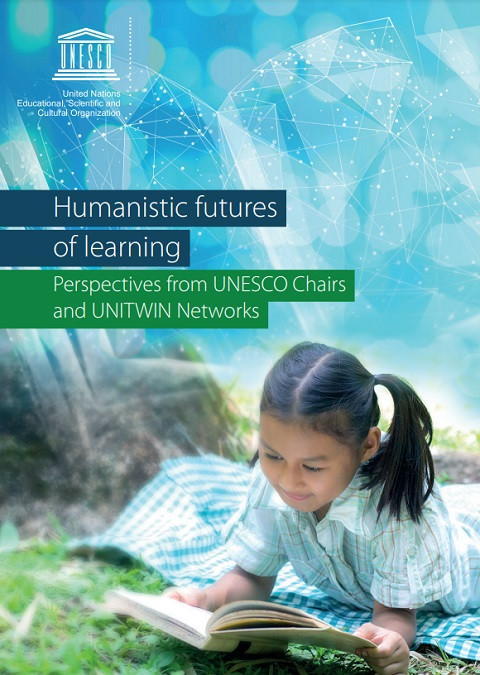 Humanistic Futures of Learning: Perspectives from UNESCO Chairs and UNITWIN Networks Year of publication: 2020 Corporate author: UNESCO UNESCO’s Futures of Education initiative aims to rethink education and shape the future. The initiative is catalyzing a global debate on how knowledge, education and learning need to be reimagined in a world of increasing complexity, uncertainty and precarity. This publication presents the first curated input to the Futures of Education initiative from the UNITWIN/UNESCO Chairs Programme, which now represents an extensive global network of more than 800 higher education institutions in over 115 countries. It features think pieces that highlight key dimensions to be considered in re-visioning and re-purposing education for the future of humanity and the planet. The collection of the pieces calls for greater focus on a number of critical areas such as: The role of culture in strengthening social and environmental sustainability; the values and attitudes that are needed to shape future generations; the importance of both robust public education, as well as of other learning spaces; the need to strengthen human creativity and capability in the digital era, as well as the role of higher education in generating the knowledge and driving the innovation required to transform our world. Les futurs humanistes de l’apprentissage: Perspectives des chaires UNESCO et des réseaux UNITWIN Year of publication: 2020 Corporate author: UNESCO L’initiative de l’UNESCO intitulée Les futurs de l’éducation vise à repenser l’éducation et à façonner l’avenir, en lançant un débat mondial sur la manière de réinventer le savoir, l’éducation et l’apprentissage dans un monde de plus en plus complexe, incertain et précaire. Le présent volume constitue la première collection de contributions soumises à l’initiative Les Futurs de l’éducation de l’UNESCO par le Programme des chaires UNESCO/UNITWIN, un vaste réseau mondial regroupant plus de 800 établissements d’enseignement supérieur dans plus de 115 pays. Les documents de réflexion qu’il contient mettent en évidence les dimensions essentielles à prendre en compte pour ré-imaginer et redéfinir l’éducation dans l’intérêt de l’avenir de l’humanité et de la planète. Cette collection appelle à insister davantage sur un certain nombre de domaines critiques tels que le rôle de la culture dans le renforcement de la durabilité sociale et environnementale, les valeurs et les attitudes nécessaires pour préparer les générations futures, l’importance d’une éducation publique et robuste, ainsi que d’autres espaces d’apprentissage, la nécessité de renforcer la créativité et les capacités humaines à l’ère numérique, ainsi que le rôle de l’enseignement supérieur concernant la génération des savoirs et la conduite de l’innovation nécessaire pour transformer notre monde. 학습의 인본주의적 미래: 유네스코 석좌와 유니트윈의 시각에서 Year of publication: 2020 Corporate author: 유네스코 유네스코의 ‘교육의 미래’(Futures of Education) 이니셔티브는 교육을 다시 생각해보고 교육의 미래를 만들어가는 것을 목표로 한다. 이 이니셔티브는 복잡성, 불확실성, 불안정성이 증가하는 세계에서 지식, 교육, 학습은 어떻게 재구상되어야 하는가라는 문제에 대한 전세계적 논의를 촉진하고 있다. 이 책은 현재 115개 이상의 국가의 800개 이상의 고등교육기관으로 구성된 광범위한 글로벌 네트워크를 대표하는 유니트윈/유네스코 석좌프로그램(UNITWIN/UNESCO Chairs Programme)이 교육의 미래 이니셔티브에 제출한 글들을 일차적으로 정리해 엮은 것이다. 이 책은 인류와 지구의 미래를 위해 교육의 비전과 목적을 재설정할 때 고려해야 할 핵심적 차원들을 조명하는 글들을 담고 있다. 이 글들은 사회적·환경적 지속가능성 강화에 있어 문화의 역할; 미래 세대 육성에 필요한 가치와 태도; 건실한 공교육 및 기타 학습공간의 중요성; 디지털 시대에 인간의 창의력과 역량을 강화할 필요성과 지식을 창출하고 세상을 변화시키는 데 필요한 혁신을 주도하는 고등교육의 역할 등 중요 영역에 더욱 초점을 맞출 것을 촉구한다.
 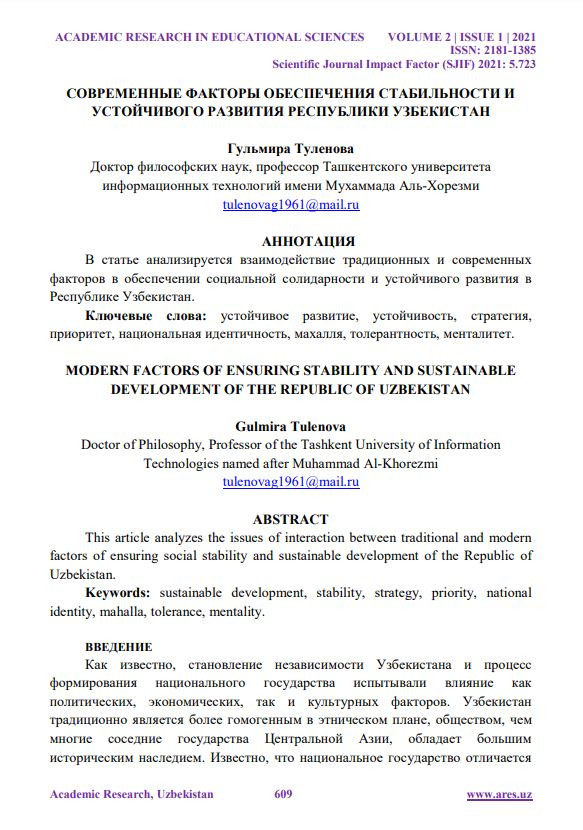 Modern Factors of Ensuring Stability and Sustainable Development of the Republic of Uzbekistan Year of publication: 2021 Author: Gulmira Tulenova This article analyzes the issues of interaction between traditional and modern factors of ensuring social stability and sustainable development of the Republic of Uzbekistan. Современные факторы обеспечения стабильности и устойчивого развития республики Узбекистан Year of publication: 2021 Author: Gulmira Tulenova В статье анализируется взаимодействие традиционных и современных факторов в обеспечении социальной солидарности и устойчивого развития в Республике Узбекистан.
  Leveraging Artificial Intelligence to Enhance Early Action towards the Kunming-Montreal Global Biodiversity Framework Year of publication: 2024 Author: Nicole DeSantis | Lea Phillips | Christina Supples | Julien Pigot | Jamison Ervin | Doley Tshering | Juan Calles Lopez | Dharshani Seneviratne | Enrique Paniagua | Monica Mora Corporate author: United Nations Development Programme (UNDP) This publication releases the methodology behind the National Biodiversity Strategies and Action Plans (NBSAP) Target Similarity Assessments and identifies key lessons learned and opportunities for future applications.
  Our Common Agenda Policy Brief 10: Transforming Education Year of publication: 2023 Corporate author: United Nations (UN) Building on the Transforming Education Summit and the report of the International Commission on the Futures of Education, this policy brief takes a closer look at the current crisis in education and proposes ideas and guiding actions for countries and the international community to transform education. The right to education and lifelong learning is an essential part of the 2030 Agenda for Sustainable Development because education, knowledge and learning are fundamental to human dignity, growth and development. For centuries, education has been the great equalizer, the driving force of nation-building and the engine of social, cultural, economic and technological progress. But today, beset by a dual crisis of equity and relevance, education as we know it is no longer fit for purpose. Informe de políticas de nuestra agenda común 10: Transformar la educación Year of publication: 2023 Corporate author: United Nations (UN) Sobre la base de la Cumbre sobre la Transformación de la Educación y el informe de la Comisión Internacional sobre los Futuros de la Educación, el presente informe de políticas examina con más detalle la crisis actual de la educación y propone unas ideas y una serie de medidas orientativas para que los países y la comunidad internacional transformen la educación. El derecho a la educación y al aprendizaje permanente es una parte esencial de la Agenda 2030 para el Desarrollo Sostenible porque la educación, el conocimiento y el aprendizaje son fundamentales para la dignidad, el crecimiento y el desarrollo de la persona. Durante siglos, la educación ha sido la gran igualadora, la fuerza motriz de la construcción nacional y el motor del progreso social, cultural, económico y tecnológico. Sin embargo, en la actualidad, acosada por una doble crisis de equidad y pertinencia, la educación tal y como la conocemos ya no es idónea.
 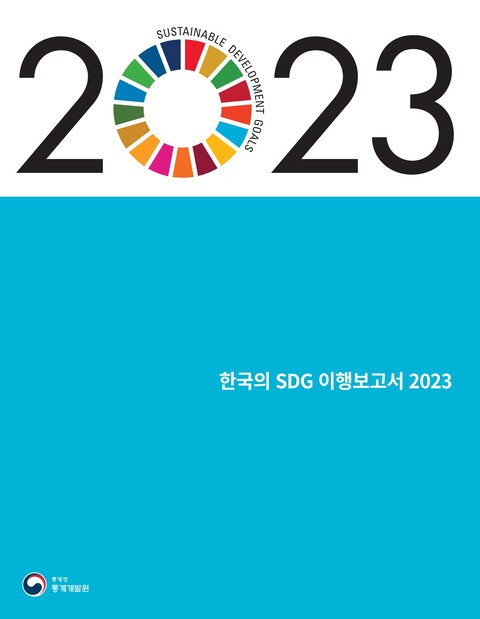 SDG In the Republic of Korea: Progress Report 2023 Year of publication: 2023 Author: Woohyun Chung | Haesik Jung | Yunjae Hwang | Dawoon Jung | Hyojung Han | Dokyun Kim | Jongho Ahn | Sangyoup Lee | Soeun Ahn | Jungwook Kim | Sangyun Lee | Jiyoung Lee | Sora Yi | Jewoo Hong | Miju Kim | Junghee Cho | Kyungah Koo | Yul Kwon Corporate author: Korea R. Statistics Research Institute | Statistics Korea It has been eight years since the Sustainable Development Goals (SDG) were adopted at the UN General Assembly, and nations began to work toward achieving them. Now we are halfway through the 2030 target period. As an authorized national focal point of SDG data, the Statistics Research Institute has been publishing a 『Sustainable Development Goals in the Republic of Korea: Progress Report』 annually, in keeping with their vision of providing support for ‘eviꠓdence-based decision-making’.『SDG in the Republic of Korea: Progress Report 2023』, released this, was designed as a compass identifying goals to be prioritized in policy implementation during the remaining period until 2030 to keep pace for achieving the SDGs. It is hoped that the report will help to point out the direction for policies responding to the crises and changes we are facing amid the COVID pandemic, the climate crisis, and war, through relevant indicators. 한국의 SDG 이행보고서 2023 Year of publication: 2023 Author: Woohyun Chung | Haesik Jung | Yunjae Hwang | Dawoon Jung | Hyojung Han | Dokyun Kim | Jongho Ahn | Sangyoup Lee | Soeun Ahn | Jungwook Kim | Sangyun Lee | Jiyoung Lee | Sora Yi | Jewoo Hong | Miju Kim | Junghee Cho | Kyungah Koo | Yul Kwon Corporate author: Statistics Research Institute 지속가능발전목표(SDG)가 유엔총회에서 채택되고 그 시작을 알린 지 올해 8년 차로, 2030년 목표 시점까지 절반의 시간이 지났습니다. 통계개발원은 한국의 SDG 데이터 책임기관으로 ‘증거 기반 의사결정 지원’이라는 비전하에 『한국의 SDG 이행보고서』를 매년 발간하고 있습니다. 올해 발간된 『한국의 SDG 이행보고서 2023』은 2030년까지 남은 기간 동안 어떤 목표에 우선순위를 두어 정책을 실행해야 SDG 달성이 가능한지를 보여 주는 나침반 역할로 기획되었습니다. 코로나19, 기후위기, 전쟁 등 격변의 시대에 우리가 직면한 위기와 변화를 지표로 보여 줌으로써 관련 정책의 방향을 제시해주리라 기대합니다. 본 저작물은 통계청 통계개발원에서 2023년 작성하여 공공누리 제3유형으로 개방한 '한국의 SDGs 이행보고서 2023(작성자:정우현)'을 이용하였으며, 해당 저작물은 통계청 통계개발원 홈페이지(https://kostat.go.kr/)에서 무료로 내려받으실 수 있습니다.