
Resources
Explore a wide range of valuable resources on GCED to deepen your understanding and enhance your research, advocacy, teaching, and learning.
1,983 Results found
 Узбекистан по пути развития медиаобразования Year of publication: 2015 Corporate author: Организация Объединенных Наций по вопросам образования, науки и культуры (UNESCO) Пособие представляет в популярной визуальной форме основы медийной и информационной грамотности (МИГ), используя программы обучения ЮНЕСКО для педагогов, а также другие материалы организации. Данное пособие разработано в рамках совместной программы ООН и Правительства Республики Казахстан «Повышение благосостояния и качества жизни в Кызылординской области через внедрение иннова-ционных подходов к оказанию экономических, социальных и экологи-ческих услуг местному населению, включая наиболее уязвимые слои», выполняемого совместно Правительством республики Казахстан и агентствами ООН в РК: ЮНЕСКО, ПРООН, ЮНФПА, ООН Женщины, ВОЗ и ЮНИСЕФ до декабря 2016 года.
  Media and Information Literacy: Training Materials Year of publication: 2015 Corporate author: UNESCO This compendium contains the reports of four studies on religion and democracy conducted by the International Alert project "Constructive Dialogues on Religion and Democracy". The studies were carried out by young professionals trained in the framework of the project in 2017 and 2018. Медийная и информационная грамотность Year of publication: 2015 Corporate author: Организация Объединенных Наций по вопросам образования, науки и культуры (UNESCO) Данный сборник содержит отчеты четырех исследований по вопросам религии и демократии, проведенных в рамках проекта International Alert "Конструктивные диалоги по религии и демократии". Исследования были проведены молодыми специалистами, обученными в рамках деятельности проекта в 2017 и 2018 гг.
  Медиа- и информационная грамотность в обществах знания Year of publication: 2013 Corporate author: Interregional Library Cooperation Centre | Организация Объединенных Наций по вопросам образования, науки и культуры (UNESCO) Издание подготовлено на основе материалов Международной конференции «Медиа- и информационная грамотность в обществах знания», состоявшейся в Москве 24–28 июня 2012 г. в рамках председательства России в Межправительственном совете Программы ЮНЕСКО «Информация для всех».
 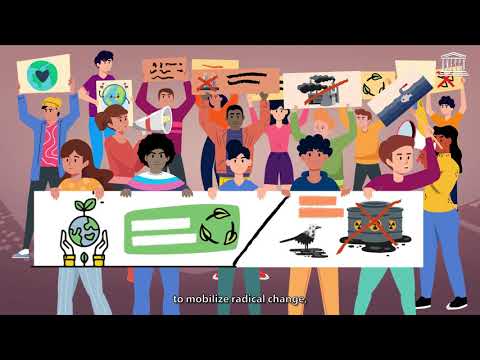 How Can Education Really Contribute to Solving the Climate Crisis? Year of publication: 2020 Corporate author: UNESCO “Debating the Futures of Education” is a video series produced by UNESCO, within the framework of an initiative that seeks to reimagine the futures of education. The purpose of this video is to think about how education can really contribute to solving the climate crisis. Comment l'éducation peut-elle réellement contribuer à résoudre la crise climatique? Year of publication: 2020 Corporate author: Organisation des Nations Unies pour l'éducation, la science et la culture (UNESCO) « Débattre sur les futurs de l'éducation» est une série de vidéos produites par l'UNESCO, dans le cadre d'une initiative visant à réinventer les futurs de l'éducation. Cette vidéo a pour but de réfléchir à la manière dont l'éducation peut réellement contribuer à résoudre la crise climatique.
  UNESCO Green Citizens: A Global Voice for Local Actors of Change Year of publication: 2020 Corporate author: UNESCO UNESCO launches the UNESCO Green Citizens Initiative, a flagship project to support citizen engagement for the planet. The UNESCO Green Citizens campaign echos the global voice of local actors of change, highlighting innovative citizen projects from around the world. UNESCO Green Citizens: Une voix globale pour des acteurs locaux du changement Year of publication: 2020 Corporate author: Organisation des Nations Unies pour l'éducation, la science et la culture (UNESCO) L’UNESCO lance l’initiative UNESCO Green Citizens, un projet phare visant à soutenir l’engagement des citoyens pour la planète. La campagne offre une voix globale aux acteurs locaux du changement, en mettant en lumière des projets citoyens innovants du monde entier.
 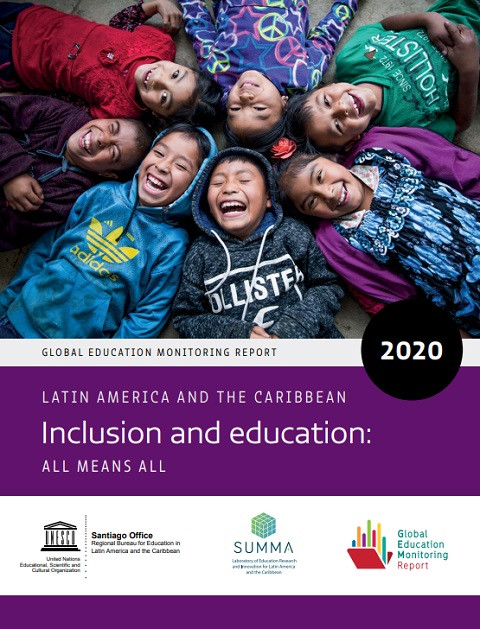 Latin America and the Caribbean 2020: Inclusion and Education; All Means All (Global Education Monitoring Report) Year of publication: 2020 Corporate author: Global Education Monitoring Report Team | UNESCO | Laboratory of Education Research and Innovation for Latin America and the Caribbean (SUMMA) Latin America and the Caribbean has the largest and most challenging socio-economic inequalities in the world, which have shaped its education systems over the decades. This report looks at everyone both in and excluded from education in the region, pinpointing barriers facing learners, especially when multiple disadvantages intersect. The report also explores challenges in education posed by COVID-19 and the need for urgent action to prevent an exacerbation of inequalities. Produced by the Global Education Monitoring (GEM) Report team, in partnership with the UNESCO Regional Bureau for Education in Latin America and the Caribbean (OREALC) and the Laboratory of Education Research and Innovation for Latin America and the Caribbean (SUMMA), the report assesses key solutions for greater inclusion through several case studies from the region. It provides in-depth analysis on challenges to inclusion in education arising from migration and displacement in Colombia and Costa Rica; remoteness in Brazil and Suriname; disability in Cuba and Nicaragua; gender in Peru and Jamaica; sexual orientation, gender identity and expression in Chile and Mexico; poverty in the Dominican Republic and Honduras; ethnicity in Bolivia and Ecuador; and incarceration in El Salvador and Uruguay. Building on the 2020 Global Education Monitoring Report, this regional edition concludes that strong laws and policies in Latin America and the Caribbean demonstrate a commitment to inclusion, but that the daily realities faced by learners suggest implementation is lagging. Recommendations are aimed at promoting more inclusive education systems to benefit all children and youth, no matter their background, identity or ability. The recommendations provide a systematic framework for identifying and dismantling barriers for vulnerable populations, according to the principle that ‘every learner matters and matters equally’. América Latina y el Caribe 2020: Inclusión y educación; Todos y todas sin excepción (Informe de seguimiento de la educación en el mundo) Year of publication: 2020 Corporate author: Global Education Monitoring Report Team | Organización de las Naciones Unidas para la Educación, la Ciencia y la Cultura (UNESCO) | Laboratory of Education Research and Innovation for Latin America and the Caribbean (SUMMA) América Latina y el Caribe es la región con las mayores y más tenaces desigualdades socioeconómicas del mundo. Durante decenios estas desigualdades se han reflejado en sus sistemas educativos. El presente informe examina a quiénes incluyen y a quiénes excluyen estos sistemas y llama la atención sobre las barreras que enfrentan los educandos, especialmente cuando están expuestos a múltiples desventajas. El informe también explora los nuevos retos educativos que plantea la pandemia de la Covid-19 y la necesidad de actuar sin dilación para evitar que se agraven las desigualdades. El informe, elaborado por el equipo del Informe de Seguimiento de la Educación en el Mundo (Informe GEM), en colaboración con la Oficina Regional de Educación para América Latina y el Caribe (OREALC/ UNESCO Santiago) y el Laboratorio de Investigación e Innovación en Educación para América Latina y el Caribe -SUMMA, evalúa algunas de las principales iniciativas emprendidas para mejorar la inclusión, basándose en varios estudios de casos de la región. Analiza en profundidad algunos ejemplos de los grandes desafíos que amenazan la inclusión en la educación: migración y desplazamiento en Colombia y Costa Rica; aislamiento rural en el Brasil y Suriname; discapacidad en Cuba y Nicaragua; discriminación de género en el Perú y Jamaica; orientación sexual e identidad y expresión de género en Chile y México; pobreza en la República Dominicana y Honduras; etnicidad en Bolivia y el Ecuador; y jóvenes en situación de privación de libertad en El Salvador y el Uruguay. Esta edición regional del Informe de Seguimiento de la Educación en el Mundo 2020 concluye que, si bien las leyes y políticas de América Latina y el Caribe demuestran la firme determinación de promover la inclusión, la realidad cotidiana de los alumnos y las alumnas sugiere que la aplicación práctica lleva retraso. Se formulan recomendaciones con el objeto de promover sistemas de educación más inclusivos en beneficio de todos los niños, niñas y jóvenes, sin distinción de origen, identidad o capacidad. Las recomendaciones brindan un marco sistemático que permite identificar y eliminar barreras para las poblaciones marginadas, conforme al principio de que “cada alumno es importante y todos los alumnos importan por igual”.