
Resources
Explore a wide range of valuable resources on GCED to deepen your understanding and enhance your research, advocacy, teaching, and learning.
1,951 Results found
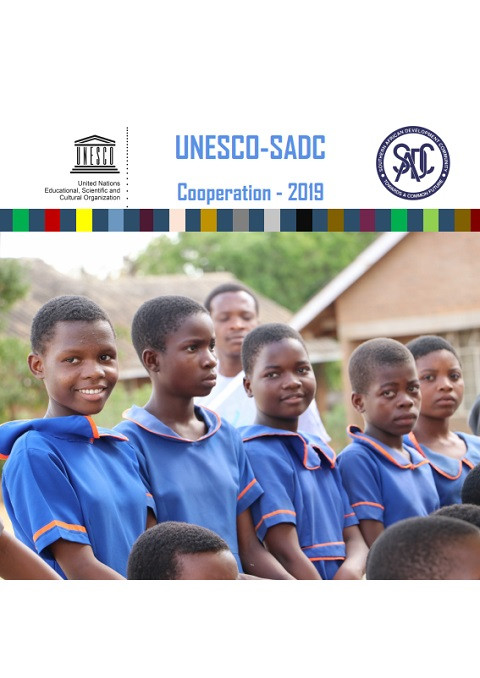 UNESCO-SADC: Cooperation 2019 Year of publication: 2020 Corporate author: UNESCO Harare UNESCO and SADC have a long standing history that culminated in the signing of a Memorandum of Understanding (MOU) in 1996. In 2017, UNESCO and SADC developed a Joint Programme of Action (JPA) which identifies concrete area of cooperation. These include education; technical and vocational education and training (TVET); youth; HIV and health education; science, technology and innovation (STI); water security, renewable energy and disaster risk management; culture; communication and information (including media for SDGs); and data for development.The purpose of this magazine is to highlight UNESCO’ work to improve education quality in the southern Africa region in partnership with SADC.
 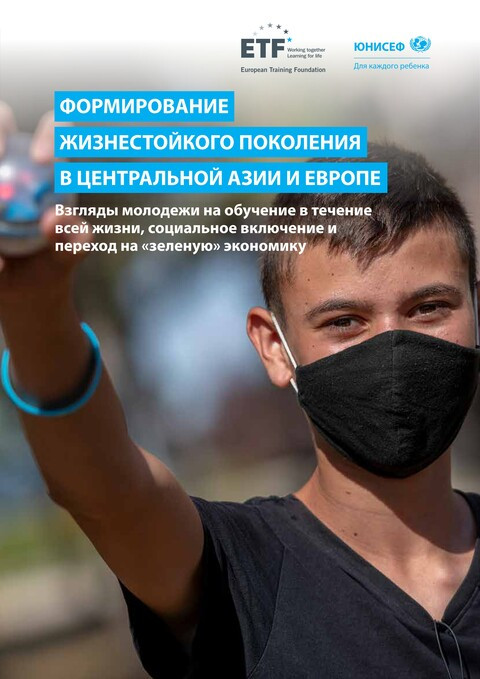 Formation of a Resilient Generation in Central Asia and Europe Year of publication: 2021 Corporate author: ЮНИСЕФ | Европейский фонд образования In this joint report of the United Nations Children's Fund (UNICEF) and the European Education Foundation (ETF) reflect the views, views and sentiments of young people in Central Asia and Europe, which will be taken into account in regional and international discussions on options for creating more effective lifelong learning systems, more inclusive communities and a more "green" society. Формирование жизнестойкого поколения в Центральной Азии и Европе Year of publication: 2021 Corporate author: ЮНИСЕФ | Европейский фонд образования В этом совместном отчете Детского фонда ООН (ЮНИСЕФ) и Европейского фонда образования (ЕФО) отражены точки зрения, взгляды и настроения молодежи в регионе ЕЦА, которые будут учитываться в региональных и международных обсуждениях вариантов создания более эффективных систем обучения в течение всей жизни, более инклюзивных сообществ и более «зеленого» общества.
  Le guide qui rend ton évènement plus éco-citoyen Corporate author: eventecocitoyen Ce guide sert à faciliter le passage à l’action de tous et toutes en proposant des conseils, outils, témoignages et ressources pratiques pour rendre les concerts et/ou festivals de Belgique plus éco-citoyens ! Pour permettre un questionnement, une remise en question en soi, qui implique ensuite des changements de comportements. Ici on vous donne des conseils/trucs et astuces mais aussi des ressources pour vous permettre de réfléchir autrement, d’agrandir notre angle de vue. This guide serves: To help everyone take action by offering advice, tools, testimonials and practical resources to make Belgium's concerts and/or festivals more eco-citizen! To enable questioning, self-questioning, which then implies changes in behavior. Here we give you tips and tricks, but also resources to help you think differently, to widen our angle of vision.
  Calendrier des événements du développement durable 2023-2024 Year of publication: 2023 Author: Matthieu Remblière Corporate author: Académie de Versailles Ce calendrier met en lumières les dates et les journées nationales, européennes et mondiales en rapport avec le développement durable. This calendar highlights national, European and international dates and days related to sustainable development.
 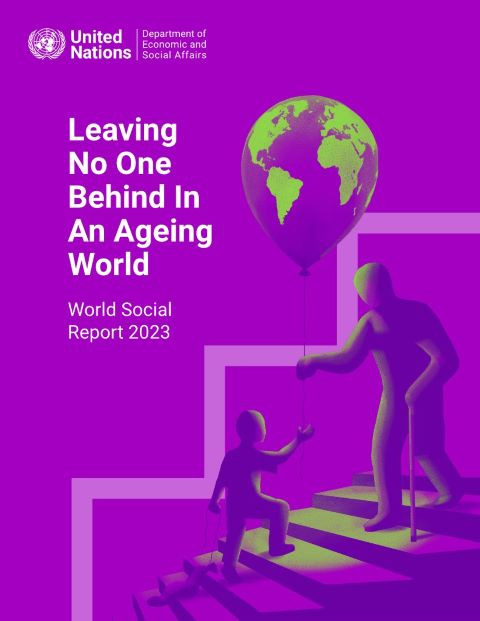 World Social Report 2023 : Leaving No One Behind in an Ageing World Year of publication: 2023 Corporate author: UN. Department of Economic and Social Affairs (UN. DESA) Population ageing is a defining global trend of our time. People are living longer, and more are older than ever before. Spectacular improvements in health and survival and reductions in fertility have driven this momentous shift, which has begun or is expected to begin soon in all countries and areas. This change brings both challenges and opportunities as countries strive to achieve the Sustainable Development Goals (SDGs). In 2022, the world marked the twentieth anniversary of the adoption of the Madrid International Plan of Action on Ageing. To commemorate this landmark, the World Social Report 2023 explores the economic and social implications of the ageing of the human population. It builds on the Plan of Action’s framework for national policies to create equitable, inclusive societies for people of all ages, providing recommendations to put the rights and well-being of older persons at the centre, across the life course. Population ageing is an inevitable result of the demographic transition towards longer lives and smaller families. While the shift towards older populations is largely irreversible, collective actions and policy decisions shape its path and consequences. Postponing critical measures that allow societies to benefit from and adapt to population ageing would impose high social, economic, fiscal and health-related costs, for both current and future generations. By contrast, with appropriate foresight and planning, Governments can manage the challenges from population ageing while enhancing opportunities for all people to thrive and ensuring that no one is left behind. As elaborated in this report, population ageing needs to be widely understood as more than just a set of discrete concerns mainly for one group of people who have advanced beyond a given age. Ageing touches all parts of economies and societies, from health care and education to employment and taxation. Each stage of life can contribute to or detract from well-being at older ages.
 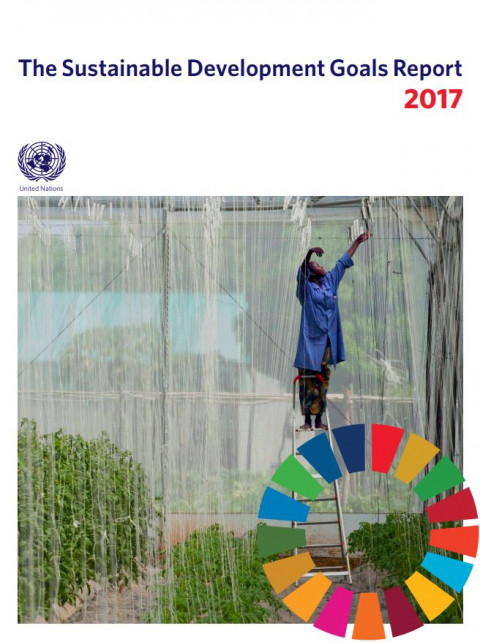 The Sustainable Development Goals Report 2017 Year of publication: 2017 Corporate author: United Nations (UN) In adopting the 2030 Agenda for Sustainable Development, world leaders resolved to free humanity from poverty, secure a healthy planet for future generations, and build peaceful, inclusive societies as a foundation for ensuring lives of dignity for all.This report provides a snapshot of our efforts to date. It stresses that high-level political leadership and new partnerships will be essential for sustaining momentum. It also underscores the need for reliable, timely, accessible and disaggregated data to measure progress, inform decision-making and ensure that everyone is counted.
  Faith for Earth : a Call for Action Year of publication: 2020 Corporate author: United Nations Environment Programme (UNEP) | Inter-Agency Network on Women and Gender Equality (IANWGE) The UN Environment Programme (UNEP) and the Parliament of the World’s Religions today released a new book, "Faith for Earth — A Call for Action", which gives readers a wide-ranging look at the history and diversity of faith teachings and their advocacy for the protection of the environment. The online book and its print edition were launched on 8 October 2020 during the Faith for Nature Global Conference, (5th - 8th October) in Skálhol, Iceland. The book provides a comprehensive overview of the faith traditions and scientific findings that underpin the understandings and reflections of world religions concerning environmental sustainability. It includes clear statements from sacred scripts and faith leaders. It underlines that protecting the Earth, restoring ecosystems, preventing pollution, and leaving behind a healthy environment for the next generations is an ethical, moral and spiritual responsibility. With more than one hundred million houses of worship around the globe, adapting green building principles is a massive demonstration of commitment to sustainability.
 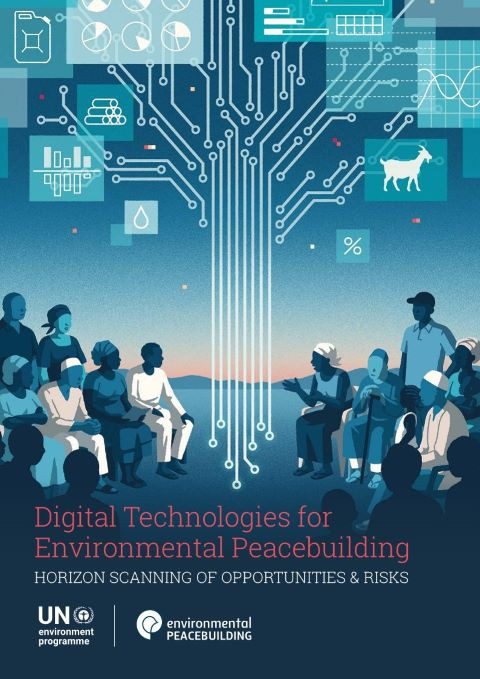 Digital Technologies for Environmental Peacebuilding : Horizon Scanning of Opportunities and Risks Year of publication: 2024 Corporate author: United Nations Environment Programme (UNEP) This report specifically delves into how digital technologies can be harnessed to manage environmental and natural resource risks that contribute to insecurity and social conflict, as well as the opportunities they present for peacebuilding, cooperation, and social cohesion. It examines relevant use cases spanning the peace and security continuum and concludes with a set of important policy and governance recommendations. The report is designed to inform and contribute to significant upcoming frameworks addressing digital technologies, including the Summit of the Future and the Global Digital Compact.
  Human Rights: 13 Ideas Received To Be Deconstructed Year of publication: 2022 Author: Céline Branaa | Louise Pluyaud | Louise Savri Corporate author: Commission nationale consultative des droits de l'homme (CNCDH) Aimed at 14-20 year-olds, this book aims to raise awareness of human rights and reminds us of the major role they play in our lives and in the organization of contemporary society. Today, human rights are being challenged by various movements that question their usefulness, effectiveness and universality. The links between certain violations of fundamental rights, climate change, the dangers of digital technology and so many other contemporary issues are often misunderstood or even ignored. The NCCHR is convinced of the urgent need to reaffirm that human rights are the foundation of a democratic society. To this end, the members of the NCCHR set out to deconstruct 13 of the most common misconceptions heard or disseminated in the media and on social networks. Through 13 illustrated chapters, each corresponding to a preconceived idea, human rights appear at the heart of our civilization as a current and indispensable reference. Readers are invited to become actively involved in their promotion. This book is a reminder that fundamental rights are not a construct of the past, but a necessary tool for the present. Highlighting the richness of human rights, this book is an invitation to anticipate a common future in which the dignity and freedom of the human person represent an accessible promise.