
Resources
Explore a wide range of valuable resources on GCED to deepen your understanding and enhance your research, advocacy, teaching, and learning.
1,951 Results found
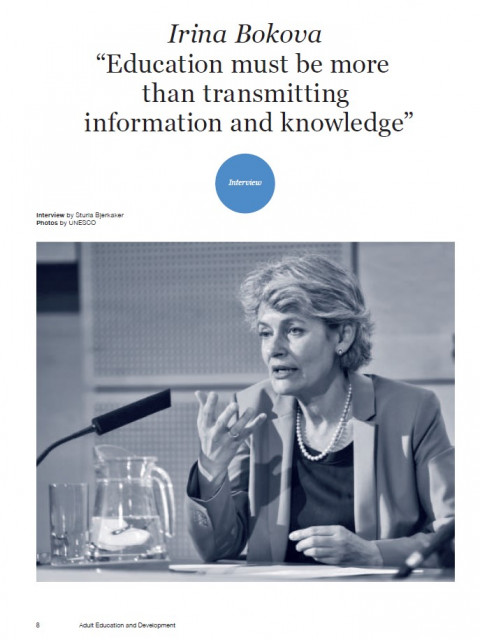 Education must be more than transmitting information and knowledge Year of publication: 2015 Author: Sturla Bjerkaker Corporate author: UNESCO. Director-General, 2009-2017 (Bokova, I.G.) Irina Bokova has been the Director-General of UNESCO since November 2009. She is the first woman to lead the organisation. Ms Bokova has served as Bulgaria’s Secretary of State for European Integration, Minister of Foreign Affairs, Ambassador to France and Monaco and Permanent Delegate to UNESCO, among other positions. She has been actively engaged in international efforts to advance quality education for all, gender equality, human rights, cultural dialogue and scientific cooperation. She also serves as Executive Secretary of the Steering Committee of the UN Secretary-General’s Global Education First Initiative.
 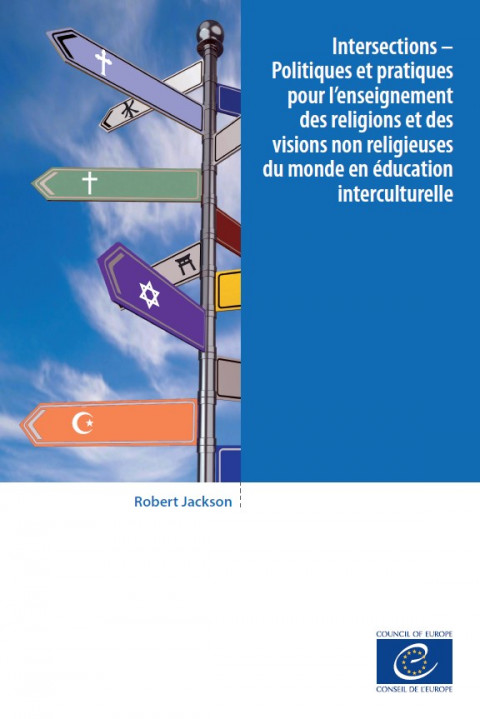 Intersections – Politiques et pratiques pour l’enseignement des religions et des visions non religieuses du monde en éducation interculturelle Year of publication: 2015 Author: Robert Jackson Que peut apporter l’étude des religions et des visions non religieuses du monde à l’éducation interculturelle des élèves européens ? Dans une importante recommandation, la Recommandation CM/Rec(2008)12 relative à la dimension des religions et des convictions non religieuses dans l’éducation interculturelle, le Comité des Ministres du Conseil de l’Europe explique la nature et les objectifs de cet enseignement.Intersections va beaucoup plus loin, car il s’agit ici d’aider les décideurs, les établissements scolaires (enseignants et équipe de direction) et les formateurs d’enseignants à relever au mieux les défis que soulève la recommandation. En tenant dûment compte de l’avis de responsables pédagogiques, d’enseignants et de formateurs d’enseignants des États membres du Conseil de l’Europe, Intersections fournit des conseils pour, par exemple, comprendre la terminologie employée dans cette forme d’enseignement; développer des compétences d’enseignement et d’apprentissage, et adopter différentes approches pédagogiques; créer en classe un « espace sécurisant » propice au dialogue entre élèves; aider les élèves à analyser les représentations des religions dans les médias; parler à la fois des visions non religieuses du monde et des points de vue religieux ; aborder les questions de religions et de convictions sous l’angle des droits de l’homme ; et tisser des liens entre établissements scolaires (de différents types) et entre l’école et son environnement.Intersections n’est ni un programme à suivre ni un manifeste politique. L’ouvrage vise à donner aux décideurs, aux établissements scolaires et aux formateurs d’enseignants des États membres du Conseil de l’Europe, ainsi qu’à toutes les personnes intéressées, les outils nécessaires pour résoudre les problèmes d’interprétation de la recommandation et adapter son message aux besoins propres à chaque pays. Intersections est le fruit du travail d’un groupe international d’experts réunis sous les auspices du Conseil de l’Europe et du Centre européen Wergeland. Il a été rédigé au nom du groupe par le professeur Robert Jackson.
 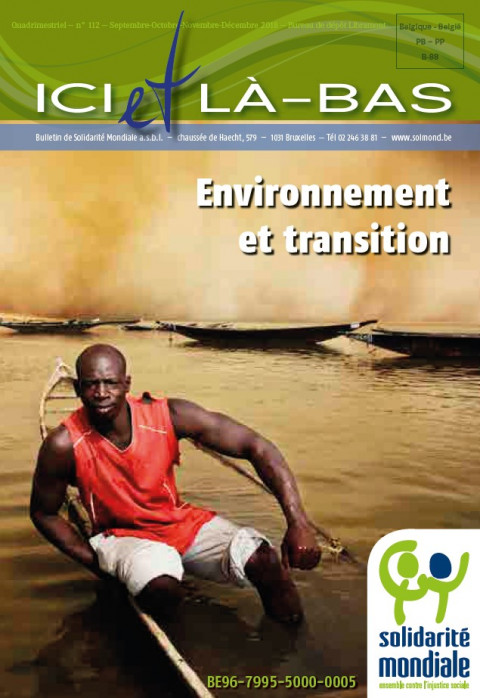 Environnement et transition (ici et là-bas) Year of publication: 2018 Corporate author: Solidarité mondiale Les « Objectifs de Développement Durable » (ODD), adoptés en 2015 par les Nations unies, nous obligent à transformer notre monde. Nous devons prendre d’urgence des mesures pour lutter contre les changements climatiques et leurs répercussions. Si l’action humaine est à la base de ces changements climatiques, elle doit aussi être à la base des solutions. Cette prise de conscience est un fil rouge dans le travail de notre organisation. Les mouvements des travailleurs et travailleuses ont l’obligation d’intégrer le respect de l’environnement dans leurs stratégies, car la planète fixe les limites de tout développement durable ! J’espère que les actions concrètes de nos collègues en Afrique, Amérique latine et en Asie présentées dans notre revue, vous serviront de source de motivation et d’inspiration. Ces bonnes pratiques illustrent que le monde du travail est en train de bâtir, pas à pas, le chemin vers des économies à faibles émissions de carbone. Les personnes en situation pré- caire sont les plus touchées par les changements climatiques. Face à ce constat, nous défendons aussi que les politiques de protection sociale peuvent à la fois contribuer au renforcement des capacités individuelles pour s’adapter, et à l’atténuation des effets dévastateurs de ces changements.
 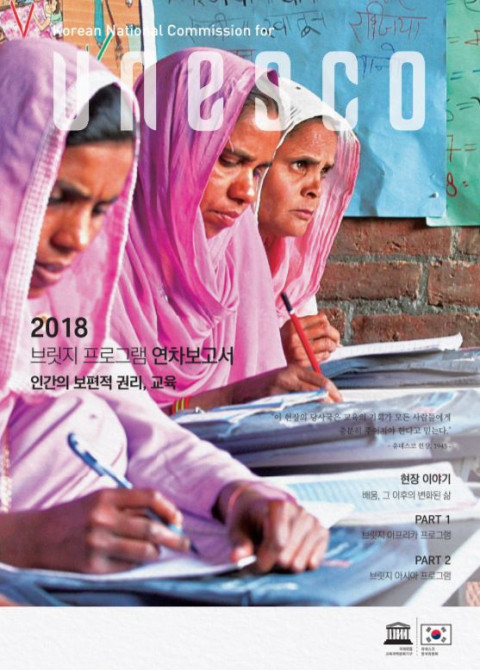 2018-2019 브릿지 프로그램 연차보고서 Year of publication: 2019 Corporate author: 유네스코한국위원회 국제사회는 지속가능발전목표 4번(SDG4)를 통해 2030년까지 모든 이들에게 포용적이고 공평한 양질의 교육을 보장하고, 평생학습의 기회가 증진되도록 노력하자는 교육 기치를 내세웠다.특히 SDG4는 아동의 초등교육 강화에 중심을 둔 '새천년개발목표' 2번(MDG2)과 모든 연령대의 기초교육에 초점을 둔 '모두를위한교육'(EFA)의 미완의 목표를 포괄함은 물론, 기초교육 이후의 교육(중등, 고등) 및 훈련(직업,기술)을 평생학습 차원에서 촉진함으로써 교육의 보편성을 강조하고 있다. 유네스코한국위원회의 브릿지 사업은 이러한 국제사회의 노력에 동참하며, 교육의 보편적 기본권이 확산될 수 있도록 돕기 위해, 전 세계적으로 교육 소외자가 집중되어 있는 사하라 이남 아프리카 지역과 남아시아 지역의 모든 연련대 교육 소외자들을 대상으로 교육권 강화에 이바지하고 있다. 브릿지 사업은 나이, 성별, 종교 그리고 사회적 배경으로 인해 공교육으로부터 배제된 이들이 교육을 받음으로써 자존감을 회복하고 삶의 질을 향상시킬 수 있게 도우며, 이러한 개인의 성장만이 궁극적으로 지역사회의 변화와 발전으로 이어진다는 확신을 갖고 있다.이 보고서에서는 브릿지 아프리카 프로그램, 브릿지 아시아 프로그램과 국별 프로젝트 및 성과를 확인할 수 있다.
 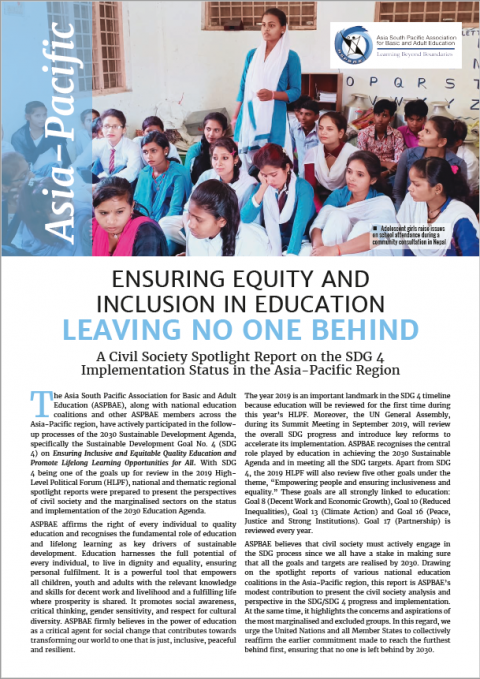 Asia-Pacific Spotlight Report on SDG 4 Year of publication: 2019 Corporate author: Asia South Pacific Association for Basic and Adult Education (ASPBAE) ASPBAE believes that civil society must actively engage in the SDG process since we all have a stake in making sure that all the goals and targets are realised by 2030. Drawing on the spotlight reports of various national education coalitions in the Asia-Pacific region, this report is ASPBAE’s modest contribution to present the civil society analysis and perspective in the SDG/SDG 4 progress and implementation. At the same time, it highlights the concerns and aspirations of the most marginalised and excluded groups. In this regard, we urge the United Nations and all Member States to collectively reaffirm the earlier commitment made to reach the furthest behind first, ensuring that no one is left behind by 2030.
 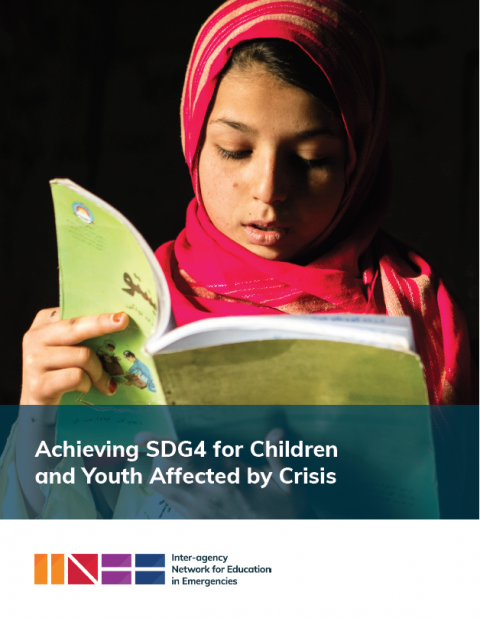 Achieving SDG4 for Children and Youth Affected by Crisis Year of publication: 2019 Corporate author: Inter-agency Network for Education in Emergencies (INEE) With the Sustainable Development Goal 4 (SDG4), the global community committed to ensuring a quality education for all children and youth. Despite this promise, children and youth in crisis contexts continue to be neglected. We will never achieve SDG4 unless all children and youth affected by conflict and crisis are able to access and attend school and learn in a quality, safe, relevant and inclusive education environment. There is an urgent need for governments and the international community to make and adhere to political, financial and legal commitments if we truly are to leave no child behind. This brief offers recommendations for addressing the disparities in safe, quality, inclusive education for children affected by crisis. It begins by highlighting key areas for policy and practice, and looks at ways to use the various tools developed by the Inter-agency Network of Education in Emergencies (INEE). It takes a look at overall themes and trends, as well as the specific issues of gender disparities, the importance of supporting teachers, children’s psycho-social wellbeing and the protection and safety of education in conflict.
  Policy brief: rethinking schooling for the 21st century Year of publication: 2018 Corporate author: Mahatma Gandhi Institute of Education for Peace and Sustainable Development (MGIEP) Analysing how far the ideals of SDG 4.7 are embodied in policies and curricula across 22 Asian countries, this study establishes benchmarks against which future progress can be assessed. It also argues forcefully that we must redefine the purposes of schooling, addressing the fundamental challenges to efforts to promote peace, sustainability and global citizenship through education.
 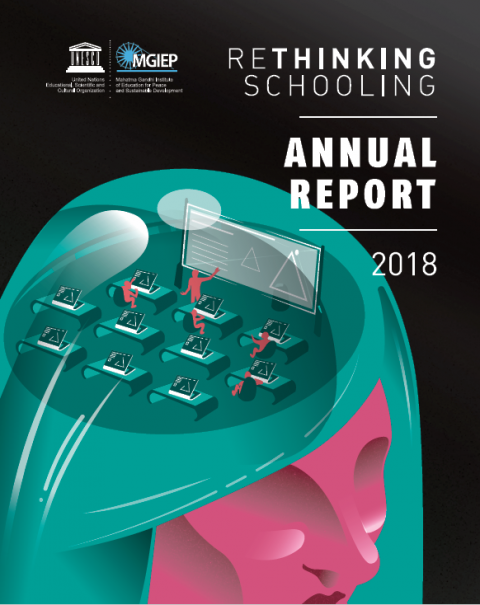 Rethinking schooling: annual report 2018 Year of publication: 2019 Corporate author: Mahatma Gandhi Institute of Education for Peace and Sustainable Development (MGIEP) Calls to gear up schools for the 21st century are ubiquitous today. Some Asian education systems are held up as models for an innovation-led utopian future. Across much of Asia, however, neither the reality of schooling nor the patterns of development with which it is associated give cause for blithe optimism. This study is informed by UNESCO’s commitment to realizing the Sustainable Development Goals (SDGs) through educational reform worldwide. Since its inception, UNESCO has championed a humanistic vision of education (UNESCO, 2015)—a vision today encapsulated in SDG 4.7. These ideals need to be strongly restated and defended in an era when educational debate has come to be framed by a narrowly economistic and instrumentalist agenda. Deriving urgent significance from this broader context, the Rethinking Schooling report analyses how far the ideals of SDG 4.7 are embodied in policies and curricula across 22 Asian countries (UNESCO MGIEP, 2017a). The report seeks to develop benchmarks against which future progress can be assessed. It also argues forcefully that the fundamental purposes of schooling need to be reconfigured, if the ideals to which the global community has subscribed are actually to be realized.
 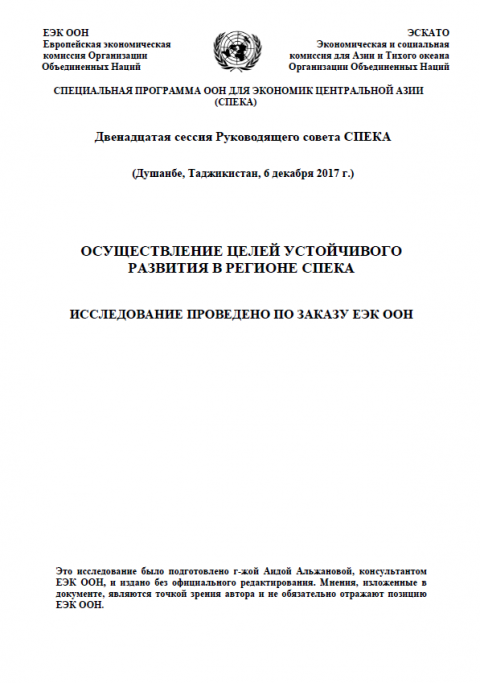 Implementation of sustainable development goals in the SPECA region Year of publication: 2017 Corporate author: United Nations Economic Commission for Europe (UNECE) This study is aimed at analyzing the links between the work on achieving the Sustainable Development Goals (SDGs) in the national framework of countries participating in the UN Special Program for the Economies of Central Asia (SPECA) and identifying areas in which the cooperation of these countries in the framework of SPECA will be useful. The analysis will lead to policy recommendations on how regional cooperation within SPECA can contribute to progress in the implementation of the SDGs. Осуществление целей устойчивого развития в регионе СПЕКА Year of publication: 2017 Corporate author: United Nations Economic Commission for Europe (UNECE) Данное исследование направлено на анализ связей между работой по достижению Целей устойчивого развития (ЦУР) в национальных рамках стран, участвующих в Специальной программе ООН для экономик Центральной Азии (СПЕКА) и определение областей, в которых будет полезно сотрудничество этих стран в рамках СПЕКА. Анализ приведет к выработке политических рекомендаций относительно того, как региональное сотрудничество в рамках СПЕКА может способствовать прогрессу в реализации ЦУР.