
Resources
Explore a wide range of valuable resources on GCED to deepen your understanding and enhance your research, advocacy, teaching, and learning.
1,983 Results found
 Женщины и насильственный экстремизм в Таджикистане Year of publication: 2017 Corporate author: Anna Matveeva | Bakhrom Fayzullayev Данное исследование основано на обзоре существующей исследовательской и политической литературы, а также на сборе данных в Таджикистане, в основном предоставленных должностными лицами, респондентами из сообществ, журналистами-расследователями, учеными и местными экспертами гражданского общества. Целью исследования является изучение роли женщин в вопросе противодействия распространению насильственного экстремизма.
  Sexual harassment in the workplace: challenges and responses Year of publication: 2017 Author: Dase Kavasa This report contains information on legal and policy challenges related to sexual harassment and recommendations for improving legislation and practice in the Republic of Kazakhstan. Сексуальные домогательства на рабочем месте: вызовы и пути реагирования Year of publication: 2017 Author: Dase Kavasa Данный отчет содержит информацию о вызовах в области права и политики, связанных с сексуальными домогательствами, и рекомендации по совершенствованию законодательства и практики в Республике Казахстан.
 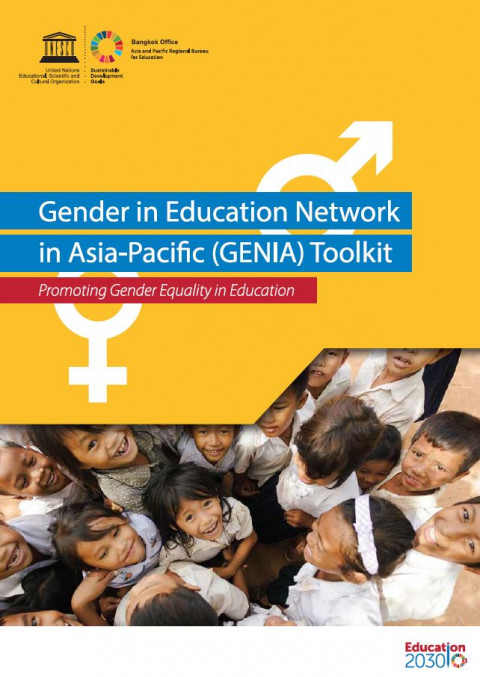 Gender in Education Network in Asia-Pacific (GENIA) Toolkit: Promoting Gender Equality in Education Year of publication: 2019 Corporate author: UNESCO Bangkok The GENIA Toolkit was originally designed in 2003 when the Gender in Education Network in Asia Pacific was established. The fifth edition of the GENIA Toolkit (25 tools) is designed for use by gender focal points and education planners and implementers. It introduces key concepts and theoretical debates, and outlines practical approaches for mainstreaming gender equality throughout the education system, and within education policy.The toolkit is designed to be used selectively, depending on the user’s needs. It can be used as a self-study tool. Readers can select topics that they have identified as priority learning areas to help them improve their own understanding and practical capacity. The toolkit can also be used by trainers to facilitate training sessions. Trainers can choose tools from the kit that best match the needs of their trainees.
 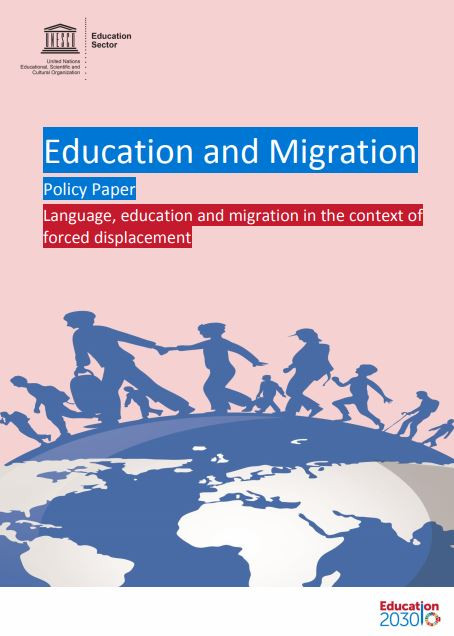 Education and Migration Policy Paper: Language, Education and Migration in the Context of Forced Displacement (Policy Brief Series, no 1) Year of publication: 2018 Author: Francine Sara Menashy | Zeena Zhakaria A surge in global migration, spurred in part by conflict, emergency, and fragility, has elicited increased attention to the specific needs of migrant and refugee learners. The international community faces an urgent global challenge: more people are now displaced than since the end of the Second World War. Half of those displaced are under the age of 18. Further, while two-thirds of international migrants are in high-income countries, 85% of those displaced by conflict and natural disaster now live in low-income countries. Forced displacement creates particular vulnerabilities, including access to education free from discrimination. Meeting Sustainable Development Goal 4 by 2030 demands that all children, youth, and adults receive an inclusive and equitable quality education. Education is a right that plays a critical role in advancing both sustainable development and peace. Yet refugees, migrants, and asylum seekers encounter numerous barriers to an inclusive andequitable quality education in host countries worldwide.
  Tajik cultural identity and multiculturalism Year of publication: 2014 Author: Khamrokhon Zarifi The article is devoted to issues of history, cultural identity and the heritage of the Tajik people. The issues of preservation and continuity of cultural diversity, as well as the phenomenon of multiculturalism are discussed.
 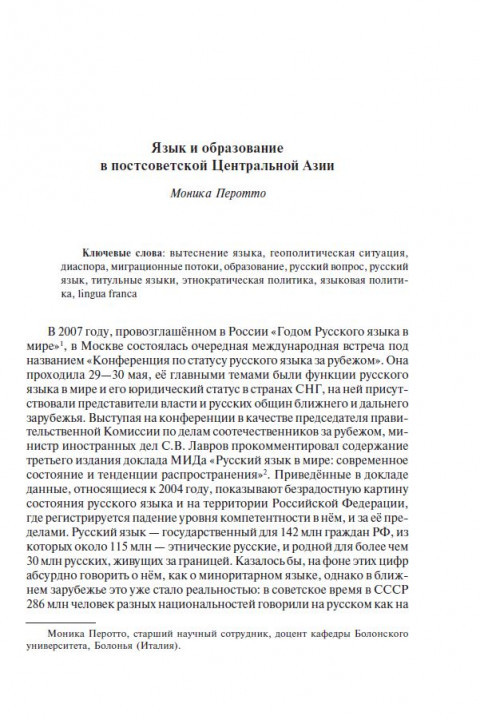 Language and education in post-Soviet Central Asia Year of publication: 2008 Author: Monica Perotto In the article, the author tries to assess the dynamics of the changing role of Russian and the titular languages in the post-Soviet republics of Central Asia with reference to demographic and geopolitical data, as well as to determine the consequences of the language policy pursued in these countries. Язык и образование в постсоветской Центральной Азии Year of publication: 2008 Author: Monica Perotto В статье автор пытается дать оценку динамике изменения роли русского и титульных языков в постсоветских республиках Центральной Азии со ссылкой на демографические, геополитические данные, а также определить последствия проводимой в этих странах языковой политики.
 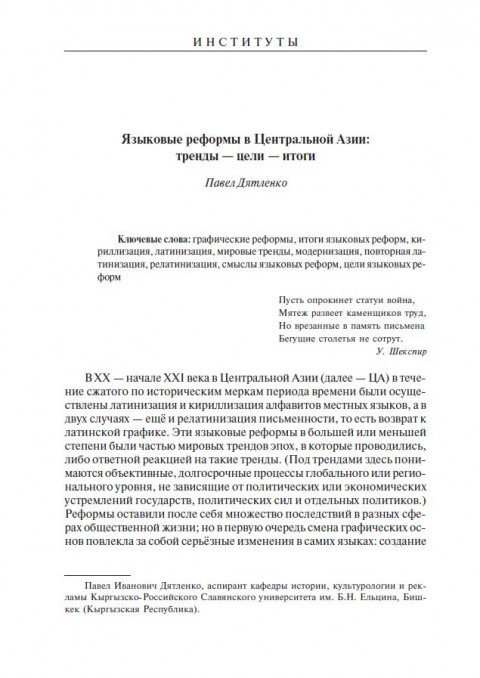 Language Reforms in Central Asia: trends - goals - results Year of publication: 2008 Author: Pavel I. Dyatlenko The article considers the evolution of language reforms in Central Asia from the beginning of the twentieth century to the end of the 2000s and their significance as a reflection of changing trends. The author analyzes the goals and interests of the political elites who initiated the language reforms, as well as the consequences of the reforms in different areas of public life. Языковые реформы в Центральной Азии: тренды — цели — итоги Year of publication: 2008 Author: Pavel I. Dyatlenko Статья рассматривает эволюцию языковых реформ в Центральной Азии в период с начала ХХ века до конца 2000-х годов и их значение, как отражение менявшихся трендов. Автор анализирует цели и интересы политических элит, инициировавших языковые реформы, а также последствия проведенных преобразований в разных сферах общественной жизни.