
Resources
Explore a wide range of valuable resources on GCED to deepen your understanding and enhance your research, advocacy, teaching, and learning.
948 Results found
 Ser y Saber: Perfil docente para el Desarrollo Sostenible y la Ciudadanía Global Year of publication: 2023 Corporate author: InteRed Documento de carácter pedagógico que describe qué características tiene el perfil docente necesario para educar en el Desarrollo Sostenible y la Ciudadanía Global. Identifica qué competencias necesarias para llevar a cabo una educación transformadora que dé respuesta a los retos globales conforme proponen movimientos sociales, ONG y sociedad civil. Esta publicación es el resultado de un trabajo colaborativo realizado durante los años 2022 y 2023 por un equipo del Movimiento 4.7 conformado con ese fin.
  Green Pack Year of publication: 2013 Corporate author: Regional Environmental Center for Central and Eastern Europe Inspired by the political process “Environment for Europe”, in 2000 the Regional Environmental Center for Central and Eastern Europe (REC) launched a programme on education for sustainable development (ESD), sponsored by Toyota. This included the development and introduction of an innovative multimedia educational kit, the Green Pack, for school teachers and their students in Central and EasternEurope. Other ESD tools similar to the Green Pack have been developed and introduced in recent years to address different target groups. Currently, the main group of REC ESD tools includes:Green Pack, aimed at children aged between 11 and 15 and their teachersGreen Pack Junior, aimed at children aged between 7 and 10 and their teachersGreen Steps, aimed at citizens and families After 14 years of project implementation, REC ESD materials have been introduced in 19 countries in Europe and Asia. Since the Green Pack launch in 2001, around 40,000 teachers and over 4.5 million students have been educated, fundamentally changing the way in which the teaching of sustainability is approached. Each project has been developed in cooperation with businesses, governments, professional organisations and NGOs in order to foster community support across a broad spectrum of society. Many donors from the international, governmental, business and private communities have supported this process. URL:http://www.greenpackonline.org/english/menu.html Проект Зеленый покет Year of publication: 2013 Corporate author: Regional Environmental Center for Central and Eastern Europe Регионaльный экологический центр для Центрaльной и Восточной Европы при поддержке Прогрaммы грaнтов в облaсти окружaющей среды «Тойоты» и Министерствa окружaющей среды Финляндии в 2000 году запустили программу по образованию в интересах устойчивого развития (ОУР), спонсируемой Toyota. Это включало разработку и внедрение инновационного мультимедийного образовательного набора «Зеленый пакет» для школьных учителей и их учеников в Центральной и Восточной Европе. В последние годы были разработаны и внедрены другие инструменты ОУР, аналогичные Green Pack, для охвата различных целевых групп. После 14 лет реализации проекта материалы ОЭЗ РЭЦ были внедрены в 19 странах Европы и Азии. Со времени запуска Green Pack в 2001 году было обучено около 40 000 учителей и более 4,5 миллионов студентов, что коренным образом изменило подход к обучению устойчивости. Каждый проект был разработан в сотрудничестве с предприятиями, правительствами, профессиональными организациями и НПО в целях содействия поддержке общин в широком спектре общества. Многие доноры из международных, правительственных, деловых и частных сообществ поддержали этот процесс. URL:http://education.rec.org/ru/main.php?lang=ru
 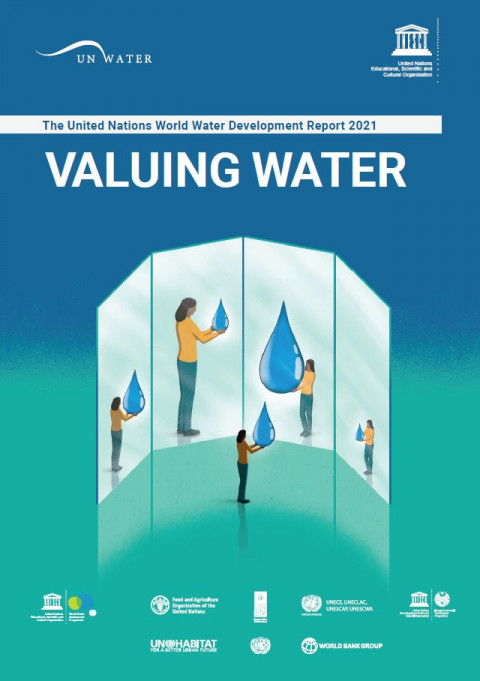 The United Nations World Water Development Report 2021: Valuing Water Year of publication: 2021 Corporate author: UNESCO World Water Assessment Programme (WWAP) The 2021 edition of the United Nations World Water Development Report focuses on valuing water. There is enough water for all provided we use and manage it efficiently. But we don’t. We invest too little, and ineffectively. We use too much water, creating scarcities. Quality is suffering and so is the environment.The value we place on water varies, depending upon who is using it, and why. Value can be a guide to what our goals should be, what actions are needed, and where we should invest. Many of our problems arise because we don’t value water highly enough; all too often water is not valued at all.This report explains various approaches to valuing water for environmental considerations, water-related infrastructure, drinking water, sanitation and hygiene. It looks at valuation issues in food and agriculture, business, industry, energy and financing. And it highlights the perspectives of different value systems and cultures, and associated social and gender-based considerations.
 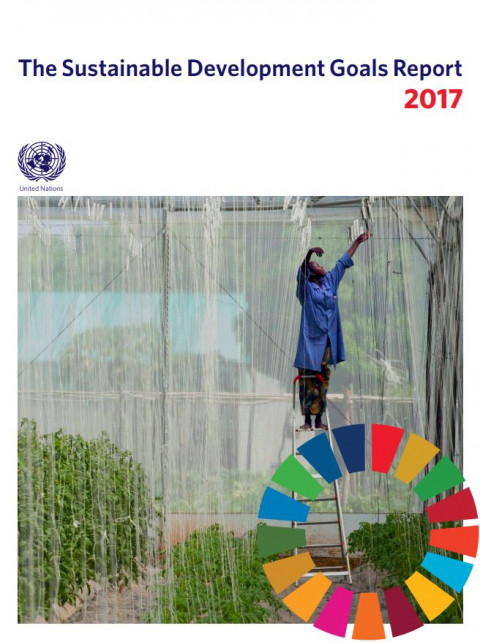 تقرير أهداف التنمية المستدامة 2017 Year of publication: 2017 Corporate author: United Nations (UN) يستعرض تقرير أهداف التنمية املستدامة لعام 2017 التقدم المحرز نحو تحقيق الأهداف السبعة عشر في السنة الثانية من تنفيذ خطة التنمية المستدامة لعام 2030 .ويستند التقرير إلى أحدث البيانات المتاحة. وهو يسلط الضوء على المكاسب والتحديات في الوقت الذي يتحرك فيه المجتمع الدولي صوب تحقيق الطموحات والمباديء التي تبناها في خطة عام 2030.
  Developing Adult Education and Training Policies for Sustainable Development: A Case Study of the State of Kuwait Year of publication: 2017 Author: Sabika Hussain Bursli Corporate author: Tanta University In this article, the author presents the case of Kuwait in relation to adult education. The article analyzes the current Kuwaiti policies related adult education in light of sustainable development requirements. تطوير سياسات التعليم والتدريب لتعليم الكبار من أجل تنمية مستدامة: دراسة حالة دولة الكويت Year of publication: 2017 Author: Sabika Hussain Bursli Corporate author: Tanta University في هذه المقالة ، يعرض المؤلف حالة الكويت فيما يتعلق بتعليم الكبار. يحلل المقال السياسات الكويتية الحالية المتعلقة بتعليم الكبار في ضوء متطلبات التنمية المستدامة.
  UNESCO-SADC: Cooperation 2019 Year of publication: 2020 Corporate author: UNESCO Harare UNESCO and SADC have a long standing history that culminated in the signing of a Memorandum of Understanding (MOU) in 1996. In 2017, UNESCO and SADC developed a Joint Programme of Action (JPA) which identifies concrete area of cooperation. These include education; technical and vocational education and training (TVET); youth; HIV and health education; science, technology and innovation (STI); water security, renewable energy and disaster risk management; culture; communication and information (including media for SDGs); and data for development.The purpose of this magazine is to highlight UNESCO’ work to improve education quality in the southern Africa region in partnership with SADC.
 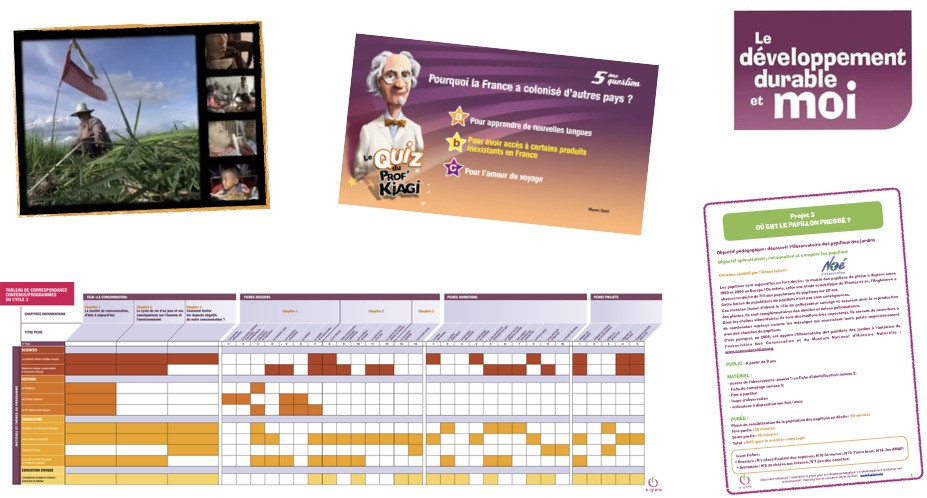 Le développement durable et moi Year of publication: 2010 Corporate author: E-graine Les mallettes pédagogiques constituent un des supports historiques d’e-graine dans sa batterie d’outils pédagogiques. Destinées en premier lieu aux enseignants dans les années 2010, elles ont été pensées comme des outils clés en mains pour éduquer au développement durable et à la solidarité internationale. A l’aide d’un tableau de correspondance pédagogique fourni avec la mallette, un enseignant pouvait, dans les différentes disciplines, intégrer facilement ces vidéos à ses cours. Le dispositif était idéal pour appuyer les écoles ne disposant pas toujours des moyens financiers permettant de faire appel à des animateurs spécialisés. Il était également possible pour le grand public de se procurer ces mallettes pour une utilisation dans le cadre familial.Pour toucher le plus grand nombre et parcequ’elle modernise ses outils pour rester à la pointe de l’innovation pédagogique, e-graine fait le choix de les proposer gratuitement en ligne pour le plus grand nombre. Le contenu que vous trouverez ci-dessous en vidéo demeure évidemment une bonne base d’initiation pour une cible 8-12 ans. Teaching kits are one of e-graine's long-standing educational tools. First designed for teachers in the 2010s, they were conceived as turnkey tools for teaching sustainable development and international solidarity. Using a pedagogical correspondence table supplied with the kit, teachers could easily integrate the videos into their lessons in any subject. The system was ideal for supporting schools that don't always have the financial resources to hire specialized animators. It was also possible for the general public to purchase the kits for use in the home. In order to reach as many people as possible, and because it is constantly updating its tools to remain at the cutting edge of educational innovation, e-graine has decided to make them available free of charge online. The video content you'll find below is obviously a good introduction for 8-12 year-olds.
  Low-tech en rénovation énergetique: les podcasts Author: Anna Chavepayre | Alexandre Pointet | Christine Lecerf | Patrice Brière | Ivan Fouquet | Vania Dormoy | Milena Karanesheva | Clotilde Corporate author: Profeel Des praticiens, maîtres d’ouvrage, maîtres d’œuvre et entreprises racontent : faire de la rénovation, c’est déjà une démarche low-tech qui prend en compte l’énergie grise, l’économie des ressources. Ils font du low-tech pour la transition climatique, pour le plaisir d’une utilisation simple et robuste, pour inventer des choses en partant du déjà-là, du paysage. C’est la marche de l’histoire. Practitioners, owners, project managers and contractors tell us that renovation is already a low-tech approach that takes into account grey energy and resource conservation. They do low-tech for the climate transition, for the pleasure of simple, robust use, to invent things based on what's already there, on the landscape. It's the march of history.