
Resources
Explore a wide range of valuable resources on GCED to deepen your understanding and enhance your research, advocacy, teaching, and learning.
980 Results found
 생명을 위협하는 탄소 불평등: 소수 엘리트 계층의 과도한 탄소 배출을 억제하면 모두를 위한 지속 가능한 지구를 만들 수 있는 이유: 요약본 Year of publication: 2024 Author: Mira Alestig | Nafkote Dabi | Abha Jeurkar | Alex Maitland | Max Lawson | Daniel Horen Greenford | Corey Lesk | Ashfaq Khalfan Corporate author: Oxfam International 기후붕괴를 막고 사회적 정의를 실현할 수 있는 유일한 방법은 불평등을 근본적으로 완화하는 것이다. 본 보고서에서는 세계에서 가장 부유한 사람들이 기후에 미치는 재앙적인 영향을 밝히고, 인류와 지구를 보호하기 위한 즉각적인 조치를 이행할 것을 제언한다. ‘슈퍼리치’로 불리는 전 세계 최상위 부유층은 우리가 아직 안전하게 배출할 수 있는 제한된 양의 이산화탄소, 다시 말 해 ‘탄소예산(carbon budget)’을 무분별하게 낭비하고 있다. 우리는 세계 상위 50대 억만장자들이 대형 요트, 개인 전용기, 투자 등을 통해 어떻게 기후위기를 가속화하고 있는지에 대한 새로운 증거를 공유하고자 한다. 옥스팜의 연구에 따르면, 전 세계 상위 1% 부유층의 탄소 배출로 인해 수조 달러의 경제적 손실과 막대한 규모의 농작물 손실, 그리고 통상적으로 예상되는 사망자 수준을 넘어서는 ‘초과 사망(excess death)’이 수백만 건 발생하고 있다. 지구 온도가 계속 상승하면서 빈곤하고 불안정한 삶을 살아가는 사람들의 생명과 생계가 위협받고 있다. 우리는 슈퍼리치들의 탄소 배출을 억제하고 환경오염을 유발하는 부유층이 비용을 치를 수 있도록 행동에 나서야 한다.
  Talking about values in the classroom Year of publication: 2015 Author: Don Rowe Corporate author: Citizenship Foundation The publication introduces teachers to a method of working with stories that enable students to develop a range of skills in thinking and talking about moral issues. It aims to expand the pupils' vocabulary concerning moral, values and ethical questions and critical thinking tools. Talking about values in the classroom Year of publication: 2015 Author: Don Rowe Corporate author: Citizenship Foundation Cette publication propose aux enseignants une nouvelle méthode de travail à partir d’histoires permettant aux apprenants de développer de nombreuses compétences de réflexion et de dialogue sur des questions morales. Elle a pour objectif de renforcer le vocabulaire des élèves sur les questions de morale, de valeurs et d’éthique, et de les aider à développer un esprit critique.
  The Impact of AI on Curriculum Systems: Towards an Orbit-Shifting Dialogue (In-Progress Reflection; no. 32, 2019) Year of publication: 2019 Corporate author: UNESCO International Bureau of Education (IBE) ‘Artificial Intelligence’ (AI) refers to the theory and development of computer systems able to perform tasks normally requiring human intelligence. In order to achieve transformational change in contemporary curriculum systems and learning environments, we need to engender an orbitshifting dialogue about the potential relationship between AI and education, in terms of both independent variables (threats), and dependent variables (opportunities). Through such a dialogue, we need to create foresight indicators that can predict the process of this relationship. It is, however, crucial that the relationship between AI and education is strong and directly proportionate. If the potential of the relationship is not exploited sufficiently, then underdeveloped education systems will lag behind and fail to achieve their potential for transformation, whether radical or incremental. Indeed, some may even become obsolete. The paper contends that in order to effectively contribute to the knowledge economy and to sustainable development in the age of the 4th Industrial Revolution (characterized by a fusion of cyber-physical technologies) modern educational systems need to overcome obstacles to innovation in order to maximize the potential for transformative change. To achieve this will require an ‘orbital shift’ in educational planning, practice and resourcing, to enable schools to respond more effectively to the rapidly changing needs of young people, society, the economy and environment in the third decade of the 21st century. Schools, educational institutions and environments, need to transform from being primarily spaces for teaching and taking exams, into spaces for innovation and personal learning, based on a culture of actively listening to the voices, choices, needs and goals of learners. Teachers need to become facilitators, coaches and mentors for learners. Schools need to create AI-enabled, flexible, collaborative working spaces. Visionary, energetic educational leaders need to communicate effectively with all stakeholders, including employers and parents, to inspire and manage change and smart decision-making to develop schools of the future. The aim of this reflection is to initiate an ‘orbit-shifting’ dialogue about the potential of AI applications to transform all components of the curriculum system to meet emergent 21st century educational goals. The conceptualization aims to explore the variable roles and impact of curriculum learning and assessment on these emerging educational goals. Theme 1 of the paper outlines the concepts and characteristics of a range of existing AI systems and their potential to enhance teaching learning and assessment. Theme 2 reflects on the potential to embrace AI systems across the curriculum system. Theme 3 proposes an action model to enable AI to have an ‘orbit shifting impact’ on all the components of the curriculum system (i.e. learners, teachers, learning environments, leadership and management, content, pedagogy and assessment) by enhancing opportunities for individualization, creativity and uniqueness.
  Minimum Standards for Education: Preparedness, Response, Recovery Year of publication: 2024 Corporate author: Inter-agency Network for Education in Emergencies (INEE) Since 2004, the INEE Minimum Standards for Education: Preparedness, Response, Recovery (INEE MS) have provided a framework for inclusive and equitable quality education. The purpose of the handbook is:-To improve the quality of education preparedness, response, and recovery;-To increase access to safe and relevant learning opportunities;-To ensure that the actors who provide these services are held accountable The INEE MS are designed to be applicable to crisis response in many different situations, including emergencies caused by conflict, by natural hazards such as those induced by climate change, and slow- and rapid-onset crises in both rural and urban environments.
 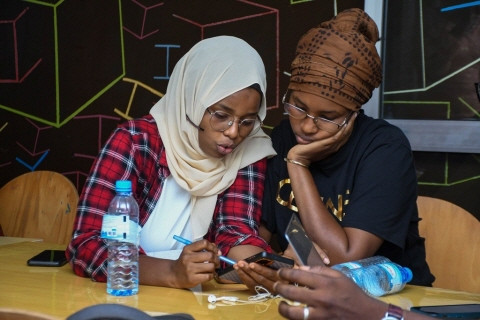 Fighting Against Disinformation and Hate Speech Year of publication: 2024 Corporate author: Association of Guinean Bloggers (ABLOGUI) This online MOOC is completely free. It is offered by the Association des Blogueurs de Guinée (ABLOGUI) through the IMPACT project (Implication of Digital Media in the Active Prevention of Conflicts and Tensions). It aims at raising awareness among young Guineans of the dangers of misinformation and hate speech, and to equip them with the knowledge and skills they need to combat information disorder in a digital world. Lutte contre la désinformation et les propos haineux Year of publication: 2024 Corporate author: Association of Guinean Bloggers (ABLOGUI) Ce MOOC en ligne est entièrement gratuit. Il est proposé par l'Association des Blogueurs de Guinée (ABLOGUI) dans le cadre du projet IMPACT (Implication des médias numériques dans la prévention active des conflits et des tensions). Il vise à sensibiliser les jeunes Guinéens aux dangers de la désinformation et des discours de haine, et à les doter des connaissances et des compétences nécessaires pour lutter contre le désordre de l'information dans un monde numérique.
  Are Journalists Objective?: The Keys to the Media Year of publication: 2021 Corporate author: Centre pour l’éducation aux médias et à l’information (CLEMI) Dans cette vidéo proposée par Clemi nous suivons l'arrivée d'une nouvelle professeur de mathématiques dans un collège. Chacun a un avis très tranché sur elle. Kamel l’adore, Cindy ne comprend rien à ce qu’elle raconte, Leonard la trouve sévère et Fama l’aime bien. Qui a raison, qui a tort ? Peut-être un peu tout le monde… Chacun la regarde selon son point de vue. Cette comparaison permet de s'interroger sur l'objectivité des médias. In this video from Clemi, we follow the arrival of a new maths teacher at a secondary school. Everyone has a very strong opinion of her. Kamel adores her, Cindy doesn't understand a word she says Leonard thinks she's harsh and Fama likes her. Who's right, who's wrong? Maybe a bit of everyone... Everyone looks at her from their own point of view. This comparison raises questions about the objectivity of the media. Les journalistes sont-ils objectifs ? : Les clés des médias Year of publication: 2021 Corporate author: Centre pour l’éducation aux médias et à l’information (CLEMI) Dans cette vidéo proposée par Clemi nous suivons l'arrivée d'une nouvelle professeur de mathématiques dans un collège. Chacun a un avis très tranché sur elle. Kamel l’adore, Cindy ne comprend rien à ce qu’elle raconte, Leonard la trouve sévère et Fama l’aime bien. Qui a raison, qui a tort ? Peut-être un peu tout le monde… Chacun la regarde selon son point de vue. Cette comparaison permet de s'interroger sur l'objectivité des médias. In this video from Clemi, we follow the arrival of a new maths teacher at a secondary school. Everyone has a very strong opinion of her. Kamel adores her, Cindy doesn't understand a word she says Leonard thinks she's harsh and Fama likes her. Who's right, who's wrong? Maybe a bit of everyone... Everyone looks at her from their own point of view. This comparison raises questions about the objectivity of the media.
  Indigenous Languages: One Year After the Launch of the Decade by UNESCO Year of publication: 2024 Corporate author: Radio France International (RFI) One year on from the launch of the great cause dedicated to protecting the world's indigenous languages: what action has been taken? Are some languages more endangered than others?