
Resources
Explore a wide range of valuable resources on GCED to deepen your understanding and enhance your research, advocacy, teaching, and learning.
948 Results found
 Glossaire sur les peuples autochtones Year of publication: 2018 Corporate author: International Fund for Agricultural Development (IFAD) Le but de ce glossaire est de garantir la cohérence et la précision de la terminologie relative aux peuples autochtones, et ce en anglais, en espagnol et en français, et d’uniformiser cette terminologie dans les documents officiels ainsi que dans tout ce qui a trait à l’organisation de réunions. Il a été établi à l’intention du personnel du FIDA, des organisations des peuples autochtones et d’autres parties concernées. À côté de chaque terme, on trouvera le document source et sa date de publication.
 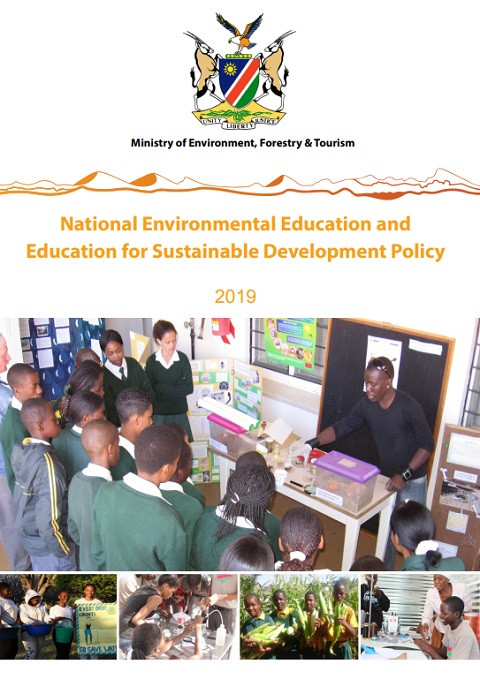 National Environmental Education and Education for Sustainable Development Policy Year of publication: 2019 Corporate author: Namibia. Ministry of Environment, Forestry and Tourism Namibia has become the first country in the SADC region to have a stand-alone National Environmental Education (EE) and Education for Sustainable Development (ESD) Policy. The development of the policy was a long time collaboration between government ministries and civil society. UNESCO through the Sustainability Starts with Teachers programme also supported the process.The vision of the national EE/ESD Policy is an “educated and empowered Namibia with environmentally literate people taking responsibility and action for a sustainable future”.The policy is designed to support EE and ESD in formal, non-formal and informal education processes across all sectors of the Namibian society including higher education, teacher education, technical and vocational education institutions, and general education. It gives Namibia the much-needed foundation to work towards ESD for 2030 and the sustainable development goals (SDGs).
 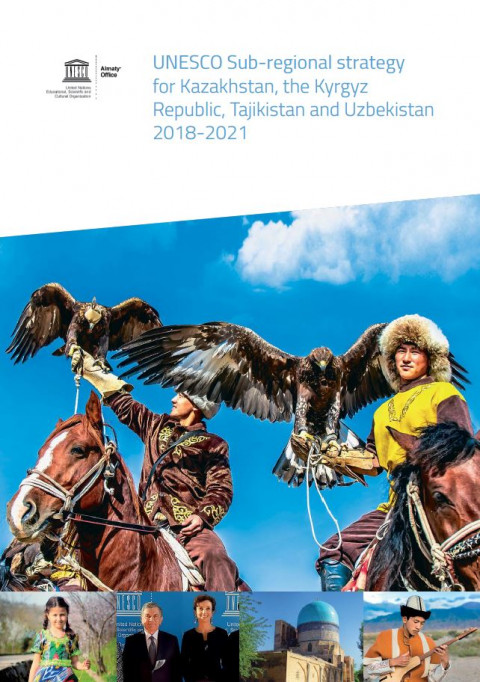 UNESCO Sub-regional Strategy for Kazakhstan, the Kyrgyz Republic, Tajikistan and Uzbekistan 2018-2021 Year of publication: 2019 Corporate author: UNESCO Almaty This document represents the strategic framework for UNESCO’s interaction with the governments and civil societies of Kazakhstan, the Kyrgyz Republic, Tajikistan and Uzbekistan, with other UN agencies and development partners aimed at responding most effectively to the development needs, priorities and aspirations of countries. Субрегиональная стратегия ЮНЕСКО для Казахстана, Кыргызской Республики, Таджикистана и Узбекистана на 2018-2021 гг. Year of publication: 2019 Corporate author: UNESCO Almaty Настоящий документ представляет собой стратегические рамки взаимодействия ЮНЕСКО с правительствами и гражданским обществом Казахстана, Кыргызской Республики, Таджикистана и Узбекистана, с другими учреждениями ООН и партнерами в области развития, направленного на наиболее эффективное реагирование на потребности, приоритеты и устремления стран в области развития.
  Critical Understanding on Global Citizenship Education in Post 2015 Context (Theory and Research in Citizenship Education; Vol. 57, No. 1) Year of publication: 2015 Author: Jinhee Kim Corporate author: Korea Association of Social Education It is notable that global citizenship education has recently gained prominence in Post 2015 context. This study attempted to explore diverse discourses of global citizenship education in theoretical dimension and it also analyzed the current status of global citizenship education as a new global education agenda. Major findings displayed issues and challenges; de-contextualization against local dimension; vague conceptualization of global citizenship education; limitation of transformative pedagogy and learning discourse; indicator development and monitoring issues; a paradigm shift for global citizenship education engaging with lifelong learning. Eventually, this study argues that comprehensive vision and long term road-map should be established to enhance global citizenship education. Lifelong learning approach is crucial to reshape global citizenship education while interacting with life-world context and life experience, which can promote an epistemology of learning to live together. Post 2015 맥락의 세계시민교육 담론 동향과 쟁점 분석 (시민교육연구; Vol. 57, No. 1) Year of publication: 2015 Author: 김진희 Corporate author: 한국사회과교육학회 최근 국제사회가 2015년 이후 새로운 교육의제를 설정하고 있는 가운데, 세계시민교육이 글로벌 교육의제로 처음으로 상정되고 있기에 주목을 받고 있다. 세계간 상호연관성이 질적으로 증대된 오늘날, 국제사회의 세계시민교육 담론과 실천적 움직임은 한국에서 세계시민교육을 어떤 방식으로 인식하고 교육적으로 담아 낼 것인가라는 이론적, 실제적 고민을 수반한다. 본 연구에는 ‘Post 2015’ 맥락에서 세계시민교육 담론 동향을 비판적으로 고찰하고 그것을 둘러싼 쟁점을 분석함으로써, 세계시민교육이 트렌드적 접근 방식으로 파편화되는 것을 극복하기 위한 교육적 방향을 성찰하였다. 연구 결과, 본 연구는 세계시민교육의 지역성과 특수성에 대한 탈맥락화라는 쟁점을 확인하였고, 세계시민교육의 모호한 정체성과 실천의 한계는 탈정치성으로 인한 딜레마를 나타나는 지점임을 보여주었다. 또한 현재의 세계시민교육은 페다고지의 한계와 학습담론의 소외를 직면하고 있으며, 앞으로 세계시민교육의 적절한 지표를 개발하고 모니터링하는 과제가 남아 있음을 분석하였다. 마지막으로 본 연구는 평생학습으로서의 세계시민교육 패러다임 전환이 요청되고 있음을 역설하였다.
  UNESCO-UNEVOC Study on the Trends Shaping the Future of TVET Teaching (Trends Mapping Studies) Year of publication: 2020 Author: Gita Subrahmanyam Corporate author: UNESCO International Centre for Technical and Vocational Education and Training (UNEVOC) This report presents the results of the trends mapping study on the future of technical and vocational education and training (TVET) teaching, conducted by UNESCO-UNEVOC. The study aimed to engage the international TVET community to: (i) improve the understanding of the implications of global disruptions; (ii) gather knowledge, insights, experiences; and (iii) highlight promising practices in preparing TVET teaching staff to deliver the skills needed in the 21st century and beyond. Coordinated by UNESCO-UNEVOC, trends mapping studies aim to further the international community's understandings on contemporary key issues concerning TVET. The studies review existing literature and policies, and engage TVET stakeholders from around the world through surveys and virtual conferences.
  Advancing Innovation: UNESCO-UNEVOC in Action; Biennial Report 2018-2019 Year of publication: 2020 Corporate author: UNESCO International Centre for Technical and Vocational Education and Training (UNEVOC) In a rapidly evolving world filled with societal, environmental and economic disruptions, technical and vocational education and training (TVET) systems need to develop innovative strategies to tackle emerging challenges while simultaneously seizing the opportunities that have arisen from the advent of 21st century technology.This Biennial Report gives a comprehensive overview of UNESCO-UNEVOC's activities in technical and vocational education and training over the biennium 2018-2019.
 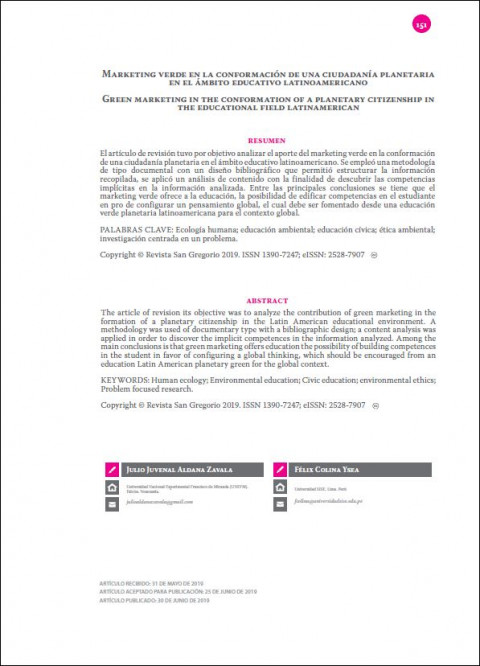 Green Marketing in the Conformation of a Planetary Citizenship in the Educational Field Latinamerican Year of publication: 2019 Author: Julio Juvenal Aldana Zavala | Félix Colina Ysea The article reviews and analyzes the contribution of green marketing in the formation of a planetary citizenship in the latin american educational systems. A documental and biblographic review methodology was used to gather and structure the information. The content of the documents was analyzed trying to discover the implicit competences for global citizenshipo present in the information. One of the main conclusions is that green marketing offers education the possibility of building competences that favour global thinking in students; thing that should be encouraged from a latin american green education perspective for the global context. Marketing verde en la conformación de una ciudadanía planetaria en el ámbito educativo latinoamericano Year of publication: 2019 Author: Julio Juvenal Aldana Zavala | Félix Colina Ysea El artículo de revisión tuvo por objetivo analizar el aporte del marketing verde en la conformación de una ciudadanía planetaria en el ámbito educativo latinoamericano. Se empleó una metodología de tipo documental con un diseño bibliográfico que permitió estructurar la información recopilada, se aplicó un análisis de contenido con la finalidad de descubrir las competencias implícitas en la información analizada. Entre las principales conclusiones se tiene que el marketing verde ofrece a la educación, la posibilidad de edificar competencias en el estudiante en pro de configurar un pensamiento global, el cual debe ser fomentado desde una educación verde planetaria latinoamericana para el contexto global.