
Resources
Explore a wide range of valuable resources on GCED to deepen your understanding and enhance your research, advocacy, teaching, and learning.
948 Results found
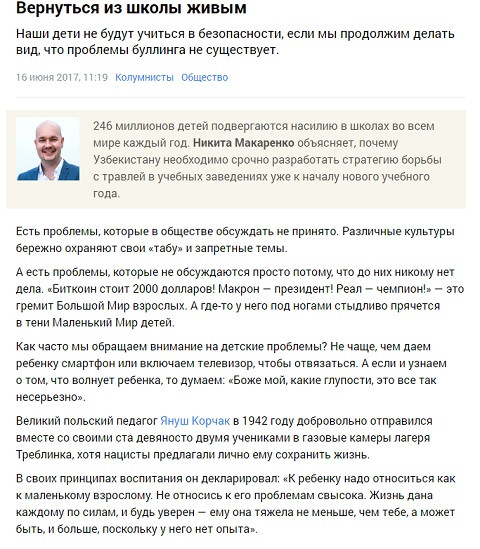 Вернуться из школы живым Year of publication: 2020 Author: Nikita Makarenko 246 миллионов детей подвергаются насилию в школах во всем мире каждый год. Автор объясняет, почему Узбекистану необходимо срочно разработать стратегию борьбы с травлей в учебных заведениях уже к началу нового учебного года.
  Regional Consultations of the National Human Rights Institutions of Central Asia: Conference Proceedings Year of publication: 2016 Corporate author: UN. Office of the United Nations High Commissioner for Human Rights (UN. OHCHR) | United Nations Development Programme (UNDP) For the first time, the conference became a platform for consultations of national human rights institutions (NHRIs) of Central Asia to help strengthen partnerships and provide opportunities for mutual support and exchange of expertise. Special attention the role of NHRIs in their interaction with the government and other partners in the country, as well as the role of NHRIs in terms of achieving the Sustainable Development Goals (SDGs). Региональные консультации национальных правозащитных учреждений стран Центральной Азии: Отчет о конференции Year of publication: 2016 Corporate author: UN. Office of the United Nations High Commissioner for Human Rights (UN. OHCHR) | United Nations Development Programme (UNDP) Конференция впервые стала площадкой для консультаций национальных правозащитных учреждений (НПЗУ) Центральной Азии в целях содействия укреплению партнерских отношений и обеспечения возможностей взаимной поддержки и обмена экспертным опытом. Особое вниманиеуделено роли НПЗУ в их взаимодействии с правительством и другими партнерами в стране, а также роли НПЗУ в части достижения Целей Устойчивого Развития (ЦУР).
  Uzbekistan: Voluntary National Review 2020 Year of publication: 2020 Corporate author: United Nations (UN) This voluntary review contains information on the implementation of the 2030 Sustainable Development Goals by the Republic of Uzbekistan, objectives and directions for further activities. Special attention is paid to SDG 4 "Education", where the priority is to improve the quality and coverage of education at all levels, as well as the development of the lifelong education system. Узбекистан: Добровольный национальный обзор 2020 Year of publication: 2020 Corporate author: United Nations (UN) Данный добровольный обзор содержит в себе информацию по выполнению Республикой Узбекистан целей устойчивого развития 2030, задачи и направления дальнейшей деятельности. Отдельное внимание уделено ЦУР 4 "Образование", где приоритетом является повышение качества и охвата образованием на всех уровнях, а также развитие системы непрерывного образования.
  Таджикистан: Факторы, препятствующие оказанию помощи жертвам семейного насилия Year of publication: 2019 Corporate author: Human Rights Watch Власти Таджикистана предпринимают недостаточно усилий для проведения расследований и судебного преследования по фактам насилия в семье, а ситуация с оказанием помощи пострадавшим далека от удовлетворительной, говорится в публикуемом сегодня докладе Human Rights Watch по этому вопросу. Несмотря на определенный прогресс по ряду направлений, уголовная ответственность за семейное насилие как таковое законом по-прежнему не предусмотрена, а пострадавшие от насилия в семье женщины не обеспечиваются надлежащей защитой, доступом к убежищам и другим службам помощи.
 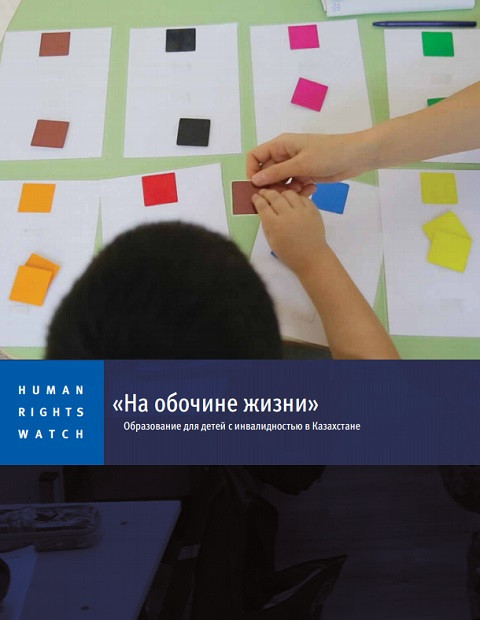 On the Margins: Education for Children With Disabilities in Kazakhstan Year of publication: 2019 Corporate author: Human Rights Watch This report is intended to analyze the situation with inclusive education in Kazakhstan for children with disabilities, government initiatives in this area, the reasons and factors of insufficient implementation of inclusive education. It also contains recommendations to the government of the Republic of Kazakhstan and international partners and proposals for improving the situation. На обочине жизни: Образование для детей с инвалидностью в Казахстане Year of publication: 2019 Corporate author: Human Rights Watch Данный отчет призван проанализировать ситуацию с инклюзивном образованием в Казахстане для детей с инвалидностью, государственные инициативы в данной сфере, причины и факторы недостаточного внедрения инклюзивного образования. В нем также содержатся рекомендации правительству Республики Казахстан и международным партнерам и предложения по улучшению ситуации.
 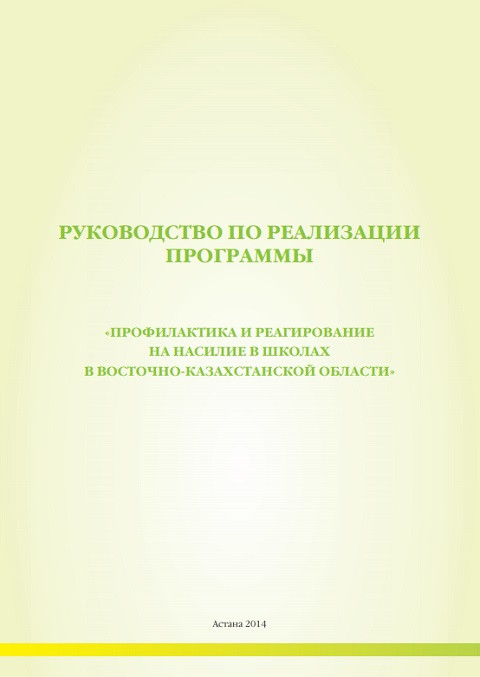 Manual for the Programme to Prevent and Respond to School Violence in East Kazakhstan Year of publication: 2014 Author: Robin Haarr Corporate author: United Nations Children's Fund (UNICEF) School violence can threaten a child’s sense of safety within school, negatively impacting on their ability to learn. The best way to address school violence is to step in promptly, with effective intervention in the first instance. Internationally, ‘best practice’ in preventing and responding to school violence is being used to develop school-wide systems of prevention and intervention.This publication was prepared under the co-operation between the Ministry of Education and Science of Kazakhstan, the Office of the Commissioner for Human Rights of the Republic of Kazakhstan, the Akimat of East Kazakhstan Oblast, the East Kazakhstan State University, and the UNICEF Office in Kazakhstan. It aims to facilitate the prevention of violence towards children in schools in Kazakhstan, with support from the Ministry of Foreign Affairs of Norway. Руководство по реализации программы: Профилактика и реагирование на насилие в школах в восточно-казахстанской области Year of publication: 2014 Author: Robin Haarr Corporate author: United Nations Children's Fund (UNICEF) Насилие в школе может угрожать ощущению безопасности детей в школе и отрицательно влиять на их способность к обучению. Наилучшим способом решения проблемы насилия в школе является профилактика и должное вмешательство при его проявлении.Данное пособие подготовлено в рамках сотрудничества между Министерством образования и науки РК, учреждением Уполномоченного по правам человека, акиматом Восточно-Казахстанской области, Восточно-Казахстанским государственным университетом им. Аманжолова и ЮНИСЕФ в целях реализации проекта по профилактике и реагированию на насилие в отношении детей в школах Казахстана, при поддержке Министерства иностранных дел Норвегии.