
Resources
Explore a wide range of valuable resources on GCED to deepen your understanding and enhance your research, advocacy, teaching, and learning.
2,275 Results found
 Rapport mondial des Nations Unies sur la mise en valeur des ressources en eau: Les solutions fondées sur la nature pour la gestion de l’eau Year of publication: 2018 Corporate author: UNESCO World Water Assessment Programme (WWAP) L'édition 2018 du Rapport mondial sur le développement de l'eau (WWDR 2018) vise à informer la politique et les décideurs, qu’ils soient parties prenante de la communauté de l’eau ou non, sur le potentiel des solutions fondées sur la nature (SfN) pour répondre aux défis contemporains de gestion de l'eau dans tous les secteurs, notamment en ce qui concerne l'eau pour l'agriculture, les villes durables, la réduction des risques de catastrophe liées à l'eau et la qualité de l'eau. Les SfN utilisent ou imitent les processus naturels pour améliorer la disponibilité de l'eau (par exemple, rétention de l'humidité du sol, recharge des eaux souterraines), améliorer la qualité de l'eau (par exemple, zones humides naturelles et construites, bandes riveraines tampons) et réduire les risques associés aux catastrophes liées à l’eau et au changement climatique (par exemple, restauration d'une plaine d'inondation, toits verts).Le WWDR2018, intitulé « Les solutions fondées sur la nature pour la gestion de l’eau », démontre comment les solutions basées sur la nature (SfN) offrent un moyen essentiel de répondre à de nombreux défis mondiaux liés à l'eau, tout en offrant simultanément des avantages supplémentaires essentiels à tous les aspects du développement durable.Actuellement, la gestion de l'eau reste fortement dominée par une infrastructure devenue habituelle, construite par l'homme (c'est-à-dire « grise ») et l'énorme potentiel des SfN reste sous-utilisé. Les SfN comprennent une infrastructure « verte » qui peut remplacer, compléter ou agir en parallèle avec une infrastructure grise de manière rentable. L'objectif est de trouver la combinaison la plus appropriée d'investissements verts et gris pour maximiser les avantages et l'efficacité du système tout en minimisant les coûts et les compromis.Les SfN pour l'eau sont essentielles à la réalisation du Programme de développement durable à l'horizon 2030, car elles génèrent des avantages sociaux, économiques et environnementaux, qui soutiennent notamment la santé humaine et les moyens de subsistance, la sécurité alimentaire et énergétique, la croissance économique durable, les emplois décents, la réhabilitation et l’entretien des écosystèmes, ainsi que la biodiversité. Bien que les SfN ne soient pas une panacée, elles joueront un rôle essentiel dans l'économie circulaire et dans la construction d'un futur plus équitable pour tous.Travailler avec la nature améliore la gestion des ressources en eau, contribue à la sécurité de l'eau pour tous et soutient les aspects fondamentaux du développement durable.Le Rapport mondial sur la mise en valeur des ressources en eau a été présenté lors du 8e Forum mondial de l'eau, à Brasilia (Brésil), le 19 mars. URL: http://www.unesco.org/new/en/natural-sciences/environment/water/wwap/wwdr/2018-nature-based-solutions/
  What Makes a Quality Curriculum?: In-Progress Reflection No.2 on Current and Critical Issues in Curriculum and Learning Year of publication: 2016 Author: Philip Stabback Corporate author: UNESCO International Bureau of Education (IBE) Sustainable Development Goal Four has to do with education in the post-2015 development agenda. It aims to “ensure inclusive and equitable quality education and promote lifelong learning opportunities for all”.Given the essential role of curriculum in enabling quality learning and in articulating and supporting education that is relevant to holistic development, our purpose in this paper is to identify what makes a quality curriculum, so as to support curricular innovation in UNESCO Member States to the end of the realization of Sustainable Development Goal Four.In this we are assuming that curriculum, given its essential role in the provision of quality learning for all children and young people, and in articulating and supporting education that is relevant to holistic development, is critical in the realization of SDG 4. It is the curriculum that determines to a large extent whether education is inclusive, thus playing a significant role in ensuring that provision is equitable. It is the curriculum that provides the structure for the provision of quality learning, especially where teachers might be under-qualified and inexperienced, their classrooms under-resourced, and their students lacking the prior frameworks within which to situate their learning. And it is the curriculum that articulates both the competencies necessary for lifelong learning and the competencies needed for holistic development.We thus argue that curriculum lies at the crossroads of these four key aspects of SDG 4: that education should be (1) inclusive and equitable, (2) characterized by quality learning, (3) promoting lifelong learning, and (4) relevant to holistic development. Curriculum, in other words, provides the bridge between education and development – and it is the competencies associated with lifelong learning and aligned with development needs, in the broadest, holistic sense of the term, that span that bridge.
  Moral Disengagement and Building Resilience to Violent Extremism: An Education Intervention Year of publication: 2014 Author: Anne Aly | Elisabeth Taylor | Saul Karnovsky Corporate author: Taylor & Francis This article reports on the development of an education intervention, the Beyond Bali Education Resource funded by the Australian Governments’ Building Community Resilience Grants of the Federal Attorney General's Department, that applies a conceptual framework grounded in moral disengagement theory. The theory of moral disengagement has been applied to the study of radicalization to violent extremism to explain how individuals can cognitively reconstruct the moral value of violence and carry out inhumane acts. Moral Disengagement and Building Resilience to Violent Extremism: An Education Intervention Year of publication: 2014 Author: Anne Aly | Elisabeth Taylor | Saul Karnovsky Corporate author: Taylor & Francis Dans cet article, il est question du développement d'une approche éducative, the « Beyond Bali Education Resource » financée par « l’Australian Governments’ Building Community Resilience Grants of the Federal Attorney General's Department ». Cette approche utilise un cadre conceptuel fondé sur la théorie du désengagement moral. La théorie du désengagement moral a été appliquée à l'étude de la radicalisation à l'extrémisme violent en vue d’expliquer comment les individus peuvent, du point de vue cognitif, reconsidérer la violence comme une valeur morale et commettre des actes inhumains.
  Strategies in Facing Antisemitism : An educational resource guide This resource guide from Yad Vashem and the Simon Wisenthal Center is divided into two parts. First, it assesses antisemitism today. Then it proposes a few articles on ways to sensitize the public to antisemitism : how to broach the topic in the classroom, how to deal with antisemitism on internet... Stratégies pour faire face à l'Antisémitisme: Un guide de ressources éducatives Ce guide de ressources de Yad Vashem et le Centre Simon Wiesenthal est divisé en deux parties. Premièrement, il évalue l'antisémitisme aujourd'hui. Ensuite, il propose quelques articles sur les moyens de sensibiliser le public à l'antisémitisme: comment aborder le sujet en classe, comment faire face à l'antisémitisme sur internet ...
 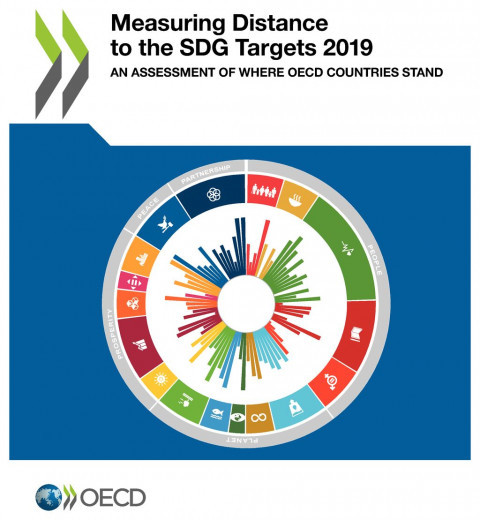 Measuring Distance to the SDG Targets 2019 - An Assessment of Where OECD Countries Stand Year of publication: 2019 Corporate author: Organisation for Economic Co-operation and Development (OECD) The Sustainable Development Goals (SDGs) set a broad and ambitious programme for the world to achieve by 2030. With 17 Goals, underpinned by 169 Targets, the complex and integrated nature of the 2030 Agenda presents national governments with huge challenges for implementation. To assist countries, the OECD has developed a unique methodology allowing comparison of progress across SDG goals and targets. Based on the UN Global List of 244 indicators, this study evaluates the distance that OECD countries need to travel to meet SDG targets for which data is currently available. This 2019 edition of the study presents the latest results for OECD countries, both on average and individually, as well as new exploratory approaches to assessing progress over time and transboundary aspects of the SDGs. By providing a high-level overview of countries’ strengths and weaknesses in performance across the SDGs, this study aims to support member countries in navigating the SDGs and in setting their own priorities for action within the broad 2030 Agenda.
 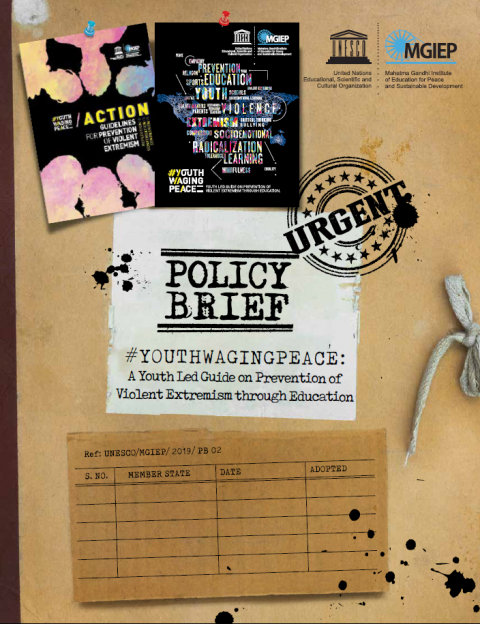 [Policy Brief] YOUTH WAGING PEACE: A Youth Led Guide on Prevention of Violent Extremism through Education Year of publication: 2019 Corporate author: Mahatma Gandhi Institute of Education for Peace and Sustainable Development (MGIEP) The #YouthWagingPeace guidebook is a document for anyone interested in understanding Violent Extremism and exploring the relationship between Education and Prevention of Violent Extremism (PVE). Led by 2 dynamic Coordinating Lead Authors and 5 Lead/Chapter Authors, the guide garnered over 2000 youth submissions/case studies, and finally integrated over 150 case study submissions from young educators and practitioners from 50+ countries. #YouthWagingPeace guidebook provides a set of actionable guidelines for PVE to teachers, school administrators, policy makers, family, religious leaders and other informal influencers.
 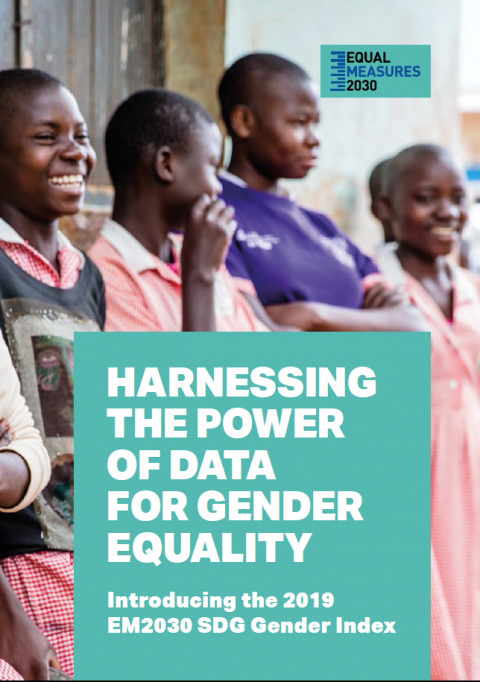 HARNESSING THE POWER OF DATA FOR GENDER EQUALITY: Introducing the 2019 EM2030 SDG Gender Index Year of publication: 2019 Corporate author: Equal Measures 2030 In the 2019 Global Report “Harnessing the power of data for gender equality: Introducing the 2019 EM2030 SDG Gender Index”, the Equal Measures 2030 (EM2030) introduces the 2019 SDG Gender Index. The index is a comprehensive tool available to explore the state of gender equality across 129 countries (covering 95% of the world’s girls and women), 14 of the 17 Sustainable Development Goals (SDGs), and 51 targets linked to issues inherent in the SDGs. The 2019 SDG Gender Index finds that, with just 11 years to go until 2030, nearly 40% of the world’s girls and women – 1.4 billion – live in countries failing on gender equality. Another 1.4 billion live in countries that “barely pass”. Even the highest-scoring countries have more to do, particularly on complex issues such as climate change, gender budgeting and public services, equal representation in powerful positions, gender pay gaps, and gender-based violence. No country in the world has reached the “last mile” on gender equality. 2019 Global Report overview: Section 1: A foreword from Equal Measures 2030’s partners: The African Women’s Development and Communication Network (FEMNET), The Asian-Pacific Resource & Research Centre for Women (ARROW), Bill & Melinda Gates Foundation, the Committee for Latin America and the Caribbean for the Defense of Women’s Rights (CLADEM), Data2X, International Women’s Health Coalition (IWHC), KPMG, ONE Campaign, Plan International, Women Deliver. Section 2: Key findings from the 2019 SDG Gender Index. Section 3: Introducing the 2019 SDG Gender Index, the approach, what makes this index unique and how the findings should be interpreted. Section 4: Key global findings, patterns and comparisons of index scores between and within the different regions: Asia and the Pacific, Europe and North America, Latin America and the Caribbean, the Middle East and North Africa, Sub-Saharan Africa. Section 5: Regional overviews of index scores and gender equality context, and thematic deep drives on 1) inequalities in girls’ education, 2) women in science and technology research positions, 3) girls’ and women’s physical safety, 4) legal barriers for women, 5) women in government. Section 6: Leaving no one behind: multiple and intersecting forms of discrimination of girls and women. Section 7: Recommendations for action.
  Trends Shaping Education 2019 Year of publication: 2019 Corporate author: Organisation for Economic Co-operation and Development (OECD) This book, published every two to three years, is designed to give policy makers, researchers, educational leaders, administrators and teachers a robust, non-specialist source to inform strategic thinking and stimulate reflection on the challenges facing education, whether in schools, universities or programmes for older adults. Trends Shaping Education 2019 is designed to support long-term strategic thinking in education. It provides an overview of key economic, social, demographic and technological trends and raises pertinent questions about their impact on education. This book fills an important need: decision makers and practitioners in education often have only anecdotal or local information on the megatrends that play out in their context; too often they do not have solid facts in front of them, especially about trends.`