
Resources
Explore a wide range of valuable resources on GCED to deepen your understanding and enhance your research, advocacy, teaching, and learning.
2,275 Results found
 International Understanding and Cooperation in Education in the Post-Corona World Year of publication: 2020 Author: Dongjoon Jo | Edward Vickers | Dina Kiwan | Fei Yan | Kyujoo Seol | Kyoko Nakayama Corporate author: APCEIU Research Report of International Understanding and Cooperation in Education in the Post-Corona World APCEIU has published a report, including research studies from 6 experts in order to figure out the role of education in promoting international understanding and cooperation in the education sector in the post-pandemic world. Through this research project, APCEIU mainly sought to answer the following questions; ▲What will be the implications of COVID-19 for international exchange and cooperation especially in education?▲What should we as educators, researchers, and practitioners do to counter the rise of populist nationalism?▲What should be the focus and direction of international cooperation in education during and after the pandemic in order to promote international understanding and GCED? This research project is expected to provide insightful views on the desirable direction for international understanding and cooperation in the education sector. Table of Contents 1. The development of UNESCO’s exchange programmes and their possible rearrangements in the post-pandemic years (Dong-Joon Jo, Professor at Department of Political Science and International Relations, Seoul National University, Korea) 2. ‘Rethinking Schooling’ once again: Post-corona challenges for education for peace and sustainability in Asia (Edward Vickers, Professor of Comparative Education at Kyushu University, Japan) 3. Race, gender, disability, and their intersections under the impact of COVID-19 (Dina Kiwan, Professor in Comparative Education, University of Birmingham, United Kingdom) 4. Competition or cooperation: Configuring ‘International’ in Chinese school textbooks (Fei Yan, Post-Doctoral Research Fellow, South China University, China) 5. The implications of democratic citizenship education and global citizenship education in South Korea for the post-corona era (Kyujoo Seol, Professor of Social Studies Education, Kyeongin National University of Education, Korea) 6. What can we learn from the pandemic of COVID-19?: An attempt to develop teaching materials for international understanding and cooperation based on Japanese educational issues (Kyoko Nakayama, Professor of Social Studies Education and Multicultural Education, Teikyo University, Japan)
  SDG 4.7: 세계시민교육 지표수립을 위한 기초연구 Year of publication: 2018 Corporate author: 유네스코 아시아태평양 국제이해교육원 “SDG 4.7 세계시민교육 지표수립을 위한 기초연구 보고서”가 발간되었다. 본 연구보고서는 국제적으로 합의된 글로벌 지표의 부재로 현재까지 정의가 완료되지 않은 지속가능발전목표 (SDG) 4.7 지표 개발을 위한 기초 연구이다. 즉, 동 보고서는 세계시민교육 및 SDG 4.7 지표에 관한 기존의 국내·외 연구결과를 종합적으로 검토하여 글로벌 지표에 관한 주요 논의를 정리하고, 국내 지표 개발을 위한 함의를 도출하는 데에 목적을 두고 있다. 이를 위하여 유네스코 통계원 (UIS)의 최신 SDG 4.7.1 메타데이터 연구와 국내·외 연구결과에 기초하여 국내에서 활용할 수 있는 정보와 데이터를 검토하고 있다.
 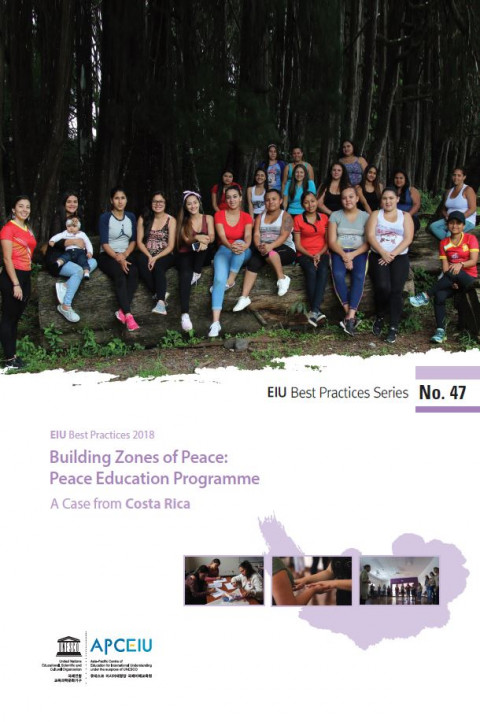 EIU Best Practices Series No. 47: Building Zones of Peace: Peace Education Programme; A Case from Costa Rica Year of publication: 2018 Corporate author: APCEIU Building Zones of Peace (BZP) is a non-formal peace and global citizen education programme created to promote peace and prevent violence in vulnerable urban communities in Costa Rica. The programme aims to encourage participants to develop a critical view of their contexts and explore different ways of taking action to transform the world we live in, and by recognizing how individual and collective efforts have a positive and direct impact in our personal, family and community spheres as well as nationally and globally.In 2017, BZP was conducted to a group of secondary education students ages 13 to 17. This year (2018), participants are young women, ages 18 to 22, all of the mothers who live in extreme poverty. These women have been selected by a governmental office whose aim is to reduce poverty by empowering them. Several resources and networks of support have been created in different areas such as health, employment, childcare and education to achieve this goal. In this sense, our programme was chosen to contribute significantly in this process.
  Kit de Herramientas de incidencia Juvenil sobre ECM Year of publication: 2019 Corporate author: Centro de Asia y el Pacífico de Educación para el Entendimiento Internacional (APCEIU) APCEIU ha publicado el Kit de Herramientas de incidencia Juvenil sobre Educación para la Ciudadanía Mundial (ECM) para proveer a líderes jóvenes con una guía de incidencia sobre ECM. Enfocado en jóvenes activistas que actualmente participan en programas de ECM alrededor del mundo, el kit ofrece una mirada de la ECM e incidencia, así como consejos y herramientas para implementar de forma efectiva una campaña de incidencia en los niveles local y global. Por otro lado, a través de compartir casos de incidencia juvenil en diversos entornos, este kit también brinda ejemplos de la vida real presentados por jóvenes que se interesan en la incidencia sobre ECM.ÍndiceCapítulo 1 - Qué es la Educación por la Ciudadanía Mundial (ECM)?Capítulo 2 - Qué es la incidencia por la ECM?Capítulo 3 - La juventud como un agente activo por la ECMCapítulo 4 - Compartiendo casos de incidencia juvenilCapítulo 5 - Iniciativas juveniles de ECM
  Набор инструментов для молодежи по адвокации обучения для глобального гражданства (GCED) Year of publication: 2019 Corporate author: Азиатско-тихоокеанский центр по воспитанию в духе международного взаимопонимания (APCEIU) APCEIU опубликовал набор инструментов для молодежи по адвокации обучения для глобального гражданства для того, чтобы обеспечить молодежным лидерам руководство по адвокации ОГГ (GCED). Этот набор, предназначен для молодежных активистов, которые в настоящее время участвуют в программах ОГГ (GCED) по всему миру, предлагает обзор ОГГ и информационно-адвокационной деятельности, а также советы и инструменты для эффективной реализации информационно-адвокационной кампании по ОГГ в локальном и глобальном контексте. Кроме того, посредством обмена историй адвокации молодежи в различных областях этот набор также предоставляет примеры из реальной жизни, которые могут быть легко использованы молодежью, заинтересованной в адвокации ОГГ. <Содержание> Набор инструментов для молодежи по адвокации обучения для глобального гражданства (GCED)Глава 1 - Что такое образование для глобального гражданства (ОГГ)?Глава 2. Что такое адвокация ОГГ?Глава 3 - Молодежь как активный агент для ОГГГлава 4 - Обмен историй молодежной адвокацииГлава 5 - Молодежные инициативы по ОГГ
 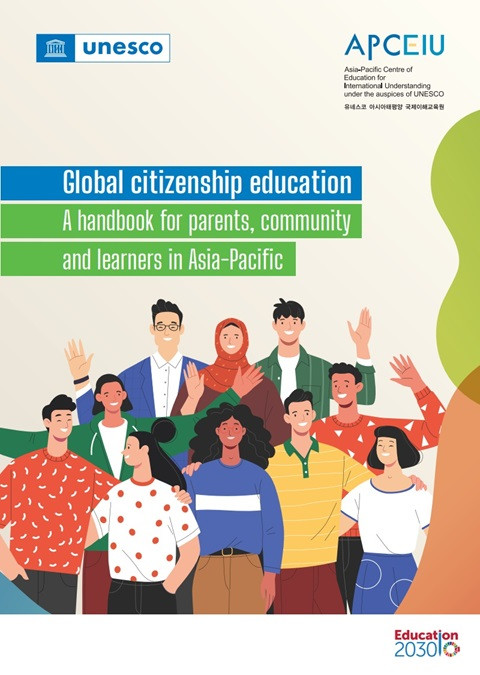 Global Citizenship Education: A Handbook for Parents, Community and Learners in Asia-Pacific Year of publication: 2023 Author: Darla K. Deardorff | Seek Ling Tan Corporate author: UNESCO Bangkok | APCEIU This handbook aspires to engage and involve parents, caregivers and the community to join the mission of developing every learner into a global citizen. To achieve this, parents, caregivers and the community will need to be empowered with the necessary GCED knowledge and skills too. In this handbook, GCED related concepts are introduced, alongside adaptable step-by-step action plans and best practices collected across the Asia-Pacific region to support parents and the community to take action in developing GCED competences in learners.
  Why Contextualization is Critical for Global Citizenship Education Year of publication: 2019 Author: Waqar Shams Corporate author: APCEIU This video is an interview on "Why contextualization is Critical for Global Citizenship Education". It is also under UNESCO's APCEIU "Meet the Global Citizens" series.Do you want to know why Contextualization is Critical for GCED? Check out what Waqar has to say. This is a story of Waqar Shams from Pakistan.In this video you will learn why Contextualization is Critical for GCED and through it, learn to think globally but act locally.
 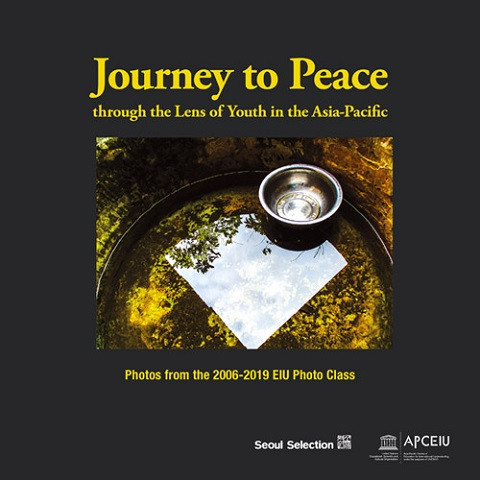 Journey to Peace Through the Lens of Youth in the Asia-Pacific: Photos From the 2006-2019 EIU Photo Class Year of publication: 2020 Corporate author: APCEIU | Seoul Selection Commemorating the 20th Anniversary of APCEIU in 2020, APCEIU published this photography book to reflect on the memorable moments of the EIU (Education for International Understanding) Photo Class. The book contains photos taken by the students and photographers of Asia and the Pacific who have taken part in the Class from 2006 to 2019.
 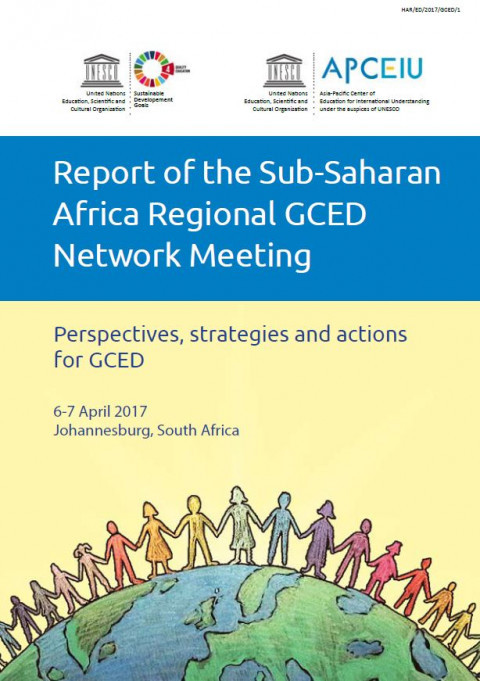 Report of the Sub-Saharan Africa Regional GCED Network Meeting: Perspectives, Strategies and Actions for GCED Year of publication: 2017 Author: Gertie Steukers | Carolyn Medel-Añonuevo | Abdoul Wahab Coulibaly Corporate author: UNESCO Harare | APCEIU An increasingly globalized world has raised questions about what constitutes meaningful citizenship as well as about its global dimensions. Global Citizenship Education (GCED) aims to empower learners to assume active roles to face and resolve global challenges and to become proactive contributors to a more peaceful, tolerant, inclusive and secure world.Education is the most important tool for equipping young people, our future generation of leaders, with the knowledge, skills and attitudes to tackle prejudice and hostility, and to build more peaceful, tolerant and equitable societies. While there are different understandings and manifestations of GCED in different countries, GCED in its various forms is fast becoming an important and necessary component of education systems in sub-Saharan Africa and across the world.The commitment of actors around the world to promoting GCED has contributed highly to the development of GCED, including raising awareness and catalysing action. Furthermore, this has led to the incorporation of GCED in the Sustainable Development Goals (SDGs) through Target 4.7, which captures the clear call for an education that addresses the needs of the twenty-first century, empowering learners to act towards a more peaceful, just, inclusive and sustainable world.GCED reflects the aim of education to go beyond just access and ‘ensure inclusive and equitable quality education and promote lifelong opportunities for all’ in the next fifteen years.UNESCO Regional Office for Southern Africa (ROSA) and the Asia-Pacific Centre of Education for International Understanding (APCEIU) invited partners across Africa for the 2017 Sub-Saharan Africa GCED Regional Network Meeting on 6–7 April 2017 in Johannesburg. The meeting was designed to jumpstart the formation of the Africa Regional GCED Network, map different GCED programmes in the region, and explore areas of possible collaboration in light of solidifying regional action on GCED.
  Global Citizenship Education: A Guide for Policymakers Year of publication: 2017 Author: Swee-Hin Toh | Gary Shaw | Danilo Padilla Corporate author: APCEIU In order to assist UNESCO Member States to integrate and strengthen Global Citizenship Education (GCED) in national education policies, strategies and plans to achieve SDG Target 4.7 effectively, the Asia-Pacific Centre of Education for International Understanding (APCEIU) has developed and published Global Citizenship Education: A Guide for Policymakers (hereafter referred to as the Guide).The Guide is mainly divided into two parts. Part 1 provides an overview of GCED, including the following three sections: the background to GCED; the rationale for GCED; and the concept of GCED. In Part 2, various selection strategies which allow each country to incorporate GCED into its current education system aligned with its own priorities and context, were divided and suggested into five major policy areas as follow: policy review and development; curriculum review and development; capacity building; knowledge creation; sharing and dissemination; and monitoring and assessment.The Guide was first published in English and Korean and additional translations will be available in the future in other languages, including French and Arabic to provide access to more readers worldwide. We hope that the Guide will provide an opportunity for policymakers and practitioners to share their experiences and insights.