
Resources
Explore a wide range of valuable resources on GCED to deepen your understanding and enhance your research, advocacy, teaching, and learning.
2,275 Results found
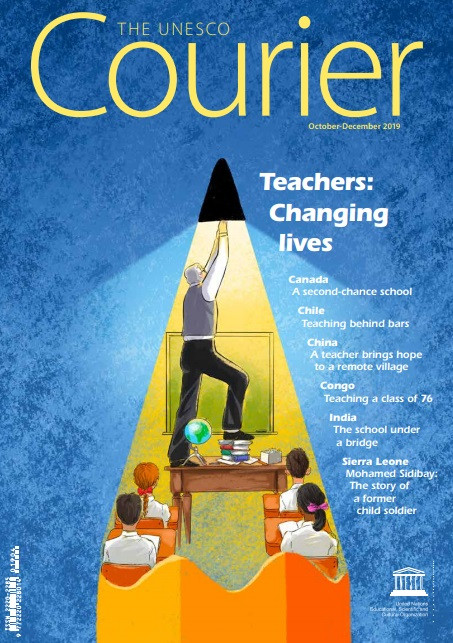 Teachers: changing lives (The UNESCO Courier no. 4, October-December 2019) Year of publication: 2019 Corporate author: UNESCO Certainly, everyone recognizes the key role teachers play. On a personal level, we can all name at least one teacher who made a difference – sometimes to such an extent that it redirected our whole lives. At the international level, the United Nations Sustainable Development Goals (SDGs), Goal 4 in particular, recognize the importance of teachers in the implementation of the Sustainable Development Agenda by 2030. Yet, the profession is being undermined. The development of cognitive neuroscience and the many applications of new technologies in the field of education are forcing the profession to adapt and reinvent itself. Ces profs qui changent le monde (Le Courrier de l'UNESCO 4, octobre-décembre 2019) Year of publication: 2019 Corporate author: Organisation des Nations Unies pour l'éducation, la science et la culture (UNESCO) Certes, tout le monde reconnaît le rôle clé que jouent les enseignants. À titre personnel, chacun peut citer le nom d’au moins un professeur qui a compté, parfois au point de réorienter une vie entière. Sur le plan international, les Objectifs de développement durable (ODD) des Nations Unies, en particulier l’Objectif no 4, reconnaissent l’importance des enseignants dans la mise en œuvre du Programme de développement durable à l’horizon 2030. Pourtant, la profession est mise à mal. Le développement des neurosciences cognitives, les multiples applications des nouvelles technologies dans le domaine de l’éducation obligent la profession à s’adapter, se réinventer. Docentes que cambian el mundo (El Correo de la UNESCO 4, Octubre-Diciembre 2019) Year of publication: 2019 Corporate author: Organización de las Naciones Unidas para la Educación, la Ciencia y la Cultura (UNESCO) Sin duda, todo el mundo reconoce la función esencial que desempeñan los docentes. A título individual, cada uno de nosotros puede mencionar el nombre de al menos un maestro que le influyó decisivamente, a veces hasta el punto de reorientar toda su vida. En el ámbito internacional, los Objetivos de Desarrollo Sostenible (ODS) de las Naciones Unidas, en particular el ODS 4, destacan la importancia del profesorado en la consecución de la Agenda 2030 de desarrollo sostenible.Y, sin embargo, la profesión docente está en crisis. El desarrollo de la neurociencia cognitiva y las múltiples aplicaciones de las nuevas tecnologías en el sector educativo imponen al magisterio la necesidad de adaptarse, de reinventarse.
  Inclusive early childhood care and education: background paper prepared for the International Forum on inclusion and equity in education, every learner matters Year of publication: 2019 Author: Sheldon Shaeffer Corporate author: UNESCO | Open Society Foundation Experiences around the world show that it is necessary to respond to the specific needs of each category of exclusion (sex, poverty, remoteness, ethnicity, language, legal status,and developmental delay anddisability) and to each excluded child–without further marginalizing or labelling them. The overall focus should be on inclusive ECCE policies, strategies, and practicesto remove all barriers, and promote optimal development and learning for all children, build ramps for participation and inclusion, and thereby help all relevant ministriesto become fully inclusive, both in vision and in practices. Only then can we really achieve the goal of good quality education for all. Educación y atención inclusiva para la primera infancia: documento de referencia para el Foro Internacional sobre Inclusión y Equidad en la Educación «Todas y todos los estudiantes cuentan» Year of publication: 2019 Author: Sheldon Shaeffer Corporate author: Organización de las Naciones Unidas para la Educación, la Ciencia y la Cultura (UNESCO) | Open Society Foundation Las experiencias en todo el mundo demuestran que es necesario responder a las necesidades específicas de cada categoría de exclusión (sexo, pobreza, lejanía, etnia, idioma, condición jurídica, retraso en el desarrollo y discapacidad) y de cada niño o niña excluido, sin marginarlos ni etiquetarlos más. La atención debe centrarse en políticas, estrategias y prácticas de AEPI inclusivas para eliminar todos los obstáculos y promover el desarrollo y el aprendizaje óptimos de todos los niños, construir rampas para la participación y la inclusión y, de ese modo, ayudar a todos los ministerios pertinentes a ser plenamente integradores, tanto en la visión como en la práctica. Sólo entonces podremos alcanzar realmente el objetivo de una educación de buena calidad para todos.
 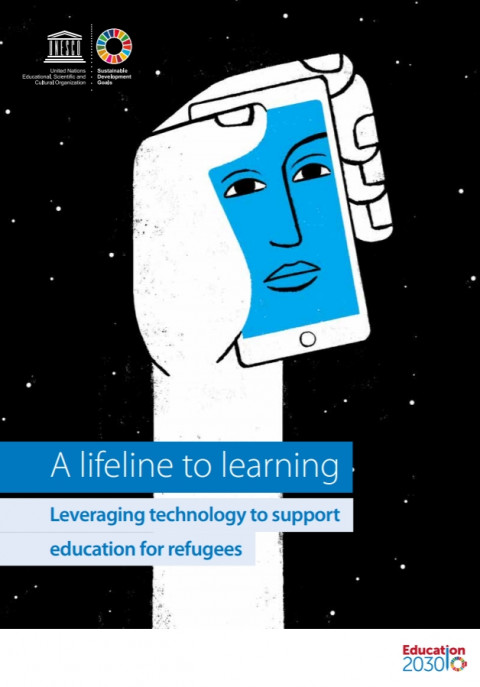 A Lifeline to Learning: Leveraging Mobile Technology to Support Education for Refugees Year of publication: 2018 Corporate author: UNESCO This publication examines the evidence base for key assumptions on using mobile technology to address individual refugees’ learning challenges, broader education system challenges, and challenges to providing refugees with specific levels and types of education. The report presents findings from a review of 117 relevant papers and reports, and lessons drawn from the implementation of 52 projects that use mobile learning for refugees and the actual use of 35 digital apps or platforms. While acknowledging a limited reach, the report identifies effective mobile solutions and organizational strategies that should be scaled up.
  Strengthening accountability in the implementation of SDG4 - Education 2030 Year of publication: 2017 Corporate author: UNESCO SDG4-Education 2030 is a renewed commitment to ensure the right to quality education and the promotion of lifelong learning opportunities, as the foundation for sustainable development. As outlined in the 2015 Incheon Declaration and the 2030 Framework for Action (FfA), strengthened governance, partnerships and accountability are essential in translating global education targets and commitments into effective policy and practice at the national level. The range of partners engaged in education - whether government, schools and teachers, families and communities, civil society organizations, or the business sector – have important roles in this collective societal endeavor. They also each have important responsibilities for which they must be accountable in the collective effort to realize the global commitment to ensure the right to quality education for all. As duty bearers, governments have the primary responsibility to deliver on the right to education, and a central role as custodians of efficient, equitable and effective management and financing of public education. Renforcer l'obligation de rendre des comptes dans le cadre de la mise en oeuvre de l'ODD 4 - Education 2030 Year of publication: 2017 Corporate author: Organisation des Nations Unies pour l'éducation, la science et la culture (UNESCO) L’ODD 4 - Éducation 2030 réaffirme l’engagement mondial garantissant le droit à l’éducation et à l’apprentis-sage tout au long de la vie, qui sert de base au développement durable. Comme le soulignent la Déclaration d’Incheon et le Cadre d’action Éducation 2030 adoptés en 2015, il est indispensable de renforcer la gouver-nance, les partenariats et l’obligation redditionnelle pour concrétiser, dans des pratiques et des politiques nationales, les cibles et les engagements mondiaux relatifs à l’éducation. Qu’il s’agisse de gouvernements, d’établissements scolaires et d’enseignants, de familles et de citoyens, d’organisations de la société civile ou encore du secteur privé, les différents partenaires engagés au service de l’éducation ont un rôle important à jouer dans cette entreprise sociétale collective. Chacun d’entre eux a également d’importantes responsabili-tés dans les efforts menés collectivement pour tenir l’engagement mondial qui vise à garantir à tous le droit à une éducation de qualité, et est à ce titre tenu de rendre des comptes. Porteurs de devoirs, les gouverne-ments sont responsables au premier chef de l’application du droit à l’éducation et ils jouent un rôle central en tant que garants de la gestion et du financement rationnels, équitables et efficaces de l’enseignement public.
  Inclusive Education for Persons with Disabilities - Are We Making Progress? Year of publication: 2019 Corporate author: UNESCO | Leonard Cheshire (UK) The paper ‘Inclusive education for persons with disabilities – Are we making progress?’ has been developed as a background paper for the UNESCO International Forum on inclusion and equity in education – Every learner matters, being held in Cali, Colombia from 11-13 September 2019. The Forum is being organised in commemoration of the 25th anniversary of the passing of the Salamanca Statement and Framework for Action. The paper will explore the global progress towards inclusive education, the successes achieved and learnings observed specifically in countries of the global South. In these countries the concerns of universal access to and retention in education is still a concern for many governments, but large-scale exclusion of children with disabilities (an estimated 32 million or 1 out of 3 are out of school) remains the order of the day and is not always high on government agendas. Educación inclusiva para personas con discapacidades - ¿estamos logrando avances? Year of publication: 2019 Corporate author: Organización de las Naciones Unidas para la Educación, la Ciencia y la Cultura (UNESCO) | Leonard Cheshire (UK) El informe «Educación inclusiva para personas con discapacidades: ¿estamos logrando avances?» ha sido elaborado como documento de referencia para el Foro Internacional sobre Inclusión y Equidad en la Educación UNESCO «Todas y todos los estudiantes cuentan», que se celebrará en Cali (Colombia) del 11 al 13 de septiembre de 2019. El Foro ha sido organizado para conmemorar el 25 aniversario de la aprobación de la Declaración de Salamanca y Marco de Acción sobre Necesidades Educativas Especiales. En este informe se explora el avance mundial hacia la educación inclusiva, los éxitos logrados y las conclusiones observadas específicamente en países del hemisferio sur, donde los problemas en torno al acceso universal a la educación y la continuidad en ella siguen siendo motivo de preocupación para numerosos gobiernos y donde la exclusión a gran escala de niños con discapacidad (se estima que unos 32 millones de niños no están escolarizados, lo que supone 1 de cada 3) sigue estando a la orden del día y no siempre es una prioridad en los programas gubernamentales.