
Resources
Explore a wide range of valuable resources on GCED to deepen your understanding and enhance your research, advocacy, teaching, and learning.
2,275 Results found
 Media Literacy at Your Library: Learning and Prototyping Report Year of publication: 2018 Corporate author: American Library Association (ALA) Media Literacy at Your Library was a project of the American Library Association (ALA) in collaboration with the Center for News Literacy at Stony Brook University (CNL), supported by the John S. and James L. Knight Foundation, the Democracy Fund, and the Rita Allen Foundation as part of the Knight Prototype Fund.Through this project, ALA sought to address a critical need in the field for adult media literacy education, with a focus on news literacy. The goal of the prototype project was to develop media literacy training and complementary resources designed to prepare public library professionals to educate their adult patrons to be informed media consumers.Following a one-day training led by CNL, teams from five public libraries took on the challenges of creating innovative media literacy programs serving their distinct communities. With the goal of making the CNL news literacy curriculum more broadly accessible to the library field, the teams also offered feedback on a series of online trainings based on the in-person training they attended. These five library teams guided and informed ALA and CNL’s understanding and development of prototype resources over the course of the project.
  Psychological Counseling for People with Special Needs: Challenges and Prospects (Conference on Integrative Growth and Development in Special Education: Creating Knowledge for the Futures) Year of publication: 2022 Author: Abdulaziz Ali Alghamdi Corporate author: Umm Al-Qura University | Saudi Arabia. Ministry of Education The study aims to identify the importance of psychological counseling for people with special needs and their families and the challenges facing them and the role of the psychological counselor in guiding them, through literature and studies in this field between (2015–2022). The study concluded that people with special needs have different guiding needs in terms of accepting disability and disorders that arise due to disability and integrating them with society and the resulting challenges that require guidance intervention, which increases the importance of psychological guidance for the study sample and the role of the psychological guide for this group to be familiar with information related to disability, help them to identify the nature of his disability, treatment and fate, and help solve his psychological, social, family and study problems, whether at the level of the individual or his family. Recommendations related to the results of the study were also made. الإرشاد النفسي لذوي الاحتياجات الخاصة : التحديات والآفاق (كتاب أبحاث المؤتمر الدولي للنمو والتطوير التكاملي في التربية الخاصة : تكوين المعرفة للمستقبليات) Year of publication: 2022 Author: Abdulaziz Ali Alghamdi Corporate author: Umm Al-Qura University | Saudi Arabia. Ministry of Education تهدف الدراسة إلى التعرف على أهمية الإرشاد النفسي لذوي الاحتياجات الخاصة وأسرهم والتحديات التي تواجههم ودور المرشد النفسي في إرشادهم من خلال الأدبيات والدراسات في هذا المجال ما بين (2015 - 2022). وقد تم استخدام المنهج الوصفي التحليلي لدراسة موضوع البحث. وخلصت الدراسة إلى أن ذوي الاحتياجات الخاصة تختلف حاجاتهم الإرشادية من حيث تقبل الإعاقة والاضطرابات التي تنشأ بسبب الإعاقة ودمجهم مع المجتمع وما ينشأ عن ذلك من تحديات تحتاج للتدخل الإرشادي مما يزيد من أهمية الإرشاد النفسي لعينة الدراسة ودور المرشد النفسي لهذه الفئة الإلمام بالمعلومات المتعلقة بالإعاقة، ومساعدتهم على التعرف على طبيعة إعاقته وعلاجها ومآلها، والمساعدة في حل مشكلاته النفسية والاجتماعية والأسرية والدراسية سواء على مستوى الفرد أو أسرته. كما تمّ تقديم توصيات مرتبطة بنتائج الدراسة.
 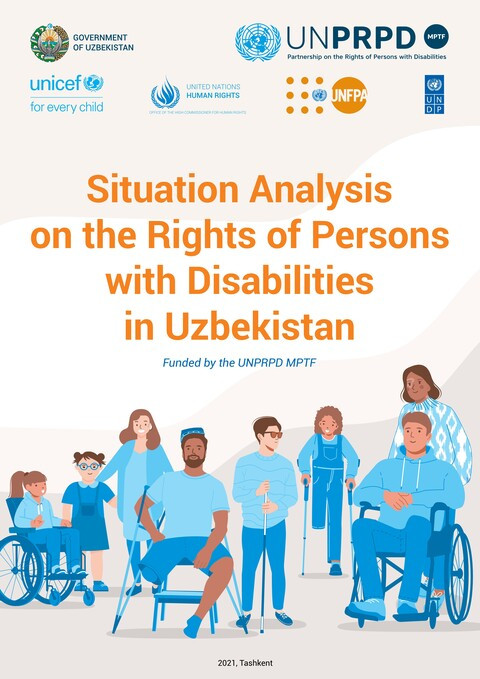 Situation Analysis on the Rights of Persons with Disabilities in Uzbekistan Year of publication: 2021 Corporate author: UNICEF Uzbekistan | United Nations Population Fund (UNFPA) | United Nations Development Programme (UNDP) | UN. Office of the United Nations High Commissioner for Human Rights (UN. OHCHR) This study is based on the results of a situation analysis of children and adults with disabilities conducted in 2019. The ambition of this Situation Analysis is not merely to point at problems but to lay ground for solutions by identifying the opportunities and catalytic forces emerging today. The report looks at the necessary preconditions for realisation of human rights of persons with disabilities, particularly women, girls, and boys with disabilities, such as a robust equality and non-discrimination framework, availability of inclusive and accessible services in the community, disability inclusive financial and coordination mechanisms, transparent monitoring and accountability systems and meaningful participation of persons with disabilities. Анализ ситуации по обеспечению прав лиц с инвалидностью в Узбекистане Year of publication: 2021 Corporate author: UNICEF Uzbekistan | United Nations Population Fund (UNFPA) | United Nations Development Programme (UNDP) | UN. Office of the United Nations High Commissioner for Human Rights (UN. OHCHR) Данное исследование основывается на результатах ситуационного анализа детей и взрослых с инвалидностью, проведенного в 2019 г. Цель данного анализа – не в том, чтобы указать на проблемы, а в том, чтобы заложить основу для их решения путем выявления возможностей и сил содействия, возникающих сегодня. В отчете рассматриваются необходимые предпосылки для реализации прав человека людей с инвалидностью, особенно женщин, девочек и мальчиков с инвалидностью, такие как надежная система обеспечения равенства и недискриминации, наличие инклюзивных и доступных услуг в сообществе, финансовые и координационные механизмы, учитывающие интересы людей с инвалидностью, прозрачные системы мониторинга и отчетности, а также значимое участие людей с инвалидностью.
  Философия независимой жизни: состояние инклюзивного образования в Казахстане (обзорный анализ современных исследований) (Вестник ЕНУ им. Л.Н. Гумилева. Серия: Исторические науки. Философия. Религиоведение; Vol.142, No.1) Year of publication: 2023 Author: Абдина Айнур К. | Уызбаева Анар А. | Жанарстанова Марал Б. Люди с ограниченными возможностями имеют право на полноценное участие в жизни общества. Философия независимой жизни связана с самоопределением, с тем, чтобы люди с ограниченными возможностями решали, что для них лучше. Для преодоления ими барьеров, существующих в социальном пространстве, необходимы не только пандусы, специальное оборудование и обученный персонал, но и изменение отношения людей. Речь идет не о благотворительности, а о правах. Необходимо принятие соответствующих законов, создание полноценно развитой социальной инфраструктуры и дружелюбной окружающей среды. Авторы статьи рефлексируют над понятием «философия независимой жизни», выделяя его ключевой момент – концептуализацию проблем инвалидности и выстраивания адекватного отношения в обществе к людям с ограниченными возможностями здоровья (ОВЗ) и особыми образовательными потребностями (ООП). Центральное место в философии независимой жизни занимает инклюзивный подход. Несомненно, проблема адаптации лиц с ООП к системе образования является одним из актуальнейших вопросов в глобальном дискурсе об инвалидности. В то же время, нельзя утверждать, что исследования в области инклюзивного образования получили достаточно широкое распространение в мировом научном сообществе и образовательном пространстве. Существуют огромные различия между национальными уровнями исследований и их интерпретационными рамками. Для выявления состояния инклюзивного образования в Казахстане, авторами предпринята попытка обзорного анализа современных научных исследований в данной области, проведенных отечественными учеными. Кроме того, делается акцент на еще одном важном моменте инклюзивного образования – на ассистивных технологиях.
 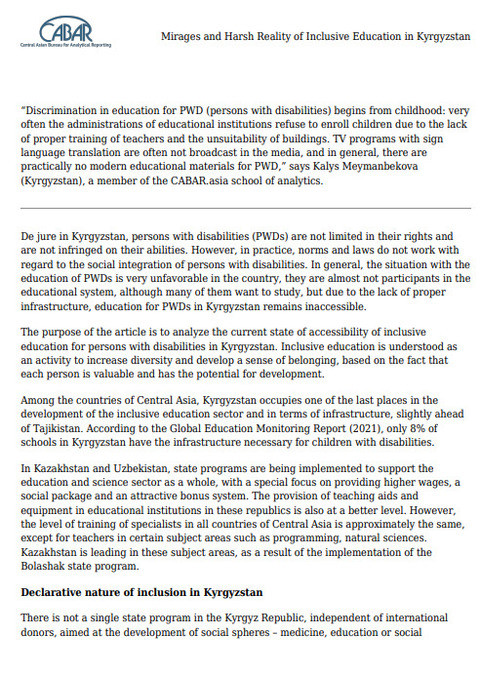 Mirages and Harsh Reality of Inclusive Education in Kyrgyzstan Year of publication: 2022 Author: Kalys Meymanbekova Corporate author: Central Asian Bureau for Analytical Reporting (CABAR) The purpose of the article is to analyze the current state of accessibility of inclusive education for persons with disabilities in Kyrgyzstan. Inclusive education is understood as an activity to increase diversity and develop a sense of belonging, based on the fact that each person is valuable and has the potential for development. Миражи и суровая реальность инклюзивного образования в Кыргызстане Year of publication: 2022 Author: Kalys Meymanbekova Corporate author: Central Asian Bureau for Analytical Reporting (CABAR) Целью статьи является анализ текущего положения доступности инклюзивного образования для ЛОВЗ Кыргызстана. Инклюзивное образование понимается как деятельность по расширению разнообразия и развитию чувства сопричастности, основанная на том, что каждый человек ценен, и у него есть потенциал развития.
  Disability Discrimination in the Digital Realm: How the ICRPD Applies to Artificial Intelligence Decision-Making Processes and Helps in Determining the State of International Human Rights Law (Human Rights Law Reivew; Volume. 23, Issue. 3) Year of publication: 2023 Author: Tetyana Krupiy | Martin Scheinin Scholars have identified challenges to protecting individuals from discrimination in contexts where organisations deploy artificial intelligence decision-making processes. While scholarship on ‘digital discrimination’ is growing, scholars have paid less attention to the impact of the use of artificial intelligence decision-making processes on persons with disabilities. This article posits that while the use of artificial intelligence technology can be beneficial for some purposes, its deployment can also construct a disability. The article demonstrates that the Convention on the Rights of Persons with Disabilities can be interpreted in a manner that confers a wide variety of human rights on persons with disabilities in the context when entities deploy artificial intelligence decision-making processes. The article proposes a test for digital discrimination based on disability and shows how it can be incorporated into the treaty through legal interpretation. Thereafter, it moves to developing an analogous general test for digital discrimination under international human rights law, applicable beyond a catalogue of protected characteristics.
 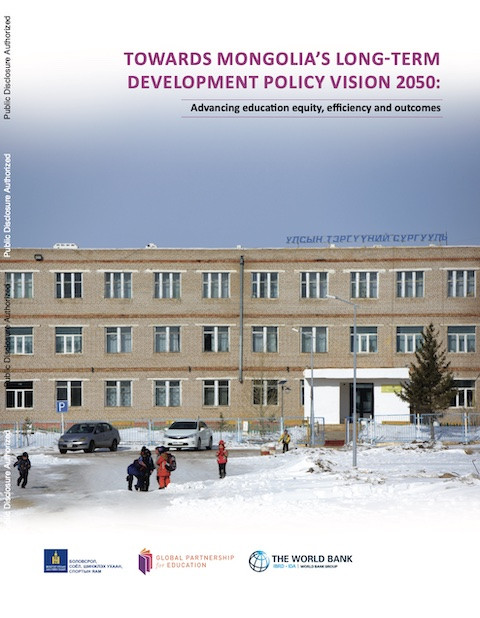 Towards Mongolia’s Long-Term Development Policy Vision 2050: Advancing Education Equity, Efficiency and Outcomes Year of publication: 2020 Corporate author: Mongolia Ministry of Education, Culture, Science and Sports | World Bank This report seeks to synthesize and analyze education outcomes with a view of identifying the main priorities for strengthening the education sector in support of Mongolia’s Sustainable Development Vision 2050. The report highlights data and findings generated from a series of source reports (see bibliography) related to the goals and targets set out in the Vision 2050. The report is composed of six thematic chapters: Access; Equity; Internal Efficiency, Education Cost and Finance; External Efficiency; Management. Each chapter will include an overview of the current situation and recent development with a focus on, key achievements and persistent challenges. As a synthesis report, the information on each topic is not exhaustive but rather seeks to present key findings. Specific activities highlighted in the Vision 2050 have been included at the beginning of each chapter and a complete mapping by activity is annexed (Annex 1. Vision 2050 Chapter mapping). This synthesis report draws on conclusions, finding, data and surveys produced in collaboration with MECSS by the Asian Development Bank, the Global Partnership for Education and the World Bank. The synthesis also draws from key UNESCO reports. The scope, research, and focus of the source reports differ, and precise findings are, on occasions, incongruent however the overall conclusions are fundamentally compatible. Whereas most of the source reports focus on one or two key stages, the synthesis report seeks to extract cross-cutting and/or recurring challenges that have an impact, positive or negative, on equity, efficiency and outcomes which ultimately may contribute to the implementation of Vision 2050. Mongolia’s State Education Policy (2014-2024) states: ‘Education is the main key factor of each citizen’s lifelong support and guarantee of life quality, and of the State’s societal and economical, science and technological development, and guarantee of national independence and security. Mongolian State shall develop education as a leading sector in society’.