
Resources
Explore a wide range of valuable resources on GCED to deepen your understanding and enhance your research, advocacy, teaching, and learning.
2,275 Results found
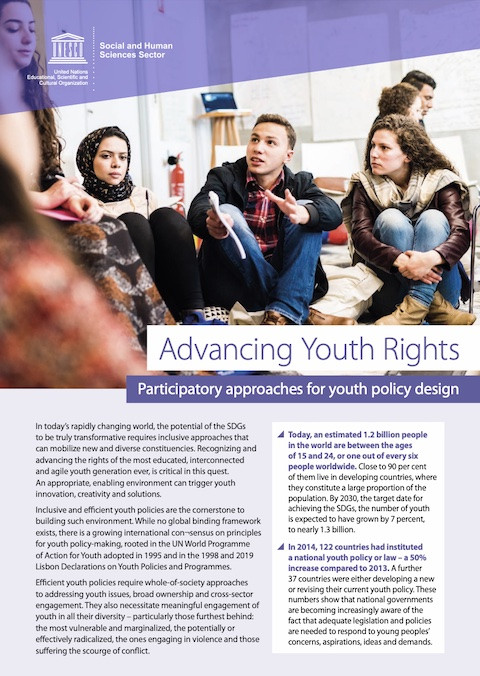 Faire progresser les droits des jeunes: Approches participatives pour la conception des politiques de jeunesse Year of publication: 2019 Corporate author: Organisation des Nations Unies pour l'éducation, la science et la culture (UNESCO) Des politiques de jeunesse inclusives et efficaces sont la pierre angulaire du développement d’un tel environnement. Bien qu’il n’existe pas de cadre mondial contraignant, il y a un consensus international grandissant sur les principes de l’élaboration des politiques de jeunesse, enracinés dans le Programme d’action mondial des Nations Unies pour la jeunesse, adopté en 1995 et dans les Déclarations de Lisbonne de 1998 et 2019 sur les politiques et programmes en faveur de la jeunesse. Pour être efficaces, les politiques en faveur de la jeunesse doivent s’appuyer sur une approche globale de la société pour traiter les problèmes des jeunes, une large appropriation et un engagement intersectoriel. Elles nécessitent également un engagement significatif envers les jeunes dans toute leur diversité - en particulier envers les plus démunis : les plus vulnérables et marginalisés, ceux qui sont potentiellement ou effectivement radicalisés, ceux qui s’engagent dans la violence et ceux qui souffrent des situations de conflit.
 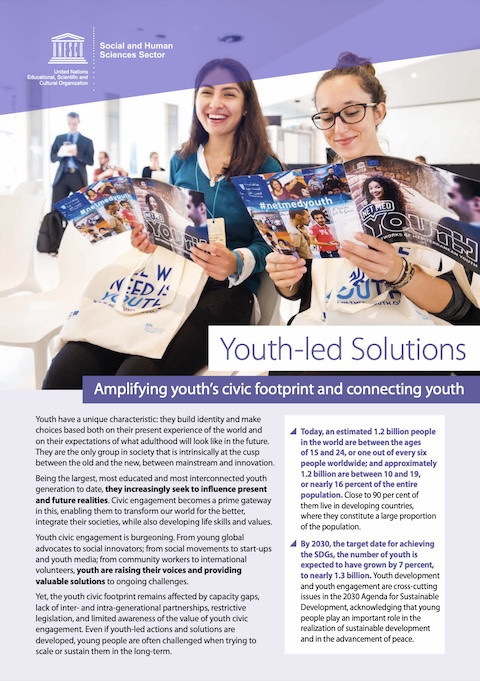 Youth-Led Solutions: Amplifying Youth’s Civic Footprint and Connecting Youth Year of publication: 2019 Corporate author: UNESCO UNESCO believes in the value of youth civic engagement and youth‐led solutions. In line with our Operational Strategy on Youth (2014‐2021), our approach to meaningfully engaging with youth entails working with youth as change‐makers and partners, and not solely as beneficiaries. We apply cutting‐edge approaches and programmes that contribute to shaping an enabling ecosystem for meaningful, effective and sustainable youth civic engagement.
 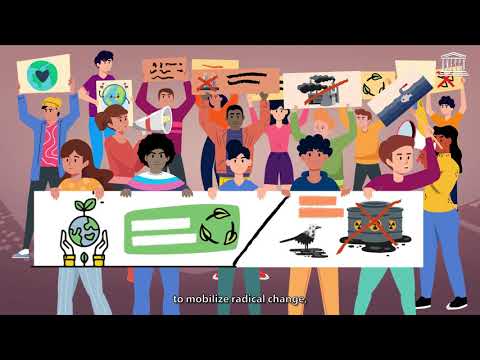 How Can Education Really Contribute to Solving the Climate Crisis? Year of publication: 2020 Corporate author: UNESCO “Debating the Futures of Education” is a video series produced by UNESCO, within the framework of an initiative that seeks to reimagine the futures of education. The purpose of this video is to think about how education can really contribute to solving the climate crisis. Comment l'éducation peut-elle réellement contribuer à résoudre la crise climatique? Year of publication: 2020 Corporate author: Organisation des Nations Unies pour l'éducation, la science et la culture (UNESCO) « Débattre sur les futurs de l'éducation» est une série de vidéos produites par l'UNESCO, dans le cadre d'une initiative visant à réinventer les futurs de l'éducation. Cette vidéo a pour but de réfléchir à la manière dont l'éducation peut réellement contribuer à résoudre la crise climatique.
  UNESCO Green Citizens: A Global Voice for Local Actors of Change Year of publication: 2020 Corporate author: UNESCO UNESCO launches the UNESCO Green Citizens Initiative, a flagship project to support citizen engagement for the planet. The UNESCO Green Citizens campaign echos the global voice of local actors of change, highlighting innovative citizen projects from around the world. UNESCO Green Citizens: Une voix globale pour des acteurs locaux du changement Year of publication: 2020 Corporate author: Organisation des Nations Unies pour l'éducation, la science et la culture (UNESCO) L’UNESCO lance l’initiative UNESCO Green Citizens, un projet phare visant à soutenir l’engagement des citoyens pour la planète. La campagne offre une voix globale aux acteurs locaux du changement, en mettant en lumière des projets citoyens innovants du monde entier.
  Education for Sustainable Development: A Roadmap Year of publication: 2022 Corporate author: UNESCO This roadmap sets out the urgent challenges facing the planet and underlines the implementation of the new Education for Sustainable Development: Towards achieving the SDGs (ESD for 2030) framework, which was adopted with the aim of increasing the contribution of education to building a more just and sustainable world. ESD for 2030 will step up actions on five priority action areas on policy, education environments, building capacities of educators, youth and local level action, stressing further ESD’s key role for the successful achievement of the 17 SDGs and the great individual and societal transformation required to address the urgent sustainability challenges. The roadmap also underlines the key areas of implementation of the ESD for 2030 framework. ESD is widely recognized as an integral element of Agenda 2030, in particular Sustainable Development Goal 4 (SDG 4), and a key enabler of all the other SDGs. 지속가능발전교육(ESD): 로드맵 Year of publication: 2022 Corporate author: 유네스코 보다 공정하고 지속가능한 세상을 만드는 데 교육의 기여를 증진시키고자 채택한 이 로드맵은 세계가 직면한 긴급한 도전 과제를 설명하고, 새로이 수립된 체계인 ‘지속가능발전교육: 지속가능발전목표 달성을 향해’(Education for Sustainable Development: Towards achieving the SDGs), 즉 지속가능발전교육 2030의 이행을 강조한다. 지속가능발전교육 2030은 정책, 교육환경, 교육자 역량 구축, 청년 및 지역사회 차원의 실천이라는 5가지 우선 실천 영역에서의 이행을 강화시킬 것이다. 이들 활동은 17개 SDGs의 성공적인 달성과 더불어, 시급한 지속가능성 관련 도전과제들에 대응하는 데 필요한 개인과 사회의 큰 변혁을 위해 교육이 보다 핵심적인 역할을 담당할 것을 강조한다. 또한 이 로드맵은 지속가능발전교육 2030 체계 이행에서의 핵심 영역들을 강조한다. ESD는 2030 의제, 특히 SDG 4번 목표의 핵심요소이자 여타 SDGs의 핵심 추동력으로서 광범위하게 인식되고 있다.
  لعربية للإدماج الحضري: تعزيز الإدماج الحضري من خلال المشاركة العامة، والوصول إلى المعلومات، والرياضة والتربية على المواطنة وحقوق الإنسان Year of publication: 2020 Author: Kareem Ibrahim | Deena Khalil | Marwa Barakat | Salwa Salman Corporate author: منظمة الأمم المتحدة للتربية والعلم والثقافة (UNESCO) | European Training and Research Centre for Human Rights and Democracy (Austria) | UNESCO Cairo ً ً ـا متسـارع ّ ا، حيـث باتـت تسـتضيف أكـر مـن نصـف سـكان املنطقـة. وتحولـت معظـم املـدن العربيـة ً تشـهد املـدن العربيـة توسـعا حرضي ّـات والثقافـات واألعـراق. وميكـن لهـذه التحـوالت أن تسـهم يف تحقيـق الرخـاء ِبف ّ عـل عوامـل مختلفـة إىل فضـاءات مختلطـة، تتنـوع فيهـا الهوي ًــا محــوره اإلنســان، وتطبيــق سياســات وتدابــر دامجــة مــن شــأنها توفــر الفــرص االجتامعــي بــرط اعتــا ً د مســؤويل املــدن نهجــا حقوقي املتسـاوية لجميـع السـكان. ُقـدم مجموعـة مـن األدوات والنصائـح العمليـة ليسرتشـد بهـا قـادة املـدن عـى هـذه الخلفيـة، يـأيت دليـل املـدن العربيـة لإلدمـاج الحـري لي العربيــة واملســؤولون بالحكومــات املحليــة يف مســعاهم نحــو إقامــة مــدن شــاملة ومســتدامة. ينطلــق الدليــل مــن خــرات وتجــارب املــدن ّ املنتسـبة لتحالـف املـدن العربيـة ضـد ّ العنرصيـة والتمييـز وكراهيـة األجانـب والتعصـب يف تخطيـط وتنفيـذ وتقييـم برامـج ومشـاريع تُعـزز اإلدمـاج الحـري وتتصـدى لإلقصـاء بأشـكاله كافـة. ويركّـز الدليـل عـى أربعـة موضوعـات اعتربتهـا املـدن األعضـاء يف التحالـف مـن ضمـن أولوياتهـا، وهـي: املشـاركة العامـة، والوصـول إىل املعلومـات، والرياضـة مـن أجـل إدمـاج الشـباب، والرتبيـة عـى املواطنـة وحقـوق اإلنسـان. Toolkit for Urban Inclusion in Arab Cities: Cities Promoting Inclusion Through Public Participation, Access to Information, Sport, and Citizenship and Human Rights Education Year of publication: 2020 Author: Kareem Ibrahim | Deena Khalil | Marwa Barakat | Salwa Salman Corporate author: UNESCO | European Training and Research Centre for Human Rights and Democracy (Austria) | UNESCO Cairo Arab cities are witnessing an unprecedented expansion. Home to more than half of the region’s population, Arab cities have transformed into heterogeneous spaces that host diverse identities, cultures, and ethnicities. In order for this transformation to lead to prosperity, city officials must adopt a rights-based, human-centred approach, and implement inclusive policies and measures that provide equal opportunities for all.In this context, the Toolkit for Urban Inclusion in Arab Cities provides Arab city leaders and local government officials with practical tools and advice to guide their efforts towards establishing inclusive and sustainable cities. The Toolkit is based on the real experiences and practices of cities members of the Coalition of Arab Cities against Racism, Discrimination, Xenophobia and Intolerance in planning, implementing and evaluating programs and projects that promote urban inclusion and combat exclusion in all its forms.The Toolkit focuses on four topics of high priority to the Arab Coalition member cities: public participation, access to information, sport for youth inclusion, and citizenship and human rights education.