
Resources
Explore a wide range of valuable resources on GCED to deepen your understanding and enhance your research, advocacy, teaching, and learning.
2,275 Results found
 Manuel des villes arabes pour l’inclusion urbaine: Promouvoir l’inclusion urbaine par la participation publique, l’accès à l’information, le sport, et l’éducation à la citoyenneté et aux droits de l’homme Year of publication: 2020 Author: Kareem Ibrahim | Deena Khalil | Marwa Barakat | Salwa Salman Corporate author: Organisation des Nations Unies pour l'éducation, la science et la culture (UNESCO) | European Training and Research Centre for Human Rights and Democracy (Austria) | UNESCO Cairo Les villes arabes connaissent un développement urbain accéléré qui les a amenées à réunir plus de la moitié de la population régionale. Une combinaison de nombreux facteurs a transformé la majorité des villes arabes en lieux de brassage où abondent les identités, les cultures et les ethnies variées. Ces transformations peuvent contribuer à la réalisation de la prospérité sociale, à condition que les responsables des villes adoptent un programme législatif centré sur les droits de l’homme, et qu’ils mettent en œuvre des politiques et des dispositions susceptibles de réaliser l’inclusion de manière à assurer l’égalité des chances à tous leurs habitants. Dans ce contexte, le Manuel des villes arabes pour l’inclusion urbaine propose un ensemble d’outils et de conseils pratiques susceptibles de servir de guide aux édiles des villes arabes et aux responsables des gouvernements locaux dans leur quête pour la mise en place de villes inclusives et durables. Le Manuel prend pour base les acquis et expériences de la Coalition des villes arabes contre le racisme, la discrimination, la xénophobie et l’intolérance dans la planification, la réalisation et l’évaluation de programmes et de projets pour favoriser l’inclusion sociale et pour s’opposer à l’exclusion sous toutes ses formes. Le Manuel est centré sur quatre questions désignées par les villes membres parmi leurs priorités : La Participation publique, l’Accès à l’information, le Sport pour l’inclusion des jeunes, l’Éducation à la citoyenneté et aux droits de l’homme.
  Reflect–Share–Act: A Guide to Community-based Education for Sustainable Development Year of publication: 2021 Corporate author: UNESCO | UNESCO Bangkok This guidebook aspires to build a community where learning for sustainable development takes place everywhere for everyone as an ongoing practice. It introduces you to Reflect-Share-Act, a process to discover and define sustainable development in your own contexts together with others in your community. The guide compiles resources that can support this learning process, including stories of various communities’ actual experiences of Reflect-Share-Act.
  Human Rights Storytelling: Manual for the Educators Year of publication: 2018 Corporate author: Huristo Project Consortium Huristo project developed a methodology about awareness and advocacy about the European Human Rights Charter as a part of global citizenship education with low skilled adult learners (refugees and migrants living in the city and natives living in rural places). This methodology is based on digital storytelling: participants work on personal narratives illustrating different topics of the charter.The main result for the adult learners are increased digital skills, reading and writing skills, awareness about the Human Rights Charter and European citizenship. The work on the Charter and the personal narratives also improve participants’ analytic media literacy, interpersonal and intercultural skills, but also core skills for employability, such as teamwork, problem solving, learning to learn and communication. Additionally, the adult trainers who are involved increase their teaching skills using digital media and the methodology of digital storytelling in particular.In the HURISTO project trainers start with the stories of the participants, and afterwards the stories are linked to articles of the Charter. To do so, the methodology is using two concepts:1) PHOTOLANGUAGE SET: a set of 30 flashcards for students with photos that illustrate the European Charter of Human Rights. They have been created as a tool to start up conversations about human rights in Europe and the situations in which these rights may be at risk. Based on these discussions and the sharing of stories, each participant chooses one photo out of the flashcards, as a starting point for a digital story. The HURISTO Photolanguage set for educators contains guidelines for educators who want to use it in a human rights digital storytelling workshop with adult learners.2) STORY CIRCLES: in different rounds participants share their stories with the group and develop them together into short stories for their film.
  The Role of Media Literacy in the Promotion Of Common Values and Social Inclusion: Position Paper Year of publication: 2017 Corporate author: All Digital While we live in an increasingly digital society, a significant number of European citizens continue to lack basic digital skills. Media practices have changed, and now we are not only receiving information passively. Anyone can be active in content creation and (re-)produce (dis)information. For example, mobile technology and ubiquitous Internet access allow citizens to produce real time information, including content for mass media (newspapers, TV channels).The production of information and news thus no longer remains in the capacity of journalists, but something within everyone’s capacity. Without the necessary skills, however, the creation of information and news is not always done in a responsible or professional manner. This is only one example of many, highlighting why media literacy is more important than ever.This position paper talks about:the role for media literacy in promoting common values and social inclusion in several ways: resilience, content creation, dissemination, social inclusionthe role of non-formal education in teaching media literacy andgives examples of media literacy programmes and projects across Europeprovides policy recommendations in terms of funding, recognition and promotion.
  Catch-up Programmes: 10 Principles for Helping Learners Catch Up and Return to Learning Year of publication: 2021 Author: Kayla Boisvert Corporate author: Accelerated Education Working Group (AEWG) Due to the COVID-19 pandemic, in which approximately 1.5 billion children and youth (nearly 85% of the world’s learners) were affected by school closures,1 the AEWG anticipates that catch-up programmes will be deployed extensively to meet the needs of learners who missed out on several months to approximately one year of education due to the disruption. Therefore, building on the AEWG’s programme definitions and our expertise in AE and other non-formal or alternative education options that accelerate the acquisition of knowledge and skills, the AEWG developed this set of principles and action points for catch-up programmes.
  Background Document: National Media and Information Literacy (MIL) Policies and Strategies in Albania; 2020-2021 Year of publication: 2021 Corporate author: Albanian Media Institute This background study was conducted in the framework of the project "Building trust in the media in Southeast Europe and Turkey, phase II" supported by UNESCO and the European Union and implemented by the Albanian Media Institute. The project, at this stage of implementation, aims to increase the skills of young people for media and information literacy (MIL) through the integration of the MIL curriculum in the formal education system in Albania. The implementation of the project started in June 2020 and will last until 2022.This document suggests objectives for MIL policies and strategy, which should be extended to formal education (university and pre-university level); in non-formal and informal education thus affecting all members of society with the aim of increasing the level of education on media and information in Albania.
  Overview of Information Literacy Resources Worldwide Year of publication: 2013 Author: Forest Woody Horton Corporate author: UNESCO This publication aims to bring together Information Literacy contributions in forty-two languages from all of the different geographic regions around the world in order to provide inclusive and multilingual Information Literacy resources for Library and Information Science professionals, teachers, researchers, and students.
 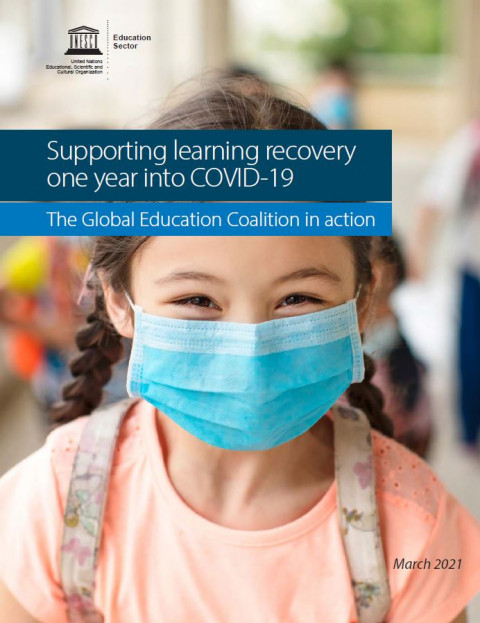 Supporting Learning Recovery One Year into COVID-19: The Global Education Coalition in Action Year of publication: 2021 Corporate author: UNESCO | Global Education Coalition The Global Education Coalition, launched by UNESCO, is a platform for collaboration and exchange to protect the right to education during this unprecedented disruption and beyond.This is the annual report of the Coalition, which builds on the inaugural report published in September 2020, and covers the activity between March 2020 and March 2021.
 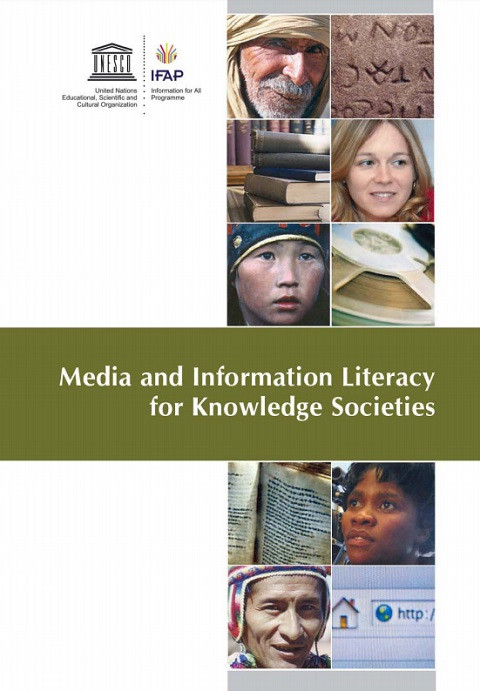 Media and Information Literacy for Knowledge Societies Year of publication: 2013 Corporate author: Interregional Library Cooperation Centre | UNESCO This book includes communications by the participants and other materials of the International Conference on Media and Information Literacy for Knowledge Societies (Moscow, Russian Federation, 24–28 June, 2012), that offered a unique opportunity to identify the key existing challenges in the field, to outline policies and professional strategies for the advocacy of media and information literacy (MIL), to promote best practices and strengthen international cooperation among various stakeholders. It also contains the Media and Information Literacy Competencies Catalogue prepared by The Modern Poland Foundation (Warsaw, Poland).
 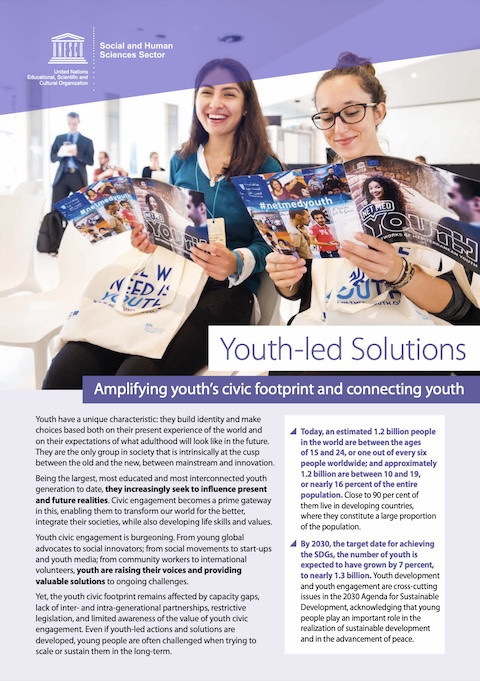 Soluciones impulsadas por las juventudes: Ampliar la huella cívica de las personas jóvenes y ponerles en contacto Year of publication: 2019 Corporate author: Organización de las Naciones Unidas para la Educación, la Ciencia y la Cultura (UNESCO) La Organización de las Naciones Unidas para la Educación, la Ciencia y la Cultura (UNESCO) cree en el valor de la participación cívica de las personas jóvenes y en las soluciones que generan . Con el fin de colaborar de forma productiva con las juventudes, trabajamos con ellas considerándolas generadoras del cambio y socias, no meras beneficiarias, en consonancia con nuestra Estrategia Operacional sobre la Juventud (2014-2021). Aplicamos estrategias y programas de punta que contribuyen a conformar un ecosistema propicio para una participación cívica significativa, eficaz y sostenible de las personas jóvenes.