
Resources
Explore a wide range of valuable resources on GCED to deepen your understanding and enhance your research, advocacy, teaching, and learning.
2,255 Results found
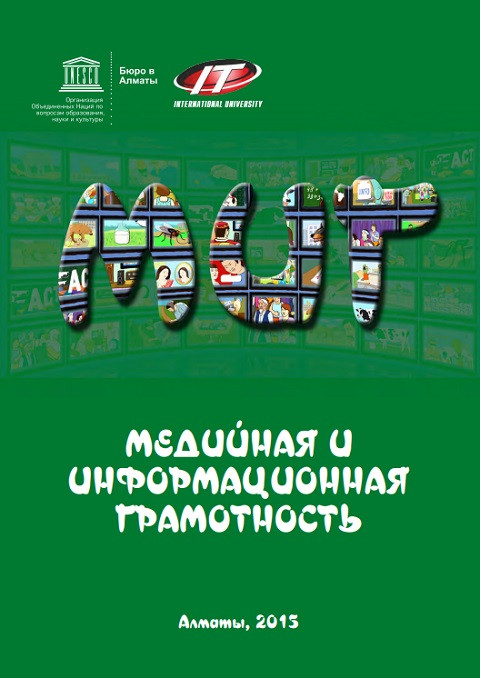 Медийная и информационная грамотность Year of publication: 2015 Corporate author: Организация Объединенных Наций по вопросам образования, науки и культуры (UNESCO) Данный сборник содержит отчеты четырех исследований по вопросам религии и демократии, проведенных в рамках проекта International Alert "Конструктивные диалоги по религии и демократии". Исследования были проведены молодыми специалистами, обученными в рамках деятельности проекта в 2017 и 2018 гг.
 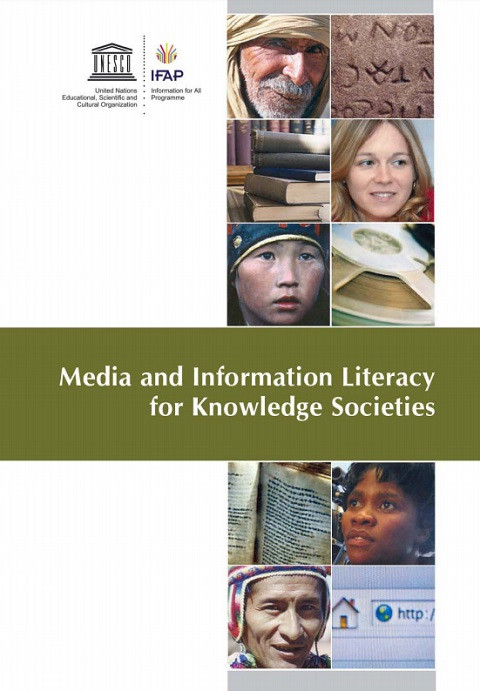 Медиа- и информационная грамотность в обществах знания Year of publication: 2013 Corporate author: Interregional Library Cooperation Centre | UNESCO Издание подготовлено на основе материалов Международной конференции «Медиа- и информационная грамотность в обществах знания», состоявшейся в Москве 24–28 июня 2012 г. в рамках председательства России в Межправительственном совете Программы ЮНЕСКО «Информация для всех».
  Background Document: National Media and Information Literacy (MIL) Policies and Strategies in Albania; 2020-2021 Year of publication: 2021 Corporate author: Albanian Media Institute | European Union (EU) | UNESCO This background study was conducted in the framework of the project "Building trust in the media in Southeast Europe and Turkey, phase II" supported by UNESCO and the European Union and implemented by the Albanian Media Institute. The project, at this stage of implementation, aims to increase the skills of young people for media and information literacy (MIL) through the integration of the MIL curriculum in the formal education system in Albania. The implementation of the project started in June 2020 and will last until 2022. This document suggests objectives for MIL policies and strategy, which should be extended to formal education (university and pre-university level); in non-formal and informal education thus affecting all members of society with the aim of increasing the level of education on media and information in Albania.
  Reflect–Share–Act: A Guide to Community-based Education for Sustainable Development Year of publication: 2021 Corporate author: UNESCO This guidebook aspires to build a community where learning for sustainable development takes place everywhere for everyone as an ongoing practice. It introduces you to Reflect-Share-Act, a process to discover and define sustainable development in your own contexts together with others in your community. The guide compiles resources that can support this learning process, including stories of various communities’ actual experiences of Reflect-Share-Act.
 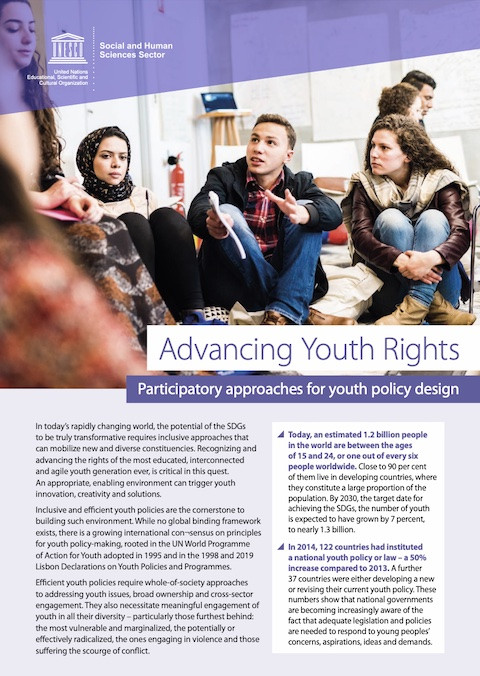 Advancing Youth Rights: Participatory Approaches for Youth Policy Design Year of publication: 2019 Corporate author: UNESCO Inclusive and efficient youth policies are the cornerstone to building such environment. While no global binding framework exists, there is a growing international con¬sensus on principles for youth policy-making, rooted in the UN World Programme of Action for Youth adopted in 1995 and in the 1998 and 2019 Lisbon Declarations on Youth Policies and Programmes. Efficient youth policies require whole-of-society approaches to addressing youth issues, broad ownership and cross-sector engagement. They also necessitate meaningful engagement of youth in all their diversity – particularly those furthest behind: the most vulnerable and marginalized, the potentially or effectively radicalized, the ones engaging in violence and those suffering the scourge of conflict. Promover los derechos de las personas jóvenes: Enfoques participativos para diseñar políticas de juventud Year of publication: 2019 Corporate author: Organización de las Naciones Unidas para la Educación, la Ciencia y la Cultura (UNESCO) Para crear este entorno, es esencial contar con políticas públicas de juventud inclusivas y eficientes. Si bien no existe un marco vinculante a nivel mundial, existe un consenso internacional cada vez mayor en lo que respecta a los principios que deben guiar la formulación de políticas de juventud. Dicho consenso dimana del Programa de Acción Mundial de las Naciones Unidas para los Jóvenes, aprobado en 1995, y de las Declaraciones de Lisboa sobre Políticas y Programas relativos a la Juventud de 1998 y 2019. Para que las políticas públicas de juventud sean eficientes, los enfoques deben englobar a toda la sociedad para abordar los problemas de la juventud y contar con una colaboración intersectorial. También se requiere la verdadera participación e inclusión las juventudes en toda su diversidad incluyendo quienes que han quedado atrás: jóvenes en situación de vulnerabilidad, marginado/as, que podrían radicalizarse o ya lo han hecho, que cometen actos violentos y quienes sufren el flagelo de los conflictos. Faire progresser les droits des jeunes: Approches participatives pour la conception des politiques de jeunesse Year of publication: 2019 Corporate author: Organisation des Nations Unies pour l'éducation, la science et la culture (UNESCO) Des politiques de jeunesse inclusives et efficaces sont la pierre angulaire du développement d’un tel environnement. Bien qu’il n’existe pas de cadre mondial contraignant, il y a un consensus international grandissant sur les principes de l’élaboration des politiques de jeunesse, enracinés dans le Programme d’action mondial des Nations Unies pour la jeunesse, adopté en 1995 et dans les Déclarations de Lisbonne de 1998 et 2019 sur les politiques et programmes en faveur de la jeunesse. Pour être efficaces, les politiques en faveur de la jeunesse doivent s’appuyer sur une approche globale de la société pour traiter les problèmes des jeunes, une large appropriation et un engagement intersectoriel. Elles nécessitent également un engagement significatif envers les jeunes dans toute leur diversité - en particulier envers les plus démunis : les plus vulnérables et marginalisés, ceux qui sont potentiellement ou effectivement radicalisés, ceux qui s’engagent dans la violence et ceux qui souffrent des situations de conflit.
 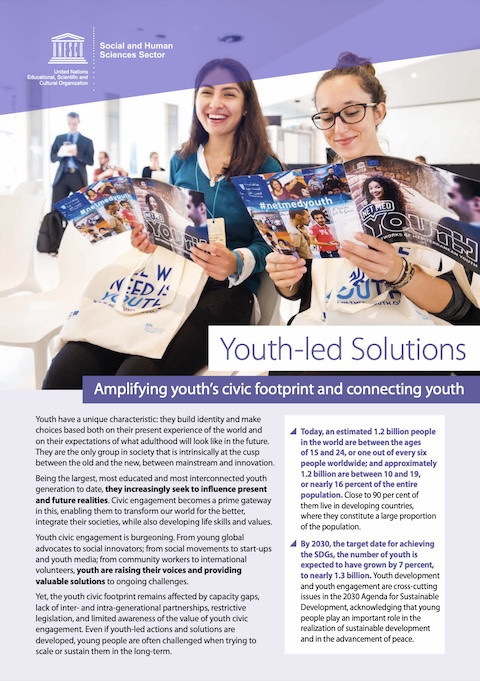 Youth-Led Solutions: Amplifying Youth’s Civic Footprint and Connecting Youth Year of publication: 2019 Corporate author: UNESCO UNESCO believes in the value of youth civic engagement and youth‐led solutions. In line with our Operational Strategy on Youth (2014‐2021), our approach to meaningfully engaging with youth entails working with youth as change‐makers and partners, and not solely as beneficiaries. We apply cutting‐edge approaches and programmes that contribute to shaping an enabling ecosystem for meaningful, effective and sustainable youth civic engagement.
 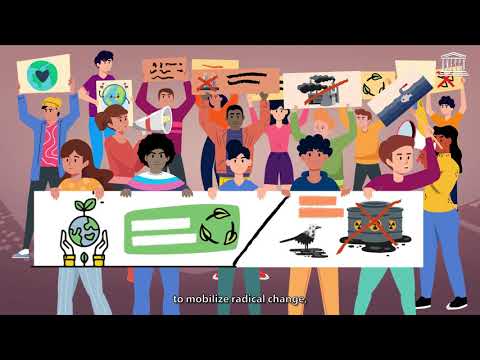 How Can Education Really Contribute to Solving the Climate Crisis? Year of publication: 2020 Corporate author: UNESCO “Debating the Futures of Education” is a video series produced by UNESCO, within the framework of an initiative that seeks to reimagine the futures of education. The purpose of this video is to think about how education can really contribute to solving the climate crisis. Comment l'éducation peut-elle réellement contribuer à résoudre la crise climatique? Year of publication: 2020 Corporate author: Organisation des Nations Unies pour l'éducation, la science et la culture (UNESCO) « Débattre sur les futurs de l'éducation» est une série de vidéos produites par l'UNESCO, dans le cadre d'une initiative visant à réinventer les futurs de l'éducation. Cette vidéo a pour but de réfléchir à la manière dont l'éducation peut réellement contribuer à résoudre la crise climatique.