
Resources
Explore a wide range of valuable resources on GCED to deepen your understanding and enhance your research, advocacy, teaching, and learning.
2,255 Results found
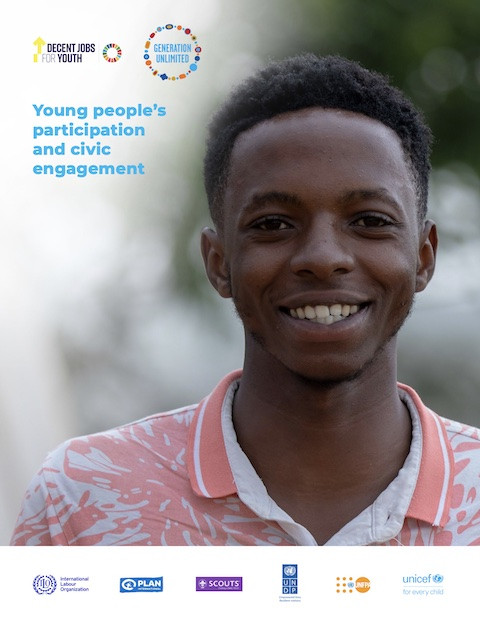 Young People’s Participation and Civic Engagement Year of publication: 2020 Corporate author: Generation Unlimited | Global Initiative on Decent Jobs for Youth The aim of this guide is to support the Generation Unlimited strategic priority to “Equip young people as problem-solvers and engaged members of society, helping to create a better world”, through providing evidence and guidance that has the potential to improve young people’s participation and civic engagement. This guide will identify successful strategies that can increase young people’s civic participation and boost the knowledge, skills, attitudes and values crucial for future civic engagement. It will identify structures that are likely to amplify young people’s voices in decision-making and benefit local communities.
  Building Knowledge Exchange Partnerships: Dialogues Across Europe Year of publication: 2020 Corporate author: Bridge 47 This publication ‘Building Knowledge Exchange Partnerships Dialogues Across Europe’ shares some of the experiences learned from this area of the Bridge 47 project.The Knowledge Exchange Partnerships hosted expert events, on site and online, carried on networking and exchange, disseminated information about GCE on other platforms and collectives, and came together for specific activities, such as workshops, webinars, publications, with the support of the larger Bridge 47 network.
  Achieving SDG4 Through a Human Rights Based Approach to Education: World Development Report 2018 Background Paper Year of publication: 2018 Author: Kate Moriarty Corporate author: World Bank Quality education is a critical dimension for the achievement of sustainable development. The renewed political commitment set out in sustainable development goal 4 (SDG4) is an opportunity to ensure strong coherence between education policy and the right to education first articulated more than 70 years ago. This paper presents the results of a desk-based study on a human rights-based approach to education (HRBAE) in the context of SDG4. It explores the ways in which such an approach can guide policy, planning, and the delivery of education in observance with agreed international frameworks providing for the right to education. The paper argues that the human rights conventions on the right to education are not passive instruments designed to remain only at the level of discourse but, as legal obligations, require action from the state and should be central in the development of education services, including in the context of large scale displacement and crisis. This paper outlines the legally binding commitments of the right to education. It considers how these can be applied practically through a HRBA-E to address the continuing barriers to access and completion of quality education and learning.
 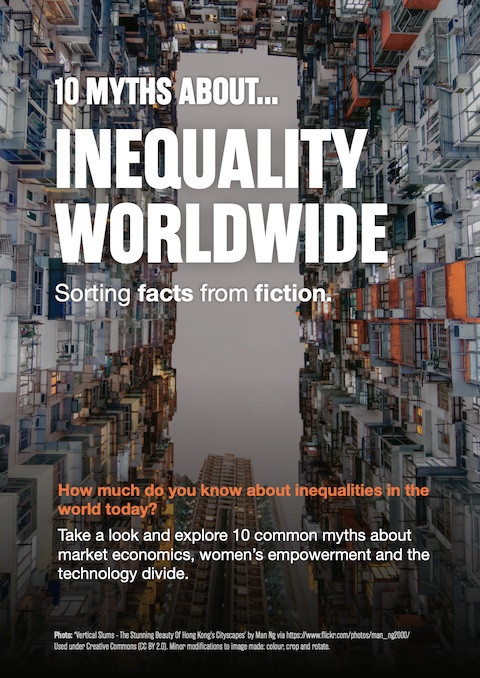 10 Myths About... Inequality Worldwide: Sorting Facts From Fiction Year of publication: 2021 Author: Colm Regan Corporate author: Irish Aid | DevelopmentEducation.ie This material explores 10 common myths about market economics, women’s empowerment and the technology divide. This pocket-size booklet includes: Why does thinking about inequality matters 10 short myths about the economics, gender equality and the role of technological solutions to inequalities Links to the Sustainable Development Goals References per each myth following a fact/fiction and explainer approach
 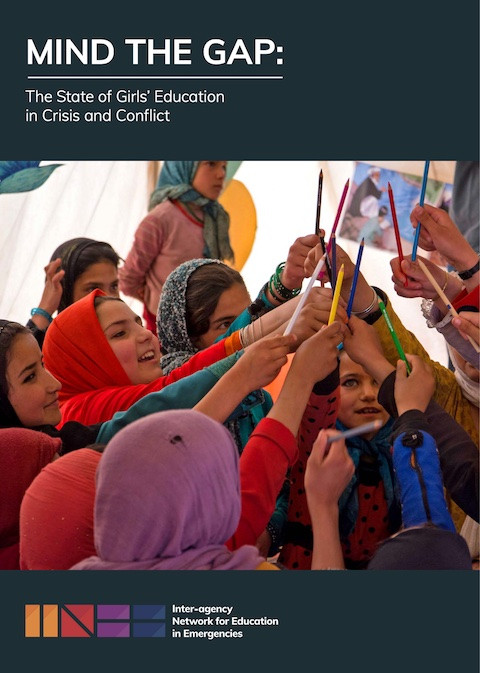 Mind the Gap: The State of Girls’ Education in Crisis and Conflict Year of publication: 2021 Corporate author: Inter-agency Network for Education in Emergencies (INEE) This report summarizes progress, gaps, challenges and opportunities in improving education and training for girls and women affected by conflict and crisis. The report aims to support the Charlevoix Declaration on Quality Education’s commitment to enhance the evidence base and monitor progress toward gender-equitable education in crises. The report draws from data on 44 crisis-affected countries, from recent research, and from a set of case studies of interventions in a range of crisis-affected contexts.
 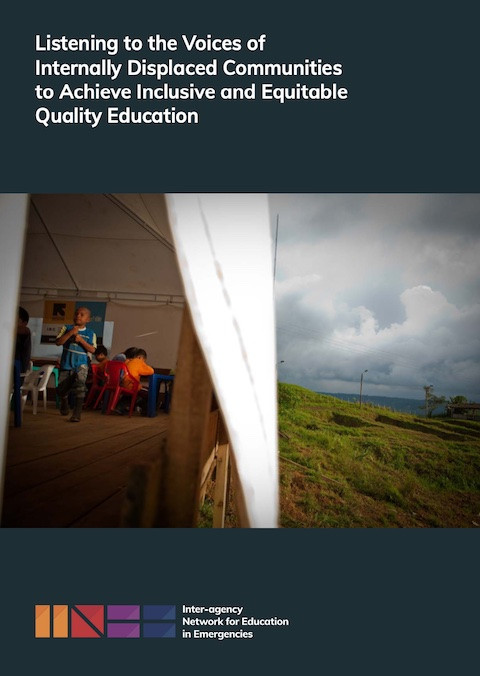 Listening to the Voices of Internally Displaced Communities to Achieve Inclusive and Equitable Quality Education Year of publication: 2021 Author: Caroline Keenan Corporate author: Inter-agency Network for Education in Emergencies (INEE) This paper outlines the real-life day-to-day challenges young IDPs experience when seeking access to quality education, which is fundamental to their healthy development and future life chances. It reflects the perspectives of teachers who have been displaced, and the challenges they have faced both personally and professionally in attempting to support the learning of children and young people in their communities. Young IDPs and internally displaced teachers shared these experiences in a series of five roundtable events hosted by the Inter-agency Network for Education in Emergencies (INEE) in March and April 2021. The paper also provides insights from other roundtable participants, including education in emergencies (EiE) practitioners, government representatives, United Nations (UN) staff, members of international non-governmental organizations (INGOs) and local civil so- ciety, and other stakeholders who are working to support access to education in displaced communities. They all are calling for taking urgent and concrete action to ensure access to quality education for internally displaced children and young people. The United Nations Secretary-General’s High-Level Panel has a unique opportunity to influence the changes needed to achieve this. The recommendations made in the panel’s final report to the Secretary-General and United Nations Member States will be critical to the future outcomes of millions of children and young people around the world.
  Online Expression: eMedia Year of publication: 2021 Corporate author: e-Media project Consortium | Erasmus+ The handbook on Online Expression gives an insight on what is online expression, and intends to promote a more creative, active and wise use of the web, exploring the opportunities given not only by social media and blogs. The aim of the handbook is to help teachers guide young people to hone their online expression skills by explaining how to be proactive in their online expressions and less reactive, to become a digital prosumer and not a consumer. The hanbook focuses on the following elements that characterizes online active participation: The creation of relationships; The building of a community or the fact of representing a community; The collective interest; The intention to produce a change, to influence society.
  연극을 통한 민주 시민 교육 방법 (2019 문화예술교육 유관학회 연계 ‘작은 연구’ - 서울어젠다 예술교육 목표 3. 예술교육의 사회적 가치 확산성을 중심으로) Year of publication: 2019 Author: 이화식 Corporate author: 한국예술경영학회 | 한국문화교육학회 본 자료는 2019 문화예술교육 유관학회 연계 '작은 연구’에서 발췌한 '연극을 통한 민주 시민 교육 방법' 연구자료이다. 본 연구는 연극 활동을 통하여 민주시민의 가치를 함양하는 민주 시민교육의 모형을 제시하며, 시민교육이라는 주제의 특성을 반영하여 학습자가 실제 생활과 유사한 환경에서 민주적인 가치를 체험하고 구성하며 생활에서 적용할 수 있는 교육 방법을 모색하는 것을 목적으로 한다. 본 저작물은 한국예술경영학회, 한국문화교육학회에서 2019년 작성하여 공공누리 제4유형으로 개방한 ‘연극을 통한 민주 시민 교육 방법(이화식)'을 이용하였으며 해당 저작물은 한국문화예술교육진흥원 arte 라이브러리 홈페이지(lib.arte.or.kr)에서 무료로 다운받으실 수 있습니다.
 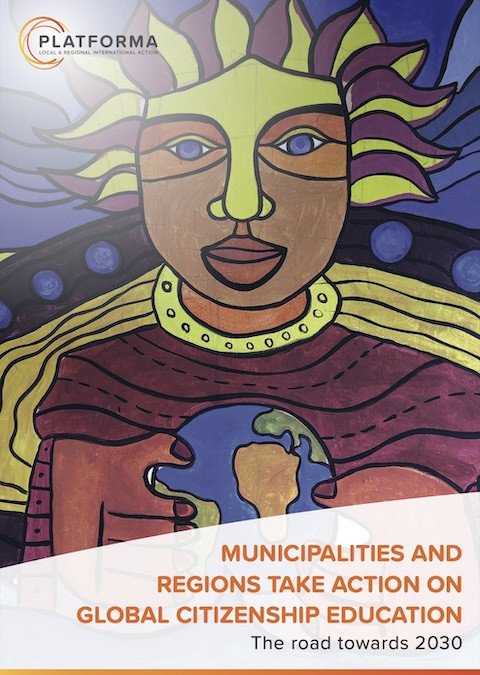 Municipalities and Regions Take Action on Global Citizenship Education: The Road Towards 2030 Year of publication: 2021 Author: Aurèle Destrée | Tereza Čajková Corporate author: PLATFORMA | European Union (EU) Development Education and Awareness Raising (DEAR)/Global Citizenship Education (GCE) can cultivate the spirit of the 2030 Agenda because it helps acquiring missing knowledge on global interconnections and creates spaces for enquiries.Whilst old constraints still remain and new challenges are appearing, local and regional governments continue to innovate, experiment and work hand in hand with key partners, including with their peers across the globe, to find new solutions and achieve their ambitions.Discover in this publication how local and regional governments are active in supporting learning and fostering changes in a context of socio-economic recovery plans. Actions des municipalités et des régions en faveur de l'éducation à la citoyenneté mondiale: En route vers 2030 Year of publication: 2021 Author: Aurèle Destrée | Tereza Čajková Corporate author: PLATFORMA | EU L’éducation au développement et la sensibilisation (DEAR) et l’éducation à la citoyenneté mondiale (ECM) soutiennent et alimentent l’esprit de l’Agenda 2030 car elles permettent d’acquérir les connaissances manquantes sur les interconnexions mondiales et de créer des espaces de recherche.Alors que d’anciennes contraintes subsistent et que de nouveaux défis apparaissent, les gouvernements locaux et régionaux continuent d’innover, d’expérimenter et de travailler de concert avec des partenaires clés, notamment avec leurs homologues du monde entier, pour trouver de nouvelles solutions et concrétiser leurs ambitions.Découvrez dans la présente publication comment les gouvernements locaux et régionaux s’emploient à soutenir l’apprentissage et à favoriser les changements dans un contexte de plans de relance socio-économique.