
Resources
Explore a wide range of valuable resources on GCED to deepen your understanding and enhance your research, advocacy, teaching, and learning.
2,255 Results found
 Addressing Anti-semitism in Schools: Training Curriculum for School Directors Year of publication: 2020 Corporate author: UNESCO | OSCE. Office for Democratic Institutions and Human Rights (ODIHR) This OSCE/ODIHR and UNESCO co-publication aims to help school directors to prevent and respond to anti-Semitism. The curriculum, intended for school director trainers, is designed to be comprehensive, robust, practical and adaptable. It suggests concrete ways to address anti-Semitism and counter prejudice in and through education, while promoting human rights, global citizenship education, and gender equality.The co-publication is part of a series of four training curricula, designed for trainers of (1) primary school teachers, (2) secondary school teachers, (3) vocational school teachers, and (4) school directors.
  Asia-Pacific Education 2030: SDG 4 Midterm Review Year of publication: 2024 Corporate author: UNESCO Institute for Statistics (UIS) | UNESCO Bangkok This publication marks the conclusion of the collaborative national midterm reviews of SDG 4 achievement in the Asia-Pacific. More importantly, it represents the beginning of the final sprint to the 2030 finish line. It also serves as a comprehensive analytical and policymaking tool for all stakeholders in the region to reflect and be better prepared for the second half of the journey. At the midway point of implementing the Education 2030 Agenda, we are observing both challenges and progress in achieving Sustainable Development Goal 4 (SDG 4) in the Asia-Pacific. The region, overall, has made advances in reaching the globally and regionally most important targets under SDG 4, yet it is still far from delivering the common commitment of the Education 2030 Agenda, to ‘ensure inclusive and equitable quality education and promote lifelong learning opportunities for all’. Eight years into implementation, the Asia-Pacific has shown progress, especially in improving access to lower levels of basic education, as well as expanding early childhood education (ECE). Across most subregions of Asia and the Pacific, over 95% of primary school students complete primary education within the expected timeframe, while more than 80% of children one year before the official primary entry age are enrolled in organized early childhood education. However, participation in education is only one part of the puzzle, and the quality of learning, evidenced by limited data for the Asia-Pacific region on learning outcomes, remains concerning. More than half of students in Eastern and South-Eastern Asia do not reach the minimum proficiency level in mathematics at the end of lower secondary education. Overall and from a regional perspective, with priorities having accelerated in ECE, primary education reaching universal participation, and higher education being consistently regarded as prestigious to accomplish, secondary education is currently the weakest link apart from the chronically undervalued technical vocational education and training path. Fulfilling our commitment to the Education 2030 Agenda and leaving no one behind is not an easy endeavour and we need everyone on board in this unprecedented, yet necessary feat. This publication is meant to facilitate taking stock of the current situation and accelerate focused advances on the most relevant education topics for the Asia-Pacific region.
  Schools and war: urgent agendas for comparative and international education Year of publication: 2005 Author: Lynn Davies Corporate author: Taylor & Francis This paper looks first at the contributions that education makes to conflict, through the reproduction of inequality and exclusion, through perpetuation of ethnic or religious divisions, through its acceptance of dominant aggressive masculinities, through selection, competition and fear, and through distorted curricular emphases on narrow cognitive areas of learning. However, the paper also outlines some ‘possibilities for hope’, such as resilient schools, the impact of peace education initiatives and the rise of global citizenship education. Schools and war: urgent agendas for comparative and international education Year of publication: 2005 Author: Lynn Davies Corporate author: Taylor & Francis Cet article examine en premier lieu les contributions de l'éducation aux conflits, à travers la reproduction de l'inégalité et de l’exclusion, la perpétuation des divisions ethniques ou religieuses, l’acceptation de la dominance de l’agressivité masculine ; à travers la sélection, la compétition et la peur, et à travers une déformation des programmes scolaires mettant l’accent sur des zones cognitives étroites de l'apprentissage. Toutefois, le document décrit également quelques « notes positives », telles que les écoles de la résilience, l'impact des initiatives de l'éducation à la paix et l’importance croissante donnée à l'éducation à la citoyenneté mondiale.
 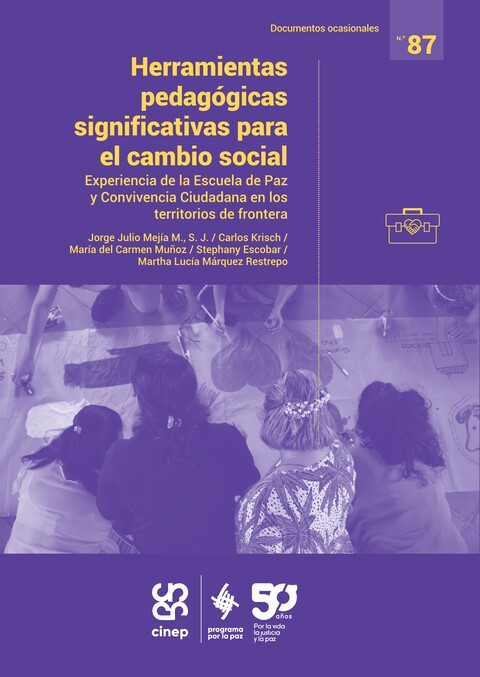 Significant Pedagogical Tools for Social Change Year of publication: 2023 Author: Jorge Julio Mejía | Carlos Krisch | Sthepany Escobar | Martha Lucía | Márquez Restrepo | María Del Carmen Muñoz Corporate author: Center for Research and Popular Education / Program for Peace (CINEP/PPP) This document includes significant pedagogical tools to promote processes of social change through training experiences for twelve years in territories on the Colombian-Venezuelan border. Through workshops and activities, participants have experienced transformations in attitudes and practices that have been useful for understanding the border as a shared space. Herramientas pedagógicas significativas para el cambio social Year of publication: 2023 Author: Jorge Julio Mejía | Carlos Krisch | Sthepany Escobar | Martha Lucía | Márquez Restrepo | María Del Carmen Muñoz Corporate author: Center for Research and Popular Education / Program for Peace (CINEP/PPP) En este documento se recogen las herramientas pedagógicas significativas para promover procesos de cambio social a través de experiencias formativas durante doce años en territorios de la frontera colombo-venezolana. Mediante talleres y actividades, los participantes han experimentado transformaciones en actitudes y prácticas que les han resultado útiles para comprender la frontera como un espacio compartido.
 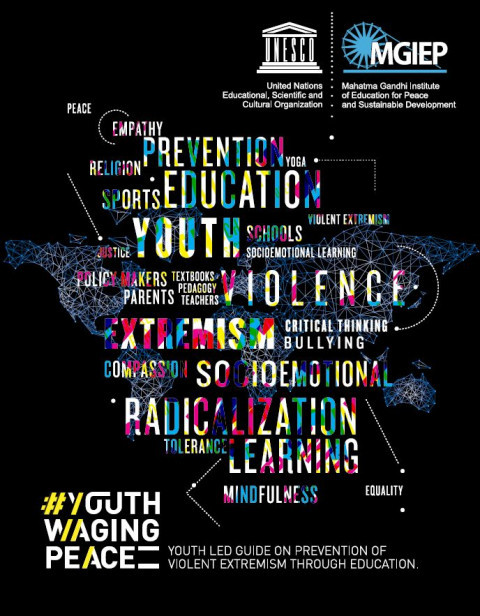 Youth Led Guide on Prevention of Violent Extremism through Education Year of publication: 2017 Author: Carolyn Nash | Yulia Nesterova | Kenneth Primrose | Wing Yu Alice Chan | Rios, Paul A. Chan | María José Velásquez Flores | Aniqah Zowmi Corporate author: Mahatma Gandhi Institute of Education for Peace and Sustainable Development (MGIEP) In September 2016, the education sector from the UNESCO headquarters and the UNESCO category 1 research Institute, the UNESCO Mahatma Gandhi Institute of Education for Peace and Sustainable Development(MGIEP) organised the first International Conference on Prevention of Violent Extremism through Education: Taking Action, in New Delhi, India. The usual plethora of reports and guides produced by experts on the subject, roundtables and expert panels were organised.But something different also happened. UNESCO MGIEP brought 50 youth from across the world rigorously selected through six week online discussion on the subject to participate in a first of its kind, “Talking Across Generations on Education (TAGe)” event. This event organised as a plenary session—not a side or lunch event—brought together these youth in a non-hierarchical “flat” dialogue with about 12 senior policymakers on the challenges and opportunities the youth see in preventing violent extremism through education.The conference culminated with the presentation of a “Youth Action Plan” containing three clear tangible action points. One action point was the development of a youth-led guide on Prevention of Violent Extremism through Education. This Guide is the result of that call to action.The Institute circulated a global call to youth who were willing to take up the challenge of producing the Guide. After a rigorous search based on a well-defined set of criteria, two coordinating lead authors were identified. These authors were then tasked to find the remaining authors who they saw fit to contribute to the Guide and this team then reached out to the wider group of youth to solicit their experiences and guidance in producing the Guide. The youth have done their part. They have reached out to more than 2,000 young people from more than 50 countries, collated their ideas and experiences and finally featured more than 150 unique voices into this document.
 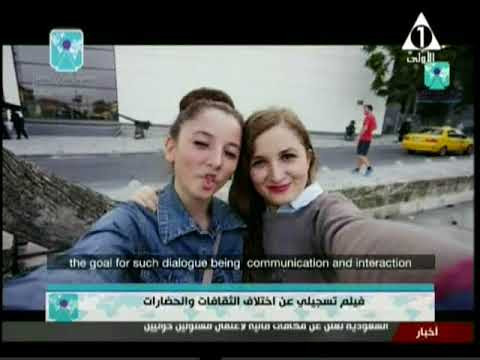 A Documentary about Different Cultures and Civilizations Year of publication: 2017 Corporate author: Egypt News The documentary talks about the differences between cultures and civilizations. It talks about the importance of cross-fertilization between civilizations for a happy life and sustainable development. فيلم تسجيلى عن اختلاف الثقافات والحضارات Year of publication: 2017 Corporate author: Egypt News يتحدث الفيلم الوثائقي عن الاختلافات بين الثقافات والحضارات. ويتحدث عن اهمية التلاقح بين الحضارات للعيش السعيد والتنمية المستدامة.
 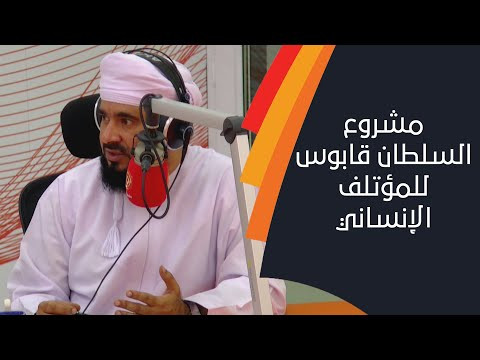 The Sultan Qaboos Project for the Humanitarian Year of publication: 2019 Corporate author: Al Shabiba The program deals with the Human Recombinant Project, its importance and objectives. The project came with the blessing of the late Sultan in order to gather the efforts of nations to improve human lives, and to raise human awareness of the importance of a shared global ethics system.