
Resources
Explore a wide range of valuable resources on GCED to deepen your understanding and enhance your research, advocacy, teaching, and learning.
1,828 Results found
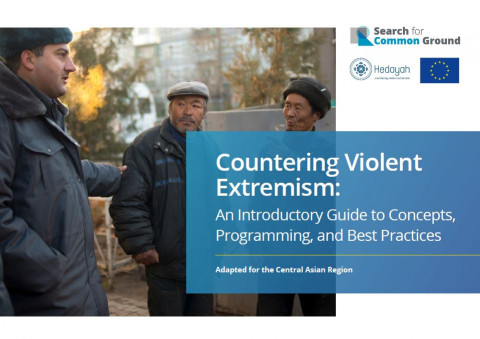 Противодействие насильственному экстремизму: Вводное руководство по концепциям, разработке программ и передовой практике Year of publication: 2019 Corporate author: Search for Common Ground Данная учебная программа направлена актуализацию передовых методов и опыта, накопленного в процессе противодействия насильственному экстремизму. Программа по противодействию насильственному экстремизму, адаптированная для Центральной Азии, предназначена для подготовки государственных служащих и работников из организаций гражданского общества. Это контекстуально грамотная и удобная для восприятия учебная программа по противодействию насильственному экстремизму и повышению осведомленности, учитывающая вашу специфику. В ней освещаются преимущества подходов к сотрудничеству, выходящих за рамки применения военных или секьюритизированных мер реагирования на насильственный экстремизм и подкрепленных передовой практикой, а также предлагаются инструменты и рекомендации для простойадаптации к вашим локальным условиям и культуре. Наконец, программа способствует раннему выявлению и смягчению рисков посредством разработки программ, а также использования подхода «Не навреди» (Do No Harm).Данная программа предлагает руководство по разработке, реализации и мониторингу конструктивных мер противодействия насильственному экстремизму, при этом также давая общее представление об управлении проектами. Таким образом, данная учебная программа не направлена на развитие общих навыков управления проектами, мониторинга и оценки или на привлечение средств. Поскольку проблема насильственного экстремизма сложна и в значительной степени зависит от локального контекста, программа также не является руководством по движущим силам радикализации в вашем местном контексте и не предлагает программы и политику, которые могли бы быть наиболее эффективными. Вместо этого программа познакомит вас с наводящими вопросами и инструментами, необходимыми для принятия обоснованных и эффективных решений в вашей работе по противодействию насильственному экстремизму.
  中国少数民族基础教育政策研究报告 Year of publication: 2010 Corporate author: UNESCO Beijing 本报告是在“提高少数民族群体的受教育程度及文化上敏感的教育”的框架下是实地调查少数民族基础教育政策研究实施情况。2010年,根据对中国政府制定、实施的少数民族基础教育政策文本分析报告,确定实地调研的目标和任务,对三个项目省十二个个案点调研报告。通过田野调查和问卷调查,六个调研组完成十二个个案点调研报告。基于十二个个案调研报告内容形成本报告,并在此基础上提出改进建议和下一步的行动计划。
  Identifying with Horror: Teaching about the Holocaust - A response to Simone Schweber's "Simulating Survival" The author responds to Simone Schweber's article "Simulating Survival", an article that praised the use of a simulation about the Holocaust by a public school teacher. In her response, Ben-Peretz discusses the impact of Schweber's article, some issues concerning the public school teacher's mode of teaching, why the Holocaust should be taught, and implications for teacher education. (Abstract In : Educating about Social Issues in the 20th and 21st Centuries: A Critical Annotated Bibliography)
  The Ecological Catastrophe Facing Democracy Year of publication: 2015 Author: Antoine Chollet | Romain Fell Corporate author: Université du Québec à Montréal (UQAM) | Éditions en environnement VertigO In this article we aim to analyze the specific temporal regimes associated with the discourses of environmental – and especially, climatic – catastrophe. By empirically describing and analyzing the images of the future used in catastrophist discourses, we seek to demonstrate that these discourses lead to anti-democratic political positions. Hence, we normatively argue for the replacement of these discourses by another understanding of the future, of temporality, and of time itself, and we theoretically define the lineaments of such an understanding. Finally, our aim is not to challenge the severity of the current ecological crises but rather, by way of reframing these crises in a present setting, and by pointing to their contradictory multiplicity, to contribute to a serious assessment of their nature. Only thus, is it possible to acknowledge the possibility of a democratic politics of socio-ecological relations. Le catastrophisme écologique contre la démocratie Year of publication: 2015 Author: Antoine Chollet | Romain Fell Corporate author: Université du Québec à Montréal (UQAM) | Éditions en environnement VertigO Il s’agit dans cet article d’interroger le régime temporel spécifique associé au catastrophisme écologique, et en particulier dans sa variante climatique. Nous cherchons à montrer que les images du futur qui sont utilisées dans les discours catastrophistes, que nous décrivons et dont nous analysons les différentes formes, produisent des positions politiques antidémocratiques. Dès lors, nous plaidons pour leur remplacement par une autre conception du futur, de la temporalité, et du temps lui-même dont nous esquissons les contours sur un plan théorique. Il ne s’agit nullement pour nous de contester la profondeur des crises écologiques que le monde expérimente actuellement, mais au contraire, en les ramenant dans le présent d’une part, et en montrant leur multiplicité contradictoire d’autre part, d’en faire prendre la mesure réelle. C’est ainsi que la possibilité d’une politique démocratique des rapports socio-écologiques peut être comprise.
 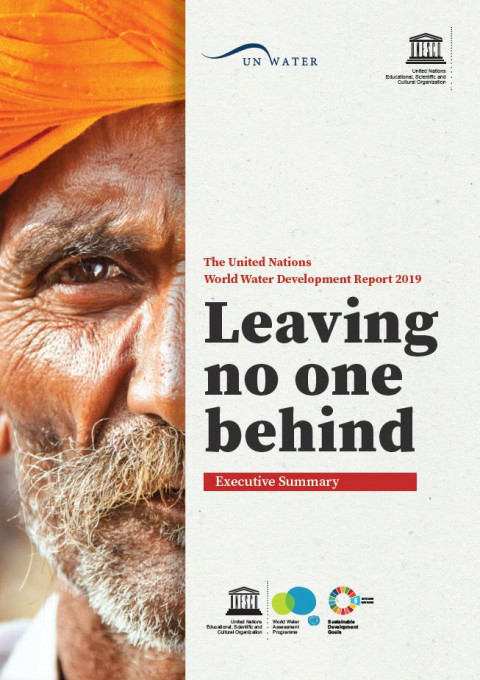 [Summary] The United Nations World Water Development Report 2019: Leaving No One Behind; Executive Summary Year of publication: 2019 Author: Richard Connor | Stefan Uhlenbrook | Engin Koncagül Corporate author: UNESCO World Water Assessment Programme (WWAP) People from different groups are ‘left behind’ for different reasons. Discrimination, exclusion, marginalization, entrenched power asymmetries and material inequalities are among the main obstacles to achieving the human rights to safe drinking water and sanitation for all and realizing the water-related goals of the 2030 Agenda. Poorly designed and inadequately implemented policies, inefficient and improper use of financial resources, as well as policy gaps fuel the persistence of inequalities in access to safe drinking water and sanitation. Unless exclusion and inequality are explicitly and responsively addressed in both policy and practice, water interventions will continue to fail to reach those most in need and who are likely to benefit most.Improving water resources management and providing access to safe and affordable drinking water and sanitation for all is essential for eradicating poverty, building peaceful and prosperous societies, and ensuring that ‘no one is left behind’ on the road towards sustainable development. These goals are entirely achievable, provided there is a collective will to do so. [Resumen] Informe Mundial de las Naciones Unidas sobre el Desarrollo de los Recursos Hídricos 2019:no dejar a nadie atrás, resumen ejecutivo Year of publication: 2019 Author: Richard Connor | Stefan Uhlenbrook | Engin Koncagül Corporate author: UNESCO World Water Assessment Programme (WWAP) Personas de distintos grupos “se quedan atrás” por diferentes motivos. Discriminación, exclusión, marginación, asimetrías de poder arraigadas y desigualdades materiales se encuentran entre los principales obstáculos para lograr los derechos humanos al agua potable segura y al saneamiento para todos y para alcanzar los objetivos relacionados con el agua de la Agenda 2030. Las políticas mal diseñadas y aplicadas de manera inadecuada, un uso ineficaz e inadecuado de los recursos financieros, así como las brechas en las políticas, alimentan la persistencia de las desigualdades en el acceso al agua potable segura y al saneamiento. A menos que la exclusión y la desigualdad se aborden de forma explícita y responsable tanto en las políticas como en la práctica, las intervenciones sobre el agua seguirán fracasando a la hora de llegar a los más necesitados y a quienes probablemente beneficiarían más.Mejorar la gestión de los recursos hídricos y facilitar el acceso al agua potable y saneamiento seguros y asequibles para todo el mundo es esencial para erradicar la pobreza, construir sociedades pacíficas y prósperas y garantizar que “no dejar a nadie atrás” en el camino hacia un desarrollo sostenible. Estos objetivos son plenamente alcanzables, siempre que exista la voluntad colectiva de hacerlo. [Résumé] Rapport mondial des Nations Unies sur la mise en valeur des ressources en eau 2019: ne laisser personne pour compte; résumé Year of publication: 2019 Author: Richard Connor | Stefan Uhlenbrook | Engin Koncagül Corporate author: UNESCO World Water Assessment Programme (WWAP) Le fait que des personnes de différents groupes soient « laissées pour compte » s’explique par plusieurs facteurs. La discrimination, l’exclusion, la marginalisation, des rapports de force asymétriques et les inégalités matérielles figurent parmi les principaux obstacles à la réalisation des droits de l’homme à l’eau potable et à l’assainissement pour tous et aux objectifs du Programme 2030 relatifs à l’eau. En outre, la mauvaise conception des politiques et leur application insuffisante, l’utilisation inefficace et inadéquate des ressources financières, ainsi que les lacunes politiques, alimentent les inégalités dans l’accès à l’eau potable et à l’assainissement. Si l’exclusion et l’inégalité ne sont pas traitées de manière explicite et adaptée dans les politiques et les pratiques, les interventions dans le domaine de l’eau continueront de ne pas bénéficier à ceux qui en ont le plus besoin et qui sont susceptibles d’en tirer le plus profit.Améliorer la gestion des ressources en eau et garantir l’accès universel à une eau potable et à des installations sanitaires sécuritaires, à un coût abordable, sont essentiels pour éliminer la pauvreté, bâtir des sociétés pacifiques et prospères et assurer de « ne laisser personne pour compte » sur la voie du développement durable. Ces objectifs sont tout à fait réalisables, à condition qu’il y ait une volonté collective d’agir. [요약보고서] 2019년 UN 세계물개발보고서: 누구도 소외되지 않는 사회; 요약보고서 Year of publication: 2019 Author: Richard Connor | Stefan Uhlenbrook | Engin Koncagül Corporate author: UNESCO World Water Assessment Programme (WWAP) 여러 그룹의 사람들은 다양한 이유로 ‘소외’되고 있다. 차별, 배제, 소외, 집권층 권력의 불균형 및 경제적 불평등은 안전한 식수 및 위생에 대한 인권을 달성하고, 2030 아젠다의 물 관련 목표를 실현하는 데 있어 걸림돌이 된다. 설계가 잘못되고, 부적절하게 구현된 정책, 비효율적이고 부당한 재정 자원 사용과 더불어 정책 격차는 안전한 식수 및 위생 시설 접근에 대한 불평등을 지속시킨다. 배제와 불평등 문제가 정책과 실행에서 분명하고, 신속하게 고려되지 않는다면, 물조정 노력 (water interventions)은 물을 가장 필요로 하고 혜택을 가장 많이 받을 수 있는 사람들에게 계속해서 그 효과를 주지 못할 것이다.수자원 관리를 개선하고 모든 사람에게 안전하고 경제적인 식수 및 위생 시설을 제공하는 것은 빈곤 퇴치, 평화롭고 번영하는 사회 형성, 지속 가능한 발전을 위한 ‘누구도 소외되지 않는 사회’ 구축에 필수적이다. 이러한 목표는 공동의 의지가 있는 한 전적으로 달성 가능할 것이다. [Pабочее резюме] Всемирный доклад Организации Объединенных Наций о состоянии водных ресурсов, 2019 г. : Не оставляя никого в стороне, рабочее резюме Year of publication: 2019 Author: Richard Connor | Stefan Uhlenbrook | Engin Koncagül Corporate author: UNESCO World Water Assessment Programme (WWAP) Представители различных групп «бывают забыты» по разным причинам. Дискриминация, отчуждение, маргинализация, укоренившаяся асимметричность в распределении власти, материальное неравенство – все это относится к числу основных препятствий на пути соблюдения права человека на безопасную питьевую воду и санитарию для всех, а также реализации связанных с водными ресурсами целей, поставленных в Повестке-2030.Плохо разработанная и неумело осуществляемая политика, бесхозяйственное и нецелевое использование финансовых ресурсов, а также пробелы в политике подпитывают сохранение неравенства в сфере доступа к водным ресурсам и санитарии. Если для решения проблем отчуждения и неравенства в политике и на практике не будут приниматься конкретные и ответственные меры, связанные с водными ресурсами мероприятия по-прежнему не будут отвечать интересам наиболее нуждающихся слоев и тех, кто должен быть их основными бенефициарами.Совершенствование управления водными ресурсами и обеспечение всеобщего доступа к безопасной и финансово доступной питьевойводе и санитарии имеет существенно важное значение для искоренения нищеты, созидания мирных и процветающих обществ и обеспечения такого положения, при котором «никто не будет забыт» на пути, ведущем к устойчивому развитию. При наличии коллективной воли эти цели вполне достижимы.