
Resources
Explore a wide range of valuable resources on GCED to deepen your understanding and enhance your research, advocacy, teaching, and learning.
1,851 Results found
 Shared Responsibility, Global Solidarity: Responding to the Socio-Economic Impacts of COVID-19 Year of publication: 2020 Corporate author: United Nations (UN) We are facing a global health crisis unlike any in the 75-year history of the United Nations — one that is killing people, spreading human suffering, and upending people’s lives. But this is much more than a health crisis. It is a human crisis. The coronavirus disease (COVID-19) is attacking societies at their core. The IMF has just reassessed the prospect for growth for 2020 and 2021, declaring that we have entered a recession – as bad as or worse than in 2009. The IMF projects recovery in 2021 only if the world succeeds in containing the virus and take the necessary economic measures.In the face of such an unprecedented situation in recent history, the creativity of the response must match the unique nature of the crisis – and the magnitude of the response must match its scale. No country will be able to exit this crisis alone.This report is a call to action, for the immediate health response required to suppress transmission of the virus to end the pandemic; and to tackle the many social and economic dimensions of this crisis. It is, above all, a call to focus on people – women, youth, low-wage workers, small and medium enterprises, the informal sector and on vulnerable groups who are already at risk.
 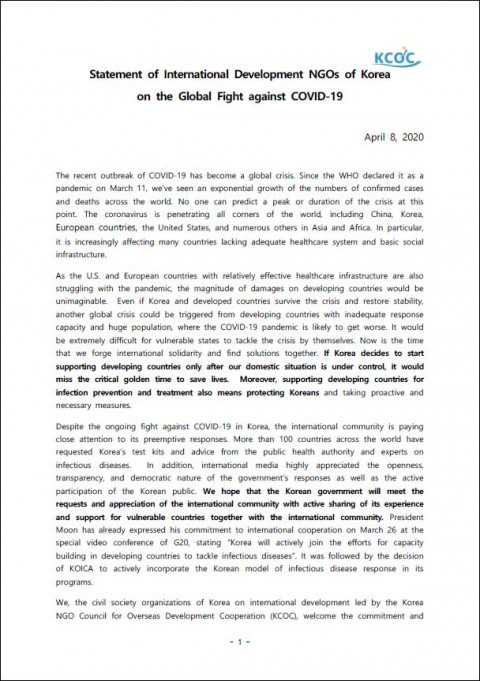 Statement of International Development NGOs of Korea on the Global Fight against COVID-19 Year of publication: 2020 Corporate author: Korea NGO Council for Overseas Development Cooperation (KCOC) The recent outbreak of COVID-19 has become a global crisis. Since the WHO declared it as a pandemic on March 11, we’ve seen an exponential growth of the numbers of confirmed cases and deaths across the world. No one can predict a peak or duration of the crisis at this point.As the U.S. and European countries with relatively effective healthcare infrastructure are also struggling with the pandemic, the magnitude of damages on developing countries would be unimaginable. It would be extremely difficult for vulnerable states to tackle the crisis by themselves. Now is the time that we forge international solidarity and find solutions together. 국제사회의 코로나19 퇴치를 위한 한국 국제개발협력 시민사회단체들의 호소문 Year of publication: 2020 Corporate author: Korea NGO Council for Overseas Development Cooperation (KCOC) 코로나19가 전 지구적 위기로 다가왔습니다. 지난 3월 11일 세계보건기구(WHO)가 팬데믹을 선언한 이래, 전 세계 확진자 및 사망자의 수가 기하급수적으로 증가하고 있고, 그 정점이 어디인지, 언제까지 이 사태가 계속될지 누구도 예측하지 못하는 상황입니다.보건 의료 인프라가 잘 갖춰진 미국과 유럽에서조차 팬데믹의 영향이 심각한 상황임을 감안할 때, 향후 개발도상국(이하 개도국)이 받게 될 피해의 정도를 가늠하기 어렵습니다. 취약한 나라일수록 스스로의 노력만으로 현 위기 상황을 타개하기란 매우 어렵기에 우리는 지금부터 국제적으로 연대하고 공동으로 해결방안을 모색해야 합니다. 또한 개도국의 감염예방 및 치료를 돕는 것이 곧 우리의 안전을 지키는 일이며, 필수적이고도 선제적인 예방책이 될 것이라는 점을 기억해야 합니다.
 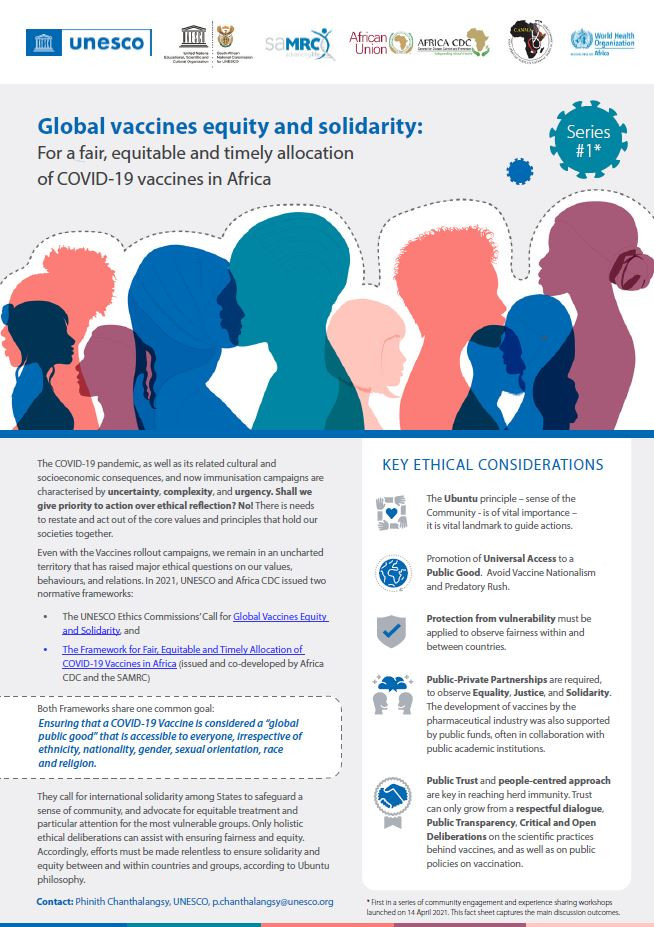 Global Vaccines Equity and Solidarity: For a Fair, Equitable and Timely Allocation of COVID-19 Vaccines in Africa; Series #1 Year of publication: 2021 Corporate author: UNESCO Harare African populations have been side-lined through the COVID-19 Vaccination roll-out process. A vaccination timeline taking Africa into 2023 would be unethical. African countries need to invest in their own structures and stop relying on colonial structures. There is a moral obligation to safeguard the population through equal distribution. This not only makes moral and ethical sense but also scientific and economic sense as a slow roll out in Africa will impact the rest of the world. First in a series of community engagement and experience sharing workshops launched on 14 April 2021. This fact sheet captures the main discussion outcomes.
 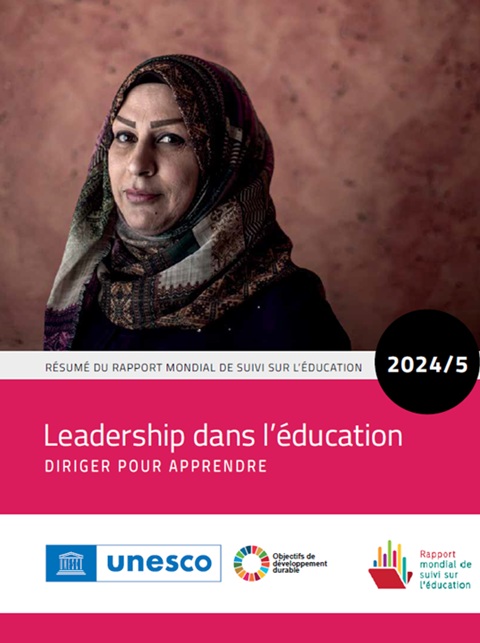 Résumé du rapport mondial de suivi sur l'éducation 2024/5: leadership dans l'éducation: diriger pour apprendre Year of publication: 2024 Corporate author: Global Education Monitoring Report Team Le Rapport mondial de suivi sur l'éducation 2024/5 évalue les progrès accomplis dans la réalisation des objectifs du Programme 2030 et montre que, si le nombre d'enfants scolarisés et achevant l'enseignement secondaire n'a jamais été aussi élevé, de nombreux domaines connaissent une stagnation. Le leadership joue un rôle central pour y remédier. Aucune école n’améliore les résultats des élèves sans un bon leader pour montrer la voie. Sur la base d’un examen des lois et politiques concernant la sélection, la préparation et les conditions de travail des chefs d'établissement de 211 systèmes éducatifs, le rapport analyse les leviers stratégiques permettant d'attirer et de retenir des leaders de talent.Les possibilités d’exercer un leadership ne se limitent pas aux dirigeants des écoles, elles s’étendent à des personnes qui occupent d’autres postes dans le système éducatif et en dehors de celui-ci, telles que les directeurs adjoints, les enseignants et les élèves lorsque le leadership est partagé, les responsables politiques, la société civile, les organisations internationales, les syndicats et les médias, qui contribuent à définir les objectifs en matière d’éducation.Le rapport préconise que des efforts soient faits pour former des leaders dans quatre dimensions essentielles : fixer des objectifs, donner la priorité à l’apprentissage, encourager la collaboration et faire évoluer les personnes. Pour que ces dimensions se concrétisent, il faut faire confiance aux personnes occupant des postes de direction et leur donner les moyens d’agir ; il faut les recruter grâce à des pratiques d’embauche équitables ; les soutenir dans leur évolution ; et les encourager à mettre en place une culture de collaboration. Le rapport appelle également à investir dans la capacité des responsables de l'éducation à jouer un rôle de leader au sein du système, en mettant particulièrement l'accent sur la direction pédagogique et l'assurance qualité
  Resumen del informe de seguimiento de la educación en el mundo, 2024/5: Liderazgo en la educación: liderar por el aprendizaje Year of publication: 2024 Corporate author: Global Education Monitoring Report Team El Informe de seguimiento de la educación en el mundo 2024-2025 evalúa los avances hacia el logro de las metas de 2030 y muestra que, aunque hay más niños escolarizados y que finalizan la educación secundaria que nunca, en muchos ámbitos hay estancamientos. El liderazgo es fundamental para abordar esta cuestión. Ninguna escuela puede mejorar los resultados de los alumnos sin un buen líder que muestre el camino a seguir. Partiendo de un examen de la legislación y las políticas relativas a la selección, preparación y condiciones laborales de los directores de escuela de 211 sistemas educativos, el informe analiza instrumentos de política para atraer y retener a líderes talentosos.El potencial de liderazgo no se limita a los líderes escolares, sino que abarca también a las personas que ocupan otros puestos en el sistema educativo, así como fuera de él, desde subdirectores, docentes y alumnos, cuando el liderazgo es compartido, hasta líderes políticos, la sociedad civil, organizaciones internacionales, sindicatos y medios de comunicación, que contribuyen a definir los objetivos de la educación.El informe insta a adoptar medidas para que los líderes desarrollen sus capacidades en las cuatro dimensiones fundamentales del liderazgo: establecer expectativas, centrarse en el aprendizaje, fomentar la colaboración y favorecer el perfeccionamiento personal. Para llevar a la práctica estas dimensiones, es esencial confiar en quienes ocupan puestos de liderazgo y empoderarlos; reclutarlos mediante prácticas de contratación justas; brindarles apoyo para que se perfeccionen; y motivarlos a fomentar culturas de colaboración. Asimismo, el informe pide que se invierta en fortalecer las capacidades de los funcionarios de educación para que actúen como líderes del sistema, especialmente en el liderazgo pedagógico y la garantía de la calidad.
  [Резюме] Лидерство в образовании: Всемирный доклад по мониторингу образования за 2024/5 годы Year of publication: 2024 Corporate author: Global Education Monitoring Report Team Всемирный доклад по мониторингу образования за 2024/2025 годы содержит подробный анализ прогресса в достижении к 2030 году запланированных целей, а также указывает на то, что несмотря на небывалые показатели охвата школьным образованием и показатели завершения полного цикла обучения в средней школе во многих аспектах сферы образования наблюдаются застойные тенденции. Важнейшей предпосылкой их преодоления является развитие образовательного лидерства. Нет таких школ, которым удалось бы улучшить образовательные достижения своих учащихся в отсутствие эффективного лидера, способного повести за собой. На основе обзора нормативных и регламентирующих документов, касающихся отбора, профессиональной подготовки и условий работы директоров школ в 211 системах образования, авторы доклада анализируют политические рычаги, которые обеспечат привлечение и удержание талантливых руководителей.Потенциал лидерства не ограничивается школьными руководителями: он распространяется и на людей, занимающих должности в других частях системы образования, а также за ее пределами, начиная с заместителей директоров школ, педагогов и учащихся, так называемого совместного руководства, и заканчивая политическими руководителями, гражданским обществом, международными организациями, профсоюзами и средствами массовой информации, готовыми содействовать в определении целей образования.В докладе содержится призыв предпринять шаги, направленные на профессиональное совершенствование лидеров в сфере образования в четырех принципиально важных компонентах лидерства, таких как формулирование видения в отношении перспектив, акцент на обучении, поощрение взаимодействия и содействие профессиональному росту. Для успешной реализации этих задач необходимо, чтобы лица, занимающие руководящие позиции в сфере образования, пользовались доверием и были наделены соответствующими полномочиями, прошли адекватную процедуру отбора, получили необходимые профессиональные навыки и поощрялись к формированию культуры коллективного лидерства. Кроме того, в докладе содержится призыв содействовать повышению профессиональных компетенций должностных лиц, работающих на руководящих постах в системе образования, с уделением особого внимания вопросам руководства учебным процессом и обеспечения качества образования.
  [الملخص] التقرير العالمي لرصد التعليم 2024/5: مهارات القيادة في مجال التعليم والقيادة الجيدة من أجل تعزيز التعلّم Year of publication: 2024 Corporate author: Global Education Monitoring Report Team ويهدف التقرير العالمي لرصد التعليم لعام 5/2024 إلى تقييم التقدم المحرز على صعيد تحقيق أهداف خطة عام 2030. ويُستشَفّ من النتائج التي خلص إليها التقرير أن عدد الأطفال الملتحقين بالمدارس والذين يكملون تعليمهم الثانوي أعلى من أي وقت مضى، ولكن قطاع التعليم لا يزال يشهد ركوداً في العديد من المجالات. وتكتسي مهارات القيادة أهمية حاسمة للتصدي لهذه المشكلة. فلا يمكن للمدرسة أن تحسّن نتائج الطلاب إذا لم يكن على رأسها قائد كفؤ يرشدها إلى الطريق.واستناداً إلى استعراض أجري للتشريعات والسياسات المطبقة في اختيار المدراء، وإعدادهم، وظروف عملهم، في 211 مؤسسة تعليمية، يبحث التقرير في أدوات السياسة العامة الكفيلة باستقطاب القادة الموهوبين والاحتفاظ بهم.ولا تقتصر مهارات القيادة على مدراء المدارس فحسب، بل تشمل أيضاً الأفراد الذين يشغلون مناصب أخرى في مجال التربية والتعليم وخارجه، مثل المديرين المساعدين والمعلّمين والطلاب. وإذا كانت القيادة مشتركة، فتمتد هذه القدرات لتشمل الزعماء السياسيين والمجتمع المدني والمنظمات الدولية والنقابات ووسائل الإعلام، الذين يساعدون على تحديد أهداف التعليم.ويدعو التقرير إلى بذل الجهود الرامية إلى تعزيز قدرات القادة وفقاً لأربعة أبعاد رئيسية خاصة بمهارات القيادة، وذلك للتمكن من تحديد التوقعات والتركيز على التعلم وتعزيز التعاون وتنمية مهارات الأفراد. ولكي تؤتي هذه الأبعاد ثمارها، ينبغي أن يحظى الأشخاص الذين يشغلون مناصب قيادية بالثقة، وأن تُعزَّز قدراتهم، وأن يتم توظيفهم من خلال إجراءات توظيف عادلة، وأن يتم دعمهم في تعزيز مهاراتهم، وتشجيعهم على إرساء ثقافة للتعاون.كما يدعو التقرير إلى تعزيز قدرة المسؤولين عن التعليم على أداء مهامهم بصفتهم قادة لنُظم التعليم.
  [摘要] 全球教育监测报告摘要, 2024/5年: 教育领导力: 引领学习 Year of publication: 2024 Corporate author: Global Education Monitoring Report Team 《2024/5年全球教育监测报告》对实现2030年具体目标的进展情况进行了评估。报告显示,虽然入学儿童和完成中学教育的儿童比以往任何时候都多,但在多个领域,进展陷入停滞。领导力是解决这一问题的核心。若无优秀的领导者指明方向,任何学校都无从改善学习成果。本报告在对211个教育系统中有关校长遴选、培训和工作条件的法律法规和政策加以审查的基础上,就吸引和留住优秀领导人才的政策手段进行了探讨。领导力潜力并非仅限于学校领导者而言:亦延及教育系统内外其他岗位上的个人,从共享领导力模式下的副校长、教师和学生,到助力制定教育目标的政治领导者、民间社会、国际组织、工会和媒体。报告呼吁努力从四个关键的领导力维度培养领导者,使他们能够设定期望、关注学习、促进协作和支持员工发展。要实现这些维度的领导力,则应信任并赋权担任领导职务的人员;通过公平的招聘做法进行征聘;支持他们成长;鼓励他们厚植协作式文化。报告还呼吁投资于教育官员担任系统领导者的能力,特别是要侧重于教学领导和质量保证。
  Beyond commitments 2019: how countries implement SDG 4 Year of publication: 2019 Corporate author: Global Education Monitoring Report Team Almost one-third of the time set to achieve the Sustainable Development Goals (SDGs) has elapsed. The 2019 High-level Political Forum (HLPF), the global SDG follow-up and review mechanism, represents a major stock-taking moment for countries, especially as regards SDG 4, the education goal, which is being reviewed for the first time. The international community relies primarily on quantitative measures to assess progress towards the SDGs. Acompanion publication by the UNESCO Institute for Statistics and the Global Education Monitoring Report for the 2019 HLPF, titled ‘Meeting commitments: Are countries on track to achieve SDG 4?’, shows that there are major challenges ahead. But increasingly, member states demand more than quantitative information. They ask for guidance on how to respond when their education systems do not reach their targets. To respond to this demand, this publication has the following purposes: Understand countries’ perceptions of SDG 4 based on responses to a questionnaire prepared for this publication, which asked countries to report on their flagship SDG 4 policies Distil those perceptions into a framework of the types of national policies that are best aligned with SDG 4 and whose implementation should be monitored Communicate the framework succinctly and provide a complementary input for the review of SDG 4 at the 2019 HLPF Provide an opportunity for countries to engage in dialogue on how they approach SDG 4. An analysis of the questionnaires submitted by 72 governments shows that most countries refer to SDG 4 as a framework in which they place their education planning. A core recommendation is that countries should align their education plans and policies with their international commitments.