
Resources
Explore a wide range of valuable resources on GCED to deepen your understanding and enhance your research, advocacy, teaching, and learning.
1,852 Results found
 Guidance on Integrating the Environment and Climate Change in Processes for United Nations Sustainable Development Cooperation Frameworks Year of publication: 2021 Author: Henrieta Martonakova Corporate author: Issue-based Coalition on Environment and Climate Change The guidance, which benefits from the diverse expertise of the 18 member organizations of the Coalition, looks at mainstreaming environmental and climate change considerations into the different stages of preparing the UNSDCF: The roadmap for a new cooperation frameworkThe common country analysisThe cooperation framework designThe cooperation framework implementationCooperation framework monitoring and evaluation The guidance looks deeper into mainstreaming the environment and climate change into a series of development priorities: human rights, including children’s rights and the rights of women; economic and trade development, including innovations, SMEs and decent work; food security and agriculture; infrastructure and sustainable use of resources, including energy, water and waste management; quality education; good health; good governance; and disaster reduction and conflict prevention.
 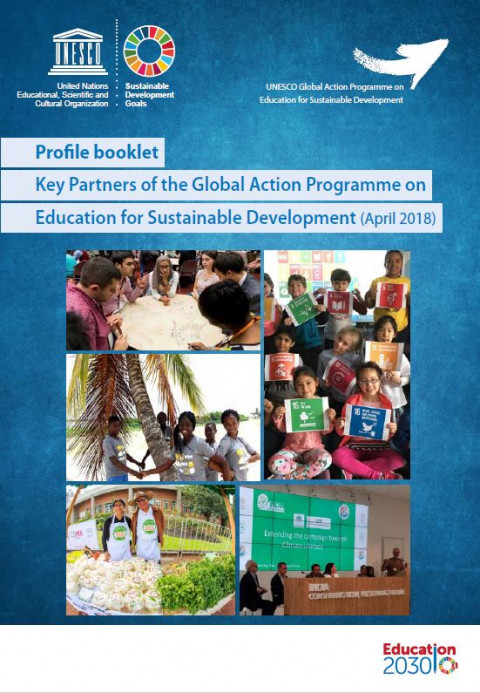 Profile booklet: key partners of the Global Action Programme on Education for Sustainable Development (April 2018) Year of publication: 2018 UNESCO’s Global Action Programme (GAP) was launched at the World Conference on Education for Sustainable Development (ESD) in November 2014 in Aichi-Nagoya, Japan as a follow-up programme to the Decade of ESD (2005-2014). This booklet contains profiles of the current 96 members (also called Key Partners) of the GAP Partner Networks. Each Key Partner is listed in alphabetical order within one of the five Partner Networks. Each profile presents the main objective of their work, their GAP launch commitment and specific activities that contribute to the GAP, as well as related website links and contact information for the organization’s focal point.
  SDG 4 Data Book 2019 Year of publication: 2019 Corporate author: UNESCO Institute for Statistics (UIS) This publication presents the global monitoring indicators used by countries and the international development community to monitor progress towards Sustainable Development Goal 4 (SDG 4) on education. The indicators were produced by the UNESCO Institute for Statistics (UIS), based on the latest available data.The UIS is the official source of internationally-comparable education data and the custodian agency for SDG 4 data. This mandate reflects the trust of the international community in UIS data and its proven track record in methodological work and standard-setting with national statistical offices, line ministries and technical partners in every region. Recueil de données de l’ODD4 Year of publication: 2019 Corporate author: UNESCO Institute for Statistics (UIS) Cette publication présente les indicateurs de suivi mondiaux utilisés par les pays et la communauté du développement international pour surveiller les progrès réalisés sur la voie de l’Objectif de développement durable 4 (ODD 4) relatif à l’éducation. Les indicateurs ont été produits par l’Institut de statistique de l’UNESCO (ISU), sur la base des dernières données disponibles.L’ISU est la source officielle de données comparables au plan international sur l’éducation et l’organisme dépositaire pour les données relatives à l’ODD 4. Ce mandat témoigne de la confiance de la communauté internationale dans les données de l’ISU et de son expérience avérée dans les travaux méthodologiques et l’élaboration de normes avec les bureaux nationaux de statistique, les ministères compétents et les partenaires techniques dans chacune des regions Libro de Datos del ODS 4 Year of publication: 2019 Corporate author: UNESCO Institute for Statistics (UIS) Esta publicación presenta los indicadores de monitoreo global usados por los países y la comunidad internacional para el desarrollo con el fin de realizar el seguimiento del progreso hacia el Objetivo de Desarrollo Sostenible 4 (ODS 4) en educación. Los indicadores han sido producidos por el Instituto de Estadística de la UNESCO (UIS), con base en los últimos datos disponibles más recientes.El UIS es la fuente oficial de datos en educación internacionalmente comparables y la agencia responsable de la custodia de los datos para el ODS 4. Su mandato refleja la confianza de la comunidad internacional en los datos del UIS y su comprobada trayectoria en el trabajo metodológico y elaboración de estándares con las oficinas nacionales de estadística, los ministerios sectoriales y los socios técnicos en cada región.
 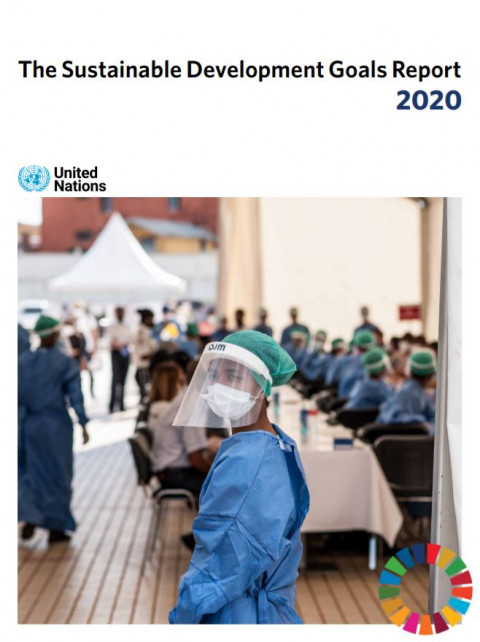 The Sustainable Development Goals Report 2020 Year of publication: 2020 Corporate author: United Nations (UN) The annual Sustainable Development Goals Report provides an overview of the world’s implementation efforts to date, highlighting areas of progress and areas where more action needs to be taken to ensure no one is left behind. Now, in only a short period of time, the COVID-19 pandemic has unleashed an unprecedented crisis, causing further disruption to SDG progress, with the world’s poorest and most vulnerable affected the most.Using the latest data and estimates, this annual stocktaking report on progress across the 17 Goals shows that it is the poorest and most vulnerable – including children, older persons, persons with disabilities, migrants and refugees – who are being hit the hardest by the effects of the COVID-19 pandemic. Women are also bearing the heaviest brunt of the pandemic’s effects.The report also shows that climate change is still occurring much faster than anticipated.
  International Environmental Politics and Critical Approach to Global Citizenship Education Year of publication: 2017 Author: Zheng Fuxing The research and practice of global citizenship education have thrived since 1990s, but the effectiveness of global citizenship education is limited. The research cannot avoid the problematic premise of the possibility of global citizenship education. The identity predicament of global citizen and alienation of local implementing make probability of the global citizenship education problematic. The practial predicament of the global citizenship education maninfest5s that the nation state is the key factor of policy implementation. Environmental question, which is about global common good, attracts the attention from the government of most of nations, and becomes the good case for exploring the feasibility of global citizenship education. Environmental politics explain the inequality and injustice in the globally enviromental governance which made the global citizenship education critical. The critical ecopedagogy becomes the new form of global citizenship. The practice of the global citizenship education becomes viable by hybrid activism generated by dialectical movement between local and global in the limit of nation-state. 国际环境政治与全球公民教育的批判路径 Year of publication: 2017 Author: Zheng Fuxing 自20世纪90年代以来,全球公民教育研究和实践蓬勃发展,然而全球公民教育实践的效果很有限。对于全球公民教育的探讨不能回避“全球公民教育如何可能”这一前提性问题。“全球公民”身份推衍困境、“在地实施”的“异化”后果让全球公民教育实施的可能性成为问题。环境问题既是一个“全球共同利益”问题,也是各国政府关心的问题,为解答“全球公民教育何以可能”提供了较好的切入点。国际环境政治解释了全球环境治理中发展中国家与发达国家的不合作与不平等状况。以全球环境问题及其治理作为教育内容,全球公民教育具有批判性。批判的生态教育学成为全球公民教育的重要实践形态。在既有的国家边界限制下,批判的生态教育学通过全球与在地的混合行动,让全球公民教育获得了一种新的可能性。
 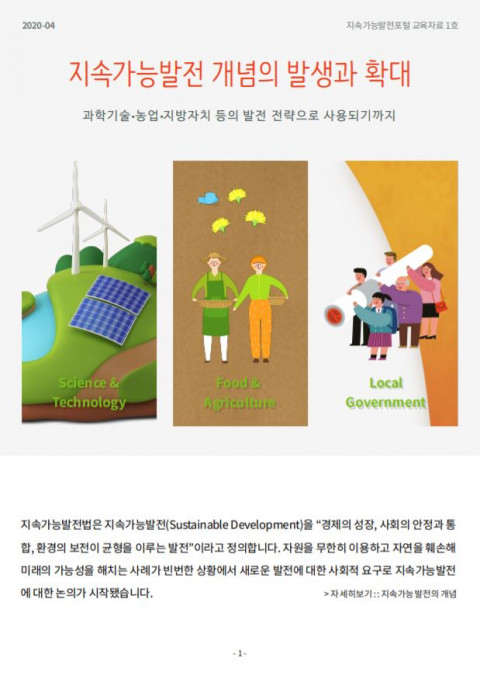 지속가능발전 개념의 발생과 확대: 과학기술·농업·지방자치 등의 발전 전략으로 사용되기까지 (지속가능발전포털 교육자료 1호) Year of publication: 2020 Corporate author: 지속가능발전포털 | 대한민국 환경부 지속가능발전 개념의 발생과 확대에 대해서 알아보고 과학기술, 농업, 지방자치에의 적용과 연관성에 대해 쉽게 설명하고 있는 지속가능발전포털 교육자료 1호이다.
  Eighth National Communication and Fifth Biennial Report of the Republic of Kazakhstan to the UN Framework Convention on Climate Change Year of publication: 2023 Corporate author: UNDP Kazakhstan The 8th National Communication and the 5th Biennial Report of the Republic of Kazakhstan to the UN Framework Convention on Climate Change was prepared by a group of national experts under a joint project of the Ministry of Ecology, Geology and Natural Resources of the Republic of Kazakhstan and the United Nations Development Programme in Kazakhstan with the financial support of the Global Environment Facility. The publication contains all available information on climate change issues in accordance with internationally available guidance. Information from open sources, data from national and international organizations, including governmental departments and agencies were used for composing this report.