
Resources
Explore a wide range of valuable resources on GCED to deepen your understanding and enhance your research, advocacy, teaching, and learning.
1,851 Results found
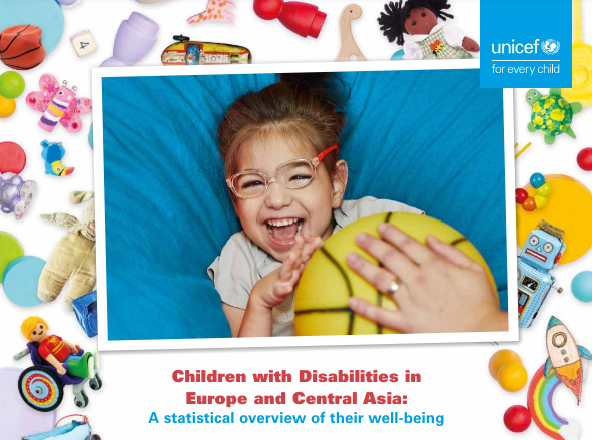 Дети с инвалидностью в Европе и Центральной Азии: статистический обзор их благополучия Year of publication: 2023 Corporate author: United Nations (UN) Данный региональный доклад содержит важные фактические данные, которые лица, принимающие решения в разных странах, могут использовать при разработке политических документов и программ. ЮНИСЕФ в Европе и Центральной Азии в контексте Глобальной стратегии и политики по вовлечению людей с инвалидностью будет использовать этот ценный ресурс, чтобы перейти на следующий уровень взаимодействия, дающий всем детям с инвалидностью перспективы реализации своих прав наравне со сверстниками.
  Thematic Alternative Report on the Implementation by the Republic of Tajikistan of the Convention on the Elimination of All Forms of Discrimination Against Women (CEDAW) in Relation to the Rights of Women Released from Places of Deprivation of Liberty Year of publication: 2024 Corporate author: European Union (EU) | DVV International | Bureau of Human Rights and Rule of Law (BHR) This alternative report focuses on the implementation by the Republic of Tajikistan of the UN Convention on the Elimination of All Forms of Discrimination against Women (CEDAW) in relation to the rights of women released from places of deprivation of liberty. The report contains information for the period from 2019 to 2023. Тематический альтернативный доклад о выполнении Республикой Таджикистан Конвенции о ликвидации всех форм дискриминации в отношении женщин. Применительно к правам женщин, освободившихся из мест лишения свободы Year of publication: 2024 Corporate author: EU | DVV International | Bureau of Human Rights and Rule of Law (BHR) Данный альтернативный доклад посвящен выполнению Республикой Таджикистан Конвенции ООН о ликвидации всех форм дискриминации в отношении женщин (КЛДЖ) в аспекте соблюдения прав женщин, освободившихся из мест лишения свободы. Доклад содержит информацию за период с 2019 по 2023 годы.
 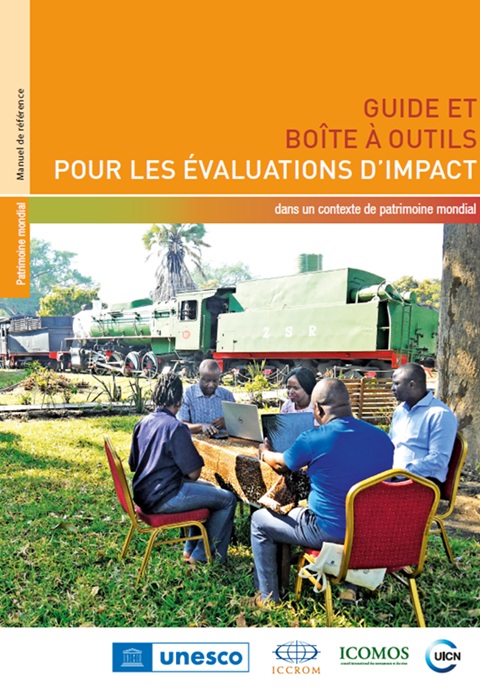 Guide et boîte à outils pour les évaluations d’impact dans un contexte de patrimoine mondial Year of publication: 2023 Author: Sarah Court | Eugene Jo | Richard Mackay | Mizuki Murai | Riki Therivel Corporate author: UNESCO | International Centre for the Study of the Preservation and Restoration of Cultural Property (ICCROM) | International Council on Monuments and Sites (ICOMOS) | International Union for Conservation of Nature (IUCN) Notre patrimoine mondial menacé : les évaluations d’impact offrent des solutionsLors du 50e anniversaire de la Convention du patrimoine mondial, en 2022, on dénombrait plus de 1 100 sites du patrimoine mondial de l’UNESCO. Ces sites sont si précieux pour l’humanité que leur conservation nous incombe à tous. Pourtant, nombre de ces lieux exceptionnels sont confrontés à la pression croissante qu’exercent les divers types de développement et des projets dans et autour des sites. L’évaluation des impacts de ces projets – avant toute décision de mise en œuvre – est essentielle pour éviter tout dommage causé au patrimoine mondial et identifier des choix durables.Le Guide et boîte à outils pour les évaluations d’impact dans un contexte de patrimoine mondial est la référence incontournable qui explique la démarche à suivre pour atteindre cet objectif. Grâce à des conseils et outils (dont des listes de contrôle et glossaire), il fournit un cadre permettant de réaliser des évaluations d’impact pour les sites du patrimoine culturel et naturel.Élaboré par l’UNESCO et les Organisations consultatives du Comité du patrimoine mondial – l’ICCROM, l’ICOMOS et l’UICN –, ce manuel constitue une base de collaboration intersectorielle et multidisciplinaire en vue de trouver des réponses permettant de protéger les sites du patrimoine mondial et de soutenir un développement qualitatif et approprié. Les États parties, les gestionnaires du patrimoine, les décideurs, les planificateurs et les aménageurs de la Convention du patrimoine mondial sont invités à l’utiliser pour contribuer à la réalisation de notre engagement collectif : la transmission de notre patrimoine inestimable aux générations futures.
 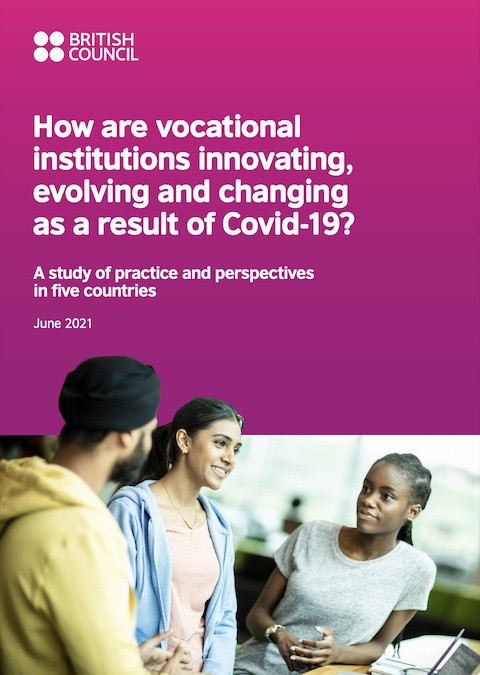 How Are Vocational Institutions Innovating, Evolving and Changing as a Result of COVID-19?: A Study of Practice and Perspectives in Five Countries Year of publication: 2021 Corporate author: British Council As an international problem, Covid-19 requires international cooperation. The social, economic and educational recovery from the pandemic can be enhanced by knowledge transfer and exchange. This research brought together 15 technical and vocational education and training (TVET) institutions from the five countries in the British Council’s I-WORK Programme (Improving Work Opportunities - Relaying Knowledge) to explore innovation, evolution and change stemming from the pandemic. TVET practitioners and leaders from Ghana, India, Malaysia, South Africa and the UK were asked to reflect on five key questions: How are institutional policy and structures likely to change to reflect the changing situation? Is this different for private institutions? What changes are proposed to the curriculum/ occupational areas to reflect the rapidly changing demand and how are they identifying this demand? How will learners get the practical and work-based experience they need and what changes to work- based learning and apprenticeships are needed? What changes are needed to the skills and type of staff in the teaching institution? How can new delivery models and ways of working promote more inclusive practice? The research took place as institutions approached almost a year of adapting their teaching, learning and support to localised lockdowns and the restrictions of the pandemic. The national policy context may have been different in each country, but the research findings pointed to a single conclusion: that across the board, the move to digital learning and teaching had brought benefits, opportunities and challenges that might not otherwise have been realised.
  Guidelines for Data Collection to Measure SDG 4.7.4 and 4.7.5 Year of publication: 2021 Author: Andres Sandoval-Hernandez | Maria Magdalena Isac | Diego Carrasco | Daniel Miranda Corporate author: UNESCO Institute for Statistics (UIS) This document provides guidance to apply a recently developed strategy to assess two indicators that embody tolerance, respect and sustainable development, namely:Indicator 4.7.4: Percentage of students in lower secondary education showing adequate understanding of issues relating to global citizenship and sustainabilityIndicator 4.7.5: Percentage of students in lower secondary education showing proficiency in knowledge of environmental science and geoscienceFollowing a thorough review and endorsement by the UIS’ Technical Cooperation Group on the Indicators for SDG 4-Education 2030 (TCG), the measurement strategy has since been applied to the last cycles of TIMSS, PISA and ICCS to produce scores to measure Indicators 4.7.4 and 4.7.5 for 60 countries. While this marks a significant achievement, it is important to acknowledge that two- thirds of UN members have yet to participate in these assessments. To promote wider participation among UN members, this document serves as a robust and easy-to-use set of guidelines offering detailed technical guidance for countries on how to collect the data necessary to produce the information to measure and monitor SDG Indicators 4.7.4 and 4.7.5. Notably, these guidelines will aid in the production of information that is comparable with that of the 60 countries for which this data already exists.
  التنوع الاثني في العراق : سوسيولوجيا التعدد في الوحدة Year of publication: 2014 Author: Rasoul Mutlaq Corporate author: Baghdad University تتناول الدراسة ظاهرة التعددية الثقافية في العراق من خلال التركيز عل ثلاثة محاور وهي المفهوم و التكوين الاثني وطرق التخلص من الاختلاف والتمييز العرقي. وتنتهي الدراسة بأن التعددية تنبذ التعصب وأن التعددية في العراق يجب أن تحترم. Ethnic Diversity in Iraq: The Sociology of Pluralism in Unity Year of publication: 2014 Author: Rasoul Mutlaq Corporate author: Baghdad University This study deals with the phenomenon of multiculturalism in Iraq by focusing on three axes, which are the concept, ethnic composition, and ways to get rid of difference and ethnic discrimination. The study concludes that pluralism rejects intolerance and that pluralism in Iraq must be respected.
 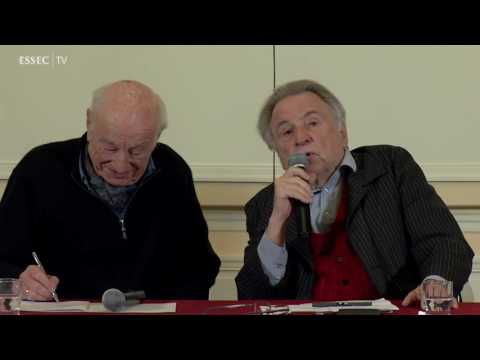 SANS TABOU, Debate Between Edgar Morin and Régis Debray on "Citizenship" Year of publication: 2016 Corporate author: ESSEC Business School Debate "Without Taboo" between Edgar Morin and Régis Debray on the theme of "Citizenship", moderated by Jean-Michel Blanquer, Managing Director of Essec at the Maison de d'Amérique Latine on November 17, 2016 and organized by the chair Edgar Morin on the complexity of Essec directed by Professor Laurent Bibard. SANS TABOU, débat entre Edgar Morin et Régis Debray sur "La Citoyenneté" Year of publication: 2016 Corporate author: ESSEC Business School Débat "Sans Tabou" entre Edgar Morin et Régis Debray sur le thème de "La Citoyenneté", animé par Jean-Michel Blanquer, Directeur Général de l'Essec à la Maison de l'Amérique Latine le 17 novembre 2016 et organisé par la chaire Edgar Morin de la complexité de l'Essec dirigée par le professeur Laurent Bibard.