
Resources
Explore a wide range of valuable resources on GCED to deepen your understanding and enhance your research, advocacy, teaching, and learning.
1,828 Results found
 Rapport mondial des Nations Unies sur la mise en valeur des ressources en eau 2020: l'eau et les changements climatiques Year of publication: 2020 Corporate author: UNESCO World Water Assessment Programme (WWAP) L’édition 2020 du Rapport mondial sur la mise en valeur des ressources en eau montre les liens essentiels entre l’eau et les changements climatiques dans le cadre du développement durable. Le rapport sert également de guide pour prendre des mesures concrètes et relever ces défis. Il présente des actions, illustrées par des exemples provenant du monde entier, liées à trois domaines : premièrement, permettre aux personnes de s’adapter aux effets des changements climatiques ; deuxièmement, renforcer la résilience des moyens de subsistance ; enfin, réduire les moteurs des changements climatiques. Les mesures visant à accroître l’efficacité de l’utilisation de l’eau dans le domaine agricole – tout en garantissant l’accès à l’eau de groupes vulnérables tels que les petits exploitants agricoles – sont incontestablement liées à de multiples ODD. Il s’agit de ceux liés à l’objectif zéro faim (ODD 2), à la disponibilité et l’accès à l’eau (ODD 6), à l’action climatique (ODD 13) et à la promotion de l’utilisation durable des services écosystémiques (ODD 15).Le rapport conclut sur le fait que réduire tant les effets que les facteurs des changements climatiques exigera des transformations importantes dans la manière dont nous utilisons et réutilisons les ressources en eau limitées de la planète. L’expérience et l’expertise nécessaires pour atteindre cet objectif sont rassemblées dans ce rapport par les membres et partenaires d’ONU-Eau. Il contribuera à aider les dirigeants à lutter contre les difficultés liées aux changements climatiques en saisissant les vastes opportunités qu’offrent l’amélioration de la gestion de l’eau pour l’adaptation, la mitigation et la résilience dans un monde en rapide évolution.
  [Summary] The United Nations World Water Development Report 2020: Water and Climate Change; Executive Summary Year of publication: 2020 Corporate author: UNESCO World Water Assessment Programme (WWAP) The 2020 edition of the United Nations World Water Development Report (WWDR) addresses the critical linkages between water and climate change in the context of the broader sustainable development agenda. The report is not meant to be a purely technical examination of the impacts of climate change on the hydrological cycle. Rather, the report focuses on the challenges, opportunities and potential responses to climate change – in terms of adaptation, mitigation and improved resilience – that can be addressed through improving how water resources are management and used, while providing water supply and sanitation services for all in a sustainable manner. In doing so, the report tackles two of the most critical crises the world will continue facing over the next several decades: Water (in)security and climate change. [Résumé] Rapport mondial des Nations Unies sur la mise en valeur des ressources en eau 2020: l'eau et les changements climatiques; résumé Year of publication: 2020 Corporate author: UNESCO World Water Assessment Programme (WWAP) L’édition 2020 du Rapport mondial sur la mise en valeur des ressources en eau (WWDR) montre les liens essentiels entre l’eau et les changements climatiques dans le cadre plus large du programme de développement durable. Le rapport n’est pas un examen purement technique des effets des changements climatiques sur le cycle de l’eau. Il s’agit plutôt d’énoncer les difficultés, les possibilités et les réponses potentielles aux changements climatiques – adaptation, atténuation et résilience renforcée – pouvant être abordées en améliorant la gestion et l’utilisation des ressources en eau et en offrant des services d’approvisionnement en eau et d’assainissement pour tous et de manière durable. Ce faisant, le rapport s’adresse à deux des plus graves crises que le monde continuera de subir au cours des prochaines décennies : la sécurité (ou insécurité) de l’eau et les changements climatiques. [Резюме] Всемирный доклад Организации Объединенных Наций о состоянии водных ресурсов, 2020 г.: водные ресурсы и изменение климата, Рабочее резюме Year of publication: 2020 Corporate author: UNESCO World Water Assessment Programme (WWAP) В Докладе Организации Объединенных Наций о состоянии водных ресурсов мира (WWDR) за 2020 год рассматриваются критически важные связи между водными ресурсами и изменением климата в контексте более широкой повестки дня в области устойчивого развития. Отчет не предназначен для чисто технического изучения воздействия изменения климата на гидрологический цикл. Скорее, в докладе основное внимание уделяется проблемам, возможностям и потенциальным ответным мерам на изменение климата — с точки зрения адаптации, смягчения последствий и повышения устойчивости, — которые можно решить путем улучшения управления и использования водных ресурсов при обеспечении услуг водоснабжения и санитарии для всех. устойчивым образом. При этом в отчете рассматриваются два наиболее серьезных кризиса, с которыми мир будет сталкиваться в течение следующих нескольких десятилетий: водная (не)безопасность и изменение климата.
  [Facts and Figures] The United Nations World Water Development Report 2020: Water and Climate Change; Facts and Figures Year of publication: 2020 Author: Engin Koncagül | Michael Tran | Richard Connor Corporate author: UNESCO World Water Assessment Programme (WWAP) Since the mid-20th century, changes in the intensity and frequency of extreme weather and climate events have been observed, including a decrease in cold temperature extremes, an increase in warm temperature extremes, an increase in extremely high sea levels and an increase in the number of heavy precipitation events in a number of regions (Min et al., 2011).Climate projections indicate with high confidence that extreme precipitation events will become more intense and frequent in many regions, but also that heatwaves will occur more often and last longer. The former will increase global flood risk (Hirabayashi et al., 2013), while the latter is expected to make droughts more intense (Trenberth et al., 2014). These risks are unevenly distributed geographically, and are generally larger for vulnerable people and communities in countries at all levels of development (IPCC, 2014a). Figure 1. Global water withdrawals throughout the previous centuryFigure 2. Climate change scenario trends in water availabilityFigure 3. Annual baseline water stressFigure 4. Seasonal variabilityFigure 5. World weather-related natural catastrophes by peril, 1980–2018Figure 6. Spatial distribution of water-related disasters (droughts, floods, landslides and storms), 2001–2018Figure 7. Spatial distribution of floods, 2001–2018Figure 8. Spatial distribution of droughts, 2001–2018Figure 9. Electricity consumption in the water sector by process, 2014–2040Figure 10. Number of people living under water stress under the Baseline Scenario [Faits et chiffres] Rapport mondial des Nations Unies sur la mise en valeur des ressources en eau 2020: l'eau et les changements climatiques, faits et chiffres Year of publication: 2020 Author: Engin Koncagül | Michael Tran | Richard Connor Corporate author: UNESCO World Water Assessment Programme (WWAP) Depuis le milieu du 20e siècle, on a observé des changements dans l’intensité et la fréquence des phénomènes météorologiques et climatiques extrêmes, notamment une diminution des extrêmes de température froide et une augmentation des extrêmes de température chaude, des niveaux de mer extrêmement élevés et du nombre de fortes précipitations dans un certain nombre de régions (Min et al., 2011).Les projections climatiques indiquent avec une grande confiance que les précipitations extrêmes deviendront plus intenses et plus fréquentes dans de nombreuses régions, mais aussi que les vagues de chaleur seront plus fréquentes et dureront plus longtemps. Les premières augmenteront le risque d’inondation au niveau mondiale (Hirabayashi et al., 2013), tandis que les dernières devraient rendre les sécheresses plus intenses (Trenberth et al., 2014). Ces risques sont répartis géographiquement de façon inégale et ils sont généralement plus importants pour les personnes et les communautés vulnérables dans les pays à tous les niveaux de développement (GIEC, 2014a). Figure 1. Préèements d’eau dans le monde au cours du 20e sièleFigure 2. Tendances des scéarios de changement climatique en matièe de disponibilitéde l’eauFigure 3. Stress hydrique annuel de référenceFigure 4. VariabilitésaisonnièeFigure 5. Catastrophes naturelles mondiales liées au climat, par risque et par nombre d’événements pertinents,1980–2018Figure 6. Réartition spatiale des catastrophes liés àl’eau (séheresses, inondations, glissements de terrain et tempêes) 2001–2018Figure 7. Répartition spatiale des inondations, 2001–2018Figure 8. Répartition spatiale de sécheresses, 2001–2018Figure 9. Consommation d’électricité dans le secteur de l’eau, par procédé, 2014–2040Figure 10. Nombre de personnes en situation de stress hydrique selon le scénario de référence
  Gender, Climate & Security: Sustaining Inclusive Peace on the Frontlines of Climate Change Year of publication: 2020 Corporate author: United Nations Environment Programme (UNEP) | United Nations Entity for Gender Equality and the Empowerment of Women (UN Women) | United Nations Development Programme (UNDP) Climate change is a defining threat to peace and security in the 21st century – its impacts felt by everyone, but not equally. Gender norms and power dynamics shape how women and men of different backgrounds experience or contribute to insecurity in a changing climate. Grounded in a series of case studies from research and programming experience, this report offers a comprehensive framework for understanding how gender, climate and security are inextricably linked. The report assesses entry points for action across existing global agendas and suggests concrete recommendations for how policymakers, development practitioners and donors can advance three inter-related goals: peace and security, climate action and gender equality.
 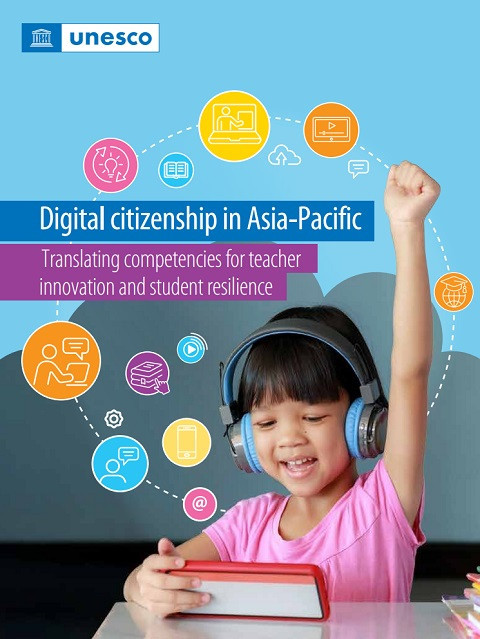 Digital Citizenship in Asia-Pacific: Translating Competencies for Teacher Innovation and Student Resilience Year of publication: 2023 Corporate author: UNESCO Bangkok A digitally-equipped and competent teaching force is crucial for cultivating students' digital citizenship skills. This UNESCO report, consisting of a comprehensive analysis comprising 15 countries in the Asia-Pacific region, unveils compelling evidence pertaining to what factors influence teachers' Information and Communication Technology (ICT) skills and their impact on students’ digital citizenship competencies. Perhaps unsurprisingly, the findings of this report show that students are developing most of their digital citizenship competencies through self-directed learning and outside of school. Nevertheless, teachers still play an important role, particularly in coaching students to use technology safely and effectively. Thus as UNESCO reports, Digital Creativity and Innovation remains relatively underdeveloped in all participating research countries. Additionally, female students tend to benefit more from teachers' guidance and advice, especially in terms of Digital Safety and Resilience. Support for teachers in terms of access to ICT infrastructure and training on ICT and pedagogical skills will contribute towards improving their ability to effectively guide and mentor their students, ultimately leading to better outcomes in terms of digital citizenship competencies. To achieve this, it is important for education systems to develop comprehensive and contextualized approaches to enhance digital citizenship capacities in teachers. Education policymakers and leaders are encouraged to use the 10 recommendations herein as a ‘roadmap’ to ensure that teachers are equipped with the necessary skills and knowledge to effectively integrate digital citizenship education into their teaching practices. This will ultimately help prepare students for the digital world and ensure their safety and well-being online.
 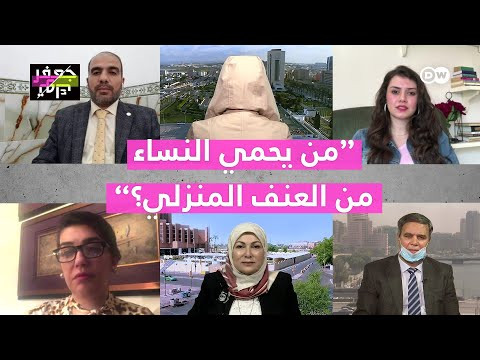 Domestic Violence Escalated in the Time of Corona ... Who Protects Women? Year of publication: 2020 Author: Jaafar Abdul Karim Corporate author: DW Jaafar Talk A program of DW TV broadcasting from Berlin. The program talks about the physical violence experienced by some women in the Arab world during the time of the new Corona virus. The program is characterized by its review of multiple cases of violence during quarantine, and seeks to discuss the causes and solutions to this issue. تصاعد العنف المنزلي في زمن كورونا... من يحمي النساء؟ Year of publication: 2020 Author: Jaafar Abdul Karim Corporate author: DW Jaafar Talk أحد برامج تلفزيون DW والذي يبث من برلين. يتحدث البرنامج عن العنف الجسدي الذي تتعرض له بعض النساء في الوطن العربي في زمن فيروس كورونا المستجد. يتميز البرنامج باستعراضه لحالات متعددة تعرضت للعنف وقت الحجر الصحي، ويسعى لمناقشة الاسباب والحلول لهذه القضية.