
Resources
Explore a wide range of valuable resources on GCED to deepen your understanding and enhance your research, advocacy, teaching, and learning.
1,852 Results found
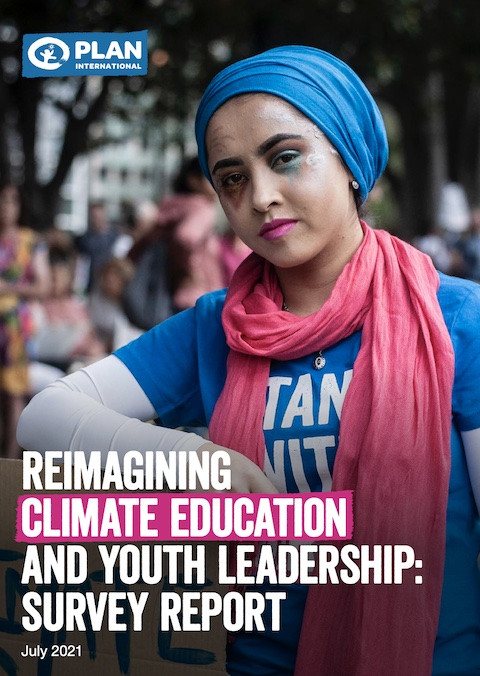 Réinventer l’éducation au climat et le leadership des jeunes : Rapport d’enquête Year of publication: 2021 Author: Lucia Rost | Jessica Cooke | Isobel Fergus Corporate author: Plan International Le changement climatique est une injustice sociale, intergénérationnelle, de genre et raciale. Plan International vise à aider les enfants et les jeunes à participer de manière significative et en toute sécurité aux processus de politique climatique et à réduire les obstacles qui les empêchent de participer et d’influencer la politique et le plaidoyer climatiques.Dans ce cadre, Plan International a mené une enquête mondiale en ligne pour recueillir les opinions et les expériences des jeunes sur l’éducation au changement climatique et leur participation aux processus politiques climatiques. L’enquête était disponible en sept langues et était ouverte aux jeunes de 15 à 24 ans dans les 77 pays où Plan International intervient. Plus de 1800 adolescent.e.s et jeunes, âgés de 15 à 24 ans, originaires de 37 pays, y ont participé : plus de la moitié (54 %) avaient entre 15 et 18 ans et 72 % étaient des filles.
 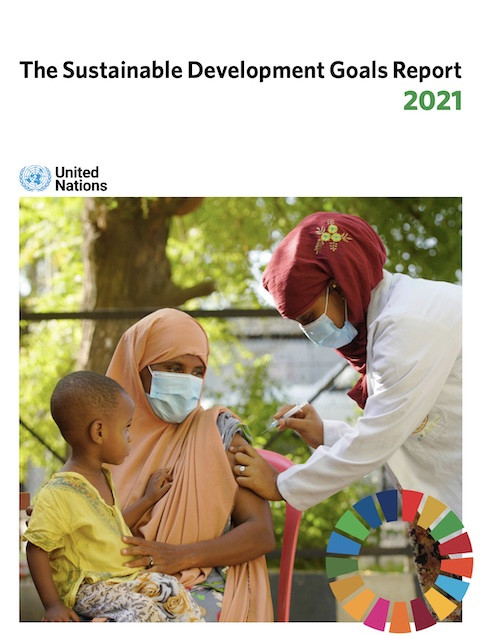 The Sustainable Development Goals Report 2021 Year of publication: 2021 Corporate author: United Nations (UN) As the pandemic continues to unfold, The Sustainable Development Goals Report 2021 outlines some significant impacts in many areas that are already apparent. The global extreme poverty rate rose for the first time in over 20 years, and 119 to 124 million people were pushed back into extreme poverty in 2020. There is a risk of a generational catastrophe regarding schooling, where an additional 101 million children have fallen below the minimum reading proficiency level, potentially wiping out two decades of education gains. Women have faced increased domestic violence, child marriage is projected to rise after a decline in recent years, and unpaid and underpaid care work is increasingly and disproportionately falling on the shoulders of women and girls, impacting educational and income opportunities and health. Notwithstanding the global economic slowdown, concentrations of major greenhouse gases continue to increase. With the global average temperature reaching about 1.2°C above pre-industrial levels, the climate crisis has well and truly arrived, and its impacts are being felt across the world. The pandemic has also brought immense financial challenges, especially for developing countries – with a significant rise in debt distress and dramatic decreases in foreign direct investment and trade. Yet, with a surge in global solidarity and leadership from the highest political level, countries can still deliver on the 2030 Agenda and the 2015 Paris Agreement on Climate Change. A global vaccination plan, designed and implemented by the countries that can produce vaccines today or will be able to do so if properly supported, is an urgent first step in that direction. A recommitment by Governments, cities, businesses, and industries to ensure that the recovery reduces carbon emissions, conserves natural resources, creates better jobs, advances gender equality and tackles growing poverty and inequalities is a further imperative. Rapport sur les objectifs de développement durable 2021 Year of publication: 2021 Corporate author: United Nations (UN) Le Rapport sur les objectifs de développement durable pement durable 2021 décrit certains effets importants qui se manifestent déjà dans de nombreux domaines. Le taux mondial d’extrême pauvreté a augmenté pour la première fois en plus de 20 ans, et entre 119 et 124 millions de personnes ont basculé dans l’extrême pauvreté en 2020. Un risque de catastrophe générationnelle se dessine en matière de scolarisation, alors que 101 millions d’enfants de plus sont passés sous le seuil minimum de compétence en lecture, ce qui pourrait réduire à néant deux décennies de progrès scolaires. Les femmes ont été confrontées à une hausse de la violence conjugale, le mariage d’enfants devrait augmenter après des années de baisse, et le travail domestique non rémunéré et sous-payé repose de plus en plus et de façon disproportionnée sur les femmes et les filles, avec des répercussions sur leurs possibilités d’édu- cation et de revenu et leur santé. Malgré le ralentissement économique mondial, la concentration des principaux gaz à effet de serre continue d’augmenter. La température moyenne mondiale s’établissant à environ 1,2 °C au-dessus des niveaux préindustriels, la crise climatique est bel et bien là et ses effets se font sentir partout dans le monde. La pandémie a également engendré d’immenses défis financiers, en particulier pour les pays en développement, avec une augmentation significative du surendettement et une baisse spectaculaire de l’investissement étranger direct et du commerce.Pourtant, avec un élan de solidarité mondiale et un leadership au plus haut niveau politique, les pays peuvent encore réaliser le Programme 2030 et l’Accord de Paris sur les changements climatiques adopté en 2015. Un plan mondial de vaccination, conçu et mis en œuvre par les pays qui peuvent aujourd’hui produire des vaccins ou qui le pourront dans le futur avec le soutien adéquat, est une première étape urgente pour y parvenir.Il est également impératif que les gouvernements, les villes, les entreprises et les industries s’engagent de nouveau à assurer une reprise qui prises et les industries s’engagent de nouveau à assurer une reprise qui réduise les émissions de carbone, préserve les ressources naturelles, crée de meilleurs emplois, fasse progresser l’égalité entre les sexes et fasse reculer la pauvreté et les inégalités croissantes.
 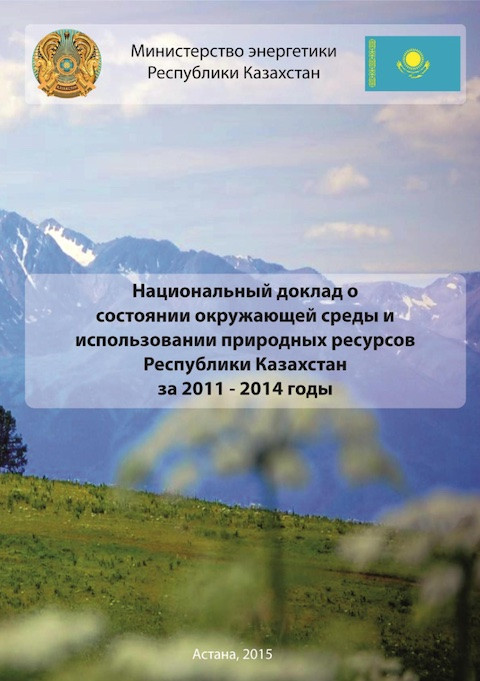 National Report on the State of the Environment and the Use of Natural Resources of the Republic of Kazakhstan for 2011-2014 Year of publication: 2015 Corporate author: Kazakhstan. Ministry of Energy National report on the state of the environment and use of natural resources is compiled in order to annually inform the population about the actual environmental situation on the territory of the Republic of Kazakhstan and the measures taken to improve it. The National Report presents the values of indicators characterizing the relationship between the state of the environment and indicators of socio-economic development. Национальный доклад о состоянии окружающей среды и использовании природных ресурсов Республики Казахстан за 2011 – 2014 годы Year of publication: 2015 Corporate author: Kazakhstan. Ministry of Energy Национальный доклад о состоянии окружающей среды и использовании природных ресурсов составляется в целях ежегодного информирования населения о фактической экологической ситуации на территории Республики Казахстан и мерах, принимаемых по ее улучшению. В Национальном докладе представлены значения показателей, характеризующих взаимосвязь состояния окружающей среды и показателей социально-экономического развития.
  The Current Situation of the Russian Language in the Central Asian States (Journal of Post-Soviet Studies; vol. 3, no. 3) Year of publication: 2020 Author: Yu Haiju The article examines the current situation of the Russian language in the five Central Asian states of Kazakhstan, Kyrgyzstan, Tajikistan, Turkmenistan, and Uzbekistan, which appreciate the sovereignty they have gained, elevating their own language policies to the level of a manifestation of national independence and a symbol of sovereignty. The status of the Russian is no longer a simple question of language, but a complex political issue. The author shows that the attitudes of the five Central Asian states toward the Russian language can be divided into three main categories: acceptance, resistance and uncertainty. Современное положение русского языка в государствах Центральной Азии (Постсоветские исследования; vol. 3, no. 3) Year of publication: 2020 Author: Yu Haiju В статье рассматривается современное положение русского языка в пяти государствах Центральной Азии – Казахстан, Киргизия, Таджикистан, Туркменистан и Узбекистан, которые высоко ценят приобретённый суверенитет, поднимают свою собственную языковую политику до уровня проявления национальной независимости и символа суверенитета. Статус русского языка уже не простой вопрос языка, а сложный политический вопрос. Автор показывает, что отношение пяти государств Центральной Азии к русскому языку можно разделить на три основные категории: принятие, сопротивление и неопределенность.
  Young People of Central Asia: Tajikistan Year of publication: 2017 Author: Muzaffar Olimov | Shavkat Sakhibov Corporate author: Friedrich-Ebert-Stiftung Kazakhstan Office The Friedrich Ebert Foundation initiated the Youth of Central Asia project. Its purpose is to study the values and attitudes of young Tajikistanis, lifestyles, identities, political views and foreign policy orientations. The project resulted in a research analytical report by independent economist Shavkat Sahibov and Professor Muzaffar Olimov, Doctor of History. Молодежь Центральной Азии: Таджикистан Year of publication: 2017 Author: Muzaffar Olimov | Shavkat Sakhibov Corporate author: Фонд имени Фридриха Эберта в Казахстане Фондом им. Фридриха Эберта был инициирован проект «Молодежь Центральной Азии». Его цель – изучение ценностей и взглядов молодых таджикистанцев, образа жизни, идентификации, политических взглядов и внешнеполитических ориентаций. По итогам проведенной работы независимым экономистом Шавкатом Сахибовым и доктором исторических наук, профессором Музаффаром Олимовым был подготовлен исследовательский аналитический отчет.
  Review and Reflection on Special Education Act in Scotland (Creative Education Studies; vol. 7, no. 1) Year of publication: 2019 Author: Qiuhan Feng Scotland is famous for its high quality education and the development of inclusive education around the world. Education equality is a core concept to improve social justice in Scotland. The government has published many educational acts to enlarge the additional support system, protect parents’ involvement and establish teacher education system to improve the education of children in disadvantaged situations. However, problems come along with the expansion of additional support needs, such as categories and labels, stigmatization, effectiveness of education resource delivery. Education equality still remains as a big problem.