
Resources
Explore a wide range of valuable resources on GCED to deepen your understanding and enhance your research, advocacy, teaching, and learning.
1,828 Results found
 Some Features of the Gender Orientation of the Social Policy of the Central Asian Countries Year of publication: 2017 Author: A.D. Bekebaeva The article examines the gender-oriented social policy of Central Asian countries, its origins, features and disadvantages. Special attention is paid to the common Soviet past of the countries studied, since this period left a major imprint on the current state of gender issues in the region. Некоторые особенности гендерной ориентации социальной политики стран центральной Азии Year of publication: 2017 Author: A.D. Bekebaeva В статье рассматривается гендерно ориентированная социальная политика стран Центрльной Азии, ее истоки, особенности и недостатки. особое внимание уделено общему советскому прошлому исследуемых стран, так как этот период наложил основной отпечаток на современное состояние гендерных проблем в регионе.
 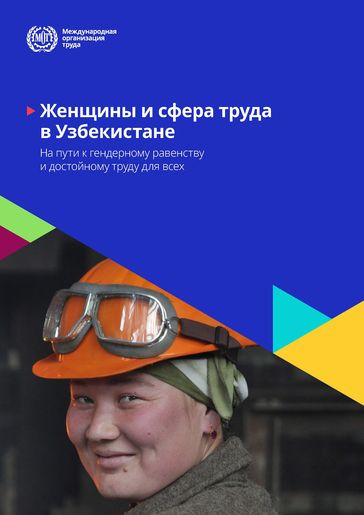 Women and the World of Work in Uzbekistan. Towards Gender Equality and Decent Work for All Year of publication: 2021 Author: Mansour Omeira Corporate author: International Labour Organization (ILO) The report is a response to the need for a comprehensive analysis of the situation of women in the labor sphere of Uzbekistan. The purpose of the report is to provide information for the development of policies, legislation, and initiatives aimed at the development and promotion of decent work for all women and men. Женщины и сфера труда в Узбекистане: На пути к гендерному равенству и достойному труду для всех Year of publication: 2021 Author: Mansour Omeira Corporate author: International Labour Organization (ILO) Доклад является ответом на необходимость всестороннего анализа положения женщин в сфере труда Узбекистана. Цель доклада – предоставление информации для разработки политики, законодательства и инициатив, направленных на развитие и продвижение достойного труда для всех женщин и мужчин.
  Juvenile Justice: Analysis of Legislation and Judicial Practice of the Republic of Uzbekistan Year of publication: 2015 Corporate author: UNICEF Uzbekistan This publication was prepared within the framework of cooperation between UNICEF, the Supreme Court of the Republic of Uzbekistan, and the Research Center on Democratization and Liberalization of Judicial Legislation and Ensuring the Independence of the Judicial System under the Supreme Court of the Republic of Uzbekistan. This report contains an analysis of the current legislation and judicial practice on the administration of juvenile justice for compliance with international standards and best practices. Правосудие в отношении несовершеннолетних: Анализ законодательства и судебной практики Республики Узбекистан Year of publication: 2015 Corporate author: UNICEF Uzbekistan Данная публикация подготовлена в рамках сотрудничества между ЮНИСЕФ, Верховным судом Республики Узбекистан и Исследовательским центром по демократизации и либерализации судебного законодательства и обеспечению независимости судебной системы при Верховном суде Республики Узбекистан. Данный отчет содержит анализ действующего законодательства и судебной практики по отправлению правосудия в отношении несовершеннолетних на предмет соответствия международным стандартам и передовой практике.
 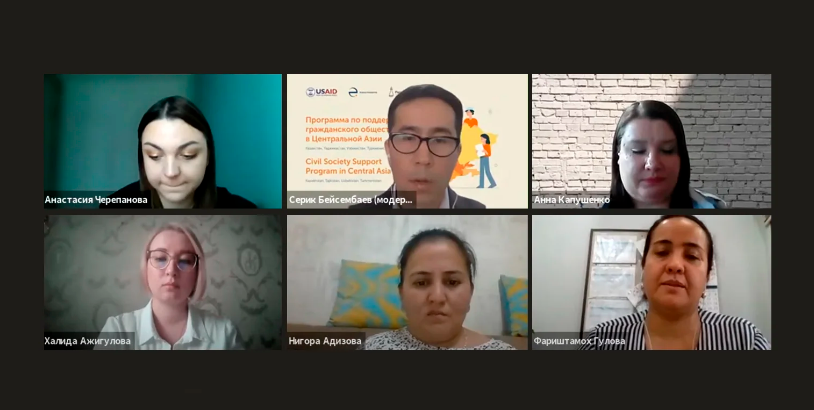 Combating Violence Against Women in Central Asia: New Laws, Old Practices Year of publication: 2021 Corporate author: Paperlab Research Center (Kazakhstan) The problem of violence against women is still acute in Central Asian countries. According to the UN, 18% of women from the countries of this region reported that they had personally experienced domestic violence and discrimination. At the PaperLab online discussion platform, experts and researchers, together with representatives of civil society and government agencies, discussed the topic of combating gender-based violence in the context of legislative and programmatic measures that are being implemented in Central Asian countries.
  The Genesis of the Category of “LGBT Refugee” Within the United Nations High Commissioner for Refugees Year of publication: 2021 Author: Ahmed Hamila Corporate author: Alterstice The international protection system is governed by the Geneva Convention of 1951, supplemented by the New York Protocol of 1967. These international conventions list five grounds for granting refugee status: persecution based on race, religion, nationality, membership of a certain social group, and political opinions. These international instruments do not explicitly recognize persecution based on sexual orientation and gender identity as grounds for granting refugee status. However, over the past three decades, the Office of the United Nations High Commissioner for Refugees (UNHCR) has come to recognize such persecution as grounds for granting international protection. In this article, I focus on the genesis of the "LGBT refugee" category within the UNHCR in the early 2000s. The essay argue that the emergence of this new category of refugees is part of two parallel dynamics, which both led to the development of the UNHCR Guidelines, which explicitly recognize persecution based on sexual orientation as a ground for granting refugee status. On the one hand, it is in the context of greater attention paid to refugee women, and in particular to gender-related persecutions, that persecutions related to sexual orientation are for the first time discussed. On the other hand, the category of “LGBT refugee” also appears in the context of the interpretation of the notion of “belonging to a certain social group”. La genèse de la catégorie de « réfugié LGBT » au sein du Haut-Commissariat des Nations Unies pour les réfugiés Year of publication: 2021 Author: Ahmed Hamila Corporate author: Alterstice Le système de protection international est régi par la Convention de Genève de 1951, complétée par le Protocole de New York de 1967. Ces conventions internationales énumèrent cinq motifs d’octroi du statut de réfugié : les persécutions du fait de la race, de la religion, de la nationalité, de l’appartenance à un certain groupe social et des opinions politiques. Ces instruments internationaux ne reconnaissent pas explicitement les persécutions du fait de l’orientation sexuelle et de l’identité de genre en tant que motifs d’octroi du statut de réfugié. Cependant, au cours des trois dernières décennies, le Haut-Commissariat des Nations Unies pour les réfugiés (HCR) a été amené à reconnaître ces persécutions en tant que motifs d’octroi de la protection internationale. Dans cet article, je m’intéresse à la genèse de la catégorie de « réfugié LGBT » au sein du HCR au début des années 2000. Je soutiens que l’émergence de cette nouvelle catégorie de réfugiés s’inscrit dans deux dynamiques parallèles, qui ont toutes les deux débouché sur l’élaboration des Principes directeurs du HCR, qui reconnaissent explicitement les persécutions du fait de l’orientation sexuelle en tant que motif d’octroi du statut de réfugié. D’une part, c’est dans le contexte d’une plus grande attention portée aux femmes réfugiées, et notamment aux persécutions liées au genre, qu’il est pour la première fois question des persécutions liées à l’orientation sexuelle. D’autre part, la catégorie de « réfugié LGBT » apparaît aussi dans le contexte de l’interprétation de la notion d’« appartenance à un certain groupe social ».
  “Racism, Sexism, Homophobia, Which Card do You Want?” The Post-Migration Experience of Northern LGBTQ People Global and Global South Year of publication: 2021 Author: Barbara Andrade de Sousa | Line Chamberland Corporate author: Alterstice This article examines the life stories of seven LGBTQ immigrants, from the Global North and South, who live in Montreal. The research on immigration has long been carried out according to a framework heteronormative, which sets aside a whole series of questions relating to the impact of sexual orientation and non-normative gender identity on the migratory experience. Societies impose distinct constraints on LGBTQ people. Once settled in the host society, these subjects can experience more sexual possibilities. However, their origin can become a marker that places them inside a relationship of power with the majority group. This article aims to shed light on how LGBTQ immigrants construct their life stories in a context where their experience is crossed by the interweaving of several aspects of identities such as sexual orientation, gender identity, ethnicity, and religion, to name a few. The intersectional approach makes it possible to identify the systems of binding powers which participants face daily. The thematic analysis gave us allowed to listen to individuals to know the categories of power and the systems of oppression they talk about — the goal being to position respondents as knowledgeable subjects, not mere study objects. Analysis of the interviews shows that LGBTQ individuals who express a diverse combination of identities face specific challenges linked to the migratory route.