
Resources
Explore a wide range of valuable resources on GCED to deepen your understanding and enhance your research, advocacy, teaching, and learning.
1,828 Results found
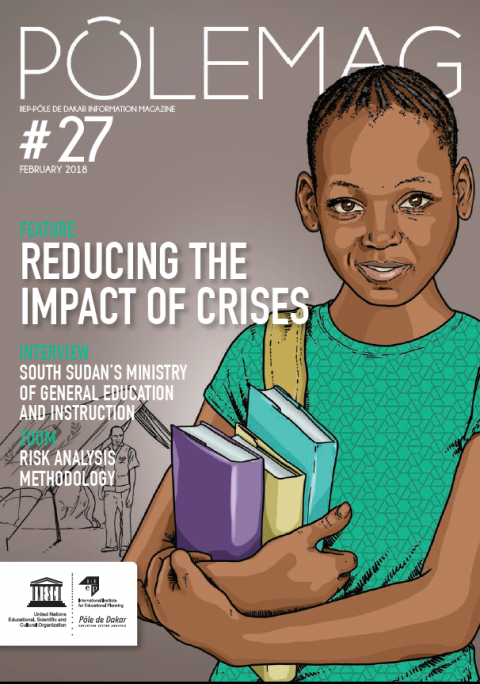 PôleMag: la lettre d'information du Pôle de Dakar Year of publication: 2018 Corporate author: UNESCO IIEP Regional Office for Africa Crise politique, crise sanitaire, crise climatique, les systèmes éducatifs sont rarement suffisamment préparés à faire face aux situations d’urgence.Et si la fréquence des menaces est inconnue, les effets sont généralement dévastateurs pour l’école, conduisant à une rupture des apprentissages, voire à l’abandon scolaire pur et simple. Dans le monde, 75 millions d’enfants vivant dans un pays affecté par une crise ont besoin d’un soutien éducatif1.Comment faire face aux crises ? Comment améliorer les capacités des systèmes à réduire leurs impacts ? Renforcer la résilience des systèmes éducatifs par une planification adaptée aux situations de crise est une priorité de l’IIPE. Notre institut a développé, avec ses principaux partenaires, des orientations stratégiques et des outils dédiés à la planification de l’éducation adaptés aux situations de crises. Forts de notre expérience sur cette thématique en Afrique, nous travaillons également en collaboration avec l’UNICEF au développement d’une nouvelle méthodologie dédiée à l’analyse des risques et vulnérabilités.Atténuer l’impact des crises appelle à renforcer les relations avec les partenaires. Une planification adaptée aux vulnérabilités doit faciliter le dialogue entre les acteurs du développement et ceux de l’humanitaire afin que les plans d’interventions soient coordonnés et alignés sur les priorités gouvernementales des plans sectoriels. Un dollar investi dans la réduction des risques pourrait épargner jusqu’à 7 dollars en coût de reconstruction. Prendre en compte les risques dans l’analyse et la planification des systèmes éducatifs est donc un investissement judicieux.
  The Mandate of UNESCO for Peace in the era of 「The Rise of Exclusionism」 Year of publication: 2019 Author: 한경구 | 유성상 | 성지은 | 조동준 | 강인욱 | 김성해 | 루츠 묄러 | 최동주 Corporate author: 대한민국 외교부 | Korean National Commission for UNESCO Multilateralism has gradually been losing ground in the international community recently, owing to rapid changes in ideology, exemplified by the America First policy, Brexit, and the rise of many right wing parties. The growth of such ideologies in the hearts and minds of people, implies that diplomacy, a form of high politics between government bureaucrats, is no longer sufficient to guard the current order.To respond to this challenge, the United Nations, the greatest symbol of postwar multilateralism, has set the reaffirmation of the UN‟s values worldwide as one of its priorities for 2019. UNESCO has a leading role to play in leading this effort, as the UN specialist organization mandated to build the defenses of peace in the minds of men and women through intellectual cooperation in the field of education, science, and culture. The aim of this session is to discuss various ways in which UNESCO can help to heal the divisions in people‟s thinking and contribute to peace-building in the current global context. 배타주의 확산 시대에 있어 평화를 향한 유네스코의 역할 (2019 제주포럼 유네스코 세션) Year of publication: 2019 Author: 한경구 | 유성상 | 성지은 | 조동준 | 강인욱 | 김성해 | 루츠 묄러 | 최동주 Corporate author: 대한민국 외교부 | 유네스코한국위원회 최근 국제사회는 미국우선주의, 브렉시트, 극우정당의 부상 등 여러 급격한 변화로 인해 2 차 대전 이후 70 여 년간 다져온 다자주의 기반을 조금씩 잃어가고 있다. 사람들의 마음속에서부터 시작되는 이러한 현상은 국가 간 외교라는 „상위정치‟만으로는 다자주의를 지키기 힘든 시대가 왔음을 의미하기도 한다. 이러한 가운데 현 다자주의 체제의 상징인 UN 은 금년 중점과제 중 하나로 “전세계적인 UN 가치 강화”를 내걸었다. UN 기구 중 교육과학문화의 지적 협력을 통해 인간의 마음에 평화의 방벽을 세우는 것을 사명으로 하는 UNESCO 를 통해 인류의 마음 속 갈등과 분열을 치유하고 평화로 나아가기 위한 여러 구체적인 방안을 고민해보고자 한다.
  한국교육과 SDG4-교육2030 Year of publication: 2018 Author: 김광호 Corporate author: 유네스코한국위원회 영유아 교육부터 성인교육에 이르기까지 교육의 모든 분야를 망라하고 있는 SDG4는 매우 야심 찬 목표다. 세계 각국은 이를 달성하기 위해 여러 논의도 벌이고 교육 정책 에 반영도 하는 등 다각도로 노력하고 있다. 이러한 국제사회의 노력에 비해 국내의 SDG4 관련 움직임은 아직 그리 크지 않은 것 같다. 이에 유네스코한국위원회는 교육부와 함께 한국의 SDG4 달성 현황을 파악하고 앞으로 어떤 과제에 집중해야 하는지 점검하기 위하여 2017년 11월에 ‘제1회 SDG4-교육 2030 포럼: 한국교육과 SDG4-교육 2030’을 개최한 바가 있다. 이 책은 포럼 발표문과 토론문의 저자들이 포럼에서의 논의를 반영하여 수정한 원고를 한데 묶은 것이다. 일차적으로 교육 정책 담당자, 교육 연구자, 교육기관 종사자, 시민단체 활동가를 위한 내용을 담고 있지만, 일반 시민의 SDG4에 대한 관심과 이해를 높이는 데에도 유용할 것이다.
 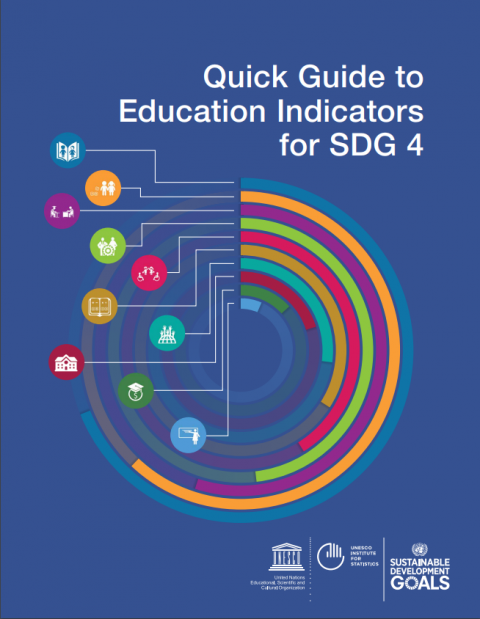 Guide rapide des indicateurs de l'éducation pour l'ODD 4 Year of publication: 2018 Corporate author: UNESCO Institute for Statistics (UIS) Ce guide sert de référence rapide sur la manière de suivre les progrès accomplis vers la réalisation de l’Objectif de développement durable 4 (ODD 4) sur une éducation de qualité. Il fournit les explications essentielles sur les cibles de l’ODD 4, leurs indicateurs, le mode d’élaboration des indicateurs et où trouver les données nécessaires à ces indicateurs.
 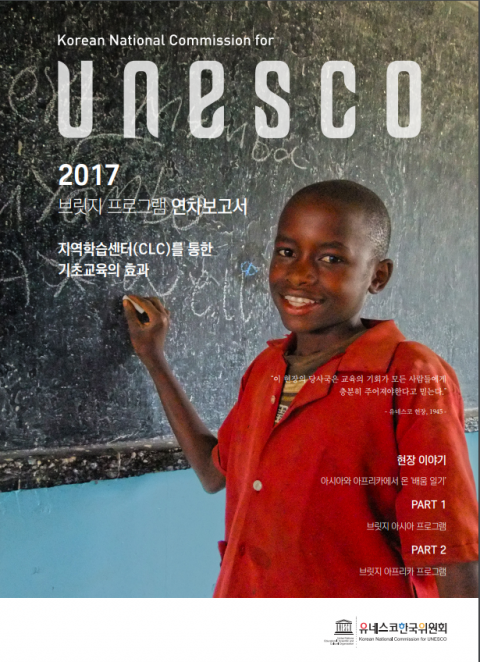 2017-18 브릿지 프로그램 연차보고서 Year of publication: 2018 Corporate author: 유네스코한국위원회 브릿지 프로그램은 유네스코한국위원회가 교육부의 지원과 후원 모금을 통해 남아시아 지역과 사하라 이남 아프리카 지역에 거주하는 비문해자를 포함한 교육소외계층을 대상으로 교육의 기회를 제공하는 사업이다. 이 보고서는 2017년도부터 2018년도 상반기까지 유네스코한국위원회가 아시아 6개국과 아프리카 6개국에서 각국의 정부기관, 시민사회단체 및 유네스코국가위원회 등과 협력하여 추진한 사업들의 세부 활동과 성과를 보여준다. 아울러, 브릿지 프로그램을 통해 삶의 변화를 맞이한 사람들의 이야기도 확인할 수 있다. Quick guide to education indicators for SDG 4 Year of publication: 2018 Corporate author: UNESCO Institute for Statistics (UIS) This guide serves as a quick reference on how to monitor progress towards Sustainable Development Goal 4 (SDG 4) on quality education. It provides basic explanations of SDG 4 targets, their indicators, how they are created and where to find the information needed for these indicators. Guía abreviada de indicadores de educación para el ODS 4 Year of publication: 2018 Corporate author: UNESCO Institute for Statistics (UIS) Esta guía sirve de referencia rápida sobre cómo monitorear el progreso en la consecución del Objetivo de Desarrollo Sostenible 4 (ODS 4) relativo a la educación de calidad. El texto ofrece explicaciones básicas acerca de las metas del ODS 4, sus indicadores, cómo se establecen y dónde encontrar la información necesaria para estos indicadores
  Asia and the Pacific SDG Progress Report 2019 Year of publication: 2019 Author: Arman Bidarbakht Nia | Eric Hermouet | Dayyan Shayani | Phuong Tran Corporate author: United Nations (UN) This report analyses Sustainable Development Goals (SDGs) trends as well as data availability for monitoring progress in Asia and the Pacific and its five subregions. It assesses progress towards the SDGs and the gaps which must be closed for these to be achieved by 2030. This assessment is designed to ensure the region’s actions remain on target, shortcomings are addressed as they arise, and all interested parties remain engaged. It is an invaluable resource for all stakeholders involved in prioritisation, planning, implementation and follow-up of the 2030 Agenda for Sustainable Development in Asia and the Pacific.
  International Scientific and Practical Conference "Water for Sustainable Development of Central Asia". Conference proceedings Year of publication: 2018 Corporate author: Institute of Water Problems, Hydropower and Ecology of the National Academy of Sciences of Tajikistan This collection includes materials from the International Scientific and Practical Conference "Water for the Sustainable Development of Central Asia".The collection reflects the current state of water resources of Central Asia and the prospects for sustainable development.