
Resources
Explore a wide range of valuable resources on GCED to deepen your understanding and enhance your research, advocacy, teaching, and learning.
1,828 Results found
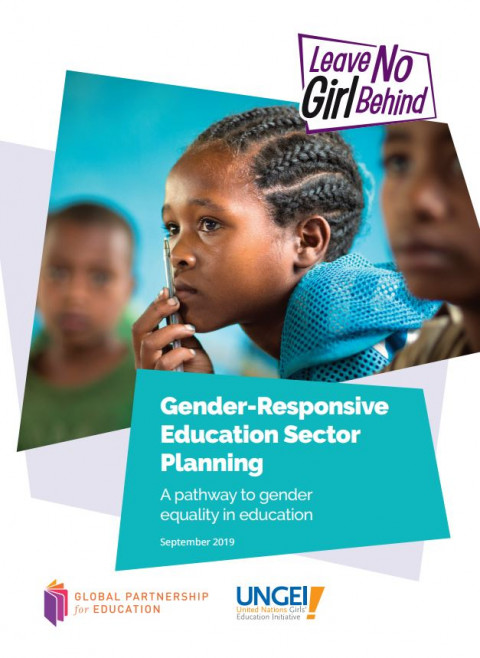 Gender-responsive education sector planning: A pathway to gender equality in education Year of publication: 2019 Corporate author: Global Partnership for Education (GPE) | United Nations Girls' Education Initiative (UNGEI) Education transforms lives. It is the surest investment to break down social and economic differences between people, unravel inequalities based on gender and accelerate progress towards the entire vision of the 2030 Agenda for Sustainable Development. Yet, despite the world’s commitment to ensure every child completes 12 years of quality education, in low-income countries only 4% of the poorest finish upper secondary school, falling to 2% among marginalized girls.Sustainable Development Goal 4, inclusive and equitable quality education for all, is about much more than education access. It calls for education policies to look beyond gender parity in school enrollment in order to put gender equality at the heart of education through gender-sensitive plans and policies. Gender-responsive education sector planning is an essential tool for advancing gender equality in and through education.
  La citoyenneté dans tous ses états Year of publication: 2016 Author: Remacle, Anne-Catherine Durant cette période que certains estiment en crise démocratique, les questions de démocratie et de citoyenneté occupent très souvent le devant de la scène. Des initiatives citoyennes et participatives éclosent un peu partout à l’échelle mondiale et notre petite Belgique n’est pas en reste. Il s’agit là notamment d’une dynamique réactivée à la suite de la diffusion du film Demain qui a réinsufflé un vent d’envie participative en évoquant des mouvements comme les villes en transition, les Incredible Edible (Incroyable Comestible), les initiatives de monnaies locales et autres filières courtes. Nous assistons sans nul doute à un réveil citoyen dans une démocratie représentative un peu essoufflée. Cette logique de participation citoyenne, ainsi que l’implication d’acteurs critiques et responsables, est également à la base du travail du Centre Permanent pour la Citoyenneté et la Participation (CPCP). Que ce soit dans ses groupes d’éducation permanente, durant ses formations et animations ou au travers de ses publications, le CPCP prône une citoyenneté active qui inclut une participation à la vie de notre société. Le travail du CPCP se situe donc intimement autour des notions de citoyen et de citoyenneté, deux termes aux acceptions très variées. Cette publication a pour but de défricher les différentes significations de la citoyenneté et de les développer selon plusieurs dimensions.
 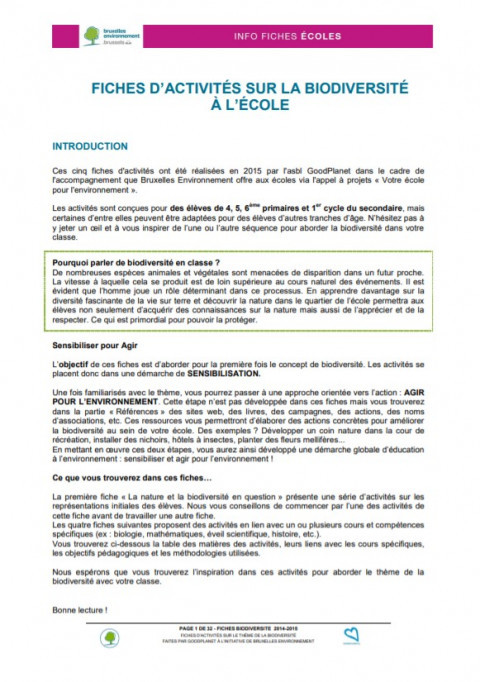 5 fiches activités sur la biodiversité à l'école Year of publication: 2015 Corporate author: Bruxelles Environnement En apprendre davantage sur la diversité fascinante de la vie sur terre et découvrir la nature dans le quartier de l’école permettra aux élèves non seulement d’acquérir des connaissances sur la nature mais aussi de l’apprécier et de la respecter. Ce qui est primordial pour pouvoir la protéger ! Ces fiches présentent une série d’activités en lien avec un ou plusieurs cours et compétences spécifiques. Elles contiennent également de nombreuses ressources pour vous permettre d’aller plus loin.
  [Video] 전 세계가 함께 하는 지속가능발전목표 Year of publication: 2019 Corporate author: 대한민국 환경부 지속가능 발전 목표를 전 세계가 함께 공유하고 행동해야 할 때이다. 지속가능발전목표(SDGs)란, 인류의 지속가능발전을 위해 유엔에서 채택한 2030년까지 인류의 공동목표이며, 대한민국도 이와 함께 하고 있다.
 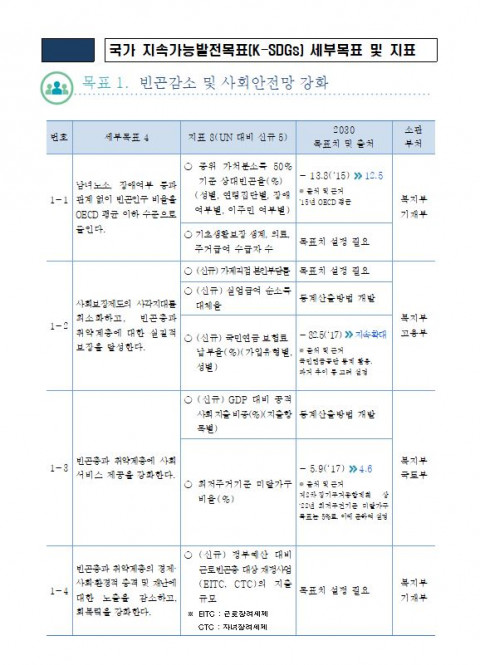 국가 지속가능발전목표(K-SDGs) 세부목표 및 지표 Year of publication: 2019 Corporate author: 대한민국 환경부 지속가능발전위원회 K-SDGs는 국제적 정세에 대응하여 수립한 한국형 SDGs이며, 경제, 사회, 환경 등 국정 전 분야를 아울러 대한민국이 가야 할 2030년까지 이정표를 설정한 것이다.K-SDGs는 기존에 행정부처에서 각종 정책 및 계획 등을 먼저 수립한 후 관계 전문가와 국민 의견을 수렴하는 하향식(Top-down) 방식과는 다른 상향식(Bottom-up) 방식으로 추진되었다. 초안을 마련하는 단계부터 192명의 민간 작업반이 참여하여 우리 사회의 지속가능성을 위해 요구되는 사항들을 반영한 세부목표, 지표체계(안)를 마련했다.이에 대해 환경부는 90개 이상의 기관과 단체가 포함된 이해관계자그룹(K-MGoS, Korea Major Groups and other Stakeholders)의 운영과 두 차례에 걸친 국민 대토론회 개최 등을 통한 국민 의견 수렴 후 그 결과를 관계부처와 협의하여 확정했다. 또한, 향후 K-SDGs의 이행과 보완 과정에서도 이해관계자그룹 등 국민 협치(거버넌스) 체계를 계속 유지할 계획이다.
 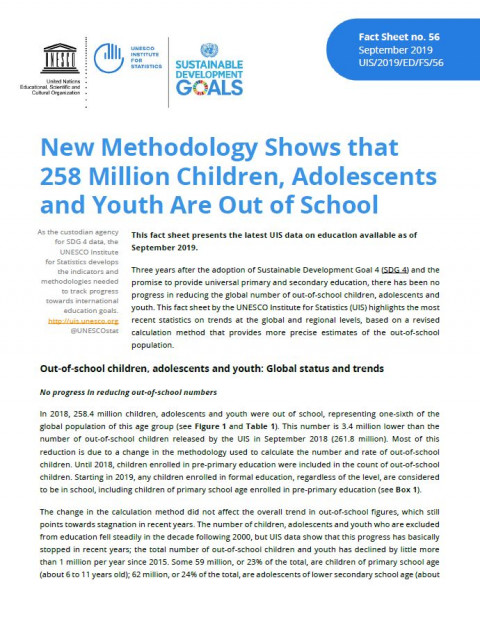 New Methodology Shows that 258 Million Children, Adolescents and Youth Are Out of School Year of publication: 2019 Corporate author: UNESCO Institute for Statistics (UIS) This fact sheet presents the latest UIS data on education available as of September 2019.Three years after the adoption of Sustainable Development Goal 4 (SDG 4) and the promise to provide universal primary and secondary education, there has been no progress in reducing the global number of out-of-school children, adolescents and youth. This fact sheet by the UNESCO Institute for Statistics (UIS) highlights the most recent statistics on trends at the global and regional levels, based on a revised calculation method that provides more precise estimates of the out-of-school population.
  Background Information on Education Statistics in the UIS Database Year of publication: 2019 Corporate author: UNESCO Institute for Statistics (UIS) Background Information on Education Statistics in the UIS Database Data releases Data sources Population estimates Economic statistics Technical notes Country notes
 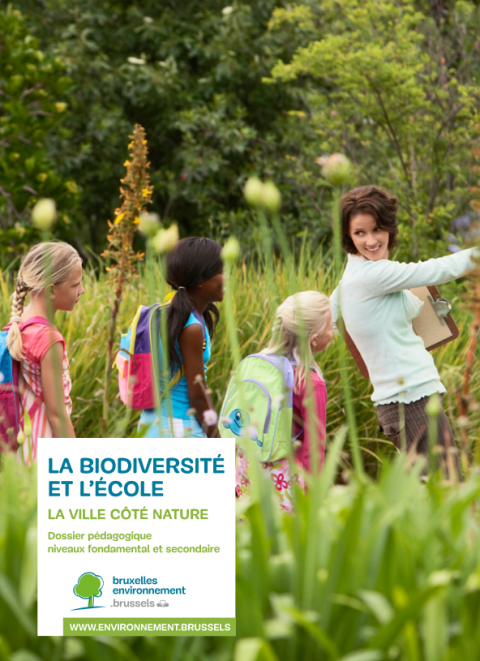 La biodiversité et l'école: la ville côté nature Year of publication: 2019 Corporate author: Bruxelles Environnement Ce dossier pédagogique donne des infos de qualité sur la thématique et des pistes pour mener des activités concrètes au sein de l'école. Les activités proposées allient pédagogie et actions. Ce dossier vous propose divers outils et activités pédagogiques pour passer à l’action avec votre classe ou école : simple découverte de la biodiversité pour motiver vos élèves ; activités pour mieux comprendre la biodiversité à Bruxelles, son importance et les pressions qui pèsent sur elle, et actions concrètes pour la protéger ou la développer, au départ de l’école ou du quartier.
  A Report on Korean-Sustainable Development Goals (K-SDGs) 2019 Year of publication: 2019 Corporate author: 대한민국 환경부 지속가능발전위원회 South Korea's Commission on Sustainable Development set up the Korean Sustainable Develpment Goals(K-SDGs) in 2018 by applying the international sustainable development goal system to domestic circumstances. 국가 지속가능발전목표(K-SDGs) 수립보고서 2019 Year of publication: 2019 Corporate author: 대한민국 환경부 지속가능발전위원회 K-SDGs는 국제적 정세에 대응하여 수립한 한국형 SDGs이며, 경제, 사회, 환경 등 국정 전 분야를 아울러 대한민국이 가야 할 2030년까지 이정표를 설정한 것이다.