
Resources
Explore a wide range of valuable resources on GCED to deepen your understanding and enhance your research, advocacy, teaching, and learning.
1,828 Results found
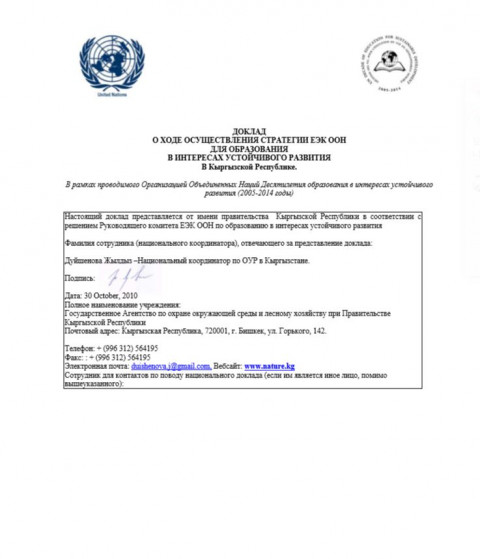 Progress Report on the Implementation of the UNECE Strategy for Education for Sustainable Development Year of publication: 2010 Corporate author: State Agency on Environment Protection and Forestry (Kyrgyzstan) This report aims to evaluate the implementation of the UNECE Strategy for Education for Sustainable Development in the Kyrgyz Republic as part of the United Nations Decade of Education for Sustainable Development (2005-2014). The report presents the results of efforts aimed at implementing ESD, current challenges with reference to socio-economic conditions and development prospects. This report has been prepared by the State Agency for Environmental Protection and Forestry of the Kyrgyz Republic with the participation of interested departments, international and local experts. In preparing the report, materials and reports of international organizations - the OSCE, were used,UNESCO, UNDP, etc. Доклад о ходе осуществления стратегии ЕЭК ООН для образования в интересах устойчивого развития Year of publication: 2010 Corporate author: Государственное агентство охраны окружающей среды и лесного хозяйства (Кыргызстан) Данный отчет направлен на оценку результатов осуществления стратегии ЕЭК ООН для образования в интересах устойчивого развития в Кыргызской Республике в рамках проводимого Организацией Объединенных Наций Десятилетия образования в интересах устойчивого развития (2005-2014 годы). В отчете представлены результаты усилий, направленных на внедрение ОУР, текущие вызовы со ссылкой на социально-экономические условия и перспективы развития. Настоящий доклад подготовлен Государственным агентством Охраны Окружающей Среды и Лесного Хозяйства КР с участием заинтересованных ведомств, международных и местных экспертов. При подготовке отчета были использованы материалы и отчеты международных организаций – ОБСЕ, ЮНЕСКО, UNDP, и т.д.
  Overview of Central Asia on Education for Sustainable Development Year of publication: 2006 Corporate author: Regional Environmental Centre for Central Asia (CAREC) This review summarizes the great work carried out by the Central Asian countries in the framework of the implementation of the UN Decade on ESD and the CAREC EE and ESD Program, and aims to achieve significant results in the implementation of the ESD Strategy for the Ministerial Conference in Belgrade in 2007. Обзор Центральной Азии о прогрессе в области образования в интересах устойчивого развития Year of publication: 2006 Corporate author: Regional Environmental Centre for Central Asia (CAREC) Данный обзоре обобщает большую работу, проделанную странами Центральной Азии в рамках реализации Десятилетия ООН по ОУР и Программы ЦАРЭС в области ЭЭ и ОУР, и направлена на достижение значительных результатов в реализации Стратегии ОУР для Министерской конференции в Белграде в 2007 году.
  Международная научно-практическая конференция "Вода для устойчивого развития Центральной Азии" Year of publication: 2018 Corporate author: Институт водных проблем, гидроэнергетики и экологии Национальной академии наук Таджикистана В настоящий сборник включены материалы Международной научно-практической конференции «Вода для устойчивого развития Центральной азии».В сборнике отражены современное состяние водных ресурсов Центральной Азии и перспективы устойчивого развития.
  Rethinking post-Soviet Society: Multiculturalism in Central Asia Year of publication: 2014 Author: Nurlan Muminov, Zhasulan Orynbaev The article is devoted to the analysis of the post-Soviet society of Central Asia on the example of Uzbekistan and Kazakhstan with reference to the phenomenon of multiculturalism. In addition, the authors will try to answer the following basic questions: what social problems do multinational and multicultural post-Soviet societies face? and how to solve interethnic and intercultural problems of societies of post-Soviet countries in the process of creating each of them their own unitary national state. Переосмысление постсоветское общество: мультикультурализм в странах Центральной Азии Year of publication: 2014 Author: Nurlan Muminov, Zhasulan Orynbaev Статья посвящена анализу постсоветского общества Центральной Азии на примере Узбекистана и Казахстана со ссылкой на феномен мультикультурности. Кроме того, вавторы постараются ответить на следующие основные вопросы: какими общественными проблемами сталкиваются многонациональные и мультикультурные постсоветские общества; и как решаются межэтнические и межкультурные проблемы обществ постсоветских стран в процессе создания каждым из них собственного унитарного национального государства.
  Культурная идентичность таджиков и мультикультурализм Year of publication: 2014 Author: Khamrokhon Zarifi Статья посвящена вопросам истории, культурной идентичности и наследию таджикского народа. Обсуждаются вопросы сохранения и преемственности культурного разнообразия, а также феномен мультикультурализма.
  Tolerance of Kazakhstani society in the context of ensuring the harmony of values Year of publication: 2013 Author: Alma Sagyngali This article discusses the process of multinational Kazakh society searching for its cultural and civilizational identity in the framework of Kazakhstan's building of a social state and integration into the world community. Particular attention is paid to tolerance as a key cultural value. Толерантность казахстанского общества в контексте обеспечения ценностного согласия Year of publication: 2013 Author: Alma Sagyngali В данной статье рассматривается процесс поиска многонациональным казахстанским обществом своей культурно-цивилизационной идентичности в рамках построения Казахстаном социального государства и интеграции в мировое сообщество. Особое внимание уделяется толерантности, как ключевой культурной ценности.