
Resources
Explore a wide range of valuable resources on GCED to deepen your understanding and enhance your research, advocacy, teaching, and learning.
124 Results found
 What parents want: the role of schools in teaching about the wider world Year of publication: 2011 Corporate author: Think Global | Development Education Association This report presents the findings from a YouGov survey of parents’ attitudes towards their children’s education. The results show that parents of schoolage children think it is vital that schools teach about the wider world. At Think Global we know that many schools and teachers already prioritise such teaching, recognising how important it is to prepare their pupils to live in a globalised world and the positive contribution this can make to pupil attainment and behaviour. This report details the high level of support for schools that decide to prioritise this work; we hope it will provide schools and teachers with the information they need to expand this area of their teaching. Ce que les parents veulent: le rôle des écoles dans l'enseignement sur le monde plus large Year of publication: 2011 Corporate author: Think Global | Development Education Association Ce rapport présente les résultats d'un sondage YouGov des attitudes des parents envers l'éducation de leurs enfants. Les résultats montrent que les parents d'enfants pensent âge scolaire, il est essentiel que les écoles enseignent sur le reste du monde. A Think Global, nous savons que beaucoup d'écoles et les enseignants accordent déjà la priorité de cet enseignement, en reconnaissant combien il est important de préparer leurs élèves à vivre dans un monde globalisé et la contribution positive cela peut faire à élève le niveau et le comportement. Ce rapport détaille le niveau élevé de soutien pour les écoles qui décident de la priorité à ce travail; nous espérons qu'elle fournira aux écoles et aux enseignants les informations dont ils ont besoin pour développer ce domaine de leur enseignement.
 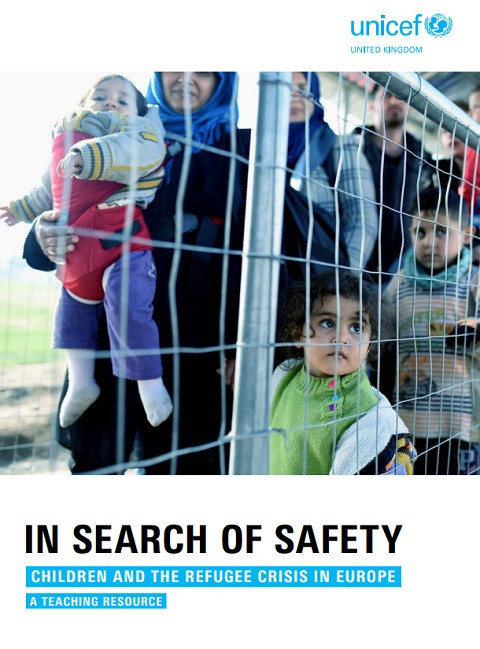 In Search of Safety: Children and the Refugee Crisis in Europe; A Teaching Resource Year of publication: 2016 Author: Carolyne Willow Corporate author: UNICEF UK This resource aims to allow teachers to help their students – primary (age seven upwards) and secondary – make sense of the current refugee and migrant crisis in Europe, within a children’s rights framework. It provides an historical overview of migration, contextualising the challenges we face today with a reminder of what has gone before. Guidance is provided to help you prepare for potentially difficult conversations and situations, and to enable you to be ready to access help for any child that needs it. The resource also includes ideas for extra activities by curriculum area, and ideas for whole-school activities. A range of films, images and information is provided and sign-posted to help you bring these activities to life.
  Educating for Global Citizenship: Australia as a Case Study (Vol. 11. No. 1) Year of publication: 2019 Author: Ruth Reynolds | Suzanne MacQueen | Kate Ferguson-Patrick Corporate author: UCL Press Twenty-first-century teaching prepares students for a globalized existence. The long-established goal of schooling to prepare a responsible citizenry who strive for the benefit of the community must now be extended, assisting students to become global citizens, equipped to deal with global issues. This article investigates how civics and citizenship education is addressed in curricula; in particular, to what extent the ongoing issue of supporting a critical citizenry, locally and globally, is addressed. Using Australia as a case study, we present an analysis of selected Australian primary school (ages 5–12) curriculum documents to determine the extent of commitment to educating for global citizenship specifically. While intentions are good, work is needed to ensure that these are enacted within schools. Active citizens: globally connected, locally engaged; facilitator's toolkit Year of publication: 2014 Corporate author: British Council This toolkit has been created to help facilitators to design and deliver the Active Citizens programme all over the world. Active Citizens is a social leadership programme which promotes intercultural dialogue and social responsibility as key leadership competencies in the 21st century. Active Citizens is run by the British Council working with civil society organisations all over the world. It began in 2009 and has been delivered in Europe, the Middle East, Africa and South Asia. It has reached more than 100,000 people to date through its training, conferences, social research and International Study Visits. The toolkit is in five sections - the introduction to the programme, preparing a workshop, delivering a workshop and post-workshop. There is also a large resource of workshop activity plans to support facilitators throughout the training cycle. The Active Citizens programme promotes community-led social development. It motivates members of communities to take responsibility for their social needs and gives them the knowledge, skills and experience to address them. The main audiences for the programme are community leaders working in, and with marginalised communities. They are people and institutions established, trusted and valued in the community - CSOs, NGOs, religious leaders, politicians, youth workers etc. They are influential and working to improve the lives of people living in their community. The programme develops skills and knowledge to identify and engage networks to help achieve goals as well as skills to plan and implement a project. The networks are between individuals at community level; institutions engaged in social action at community level; and institutions engaged in social policy dialogue at a national level. It includes cross-sectoral networking e.g. with the business community, media, etc. The building of these networks increases social inclusion, community resilience to conflict and increases social development in communities. See Diagram 1 on page 9. The programme is flexible and adaptable. It has been delivered to diverse groups, from rural communities in North-West Frontier Province Pakistan to urban communities in East London UK, to communities vulnerable to post-election violence in Kenya and internally displaced persons (IDPs) in Sri Lanka. Des Citoyens Actifs: connecté globalement recrutés sur place; la boîte à outils de l'animateur Year of publication: 2014 Corporate author: British Council Cette boîte à outils a été créé pour aider les animateurs à concevoir et à exécuter le programme des citoyens actifs partout dans le monde. Citoyens actifs est un programme de leadership social qui favorise le dialogue interculturel et la responsabilité sociale comme compétences clés en leadership au 21e siècle. Citoyens actifs est géré par le British Council travaille avec des organisations de la société civile partout dans le monde. Il a commencé en 2009 et a été livré en Europe, au Moyen-Orient, en Afrique et en Asie du Sud. Il a atteint plus de 100.000 personnes à ce jour par le biais de sa formation, les conférences, la recherche sociale et visites d'étude internationaux. La boîte à outils est en cinq sections - l'introduction au programme, la préparation d'un atelier, offrant un atelier et post-atelier. Il y a aussi une ressource importante de l'activité de l'atelier prévoit de soutenir les animateurs tout au long du cycle de formation. Le programme des citoyens actifs favorise le développement social dirigé par la communauté. Il motive les membres des communautés à prendre en charge leurs besoins sociaux et leur donne les connaissances, les compétences et l'expérience nécessaires pour y remédier. Les principaux publics pour le programme sont des leaders communautaires qui travaillent dans et avec les communautés marginalisées. Ce sont des gens et des institutions établies, fiables et appréciés dans la communauté - OSC, les ONG, les chefs religieux, les politiciens, les travailleurs de la jeunesse, etc. Ils sont influents et travaille à améliorer la vie des personnes vivant dans leur communauté. Le programme développe les compétences et les connaissances pour identifier et engager des réseaux pour aider à atteindre les objectifs ainsi que les compétences nécessaires pour planifier et mettre en œuvre un projet. Les réseaux sont entre les individus au niveau de la communauté; les institutions engagées dans l'action sociale au niveau communautaire; et les institutions engagées dans un dialogue de politique sociale au niveau national. Il comprend la mise en réseau intersectoriel par exemple avec la communauté des affaires, des médias, etc. La construction de ces réseaux augmente l'inclusion sociale, la résilience des communautés aux conflits et augmente le développement social dans les communautés. Voir diagramme 1 à la page 9. Le programme est flexible et adaptable. Il a été remis à divers groupes, des communautés rurales en North-West Frontier Province du Pakistan aux communautés urbaines à East London au Royaume-Uni, aux communautés des personnes vulnérables à la violence post-électorale au Kenya et déplacées à l'intérieur (PDI) au Sri Lanka. Primary schools and Prevent Year of publication: 2008 Corporate author: United Kingdom. Department for Children, Schools and Families This resource pack has been created to reduce the likelihood of young people becoming radicalized and then engaging in any form of violent extremism. The aim of ‘Prevent’ is to stop people becoming or supporting terrorists and to do this by challenging ideologies, protecting vulnerable individuals and supporting institutions, such as schools. It is part of the National Counter Terrorism Strategy known as CONTEST. Primary schools and Prevent Year of publication: 2008 Corporate author: United Kingdom. Department for Children, Schools and Families Cet ensemble de ressources a été élaboré afin d’empêcher, autant que possible, les jeunes de se radicaliser et de s’engager ensuite sur la voie de l’extrémisme violent. En effet, l’objectif d’une action préventive est d’empêcher les individus de rejoindre ou de supporter les groupes terroristes, en poussant à la remise en question de ces idéologies, en protégeant les personnes vulnérables et en soutenant les institutions en première ligne telles que les écoles. Cet outil participe ainsi à la Stratégie Nationale britannique de lutte contre le terrorisme, appelée CONTEST.
 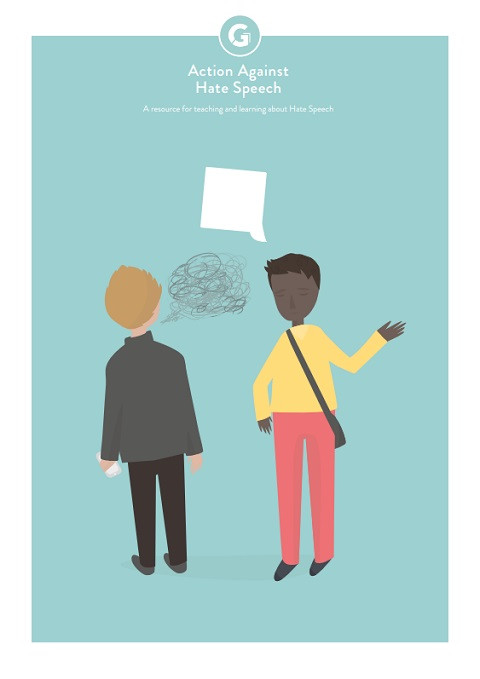 Action Against Hate Speech: A Resource for Teaching and Learning About Hate Speech Year of publication: 2017 Corporate author: Tony Blair Institute for Global Change | Generation Global This module is designed to prepare students for dialogue around the issue of hate speech. It builds upon other work on human rights, and explores the balancing act between freedom of expression and freedom from insult. Additionally, it prepares students for dialogue on these issues in our facilitated videoconferences and on our safe, secure, online community. This material helps you and your students to get involved in educating, advocating, and acting against hate speech in your communities.
  The Ultimate Dialogue Adventure: An Online Global Citizenship Game for Students Ages 13-17 Year of publication: 2020 Corporate author: Generation Global An interactive online platform that leads young people ages 13-17, through a game to learn the skills of intercultural dialogue and participate in forums focused on a variety of global topics and issues. The Ultimate Dialogue Adventure can be used as a self-directed learning journey for young people, or as an in-class companion for teachers, to support rigorous dialogue about a global topic or provide a place of practice when using our offline materials.