
Resources
Explore a wide range of valuable resources on GCED to deepen your understanding and enhance your research, advocacy, teaching, and learning.
130 Results found
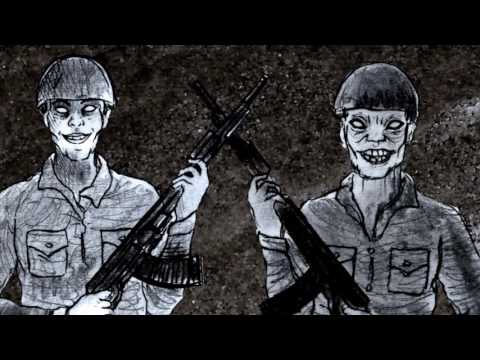 Trazos de memoria 2: Cortometraje Year of publication: 2017 Corporate author: Londres 38 Segunda parte del cortometraje basado en historias vinculadas a Londres 38, un inmueble utilizado como lugar de detención y tortura de opositores a la dictadura de Augusto Pinochet. Las voces de los protagonistas fueron entregados a dibujantes e ilustradores jívenes, para la realización de esta película.
  My Migrant Object Corporate author: Museo de la Memoria y los Derechos Humanos Educational material developed by the Museum of Memory and Human Rights from objects associated with stories of exile during the dictatorship of Augusto Pinochet in Chile.
 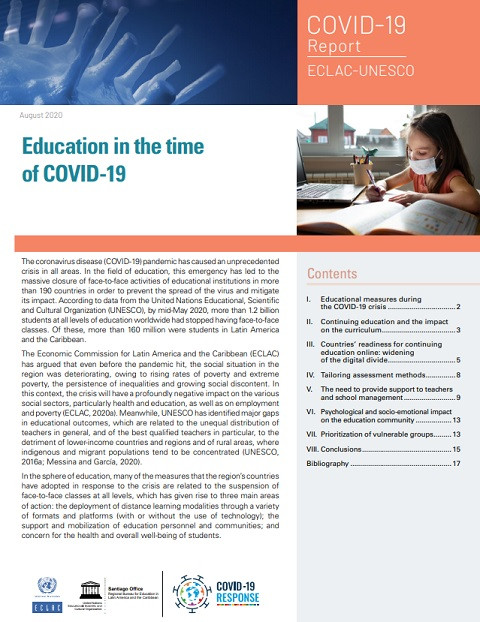 Education in the Time of COVID-19 (COVID-19 Report; ECLAC-UNESCO) Year of publication: 2020 Corporate author: Economic Commission for Latin America and the Caribbean (ECLAC) | UNESCO Santiago The coronavirus disease (COVID-19) pandemic has caused an unprecedented crisis in all areas. In the field of education, this emergency has led to the massive closure of face-to-face activities of educational institutions in more than 190 countries in order to prevent the spread of the virus and mitigate its impact. The Economic Commission for Latin America and the Caribbean (ECLAC) has argued that even before the pandemic hit, the social situation in the region was deteriorating, owing to rising rates of poverty and extreme poverty, the persistence of inequalities and growing social discontent. In this context, the crisis will have a profoundly negative impact on the various social sectors, particularly health and education, as well as on employment and poverty. Meanwhile, UNESCO has identified major gaps in educational outcomes, which are related to the unequal distribution of teachers in general, and of the best qualified teachers in particular, to the detriment of lower-income countries and regions and of rural areas, where indigenous and migrant populations tend to be concentrated.In the sphere of education, many of the measures that the region’s countries have adopted in response to the crisis are related to the suspension of face-to-face classes at all levels, which has given rise to three main areas of action: the deployment of distance learning modalities through a variety of formats and platforms (with or without the use of technology); the support and mobilization of education personnel and communities; and concern for the health and overall well-being of students.The aim of this document is to shed light on various consequences that these measures will have on educational communities in the short and medium term, and to offer key recommendations on how to manage those consequences in the best possible manner, drawing attention to opportunities for learning and innovation in the post-pandemic education system. La educación en tiempos de la pandemia de COVID-19 (Inform COVID-19; CEPAL-UNESCO) Year of publication: 2020 Corporate author: Economic Commission for Latin America and the Caribbean (ECLAC) | UNESCO Santiago La pandemia de enfermedad por coronavirus (COVID-19) ha provocado una crisis sin precedentes en todos los ámbitos. En la esfera de la educación, esta emergencia ha dado lugar al cierre masivo de las actividades presenciales de instituciones educativas en más de 190 países con el fin de evitar la propagación del virus y mitigar su impacto.La Comisión Económica para América Latina y el Caribe (CEPAL) ha planteado que, incluso antes de enfrentar la pandemia, la situación social en la región se estaba deteriorando, debido al aumento de los índices de pobreza y de pobreza extrema, la persistencia de las desigualdades y un creciente descontento social. En este contexto, la crisis tendrá importantes efectos negativos en los distintos sectores sociales, incluidos particularmente la salud y la educación, así como en el empleo y la evolución de la pobreza. Por su parte, la UNESCO ha identificado grandes brechas en los resultados educativos, que se relacionan con una desigual distribución de los docentes, en general, y de los docentes mejor calificados, en particular, en desmedro de países y regiones con menores ingresos y de zonas rurales, las que suelen concentrar además a población indígena y migrante.En el ámbito educativo, gran parte de las medidas que los países de la región han adoptado ante la crisis se relacionan con la suspensión de las clases presenciales en todos los niveles, lo que ha dado origen a tres campos de acción principales: el despliegue de modalidades de aprendizaje a distancia, mediante la utilización de una diversidad de formatos y plataformas (con o sin uso de tecnología); el apoyo y la movilización del personal y las comunidades educativas, y la atención a la salud y el bienestar integral de las y los estudiantes.El objetivo de este documento es visibilizar la diversidad de consecuencias que estas medidas tendrán sobre las comunidades educativas a corto y mediano plazo, así como plantear las principales recomendaciones para sobrellevar el impacto de la mejor manera posible, proyectando oportunidades para el aprendizaje y la innovación en la educación posterior a la pandemia.
 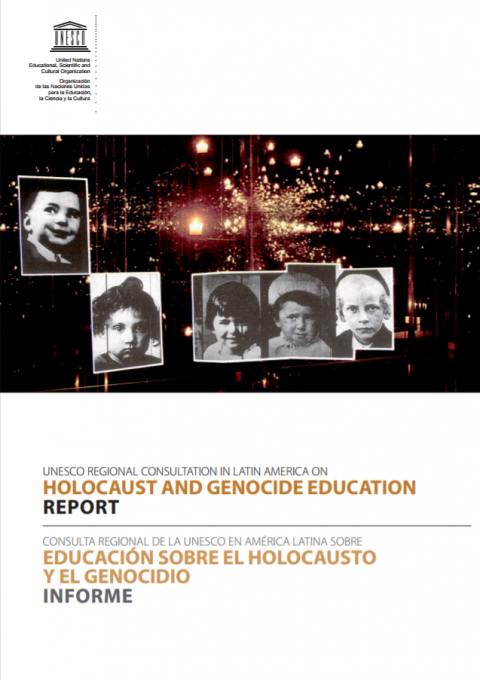 UNESCO regional consultation in Latin America on Holocaust and genocide education: report Year of publication: 2014 Corporate author: UNESCO Santiago This consultation with Latin American Member States sought to raise awareness amongst policymakers and education specialists of the region about the history of the Holocaust, as it can contribute to the prevention of genocide, following United Nations General Assembly resolution 60/7 on Holocaust remembrance. The meeting also aimed at fostering concrete cooperation between UNESCO and Member States on education about the history of genocide and mass atrocities, notably the Holocaust, with a view of introducing the subject in the curriculum and of developing relevant educational programmes in the region. The overall objectives of the project were as follows:▶ Strengthen educational leaders’ awareness and support for Holocaust remembrance and education about the history of genocide and mass atrocities, in line with regional efforts to foster education for peace and human rights.▶ Increase the implementation of education programmes about the history of the Holocaust and other genocides, and support interested Ministries of Education to introduce these subjects in the curriculum.▶ Foster regional exchanges about this topic and facilitate access to good practices regarding Holocaust and genocide related issues and peace education.
  Promoting Global Citizenship in the Chilean Classrooms Year of publication: 2016 Author: Cinzia Bizama Borotto | Nicolás Lobo Carrasco This article focuses on the analysis and clarification of the term "global citizenship". For this, different ways in which this concept is applied in canadian classrooms is analysed while suggesting ways of integrating it in chilean classrooms bearing in mind the educational history of the country and the benefits this would bring not only for teachers and students, but also for families, educational institutions and the country itself. La enseñanza de una ciudadanía global en el aula chilena Year of publication: 2016 Author: Cinzia Bizama Borotto | Nicolás Lobo Carrasco En este artículo se busca analizar y aclarar el termino “ciudadanía global”. Para esto se sugieren maneras en que este concepto aplicado en aulas canadienses puede ser integrado a la sala de clases chilena, tomando en cuenta los antecedentes educacionales del país y los posteriores beneficios que su uso traería no solo para docentes y los alumnos, sino que también para los padres, las instituciones educacionales y el país como tal.
  Intercultural and Decolonization in Higher Education and Challenges in Bolivia Year of publication: 2016 Author: Mario Yapu Corporate author: CELEI Chile There are several efforts to promote multiculturalism and decolonization in higher education, but their application has limitations. This article notes that often these issues are discussed under the influences of history in primary and secondary education that not correspond to higher education and universities reality. In other cases they are addressed as primarily cultural and folclorized problems. To attend this issue, this chapter suggest a reconceptualization of culture and a more integral, materialist and political historical and institutional analysis of interculturality and decolonization in universities. In these way, tried to explain the difficulties in applying the current educational reform at the higher education. La interculturalidad y la descolonización en la Educación Superior y sus desafíos en Bolivia Year of publication: 2016 Author: Mario Yapu Corporate author: CELEI Chile Existen diversos esfuerzos para promover la interculturalidad y descolonización en educación superior, pero su aplicación presenta limitaciones. Este artículo observa que con frecuencia aquellos temas son analizados bajo influencias de la historia de la educación primaria o secundaria que no se adecua a la educación superior y las universidades. En otros casos son abordados como problemas principalmente culturales y folclorizantes. Por eso propone una reconceptualización de la cultura y sugiere un análisis histórico e institucional más integral, materialista y político de la interculturalidad y descolonización en las universidades. Así trata de explicar las dificultades de aplicación de la reforma educativa actual en el nivel superior.
  Cities of the Future: By Reason and Science Year of publication: 2018 Corporate author: VTRChile The series "By Reason and Science" aims to bring science and technology closer to our daily lives, focusing mainly on local scientific development. This video explores different models of sustainable development in various cities around the world.