
Resources
Explore a wide range of valuable resources on GCED to deepen your understanding and enhance your research, advocacy, teaching, and learning.
2,776 Results found
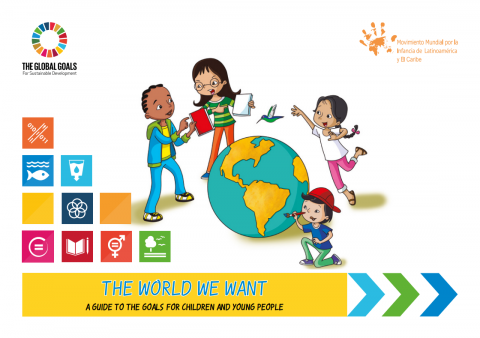 The World We Want: A Guide to the Goals for Children and Young People Year of publication: 2015 Author: Dora Bardales | Paola Arenas Corporate author: Global Movement for Children of Latin America and Caribbean | United Nations Children's Fund (UNICEF) The purpose of this guide is to help children and young people understand the Sustainable Development Goals, how they impact their life and what they can do every day to help their government achieve the Goals.
  The Road to the SDGs: A discussion with students Year of publication: 2015 Corporate author: United Nations Children's Fund (UNICEF) Animated video to help children learn about important concepts for people and planet as covered in the Sustainable Development Goals (SDGs) Le chemin vers les objectifs de developpement durable Year of publication: 2015 Corporate author: United Nations Children's Fund (UNICEF) Animated video to help children learn about important concepts for people and planet as covered in the Sustainable Development Goals (SDGs) El camino hacia los Objetivos de Desarrollo Sostenible Year of publication: 2015 Corporate author: United Nations Children's Fund (UNICEF) Animated video to help children learn about important concepts for people and planet as covered in the Sustainable Development Goals (SDGs)
  Address by Irina Bokova, Director-General of UNESCO, on the occasion of the Conference: Victims of ethnic and religious violence in the Middle East, Protecting and promoting plurality and diversity; Madrid, 24 May 2017 Year of publication: 2017 Corporate author: UNESCO. Director-General, 2009-2017 (Bokova, I.G.) This address was presented by Irina Bokova, Director-General of UNESCO, on the occasion of the Victims of Ethnic and Religious Violence conference in the Middle East for protecting and promoting plurality and diversity
 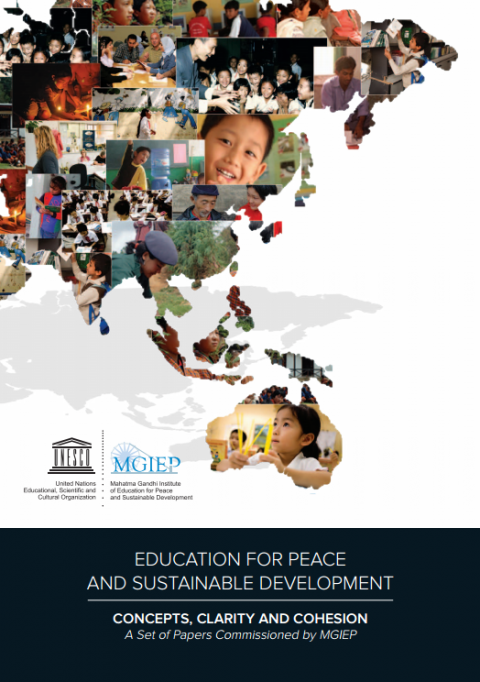 Education for peace and sustainable development: concepts, clarity and cohesion Year of publication: 2013 Corporate author: Mahatma Gandhi Institute of Education for Peace and Sustainable Development (MGIEP) UNESCO MGIEP's focus lies in exploring and engaging with the strong interlinkages between peace and sustainable development and making interventions in the education systems to impart these principles. The first publication from the Institute Education for Peace and Sustainable Development: Concepts, Clarity and Cohesion explores the interlinkages and interdependencies of Education for Peace and Education for Sustainable Development. The monograph contains four concept papers which elaborate on the interlinkages between education, peace and sustainable development, define the gaps in the current approach to education for peace and sustainable development and argue for a comprehensive approach to issues of peace and sustainability to be incorporated in education systems. UNESCO MGIEP aims to develop a theoretical framework to look at the interlinkages between peace and sustainability in a holistic manner and this monograph is the first exercise towards building this discourse. L'éducation pour la paix et le développement durable: concepts, la clarté et la cohésion Year of publication: 2013 Corporate author: Mahatma Gandhi Institute of Education for Peace and Sustainable Development (MGIEP) La mise au point de l'UNESCO MGIEP réside dans l'exploration et la collaboration avec les liens étroits entre la paix et le développement durable et faire des interventions dans les systèmes éducatifs pour communiquer ces principes. La première publication de «L'éducation pour la paix et le développement durable: concepts, la clarté et la cohésion de l'Institut explore les liens et les interdépendances de l'éducation pour la paix et l'éducation pour le développement durable. La monographie contient quatre documents de réflexion qui élaborent sur les liens entre l'éducation, la paix et le développement durable, définissent les lacunes dans l'approche actuelle de l'éducation pour la paix et le développement durable et plaident en faveur d'une approche globale des questions de paix et de développement durable à incorporer dans l'éducation systèmes. UNESCO MGIEP vise à développer un cadre théorique pour examiner les liens entre la paix et le développement durable d'une manière holistique et cette monographie est le premier exercice à la construction de ce discours. The heart of education: learning to live together; selected papers presented at the 16th UNESCO-APEID international conference Year of publication: 2014 Corporate author: UNESCO Bangkok To help frame current thinking on education in a changing world, UNESCO Bangkok, the Ministry of Education in Thailand, the Asian-Pacific Network for International Education and Values (APNIEVE), Pearson Thailand and J.P. Morgan co-organized the 16th UNESCO-APEID International Conference, The Heart of Education: Learning to Live Together in November 2012 in Bangkok, Thailand. The Conference provided a forum for participants to share their knowledge and experiences, raise critical questions, provide constructive feedback and, most of all, express their commitment to imbue and translate the essence of learning to live together in their respective educational efforts. This report contains selected papers presented at the Conference to reflect the linkages between learning and social development, showcase approaches and tools, and identify enabling policies and instruments to promote learning to live together. Le cœur de l'éducation: apprendre à vivre ensemble; articles sélectionnés présentés à la 16e Conférence internationale UNESCO-APEID Year of publication: 2014 Corporate author: UNESCO Bangkok Pour aider à encadrer la réflexion actuelle sur l'éducation dans un monde en mutation, l'UNESCO à Bangkok, le Ministère de l'éducation en Thaïlande, le Réseau Asie-Pacifique pour l'éducation et les valeurs internationales (APNIEVE), Pearson Thaïlande et JP Morgan co-organisé le 16 UNESCO-APEID internationale Conférence, The Heart of Education: Apprendre à vivre ensemble en Novembre 2012 à Bangkok, Thaïlande. La conférence a fourni un forum pour les participants de partager leurs connaissances et expériences, soulèvent des questions critiques, fournir une rétroaction constructive et, surtout, expriment leur engagement à imprégner et de traduire l'essence de l'apprentissage à vivre ensemble dans leurs efforts éducatifs respectifs. Ce rapport contient des documents présentés à la conférence afin de refléter les liens entre l'apprentissage et le développement social, les approches de la vitrine et des outils, et d'identifier des politiques favorables et des instruments pour promouvoir l'apprentissage à vivre ensemble sélectionné. Address by Irina Bokova, Director-General of UNESCO, on the occasion of Seminar on Global Citizenship Education, UNHQ; New York, 6 March 2015 Year of publication: 2015 Corporate author: UNESCO. Director-General, 2009-2017 (Bokova, I.G.) This document is an address by Irina Bokova, Director-General of UNESCO on the occasion of "Seminar on Global Citizenship Education" in New York, 6 March 2015. She highlights the importance of GCED for education in the 21st century.