
Resources
Explore a wide range of valuable resources on GCED to deepen your understanding and enhance your research, advocacy, teaching, and learning.
3,436 Results found
 In the Age of Lifelong Education, a Study on the Meaning of Teachers: Focused on the Plato’s Thought (The Journal of Korean Teacher Education; Vol. 36, No. 3) Year of publication: 2019 Author: 허지숙 Corporate author: 한국교원교육학회 The purpose of this study is to explore the essential meaning and role of teachers through Plato's educational thought. For this purpose, based on the four principles of UNESCO Lifelong Education, we examine how changes in and out of school and the role of teachers are required. Then, after reviewing Sophist, Socrates, Plato's Philosopher, and the metaphors of Cave from Plato's point of view, it reveals what meaning and value of the teacher image presented by Plato in today's lifelong education.Research shows that the role of teachers in the age of lifelong education is becoming more and more important, but this does not mean simply changing roles as guides and advisors. the changed face of the teacher is an ethical trainer to enrich their lives from a knowledge transferer, a collaborative learner through conversations and discussions outside the teacher-student relationship, a practitioner of inclusive teaching among learning alienation, learning inequality, a teacher as a lifelong learner who loves wisdom. This suggests implications for teachers 'new possibilities and meanings beyond the existing teacher' s role in the fall of the ruling right and the right of learning. 평생교육시대, 교사의 의미 탐색: 플라톤의 교육사상을 중심으로 (한국교원교육연구 제36권 제3호) Year of publication: 2019 Author: JiSuk Huh Corporate author: Korean Society for the Study of Teacher Education 본 연구는 평생교육시대의 변화에 부합하는 교사의 모습에 대한 재탐색이 필요하다는 문제의식 하에, 플라톤의 교육사상을 중심으로 교사의 본질적 의미와 역할에 대해 탐구하는데 목적이 있다. 이를 위해 먼저 UNESCO 평생교육의 네 가지 원리를 근거로 학교의 안팎의 변화와 교사의 역할이 어떻게 요구되고 있는지를 고찰하였다. 다음으로 플라톤의 관점에서 바라본 소피스트, 소크라테스, 플라톤의 철인, 동굴의 비유에 대해 살펴본 후, 플라톤이 제시한 교사상이 오늘날 평생교육시대에서 어떤 의미와 가치가 있는지 밝히고, 그 속에 내포된 교사로서의 역할과 의미를 구체적으로 탐색하였다.연구결과, 평생교육시대의 교사의 역할은 점점 더 중요해지고 있으나 이는 단순히 안내자, 조언자로서의 단순한 역할 변화를 의미하는 것이 아니다. 평생교육시대 교사의 변화된 모습은 지식전달자로부터 삶을 풍성하게 살아가기 위한 윤리적 훈련가로, 교사-학생의 관계에서 벗어나 대화와 토론을 통한 공동의 학습자로, 학습소외, 학습 불평등 가운데 포용적 교수의 실천가로, 열망을 가지고 끊임없이 배우는 생성적 존재로 모색된다. 이를 통해 오늘날 추락하는 교권과 학습권의 자리다툼 가운데 기존 교사의 역할을 넘어 교사가 지닌 새로운 가능성과 의미에 대해 시사점을 제안하였다.
 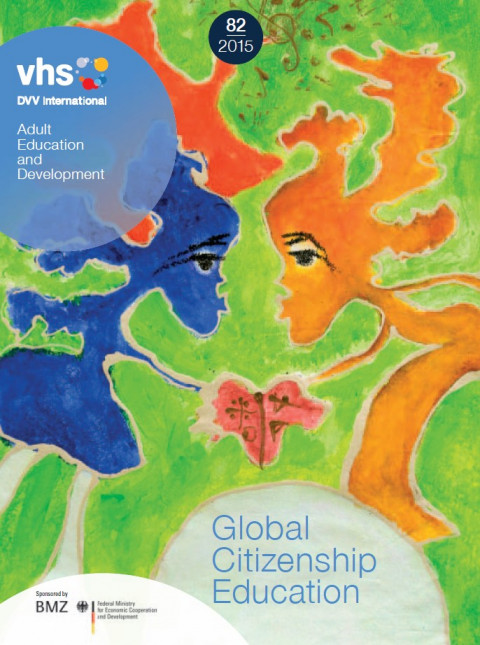 Adult education and development: global citizenship education (no 82, 2015) Year of publication: 2015 Corporate author: DVV International Issue 82/2015 of the international journal Adult Education and Development (AED) explores the topic global citizenship education. In the international debates, we are witnessing a growing interest in the concept of global citizenship education. It is one of the three pillars of the Global Education First Initiative (GEFI) launched by the United Nations Secretary-General in 2012 and is being internationally promoted by the work of UNESCO. According to the GEFI, education that fosters global citizenship “must fully assume its central role in helping people to forge more just, peaceful, tolerant and inclusive societies”. The 2030 Agenda for Sustainable Development, adopted by the United Nations General Assembly in September 2015, refers to global citizenship as one tool to “ensure that all learners acquire the knowledge and skills needed to promote sustainable development”. The ambitions are high, but the concrete understanding of global citizenship education and its implications differ widely. Is it just another abstract concept? What meaning can the word citizenship have if it does not refer to a specific nation? What do people in different parts of the world understand by global citizenship? And how can global citizenship education be put into practice? Adult Education and Development decided to engage in the debate and invited authors from different regions, backgrounds and disciplines to share their thoughts and experiences on the topic and related questions such as identity, migration, peace, the meaning of citizenship, globalisation and sustainable development. Irina Bokova, Director-General of UNESCO, explains the organisation’s understanding of global citizenship education, and why adult education and “learning beyond the classrooms” are crucial when it comes to promoting global citizenship. Canadian author and journalist Doug Saunders (“Arrival City: How the Largest Migration in History Is Reshaping Our World”) talks about the challenges and opportunities of what he refers to as the last great human migration, that from the countryside to the cities, and about the positive role adult education can play during this transition. In the section “Citizens’ voices” people from all over the world talk about what global citizenship means to them and in what ways they see themselves as global citizens. And photographer Viktor Hilitksi travelled through Belarus and captured with his camera how villages rediscover their local traditions and cultures. Éducation des adultes et développement: L'éducation à la citoyenneté mondiale (ECM) (no 82, 2015) Year of publication: 2015 Corporate author: DVV International Le numéro 82/2015 de la revue internationale l’Éducation des Adultes et Développement(AED) explore le sujet de l'éducation à la citoyenneté mondiale. Dans les débats internationaux, nous assistons à un intérêt croissant pour le concept d'éducation à la citoyenneté mondiale. Il est l'un des trois piliers de l'Initiative Mondiale pour l'Éducation Avant Tout (GEFI) lancé par le Secrétaire général des Nations Unies en 2012 et est promu à l'échelle internationale par le travail de l'UNESCO. Selon le GEFI, l'éducation qui favorise la citoyenneté mondiale "doit assumer pleinement son rôle central en aidant les gens à forger plus justes, des sociétés pacifiques, tolérantes et inclusives". L'Agenda 2030 pour le développement durable, adoptée par l'Assemblée générale des Nations Unies en Septembre 2015, se réfère à la citoyenneté mondiale comme un outil pour «faire en sorte que tous les apprenants à acquérir les connaissances et les compétences nécessaires pour promouvoir le développement durable». Les ambitions sont grandes, mais la compréhension concrète de L'éducation à la citoyenneté mondiale(ECM) et ses implications diffèrent largement. Est-il juste un autre concept abstrait? Quel sens le mot citoyenneté peut avoir si elle ne se réfère pas à une nation spécifique? Qu'est-ce que les gens dans les différentes parties du monde comprennent par la citoyenneté mondiale? Comment l'éducation à la citoyenneté mondiale(ECM) peut-elle être mise en pratique? Education des adultes et développement ont décidé de participer au débat et a invité les auteurs de différentes régions, milieux et disciplines à partager leurs réflexions et expériences sur le sujet et les questions connexes telles que l'identité, la migration, la paix, le sens de la citoyenneté, la mondialisation et le développement durable. Irina Bokova, Directrice générale de l'UNESCO, explique la compréhension de l'organisation de l'éducation à la citoyenneté mondiale, et pourquoi l'éducation des adultes et de «l'apprentissage au-delà des salles de classe" sont cruciales en matière de promotion de la citoyenneté mondiale. L'auteur et journaliste canadien Doug Saunders ( «La ville d'arrivée: comment la plus grande migration dans l'histoire remodèle notre monde») parle des défis et des opportunités de ce qu'il appelle la dernière grande migration humaine, celle des campagnes aux villes et Sur le rôle positif que l'éducation des adultes peut jouer au cours de cette transition. Dans la section «La voix des citoyens», des gens du monde entier parlent de ce que la citoyenneté mondiale signifie pour eux et de la manière dont ils se perçoivent comme des citoyens du monde. Et le photographe Viktor Hilitksi a parcouru la Biélorussie et a capturé avec sa caméra comment les villages redécouvrent leurs traditions et cultures locales.
  Éducation des adultes et développement: l’éducation à la citoyenneté mondiale (no 82, 2015) Year of publication: 2015 Corporate author: DVV International Issue 82/2015 of the international journal Adult Education and Development (AED) explores the topic global citizenship education. In the international debates, we are witnessing a growing interest in the concept of global citizenship education. It is one of the three pillars of the Global Education First Initiative (GEFI) launched by the United Nations Secretary-General in 2012 and is being internationally promoted by the work of UNESCO. According to the GEFI, education that fosters global citizenship “must fully assume its central role in helping people to forge more just, peaceful, tolerant and inclusive societies”. The 2030 Agenda for Sustainable Development, adopted by the United Nations General Assembly in September 2015, refers to global citizenship as one tool to “ensure that all learners acquire the knowledge and skills needed to promote sustainable development”. The ambitions are high, but the concrete understanding of global citizenship education and its implications differ widely. Is it just another abstract concept? What meaning can the word citizenship have if it does not refer to a specific nation? What do people in different parts of the world understand by global citizenship? And how can global citizenship education be put into practice? Adult Education and Development decided to engage in the debate and invited authors from different regions, backgrounds and disciplines to share their thoughts and experiences on the topic and related questions such as identity, migration, peace, the meaning of citizenship, globalisation and sustainable development. Irina Bokova, Director-General of UNESCO, explains the organisation’s understanding of global citizenship education, and why adult education and “learning beyond the classrooms” are crucial when it comes to promoting global citizenship. Canadian author and journalist Doug Saunders (“Arrival City: How the Largest Migration in History Is Reshaping Our World”) talks about the challenges and opportunities of what he refers to as the last great human migration, that from the countryside to the cities, and about the positive role adult education can play during this transition. In the section “Citizens’ voices” people from all over the world talk about what global citizenship means to them and in what ways they see themselves as global citizens. And photographer Viktor Hilitksi travelled through Belarus and captured with his camera how villages rediscover their local traditions and cultures.
 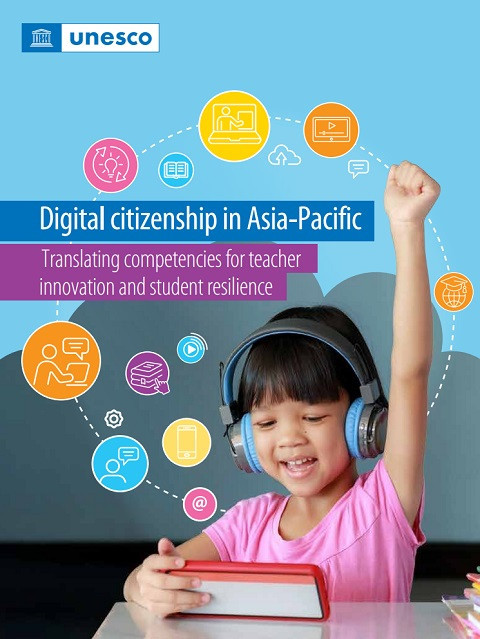 Digital Citizenship in Asia-Pacific: Translating Competencies for Teacher Innovation and Student Resilience Year of publication: 2023 Corporate author: UNESCO Bangkok A digitally-equipped and competent teaching force is crucial for cultivating students' digital citizenship skills. This UNESCO report, consisting of a comprehensive analysis comprising 15 countries in the Asia-Pacific region, unveils compelling evidence pertaining to what factors influence teachers' Information and Communication Technology (ICT) skills and their impact on students’ digital citizenship competencies. Perhaps unsurprisingly, the findings of this report show that students are developing most of their digital citizenship competencies through self-directed learning and outside of school. Nevertheless, teachers still play an important role, particularly in coaching students to use technology safely and effectively. Thus as UNESCO reports, Digital Creativity and Innovation remains relatively underdeveloped in all participating research countries. Additionally, female students tend to benefit more from teachers' guidance and advice, especially in terms of Digital Safety and Resilience. Support for teachers in terms of access to ICT infrastructure and training on ICT and pedagogical skills will contribute towards improving their ability to effectively guide and mentor their students, ultimately leading to better outcomes in terms of digital citizenship competencies. To achieve this, it is important for education systems to develop comprehensive and contextualized approaches to enhance digital citizenship capacities in teachers. Education policymakers and leaders are encouraged to use the 10 recommendations herein as a ‘roadmap’ to ensure that teachers are equipped with the necessary skills and knowledge to effectively integrate digital citizenship education into their teaching practices. This will ultimately help prepare students for the digital world and ensure their safety and well-being online.
  A Study on the Influential Factors of E-learning Opportunity for Elementary School Students: Perspectives from Students, Parents and Schools (Educational Journal ; Vol.45, No.1) Year of publication: 2017 Author: 陈宇芃 | 林丰政 Based on the data from students, parents and schools of the 2013 Survey of Student Digital Ability and e-Learning Opportunity from the Academia Sinica’s Survey Research Data Archive, this article constructed a hierarchical linear model to analyze how students’ e-learning opportunity is related to the multilevel influence effects of school- and parent-level covariates. Quantile regression was also used to study different covariate effects at different quantile levels of student e-learning opportunity. Results indicate that: (1) Digital Level Area is a very important influential factor for students’ e-learning opportunity due to the reason that schools in higher Digital Level Area have more digital resources, and students are likely to have more opportunity for access to and frequent use of e-learning; (2) the more IT equipment or IT literacy students have can greatly affect their possession of e-learning opportunity; (3) parents should pay special attention to problems of their children resulting from overuse of e-learning resources which could cause harm to their children both mentally and physically; moreover, schools should widely promote the awareness of personal information security to students; (4) in order to eliminate the digital divide caused by Digital Level Area, schools need to strengthen the integration of software and information technology into instruction as far as possible. 国小学生数位学习机会影响因素之研究: 以学生、家长与学校观点探讨 (教育学报; Vol. 45, No.1) Year of publication: 2017 Author: 陈宇芃 | 林丰政 本研究以中央研究院学术调查研究资料库中「102年[2013年]学生数位学习及数位机会」的学生、家长、学校三方调查资料为基础,整合建立「学校给予学生数位学习机会」对「家庭数位学习机会影响学生数位学习机会」阶层线性模式,探讨当中的影响;亦进一步于学生数位学习机会的不同分量下,探究影响因素的变化。结果显示:(1)数位级区对于学生数位学习机会影响力极大,原因可能是数位级区愈高的学校可提供的数位资源较多,学生接触数位学习的机会亦较频繁;(2)学生拥有的设备愈齐全及对基本技能有一定素养,对其数位学习机会相对影响较大;(3)家长须留意学生的数位学习情形,防止因过度使用反而造成身心损害,学校亦应向学生加强宣导个人资料隐私的重要性;(4)学校应尽可能强化软体与科技融入教学,期能消弭因数位级区造成的差距。
  The Role of Digital Citizenship in the Use of Technology and Reducing the Risks Resulting from it (Alustath Journal for Human and Social Sciences; vol.59, no.3) Year of publication: 2020 Author: Amal Mohammed Abdullah Albado Corporate author: University of Baghdad. College of Education Ibn Rushd The current study aims to know the role of digital citizenship in the use of technology and reducing the risks resulting from it. The researcher uses the descriptive analytical approach and makes a questionnaire to know if there is a role for the digital citizenship in the use of technology and reducing the dangers caused by it. The study sample consists of (102) employees in the Ministry of Education Marka Brigade (the fourth Amman qasaba). The questionnaire consists of two main axes: the first axis, which is defined as the concept of digital citizenship, the second axis is the role of digital citizenship in the use of technology and reducing the dangers of technology. The results of the study show that the awareness of the sample of the study of the concept of digital citizenship is on a high level, on average that equals (3.887) of the Likert quinary scale and the standard deviation is equal to (0.97). The results also show a strong role for citizens in reducing the dangers caused by technology where the arithmetic mean equals (4.2) and the standard deviation was (0.94). دور المواطنة الرقمية في استخدام التكنولوجيا والتقليل من الاخطار الناجمة عنها (الاستاذ للعلوم الانسانية والاجتماعية; no.3, vol.59) Year of publication: 2020 Author: Amal Mohammed Abdullah Albado Corporate author: University of Baghdad. College of Education Ibn Rushd هدفت الدراسة الحالية الى معرفة دور المواطنة الرقمية في استخدام التكنولوجيا والتقليل من الاخطار الناجمة عنها، فقد استخدمت الباحثة المنهج الوصفي التحليلي، واستبانة لمعرفة هل هناك دور للمواطنة الرقمية في استخدام التكنولوجيا والتقليل من الاخطار الناجمة عنها، وتكونت عينة الدراسة من (102) موظف في وزارة التربية والتعليم لواء ماركا (قصبة عمان الرابعة). تكونت الاستبانة من محورين رئيسين، المحور الاول المعرفة بمفهوم المواطنة الرقمية، المحور الثاني دور المواطنة الرقمية في استخدام التكنولوجيا والتقليل من أخطار التكنولوجيا. ودلت نتائج الدراسة على أن معرفة عينة الدراسة لمفهوم المواطنة الرقمية بدرجة مرتفعة ؛ فقد كان الوسط الحسابي يساوي (3.887) على مقياس ليكرت الخماسي والانحراف المعياري يساوي(0.97). ودلت النتائج على أن وجود دور قوي للمواطنة في التقليل من الاخطار الناجمة عن التكنولوجيا ؛ فقد كان الوسط الحسابي يساوي (4.2) والانحراف المعياري يساوي (0.94).