
Resources
Explore a wide range of valuable resources on GCED to deepen your understanding and enhance your research, advocacy, teaching, and learning.
1,407 Results found
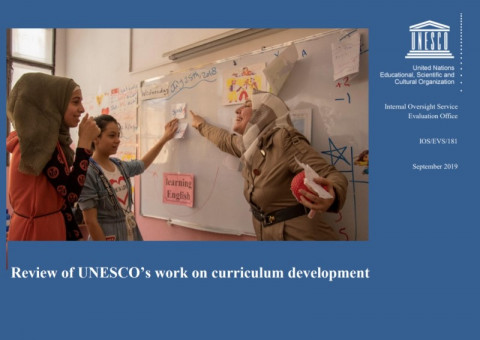 Review of UNESCO’s work on curriculum development Year of publication: 2019 Corporate author: UNESCO In response to a request from the UNESCO Executive Board in Spring 2019, the UNESCO Internal Oversight Service (IOS) Evaluation Office has undertaken this Review to provide a mapping and analysis of UNESCO’s activities in curriculum; to provide an overview of the roles typically played by other national, regional and international actors in the field of curriculum, and to assess the demand for services from UNESCO Member States and donors in the area of curriculum. The review found that curriculum is widely considered as the foundational building block of the education system, resulting from a pedagogical and political consensus with regard to what is important in learning and why, according to both the learner’s needs and societal visions. In light of challenges of the 21st century and the need to strengthen the role of the humanities in a context dominated by technology and data, the redefinition of curriculum has become one of the main concerns of national education authorities around the world. It is also widely accepted that quality curricula can support the attainment of Sustainable Development Goal 4 (SDG 4). The review concluded that curriculum, particularly curriculum development and reform processes, should remain an area of UNESCO’s education programme as it addresses a clear need from Member States. As curriculum implies both technical and political dimensions, UNESCO can act as a neutral broker, to facilitate informed and inclusive policy dialogue. It also has a long-term tradition in facilitating complex curriculum processes in often difficult and sensitive contexts. In addition, UNESCO has the capacity to serve as a platform for international exchanges and comparative research, including through networks such as UNESCO Chairs, and coordinating knowledge hubs and communities of practice. To address curriculum with added value in the future, UNESCO should focus on providing methodological technical assistance, capacity development, standard-setting and policy advice to support the curriculum processes, products and competences in Member States while ensuring a coordinated and holistic perspective. Complementary to work on curriculum from a methodological point of view, thematic Sections at Headquarters should continue elaborating content on specific crosscutting topics. Looking to the future, the review recommends (i) maintaining a specialized category 1 institute as a lead entity on curriculum development; (ii) refining the offer of technical assistance and capacity development to Member States on curriculum development and reform; (iii) developing and maintaining a knowledge base of materials and a roster of experts on curriculum; (iv) providing a platform for policy dialogue and exchange of experience among Member States; and (v) systematizing the inclusion of curriculum in standard-setting and normative work.
 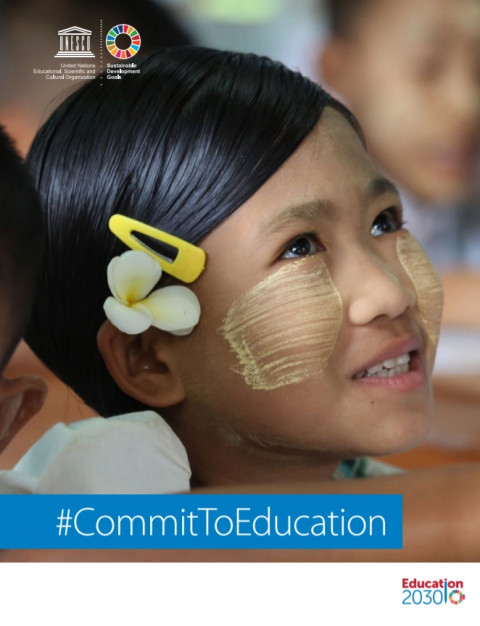 #CommitToEducation Year of publication: 2019 Corporate author: UNESCO In December 2018, building on a series of regional consultations, the education community struck a common chord at the Global Education Meeting in Brussels, the first gathering of its kind since the adoption of the 2030 Agenda. Ministers, representatives of government, multilateral organizations, civil society and other stakeholders agreed on a set of priorities for collective action. These include an overarching focus on the right to inclusive quality education; eradicating illiteracy; including migrants, displaced persons, refugees and stateless persons in education; quality gender-responsive education and training; strengthened education for global citizenship and sustainable development; more flexible and open learning systems providing a broader range of knowledge, skills and competences at all levels; qualified teachers and domestic and international resource mobilization. This set the ground for the first review of SDG 4 by the July 2019 High level Political Forum, the UN apex platform for the follow-up and review of Agenda 2030. As the UN agency responsible for the coordination of SDG 4, mandated by the World Education Forum in Incheon (Republic of Korea, 2015), UNESCO provided an analysis of where the world stands on SDG 4, how countries have taken up the goal in their policies, and made recommendations to act better, differently and collaboratively.
 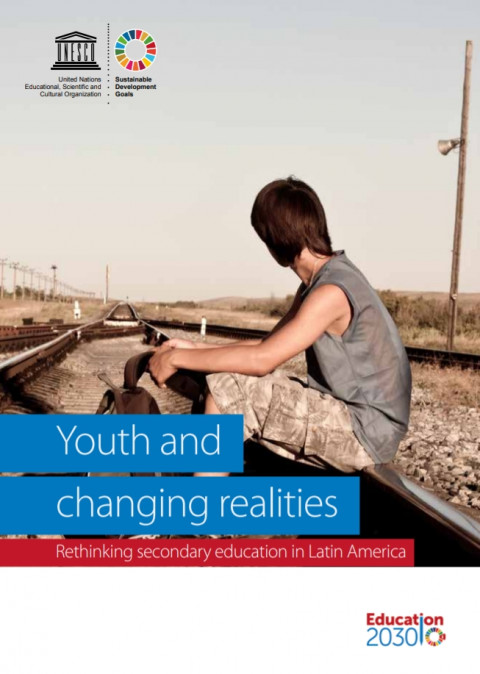 Youth and changing realities: rethinking secondary education in Latin America Year of publication: 2017 Author: López.Néstor, Opertti.Renato, Vargas Tamez.Carlos Corporate author: UNESCO International Bureau of Education (IBE) | UNESCO IIEP Office for Latin America and the Caribbean Youth are central to UNESCO’s mandate. The more than one billion youth and adolescents in the world today hold the key to our shared future and to global sustainable development. With a focus on Latin America, this publication addresses the need to regain young learners’ trust in education and to arrive at more positive social constructions of youth among educators, parents and education authorities. In so doing, this study looks at educational experiences as meaning makers that shape youth cultures and identities as well as their attitudes toward education and its potential to improve individual and collective well-being. Adolescentes y jóvenes en realidades cambiantes: notas para repensar la educación secundaria en América Latina Year of publication: 2017 Author: López.Néstor, Opertti.Renato, Vargas Tamez.Carlos Corporate author: UNESCO International Bureau of Education (IBE) | UNESCO IIEP Oficina para América Latina y el Caribe La juventud es un tema central dentro del mandato de la UNESCO. Más de mil millones de jóvenes y adolescentes en el mundo actual tienen la llave de nuestro futuro en común y del desarrollo sostenible, justo e inclusivo a nivel mundial. Con el foco puesto en América Latina, la publicación aborda la necesidad de recuperar la confianza de las y los jóvenes y adolescentes en la educación y de llegar a construcciones sociales de la juventud más completas y positivas entre las y los educadores, los padres y madres, las comunidades y las autoridades educativas. De este modo, el estudio analiza las experiencias educativas en cuanto productoras de significado que configuran las culturas e identidades de la juventud, al igual que sus actitudes hacia la educación y su potencial para mejorar y sostener el bienestar individual y colectivo.
  Рекомендация об обучении и образовании взрослых Year of publication: 2016 Corporate author: Организация Объединенных Наций по вопросам образования, науки и культуры (UNESCO) | UNESCO Institute for Lifelong Learning (UIL) Рекомендация об обучении и образовании взрослых была принята на 38-й сессии Гене-ральной конференции ЮНЕСКО в ноябре 2015 г. Данная рекомендация направлена на поддержку осуществления рамочной программы действий «Образование-2030», она учитывает глобальные тенденции и будет способствовать трансформации обучения и образования взрослых и расширению равных возможностей в этой области.Рекомендация 2015 г. подходит к ООВ комплексно и системно и определяет три основные области обучения и приобретения навыков: грамотность и базовые навыки, непрерывное повышение образовательных и профессиональных навыков и либеральное, народное и общинное образование и гражданские навыки. В ней также описываются пять сквозных направлений деятельности: политика, управление, финансирование, участие, инклюзивность и равенство, а также качество. Данные области деятельности уже представлялись международному сообществу в Беленских рамках действий, принятых на КОНФИНТЕА в 2009 г. в качестве инструмента для содействия государствам-членам в совершенствовании ООВ. Такой комплексный и согласованный подход к ООВ поможет государствам-членам обеспечить всеохватное и справедливое качественное образование и поощрение возможности обучения на протяжении всей жизни для всех (цель 4 в области устойчивого развития).
  How Can a Lifelong Learning Perspective Enhance the Relevance and Impact of the 1974 Recommendation?: Thematic Paper Year of publication: 2022 Corporate author: UNESCO Institute for Lifelong Learning (UIL) Lifelong learning is rooted in the integration of learning with participation in society. It includes learning activities for people of all ages, in all life-wide contexts and spaces (family, school, community, workplace and more), and through a variety of modalities (formal, non-formal and informal).The purpose of this background paper is to propose ways in which the significance of lifelong learning can be reflected in the revision of the 1974 Recommendation concerning Education for International Understanding, Cooperation and Peace and Education relating to Human Rights and Fundamental Freedoms. It does this by recalling previous international contributions to the promotion of lifelong learning, including the landmark publications Learning to Be: The World of Education Today and Tomorrow (Faure et al., 1972) and Learning: The Treasure Within (Delors et al., 1996), which show the benefits of lifelong learning not only for employment but for the whole life of an individual and their participation in society.
 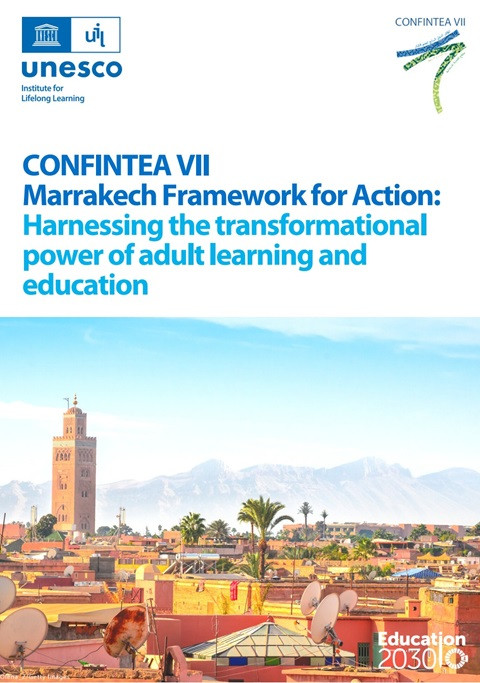 CONFINTEA VII Marrakech Framework for Action: Harnessing the Transformational Power of Adult Learning and Education Year of publication: 2022 Corporate author: UNESCO Institute for Lifelong Learning (UIL) This Marrakech Framework for Action is an outcome of the the Seventh International Conference on Adult Education (CONFINTEA VII) held in Marrakech, Kingdom of Morocco, and online, from 15 to 17 June 2022. 성인학습∙교육의 변혁적 힘을 활용하기 위한 제7차 세계성인교육회의 마라케시 실행계획 Year of publication: 2022 Corporate author: UNESCO Institute for Lifelong Learning (UIL) 2022년 6월 15일부터 17일까지 모로코 마라케시에서 제7차 세계성인교육회의(CONFINTEA VII)가 개최되었다. 회의 결과문서인 '마라케시 실행계획(Marrakech Framework for Action)'은 성인학습·교육(ALE)이 평생학습의 핵심 요소이며, 성인학습·교육을 포함하여 교육이 기본적 인권이며 공공의 노력이자 공동재임을 확인하고 있다. Recommendation on Adult Learning and Education, 2015 Year of publication: 2016 Corporate author: UNESCO | UNESCO Institute for Lifelong Learning (UIL) The Recommendation on Adult Learning and Education was adopted at the 38th Session of the UNESCO General Conference in November 2015. The Recommendation supports the Education 2030 Framework for Action, reflects global trends, and will guide the transformation and expansion of equitable learning opportunities for youth and adults. The 2015 Recommendation takes a comprehensive and systematic approach to ALE, defining three key domains of learning and skills: literacy and basic skills; continuing education and vocational skills; as well as liberal, popular and community education and citizenship skills.It also describes five transversal areas of action: policy; governance; financing; participation, inclusion and equity; and quality. These areas of action were already introduced to the international community in the Belém Framework for Action, adopted at CONFINTEA in 2009 as a means of guiding Member States in improving ALE. This integrative and consistent approach to ALE will help Member States to ensure inclusive and equitable quality education and promote lifelong learning opportunities for all (Sustainable Development Goal 4).
 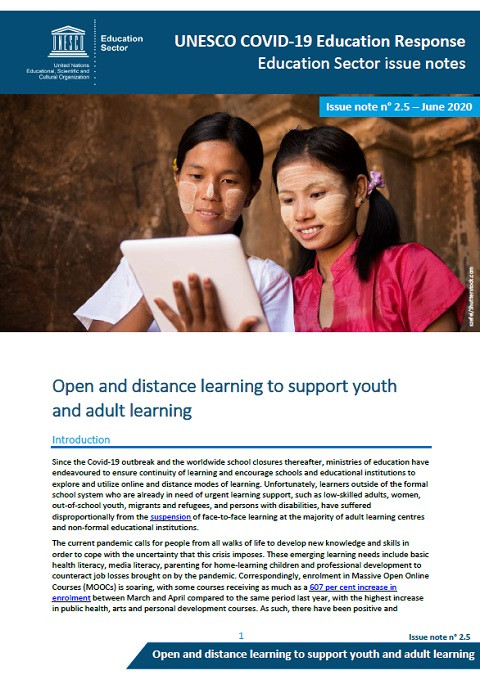 UNESCO COVID-19 Education Response: Open and Distance Learning to Support Youth and Adult Learning (Education Sector Issue Note; No. 2.5 – June 2020) Year of publication: 2020 Corporate author: UNESCO Institute for Lifelong Learning (UIL) A new UNESCO issue note, produced by the UNESCO Institute for Lifelong Learning (UIL), aims to support education policy-makers and planners in ensuring open and distance learning to support youth and adult learning in the context of the current pandemic, now and in its aftermath.Since the COVID-19 outbreak and the worldwide school closures that followed, ministries of education have endeavoured to ensure continuity of learning and encourage schools and educational institutions to explore and utilize online and distance modes of learning. Unfortunately, learners outside of the formal school system who are already in need of urgent learning support, such as low-skilled adults, women, out-of-school youth, migrants and refugees, and persons with disabilities, have suffered disproportionally from the suspension of face-to-face learning at the majority of adult learning centres and non-formal educational institutions.The current pandemic calls for people from people from all socio-economic backgrounds, wherever they live in the world, to develop new knowledge and skills in order to cope with the uncertainty that this crisis imposes. These learning needs include basic health literacy, media literacy, parenting for home-schooling children and professional development to counteract job losses brought on by the pandemic. Correspondingly, enrolment in massive open online courses (MOOCs) is soaring. As such, there have been positive and demand-driven trends in exploring alternative options, such as open and distance learning (ODL), to ensure the continuity and expansion of non-formal education and adult learning.This issue note takes stock of opportunities and challenges in using ODL, both online and offline as defined in the UNESCO Issue Note on Distance Learning Strategies, for youth and adult learners outside the formal education system. After examining key issues and illustrating promising cases from public and private sectors, it provides key messages for policy interventions to support inclusive lifelong learning for youth and adults during and after the current pandemic.UNESCO Education Sector’s issue notes cover key topics related to the COVID-19 education response.