
Resources
Explore a wide range of valuable resources on GCED to deepen your understanding and enhance your research, advocacy, teaching, and learning.
2,199 Results found
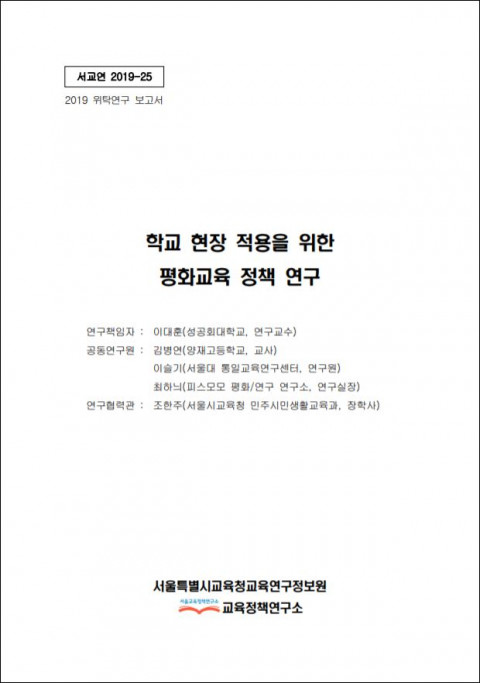 학교 현장 적용을 위한 평화교육 정책 연구 Year of publication: 2020 Author: 이대훈 Corporate author: 서울특별시교육청 교육연구정보원 | 서울교육정책연구소 본 연구는 서울특별시교육청의 학교 평화교육 도입 및 시행을 위한 평화교육 개념 및 정책 방향을 설정하는 토대 연구이다. 이를 통해서 변화하는 한반도 현실에 적합한 평화교육 정책 모색하면서, 학교 현장의 필요에 적합한 평화교육의 내용 및 활성화 방법과 평화교육과 교과 교육과정과의 연계의 방향을 찾고자 한다. 본 연구에서 다루는 평화교육의 초점은 ‘평화역량’ 개념의 교육적 적용, 즉 평화역량 중심의 평화교육을 위한 정의와 프로그램이다. 이를 위해 국내외 주요 평화교육으로부터의 시사점, 서울특별시교육청의 평화교육 비전 설정 및 주제와 이행단계 설정, 교육 현장의 욕구 및 필요를 반영한 평화교육의 통합적 운영 방안을 제시한다. 서울특별시교육청교육연구정보원이(가) 창작한 [서교연2019-25]2019 위탁연구(학교 현장 적용을 위한 평화교육 정책 연구) 최종보고서 저작물은 "공공누리 제4유형(출처표시-상업적 이용금지-변경금지)" 조건에 따라 이용 할 수 있습니다.
 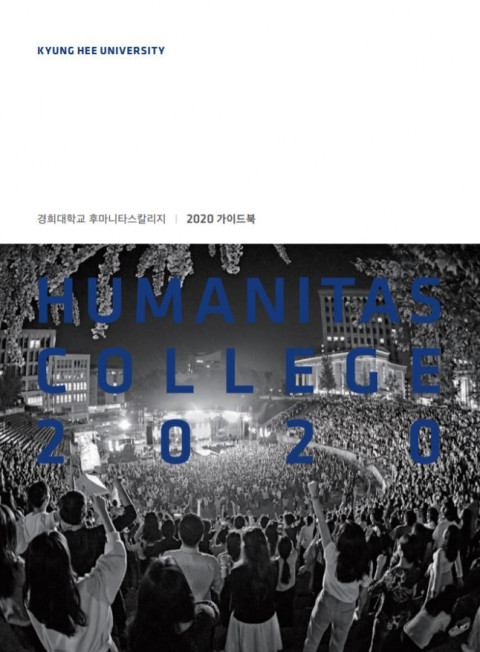 경희대학교 후마니타스칼리지 2020 가이드북 (Humanitas College 2020) Year of publication: 2020 Corporate author: 경희대학교 후마니타스칼리지 신입생에게 후마니타스칼리지 교양교육에 대한 이해를 돕고, 후마가 한 해 동안 거둔 성과를 담은 『2020 후마니타스칼리지 가이드북』이 발간됐다. 후마는 2014년부터 해마다 가이드북을 발간하고 있다.『2020 후마 가이드북』에는 미래비전을 새로 정립하고 재도약에 나선 후마의 행보를 담았다. 신입생뿐 아니라 구성원 모두가 눈여겨볼 만하다. 대학 내에서의 세계시민교육 교과과정 및 현장 활동 우수 사례들을 담고 있으며 세계시민교육은 단순한 실험이나 실습이 아닌 ‘실천’임을 강조한다. 앞으로 세계시민교육을 수강하고 독립연구를 계획하는 학생들에게 도움이 될 것으로 보인다.
 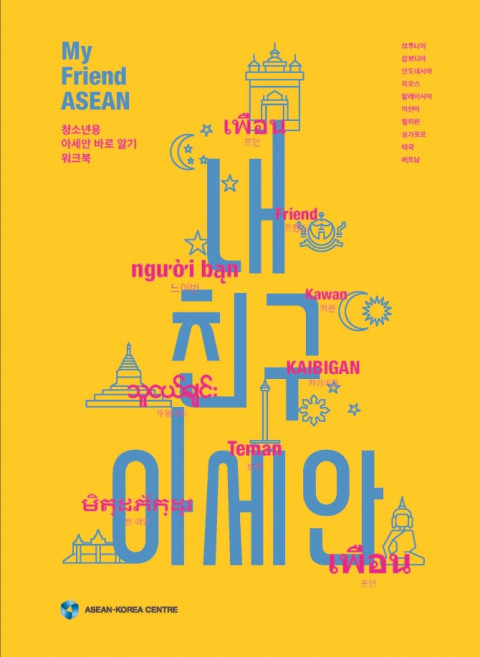 내 친구 아세안: 청소년용 아세안 바로 알기 워크북 Year of publication: 2019 Corporate author: 한-아세안센터 정보자료국 아시아 태평양 지역 중, 동남아시아 10개국의 연합을 아세안(ASEAN)이라고 하며 브루나이·캄보디아·인도네시아·라오스·말레이시아·미얀마·필리핀·싱가포르·태국·베트남이 그 국가들이다. 정치형태, 종족, 종교, 문화, 역사 등 다양한 환경을 가진 사람들이 공존하고 다양한 사람들이 어우러져 살고 있는 아세안 10개국은 2015년 말 ‘아세안 공동체’ 라는 하나의 공동체를 탄생시켰다. 이 책은 아세안 국가들과 우리나라와의 관계를 살펴보고 청소년들에게 다소 낯선 아세안 회원국을 각 나라별로 일러스트와 이미지를 통해 쉽게 알 수 있도록 설명한다.
 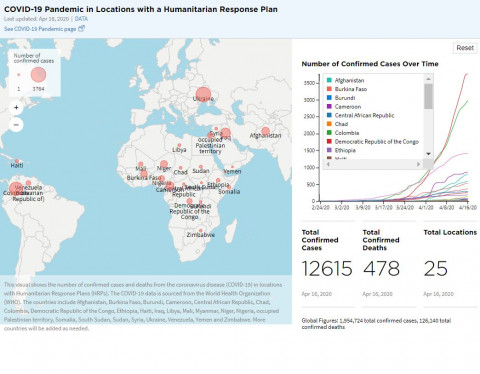 COVID-19 Pandemic in Locations with a Humanitarian Response Plans Year of publication: 2020 Corporate author: United Nations Office for the Coordination of Humanitarian Affairs (OCHA) This visual shows the number of confirmed cases and deaths from the coronavirus disease (COVID-19) in locations with Humanitarian Response Plans (HRPs). The COVID-19 data is sourced from the World Health Organization (WHO). The countries include Afghanistan, Burkina Faso, Burundi, Cameroon, Сentral African Republic, Chad, Colombia, Democratic Republic of the Congo, Ethiopia, Haiti, Iraq, Libya, Mali, Myanmar, Niger, Nigeria, occupied Palestinian territory, Somalia, South Sudan, Sudan, Syria, Ukraine, Venezuela, Yemen and Zimbabwe. More countries will be added as needed.
 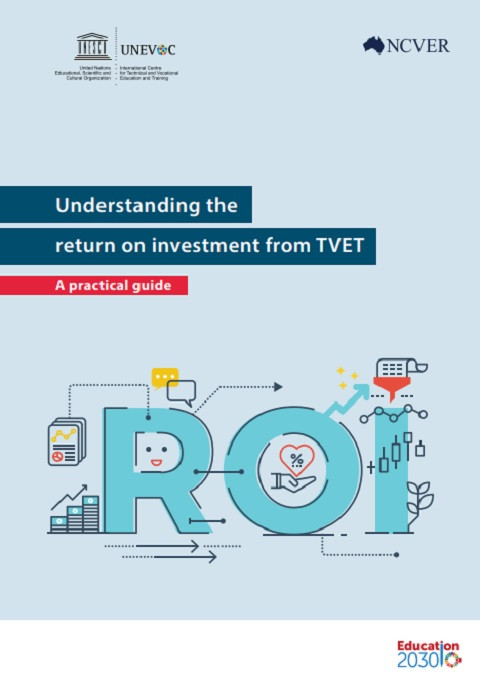 Understanding the Return on Investment from TVET: A Practical Guide Year of publication: 2020 Author: Jane Schueler | Phil Loveder Corporate author: UNESCO International Centre for Technical and Vocational Education and Training (UNEVOC) | National Centre for Vocational Education Research(NCVER) This guide presents an analytic framework that summarizes some of the main elements and issues that need to be considered in measuring ROI. This includes establishing the scope, context and purpose for measuring ROI, adopting guiding principles, identifying costs, benefits and factors that impact on ROI, and approaches to data collection and analysis. The Guide then introduces a framework that looks at the ROI equation from a range of perspectives – including economic and social dimensions – and for different stakeholders, including individuals, businesses and societies. The Guide presents relevant ROI indicators and measures drawn from the existing international research. Finally, it provides guidelines to planning and collecting ROI data, along with a set of practical pro forma resources and case studies to assist the reader.
  Research on the Strategy of Inner Mongolia Ecological Cultural Construction Year of publication: 2019 Author: WEI Zhiyong | BAI Zhifeng Corporate author: China Environment Publishing Group Focusing on the Ecological Civilization of Inner-Mongolia, China, this book presents to readers the backgroud and history of the ecological civilization development in the area. By analyzing the relevant policies, introducing the available resouces and typical cases, it showcases how the concept of harmonized development between man and nature evolving into the core of ecological cultural development in Inner-Mongolia. It summarizes the experiences and lessons learnt during the process, presents challenges faced and proposed practical suggestions and solutions. It also introduced some successful cases from the international experiences.
 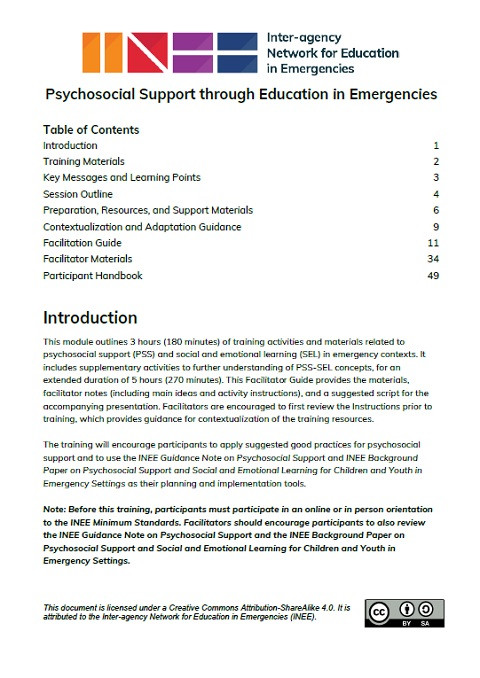 تقدیم الدعم النفسي الاجتماعي خلال التعلیم في حالات الطوارئ Year of publication: 2019 Corporate author: Inter-agency Network for Education in Emergencies (INEE) تُلخصُ هذه الوحدة ثلاث ساعات ( 180 دقیقة) من أنشطةِ وموادِ التدریب المتصلة بالدّعم النّفسيّ الاجتماعيّ والتّعلّم الاجتماعي والعاطفيّ في حالات الطوارئ، و تشملُ أنشطةً تكمیلیة لزیادة استیعاب مفاهیم الدعم النفسي الاجتماعي والتعلیم الاجتماعي العاطفي،لفترة تمتد إلى خمس ( 5) ساعات ( 270 دقیقة).ویقدمُ دلیلُ المُیسِّر - الذي بین أیدینا - الموادَ ومذكراتِ المُیسِّرین (بما في ذلك الأفكار الرئیسة وتعلیمات الأنشطة)، ونصاً مقترحاًللعرض المرافق.یشجعُ الدلیلُ أیضًا المُیسِّرین على استعراض التعلیمات أولًا قبل التدریب، التي من شأنها تقدیم التوجیه لوضع موارد التدریب فيسیاقها الصحیح. Psychosocial Support through Education in Emergencies Year of publication: 2019 Corporate author: Inter-agency Network for Education in Emergencies (INEE) This module outlines 3 hours (180 minutes) of training activities and materials related to psychosocial support (PSS) and social and emotional learning (SEL) in emergency contexts. It includes supplementary activities to further understanding of PSS-SEL concepts, for an extended duration of 5 hours (270 minutes). This Facilitator Guide provides the materials, facilitator notes (including main ideas and activity instructions), and a suggested script for the accompanying presentation. Facilitators are encouraged to first review the Instructions prior to training, which provides guidance for contextualization of the training resources. Apoyo Psicosocial a través de la Educación en Situaciones de Emergencia Year of publication: 2019 Corporate author: Inter-agency Network for Education in Emergencies (INEE) Este módulo ofrece 3 horas (180 minutos) de actividades de formación y materiales relacionados con el apoyo psicosocial (PSS, por sus siglas en inglés) y el aprendizaje socioemocional (SEL, por sus siglas en inglés) en situaciones de emergencia. Incluye actividades complementarias para una mayor comprensión de los conceptos PSS-SEL, con una duración ampliada de 5 horas (270minutos). Esta Guía del Facilitador proporciona los materiales, las notas del facilitador (incluyendo las ideas principales y las instrucciones de las actividades), además de un guión propuesto para la presentación que se adjunta. Se recomienda a los facilitadores que primero revisen las instrucciones antes de pasar a la formación, ya que contienen directrices para la contextualización de los recursos de la formación. Le soutien psychosocial par l'éducation en situations d'urgence Year of publication: 2019 Corporate author: Inter-agency Network for Education in Emergencies (INEE) Ce module est une présentation de 3 heures (180 minutes) d'activités de formation et de matériel concernant le soutien psychosocial (SPS) et l'apprentissage social et émotionnel (ASE) en contextes d'urgence. Il comprend également des activités supplémentaires permettant d'approfondir la compréhension des concepts de SPS-ASE, et ce, pour une durée prolongée de 5 heures (270 minutes). Le présent guide du facilitateur contient le matériel, les notes de facilitation (y compris les idées principales et les instructions pour les activités) et une suggestion de script pour la présentation associée. Il est suggéré aux facilitateurs d'étudier, avant la formation, les instructions qui fournissent des repères pour la contextualisation des ressources de formation.