
Resources
Explore a wide range of valuable resources on GCED to deepen your understanding and enhance your research, advocacy, teaching, and learning.
3,229 Results found
 지속가능발전목표 4 Year of publication: 2018 Corporate author: 유네스코한국위원회 이 소책자는 2018년 10-12월 동안 유네스코한국위원회에서 연재한 SDG 4 카드뉴스 시리즈를 바탕으로 제작된 것으로 지속가능발전목표 4(SDG 4)에 대해 쉽게 설명하고 각 목표 달성을 위한 한국교육의 과제와 역할에 대해 다루고 있다. 모두가 함께 달성해가는 SDG 4 SDG 4 달성을 위해 대한민국이 하는 일 한국 교육과 SDG 4.1: 양질의 초등교육과 중등교육 보장 한국 교육과 SDG 4.2: 영유아 발달 교육 및 취학 전 교육 한국 교육과 SDG 4.3: 양질의 고등교육 제공 한국 교육과 SDG 4.4: 전문기술 및 직업기술을 지닌 청년과 성인의 수 향상 한국 교육과 SDG 4.5: 교육 형평성 한국 교육과 SDG 4.6: 문해력과 수리력 성취 한국 교육과 SDG 4.7: 지속가능발전과 세계시민의식 SDG 4 달성을 위한 정보통신기술(ICT)의 역할 SDG 4 달성을 위한 교육지표 개발과 모니터링
  [Video] Global Citizenship Education - The Key to a Just, Peaceful and Inclusive World Year of publication: 2015 Corporate author: Global Education First Initiative Global Citizenship Education gives students the knowledge and skills they need to answer the big questions of the day, and to help forge more tolerant, peaceful and inclusive societies.
 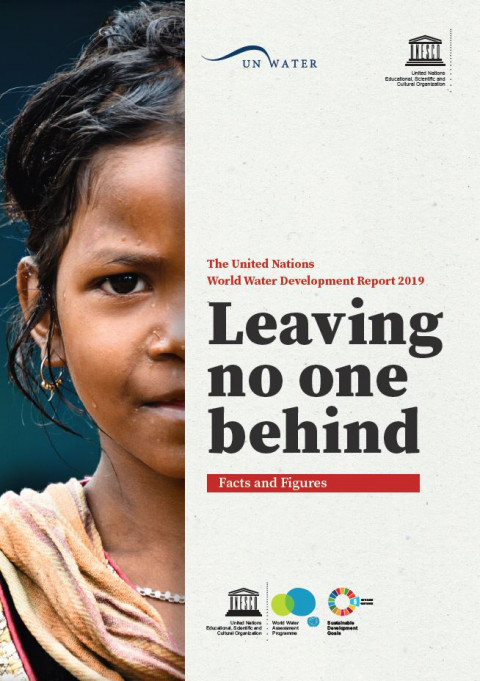 [Facts and Figures] The United Nations World Water Development Report 2019: Leaving No One Behind; Facts and Figures Year of publication: 2019 Author: Engin Koncagül | Michael Tran | Richard Connor | Stefan Uhlenbrook Corporate author: UNESCO World Water Assessment Programme (WWAP) Water availability and demandFigure 1 provides a global overview of countries experiencing different levels of water stress (the ratio of total freshwater withdrawn annually by all major sectors, including environmental water requirements, to the total amount of renewable freshwater resources, expressed as a percentage).Over 2 billion people live in countries experiencing high water stress. Recent estimates show that 31 countries experience water stress between 25% (which is defined as the minimum threshold of water stress) and 70%. Another 22 countries are above 70% and are therefore under serious water stress (UN, 2018a).Growing water stress indicates substantial use of water resources, with greater impacts on resource sustainability, and a rising potential for conflicts among users.It has been estimated that about 4 billion people, representing nearly two-thirds of the world population, experience severe water scarcity during at least one month of the year (Mekonnen and Hoekstra, 2016).
 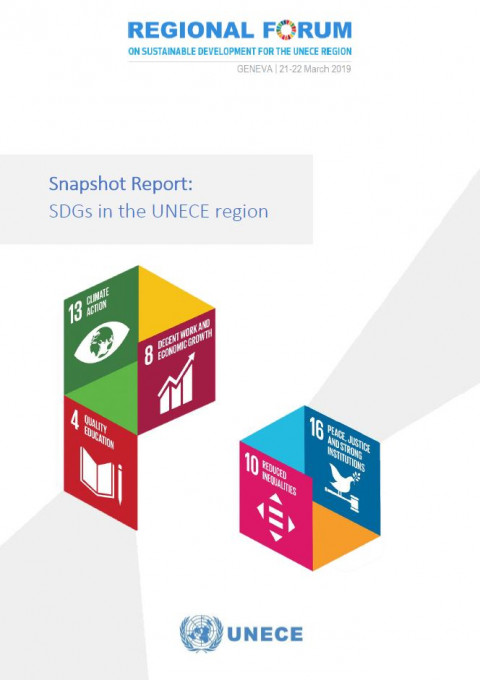 Snapshot Report: SDGs in the UNECE Region Year of publication: 2019 Corporate author: United Nations Economic Commission for Europe (UNECE) This document provides a brief snapshot of some aspects of SDG performance in the UNECE region. It covers the SDGs that will be discussed at the 2019 Regional Forum on Sustainable Development for the UNECE region but it does not attempt to provide an exhaustive assessment. It only uses the available information in the UN SDG Global Database and the sources referenced there to illustrate a selected number of SDG issues. In a very few cases, when no data is available from this database and associated sources, information from other international organizations is used to provide some context to the discussions.
  Are We There Yet?: Education Unions Assess the Bumpy Road to Inclusive Education Year of publication: 2018 Corporate author: Education International (EI) | Tania Principe This report is based on a global membership survey that Education International conducted in 2017-18. The report shows that while many countries have integrated the UN Conventions into their national laws, implementation is running far behind. School materials and facilities are often not accessible, teachers are not adequality supported or consulted, and there are too few education support personnel. In addition, public services are not consistently made available for families with children and youth with disabilities, which can be a major barrier to school attendance. The survey results are a wake-up call for governments to take action and show that a thorough rethinking of past policy-making and current implementation is urgently needed.
  Global Education Digest 2015-2017: Compiled by the Development Education Research Centre Year of publication: 2018 Corporate author: Development Education Research Centre (DERC) This is the first edition the Global Education Digest, a bibliography of recent published academic and research material relevant to the field of global education. This Digest has been compiled by Development Education Research Centre (DERC) on behalf of Global Education Network Europe (GENE) in the framework of ANGEL activities. ANGEL (Academic Network on Global Education & Learning) is the academic network of global education researchers and academics. The Digest is divided into eight themes/ areas of work, and within each we have identified policy reports, books, academic articles and doctoral research related to global education. Items for inclusion were found through keyword searches of Scopus, Web of Science, Google Scholar, and British Library (including ETHOS and Proquest) databases, as well as through informal discussions with colleagues in the field. The core focus of the Digest is on literature on global education. Selected literature with a focus on related concepts, such as global citizenship, environmental education, and education for sustainable development, has also been included where these have clear links to concerns in global education.
  SDG 4 Data Book: Global Education Indicators 2018 Year of publication: 2018 Corporate author: UNESCO Institute for Statistics (UIS) This publication presents the global monitoring indicators used by countries and the international development community to monitor progress towards Sustainable Development Goal 4 (SDG 4) on education. The indicators were produced by the UNESCO Institute for Statistics (UIS), based on the latest available data.The UIS is the official source of internationally-comparable education data and the custodian agency for SDG 4 data.This mandate reflects the trust of the international community in UIS data and its proven track record in methodological work and standard-setting with national statistical offices, line ministries and technical partners in every region.This publication presents a snapshot of the data used to monitor progress towards the global education goal and targets. It complements the UIS Quick Guide to Education Indicators for SDG 4, which provides more detailed information on the development, interpretation and use of the indicators.
  Digital Pedagogies for Building Peaceful & Sustainable Societies (The Blue Dot Issue 8, 2018) Year of publication: 2018 Corporate author: Mahatma Gandhi Institute of Education for Peace and Sustainable Development (MGIEP) In this issue of The Blue Dot (Digital Pedagogies for Building Peaceful and Sustainable Societies), some of the most prominent experts in the field of digital pedagogies share with us their views and perspectives in the growing field for education. Foreword by the visionary Chief Minister, Honourable Nara Shri Chandrababu Naidu of the State of Andhra Pradesh, India, pretty much lays the ground for the future of EdTech and the way he sees its role in his state as well as for the global community. The second foreword by the Global Head of Education, Unity Technologies, one of the world’s largest provider of game engines, demonstrates the willingness of the private sector to engage with educators to provide the platform to develop learners as creative explorers.
 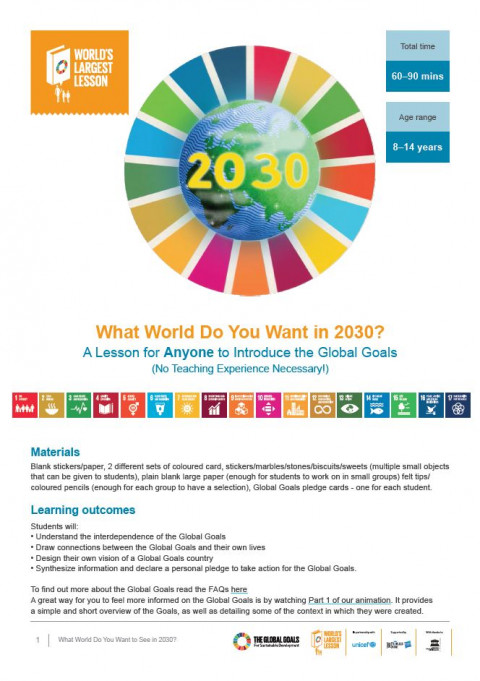 What World Do You Want in 2030?: A Lesson for Anyone to Introduce the Global Goals Year of publication: 2018 Corporate author: World’s Largest Lesson MaterialsBlank stickers/paper, 2 different sets of coloured card, stickers/marbles/stones/biscuits/sweets (multiple small objects that can be given to students), plain blank large paper (enough for students to work on in small groups) felt tips/coloured pencils (enough for each group to have a selection), Global Goals pledge cards - one for each student. Learning outcomesStudents will:• Understand the interdependence of the Global Goals• Draw connections between the Global Goals and their own lives• Design their own vision of a Global Goals country• Synthesize information and declare a personal pledge to take action for the Global Goals.
 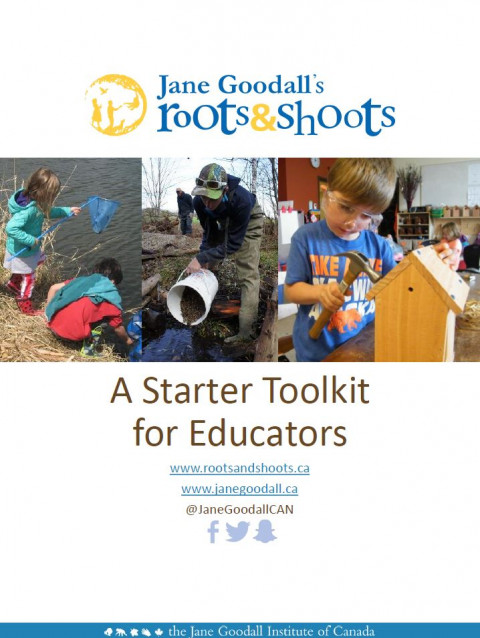 Jane Goodall's Roots & Shoots: A Starter Toolkit for Educators Year of publication: 2016 Corporate author: Jane Goodall Institute of Canada This toolkit (Jane Goodall's Roots and Shoots) is designed to assist you as you guide young people on their Roots & Shoots journey. Whether you’re an educator, parent or trusted adult, you’ll find something useful to inspire the youth around you to make a positive difference for people, animals and the environment we all share.Jane Goodall’s Roots & Shoots is humanitarian and environmental education and youth empowerment program of the Jane Goodall Institute and is active in 87 countries. The program inspires and prepares young people to become compassionate conservation leaders who are globally mindful and locally active by guiding them through youth-led, community projects that help people, other animals and the environment. This toolkit will help educators or parents looking to inspire young people to make a positive difference in the community or young people wanting to lead the change themselves.