
Resources
Explore a wide range of valuable resources on GCED to deepen your understanding and enhance your research, advocacy, teaching, and learning.
3,229 Results found
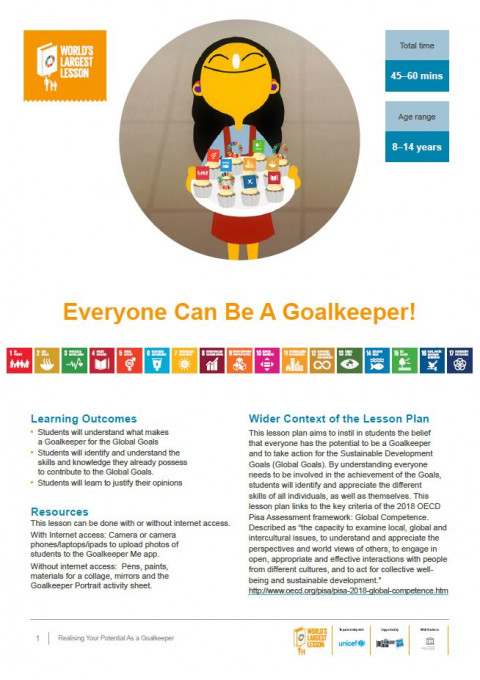 Everyone Can Be a Goalkeeper! Corporate author: World’s Largest Lesson Learning Outcomes• Students will understand what makes a Goalkeeper for the Global Goals• Students will identify and understand the skills and knowledge they already possess to contribute to the Global Goals.• Students will learn to justify their opinions Resources This lesson can be done with or without internet access.With Internet access: Camera or camera phones/laptops/ipads to upload photos of students to the Goalkeeper Me app.Without internet access: Pens, paints, materials for a collage, mirrors and the Goalkeeper Portrait activity sheet. Wider Context of the Lesson PlanThis lesson plan aims to instil in students the belief that everyone has the potential to be a Goalkeeper and to take action for the Sustainable Development Goals (Global Goals). By understanding everyone needs to be involved in the achievement of the Goals, students will identify and appreciate the different skills of all individuals, as well as themselves. This lesson plan links to the key criteria of the 2018 OECD Pisa Assessment framework: Global Competence.Described as “the capacity to examine local, global and intercultural issues, to understand and appreciate the perspectives and world views of others, to engage in open, appropriate and effective interactions with people from different cultures, and to act for collective wellbeing and sustainable development.”
  The influence of the European Union on Central Asia: review, analysis and forecast Year of publication: 2017 Author: V. Paramonov | A. Strokov | Z. Abduganieva The book is intended for government officials and representatives of large businesses, analysts and experts, scientists and teachers of higher educational institutions - in general, all those who are professionally interested in Central Asia are studying the European Union and his policies. The book is the result of a study conducted under the guidance of VVParamonova in the period 2014-2016, built in the form of an analytical report.In this article, we consider the legal aspects of combating extremism in Central Asia, as well as educational and ideological components to combat this phenomenon and cooperation of all three republics with international organizations and other countries of the world in the fight against extremism. Влияние Европейского Союза на Центральную Азию: обзор, анализ и прогноз Year of publication: 2017 Author: V. Paramonov | A. Strokov | Z. Abduganieva Книга предназначена для государственных деятелей и редставителей крупного бизнеса, аналитиков и экспертов, ученых и преподавателей высших учебных заведений – в целом всех тех, кто профессионально интересуется Центральной Азией, занимается изучением Евросоюза и его политики. Книга является результатом исследования, роведенного под руководством В.В.Парамонова в период 2014–2016 годов, построена в форме аналитического доклада.
  UNESCO IICBA: strategic plan Year of publication: 2019 Corporate author: UNESCO International Institute for Capacity-Building in Africa (IICBA) UNESCO IICBA’s Strategic Plan for 2018-2021 is guided by its mandate and mission to strengthen the capacity of Member States in Africa in teacher policy and development. This work is vital to realizing its vision of an integrated, prosperous and peaceful Africa where everyone has access to qualified, motivated and professionally supported teachers. This plan is supported by a vision for Strategic Partnerships, because UNESCO IICBA recognizes their value in promoting regional and national cooperation in teacher-related issues, and in fostering dialogue on teachers and education. Strategic partnerships have three objectives:Successfully implement UNESCO IICBA’s Strategic Plan 2018-2021 Ensure the efficiency and effectiveness of resource mobilizationStrengthen advocacy, cooperation and coordination mechanisms The Strategic Plan is also supported by a Communication Strategy that covers all of UNESCO IICBA’s programme areas and will support collaboration, coordination and institutional operations. The strategy aims to contribute to effective communication that will:Help to fulfill UNESCO IICBA’s strategic goals and objectivesAmplify the visibility of UNESCO IICBA to its stakeholdersInform partners and donors on implementation progress, and demonstrate UNESCO IICBA’s accountabilityEnsure people understand what UNESCO IICBA represents and doesImprove teachers’ professional image and raise awareness to address teachers’ issues in AfricaKeep UNESCO IICBA team members proud, motivated, innovative and accountable in their tasks
  Central Asia: struggle for the new future Year of publication: 2018 Author: A. Dankov The article discusses the social, economic and political prospects of Central Asia (2019-2024). Prognosis also covers the ethnic changes, migration, cultural and language diversity, urbanization, quality of life. Центральная Азия: борьба за новое будущее Year of publication: 2018 Author: A. Dankov В статье рассматриваются социальные, экономические и политические перспективы Центральной Азии (2019-2024). Прогноз также охватывает этнические изменения, миграцию, культурное и языковое разнообразие, урбанизацию, качество жизни.
 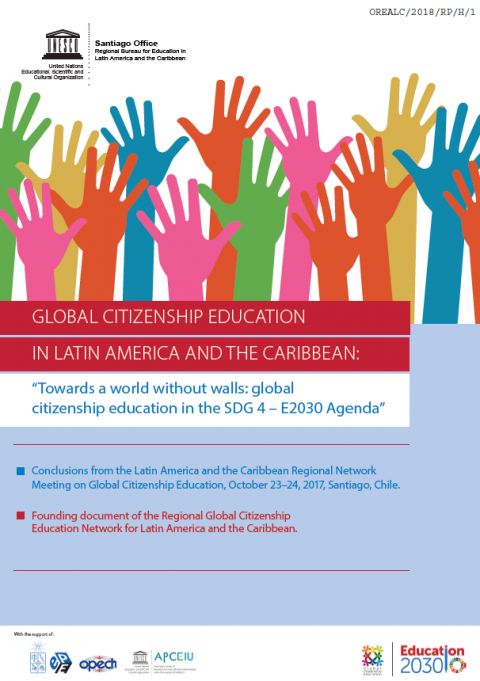 Global Citizenship Education in Latin America and the Caribbean: Towards a World without Walls: Global Citizenship Education in the SDG 4 - E2030 Agenda Year of publication: 2018 Corporate author: UNESCO Santiago The Latin America and the Caribbean Regional Network Meeting on Global Citizenship Education “Towards a World without Walls: Global Citizenship Education in SDG 4 – Agenda E2030”, was organized by the UNESCO Regional Bureau for Education in Latin America and the Caribbean (OREALC / UNESCO Santiago) and the Asia – Pacific Centre of Education for International Understanding (APCEIU), in collaboration with the Chilean Observatory of Educational Policies (OPECH) of the University of Chile. The event, held on October 23 and 24, 2017, in Santiago, Chile, brought together regional researchers, members of civil society organizations and activists, educational communities, social movements, government educational authorities and universities. The objective of the meeting was to promote dialogue on the concept of Global Citizenship Education (GCED), deepen the regional perspective on the topic and create a network that helps strengthen the implementation of GCED in the context of the Latin America and the Caribbean region. This document summarizes the main topics addressed and issues discussed at the meeting. Subsequently, the founding document of the Regional Global Citizenship Education Network for Latin America and the Caribbean, which was elaborated in light of the meeting’s discussions, is presented. Educación para la Ciudadanía Mundial en América Latina y el Caribe: Hacia un mundo sin muros: educación para la ciudadanía mundial en el ODS4 - Agenda E2030 Year of publication: 2018 Corporate author: UNESCO Santiago La Reunión Regional para América Latina y el Caribe de la Red de Educación para la Ciudadanía Mundial “Hacia un mundo sin muros: educación para la ciudadanía mundial en el ODS 4 – Agenda E2030”, fue organizada por la Oficina Regional de Educación para América Latina y el Caribe (OREALC / UNESCO Santiago) y el Centro de Educación para la Comprensión Internacional de Asia-Pacífico (APCEIU), en colaboración con el Observatorio Chileno de Políticas Educativas de la Universidad de Chile (OPECH). La cita se desarrolló el 23 y 24 de octubre de 2017 en Santiago de Chile, y a ella fueron convocados pensadores y activistas de la región, provenientes de organizaciones de la sociedad civil, comunidades educativas, movimientos sociales, organismos gubernamentales y universidades. El objetivo de la reunión fue promover el diálogo sobre el concepto de Educación para la Ciudadanía Mundial (ECM) y profundizar en una mirada regional para propiciar la conformación de una red que permita fortalecer la implementación de la ECM, situada en el contexto de América Latina y el Caribe. Se presenta este documento como síntesis de las principales temáticas que fueron abordadas y discutidas en el encuentro. A continuación, se presenta el documento fundacional que establece la Red Regional de Educación para la Ciudadanía Mundial para América Latina y el Caribe, que fue elaborada a raíz de las discusiones.
 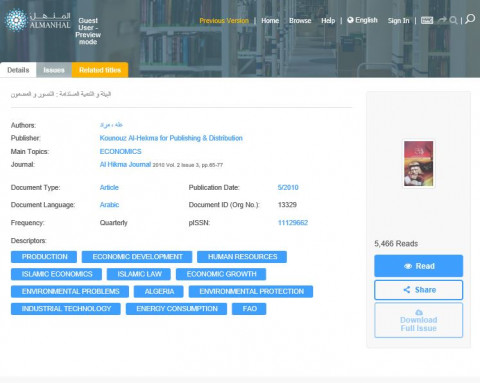 Environment and Sustainable Development: Concept and Content Year of publication: 2010 Author: Ellah Murat There is no doubt that environmental problems have become increasingly important across all levels, where all countries have been preoccupied with, and held many conferences. The world has become the forefront of the concerns of the year, and the protection of the environment - without doubt - a necessity of life in order to preserve. Environmental and economic balance, through the rational management of natural resources to preserve their sustainability for future generations.Their link to sustainable development, which calls for a new pattern of development that preserves available natural resources and creates clean alternatives that do not destroy the environment. The environmental dimension is a deeper dimension in sustainable development.From the effects on the natural environment of the universe, we will try through our modest study these research into the implications of the environment on the one hand and sustainable development on the other.
 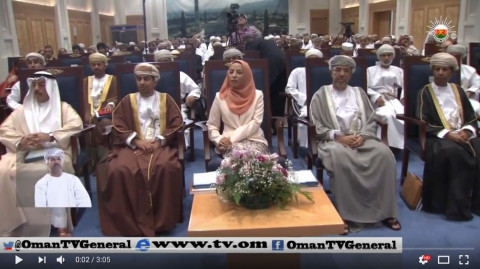 انطلاق ملتقى "المواطنة الإنسانية ودورها في التقارب والوئام الإنساني" Year of publication: 2015 Corporate author: OmanTvGeneral أقام مركز السلطان قابوس العالي للثقافة والعلوم الملتقى العلمي المواطنة الإنسانية ودورها في التقارب والوئام الإنساني، وذلك في إطار فعاليات أسبوع التقارب والوئام الإنساني الرابع، حيث يعد الملتقىى فرصة سانحة لجميع المشاركين للاطلاع على تجربة السلطنة الرائدة في الحوار الحضاري ودعم قيم التسامح والتعاون والتعايش السلمي وفق الثوابت التي أرسى مبادئها حضرة صاحب الجلالة السلطان قابوس بن سعيد المعظم ـ حفظه الله ورعاه.