
Resources
Explore a wide range of valuable resources on GCED to deepen your understanding and enhance your research, advocacy, teaching, and learning.
1,181 Results found
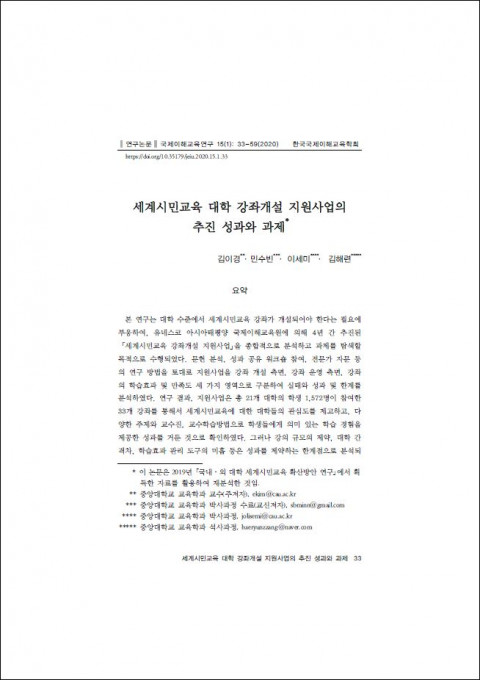 The Achievements and Tasks of the Global Citizenship Education University Course Development Project Year of publication: 2020 Author: Eegyeong Kim | Soobin Min | Semi Lee | Haeryun Kim Corporate author: Korean Society of Education for International Understanding (KOSEIU) This study seeks to analyze the achievements and tasks of the 「GCED University Course Development Project」 promoted by APCEIU. Using such research methods as literature review, workshops, and expert consultation, we analyzed the four-year project surrounding course providers, course contents, and student learning and satisfaction. The findings show that the project has heightened universities’ interest in GCED through 33 courses involving 1,572 students from 21 universities. It was also confirmed that a variety of supports allowed students to have meaningful learning experiences. However, large class sizes, disparity among universities, and the absence of performance measuring tools seemed to limit the success of the project. As a strategy for overcoming these limitations, we suggested the tasks in terms of both quantitative and qualitative aspects. 세계시민교육 대학 강좌개설 지원사업의 추진 성과와 과제 Year of publication: 2020 Author: 김이경 | 민수빈 | 이세미 | 김해련 Corporate author: 한국국제이해교육학회 본 연구는 대학 수준에서 세계시민교육 강좌가 개설되어야 한다는 필요에 부응하여, 유네스코 아시아태평양 국제이해교육원에 의해 4년 간 추진된「세계시민교육 강좌개설 지원사업」을 종합적으로 분석하고 과제를 탐색할 목적으로 수행되었다. 문헌 분석, 성과 공유 워크숍 참여, 전문가 자문 등의 연구 방법을 토대로 지원사업을 강좌 개설 측면, 강좌 운영 측면, 강좌의 학습효과 및 만족도 세 가지 영역으로 구분하여 실태와 성과 및 한계를 분석하였다. 연구 결과, 지원사업은 총 21개 대학의 학생 1,572명이 참여한 33개 강좌를 통해서 세계시민교육에 대한 대학들의 관심도를 제고하고, 다양한 주제와 교수진, 교수학습방법으로 학생들에게 의미 있는 학습 경험을 제공한 성과를 거둔 것으로 확인하였다. 그러나 강의 규모의 제약, 대학 간 격차, 학습효과 관리 도구의 미흡 등은 성과를 제약하는 한계점으로 분석되었다. 이후 세계시민교육이 지속가능한 방식으로 발전하기 위해 필요한 과제를 사업의 양적 확산 방안과 질적 내실화 방안으로 구분하여 제시하였다.
 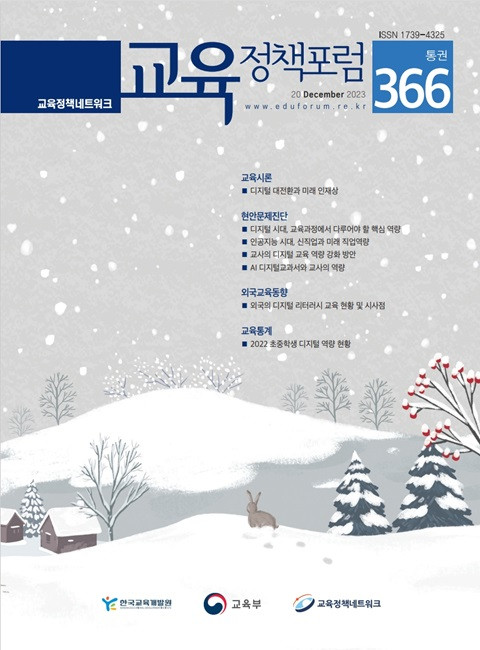 디지털 대전환과 미래 인재상 (교육정책포럼; 2023년 12월, Vol. 366) Year of publication: 2023 Corporate author: 한국교육개발원 교육시론ㅁ 디지털 대전환과 미래 인재상 현안문제진단ㅁ 디지털 시대, 교육과정에서 다루어야 할 핵심 역량ㅁ 인공지능 시대, 신직업과 미래 직업역량ㅁ 교사의 디지털 교육 역량 강화 방안ㅁ AI 디지털교과서와 교사의 역량 외국교육동향ㅁ 외국의 디지털 리터러시 교육 현황 및 시사점 교육통계ㅁ 2022 초중학생 디지털 역량 현황
 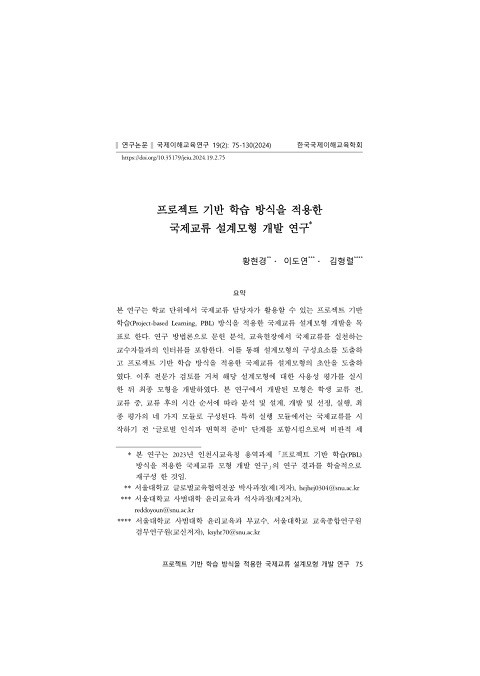 프로젝트 기반 학습 방식을 적용한 국제교류 설계모형 개발 연구 (국제이해교육연구; Vol. 19, No. 2) Year of publication: 2024 Author: 황현경 | 이도연 | 김형렬 Corporate author: 한국국제이해교육학회 본 연구는 학교 단위에서 국제교류 담당자가 활용할 수 있는 프로젝트 기반 학습(Project-based Learning, PBL) 방식을 적용한 국제교류 설계모형 개발을 목표로 한다. 연구 방법론으로 문헌 분석, 교육현장에서 국제교류를 실천하는 교수자들과의 인터뷰를 포함한다. 이를 통해 설계모형의 구성요소를 도출하고 프로젝트 기반 학습 방식을 적용한 국제교류 설계모형의 초안을 도출하였다. 이후 전문가 검토를 거쳐 해당 설계모형에 대한 사용성 평가를 실시한 뒤 최종 모형을 개발하였다. 본 연구에서 개발된 모형은 학생 교류 전, 교류 중, 교류 후의 시간 순서에 따라 분석 및 설계, 개발 및 선정, 실행, 최종 평가의 네 가지 모듈로 구성된다. 특히 실행 모듈에서는 국제교류를 시작하기 전 ‘글로벌 인식과 변혁적 준비’ 단계를 포함시킴으로써 비판적 세계시민교육의 목표와 교수법을 통합하는 동시에 국제교류 경험이 부족한 교수자에게 구체적인 지침을 제공하고자 하였다. 본 연구를 통해 개발된 설계모형은 단위학교의 교육계획과 교육과정 제반 요소 또한 고려하고 있기 때문에, 학교 현장에서 보다 현실적이고 지속가능한 국제교류를 설계하고 운영하기 위한 지침으로 활용될 수 있다.
 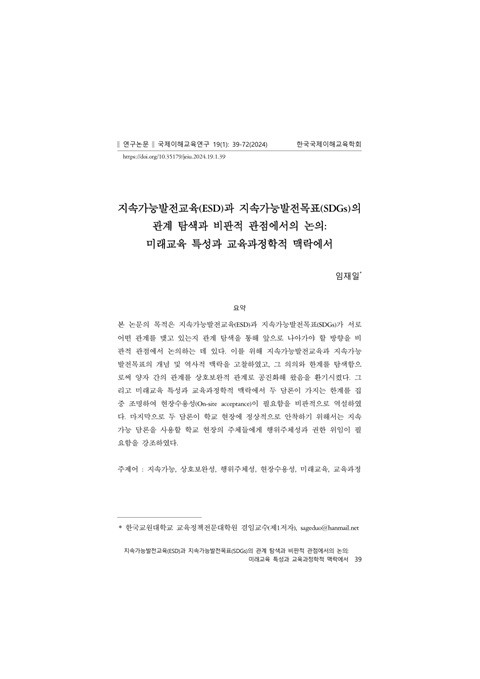 지속가능발전교육(ESD)과 지속가능발전목표(SDGs)의 관계 탐색과 비판적 관점에서의 논의: 미래교육 특성과 교육과정학적 맥락에서 (국제이해교육연구; Vol. 19, No. 1) Year of publication: 2024 Author: 임재일 Corporate author: 한국국제이해교육학회 본 논문의 목적은 지속가능발전교육(ESD)과 지속가능발전목표(SDGs)가 서로 어떤 관계를 맺고 있는지 관계 탐색을 통해 앞으로 나아가야 할 방향을 비판적 관점에서 논의하는 데 있다. 이를 위해 지속가능발전교육과 지속가능발전목표의 개념 및 역사적 맥락을 고찰하였고, 그 의의와 한계를 탐색함으로써 양자 간의 관계를 상호보완적 관계로 공진화해 왔음을 환기시켰다. 그리고 미래교육 특성과 교육과정학적 맥락에서 두 담론이 가지는 한계를 집중 조명하여 현장수용성(On-site acceptance)이 필요함을 비판적으로 역설하였다. 마지막으로 두 담론이 학교 현장에 정상적으로 안착하기 위해서는 지속가능 담론을 사용할 학교 현장의 주체들에게 행위주체성과 권한 위임이 필요함을 강조하였다.
 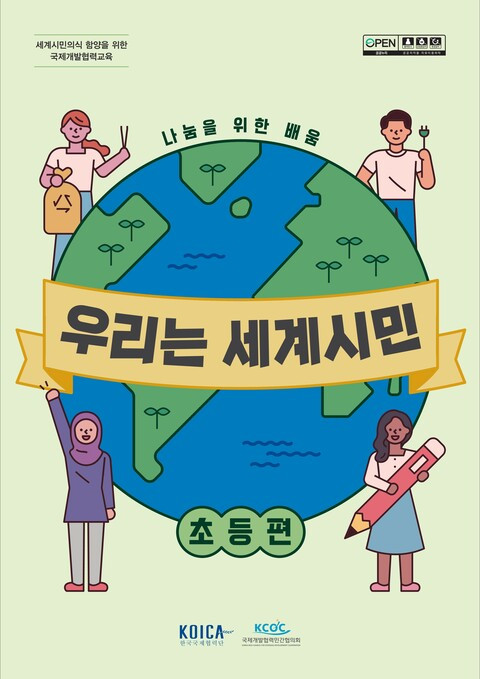 [개정판] 우리는 세계시민: 나눔을 위한 배움; 초등편 Year of publication: 2021 Corporate author: 한국국제협력단 | 국제개발협력민간협의회 본 교재는 KOICA ODA 교육원의 연구용역으로 발간된 것으로 초등학생 대상의 세계시민과 개발교육을 위한 교안및 활용 가이드를 수록하였고 부록으로 교안 선택 활동과 교안 활용을 위한 교보재 등을 다루고 있다. 본 저작물은 국제개발협력민간협의회에서 2021년 작성하여 공공누리 제4유형으로 개방한 ‘우리는 세계시민: 초등편’을 이용하였으며 해당 저작물은 국제개발협력민간협의회 홈페이지 (www.ngokcoc.or.kr)에서 무료로 다운받으실 수 있습니다.
 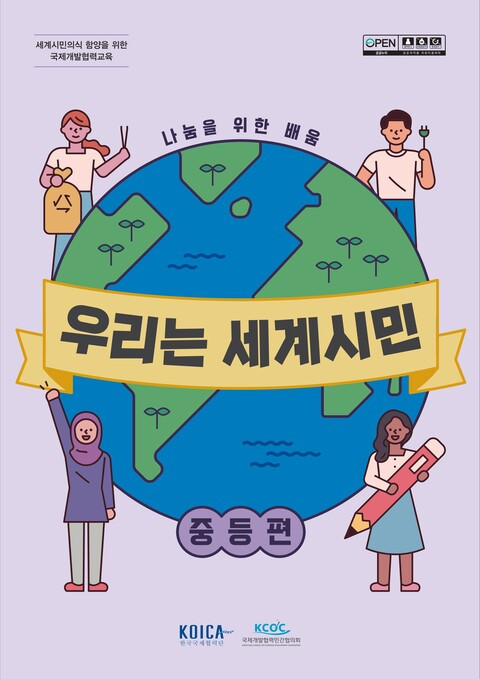 [개정판] 우리는 세계시민: 나눔을 위한 배움; 중등편 Year of publication: 2021 Corporate author: 한국국제협력단 | 국제개발협력민간협의회 본 교재는 KOICA ODA 교육원의 연구용역으로 발간된 것으로 중학생 대상의 세계시민과 개발교육을 위한 교안및 활용 가이드를 수록하였고 부록으로 교안 선택 활동과 교안 활용을 위한 교보재 등을 다루고 있다. 본 저작물은 국제개발협력민간협의회에서 2021년 작성하여 공공누리 제4유형으로 개방한 ‘우리는 세계시민: 중등편’을 이용하였으며 해당 저작물은 국제개발협력민간협의회 홈페이지 (www.ngokcoc.or.kr)에서 무료로 다운받으실 수 있습니다.
 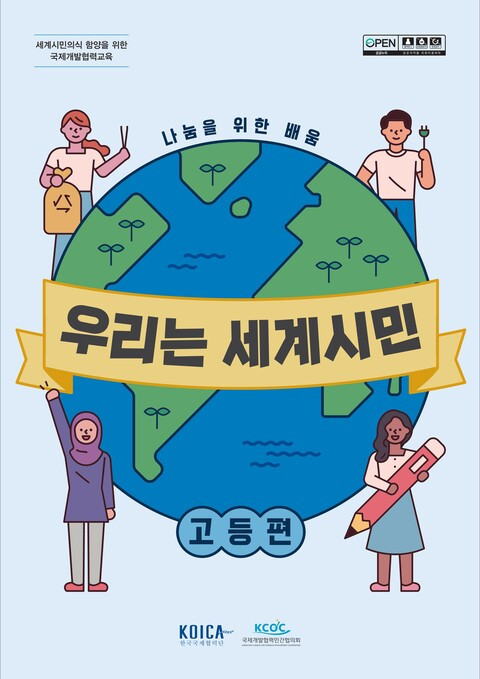 [개정판] 우리는 세계시민: 나눔을 위한 배움; 고등편 Year of publication: 2021 Corporate author: 한국국제협력단 | 국제개발협력민간협의회 본 교재는 KOICA ODA 교육원의 연구용역으로 발간된 것으로 고등학생 대상의 세계시민과 개발교육을 위한 교안및 활용 가이드를 수록하였고 부록으로 교안 선택 활동과 교안 활용을 위한 교보재 등을 다루고 있다. 본 저작물은 국제개발협력민간협의회에서 2021년 작성하여 공공누리 제4유형으로 개방한 ‘우리는 세계시민: 고등편’을 이용하였으며 해당 저작물은 국제개발협력민간협의회 홈페이지 (www.ngokcoc.or.kr)에서 무료로 다운받으실 수 있습니다.
 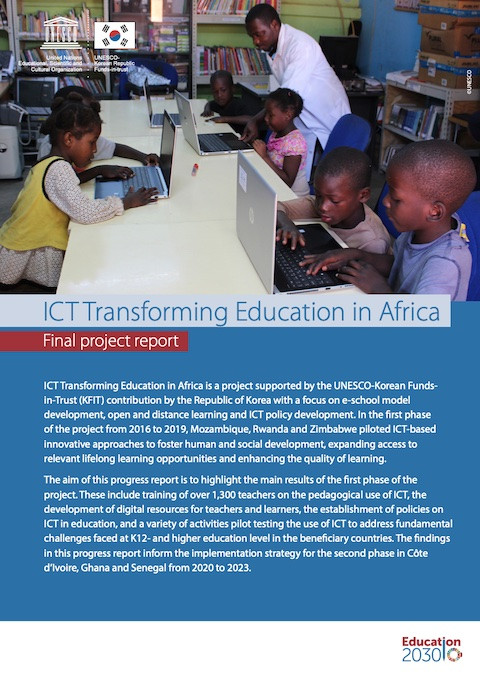 ICT Transforming Education in Africa: Final Project Report Year of publication: 2020 Corporate author: UNESCO ICT Transforming Education in Africa is a project supported by the UNESCO-Korean Funds- in-Trust (KFIT) contribution by the Republic of Korea with a focus on e-school model development, open and distance learning and ICT policy development. In the first phase of the project from 2016 to 2019, Mozambique, Rwanda and Zimbabwe piloted ICT-based innovative approaches to foster human and social development, expanding access to relevant lifelong learning opportunities and enhancing the quality of learning.The aim of this progress report is to highlight the main results of the first phase of the project. These include training of over 1,300 teachers on the pedagogical use of ICT, the development of digital resources for teachers and learners, the establishment of policies on ICT in education, and a variety of activities pilot testing the use of ICT to address fundamental challenges faced at K12- and higher education level in the beneficiary countries. The findings in this progress report inform the implementation strategy for the second phase in Côte d’Ivoire, Ghana and Senegal from 2020 to 2023.
  Roadmap for Integrating Global Citizenship and Liberation History in Teaching and Learning in SADC Member States Year of publication: 2021 Corporate author: UNESCO The Roadmap for integrating GCED and SALH in teaching and learning in SADC member states is grounded in two visions: Identify common values and learning outcomes that can be advanced by GCED and SALH, with a view of promoting the sense of belonging, solidarity, and regional identity and integration. Guide education planners and practitioners to mobilize the GCED and SALH contents to contribute to the SADC vision of reconciliation, social cohesion, resilience, peace, solidarity, development, and freedom for future generations through promoting an education that equips young people with skills, values, knowledge, behaviours, and attitudes that critically and creatively address today’s local, national, regional, and global challenges through an inclusive lens. The objectives of this Roadmap are to: Provide general guidance and steps for the integration of SALH and GCED in curricula and teaching and learning practices in SADC member states; Provide articulations between the regional and local philosophical concepts and the GCED core values, such as ubuntu, to support a contextualized teaching of GCED values; Support countries to identify priority topics and steps towards integrating GCED and SALH in education policies in a manner that highlights the regional dimensions of liberation history, as well as universal values; Propose learning outcomes and competencies as well as teaching and learning approaches for GCED and SALH; Provide guidance on integration of GCED and SALH in teacher education programmes, as well as possible assessment methods.