
Resources
Explore a wide range of valuable resources on GCED to deepen your understanding and enhance your research, advocacy, teaching, and learning.
2,162 Results found
 Pautas para una educación global: manual para que los educadores comprendan e implementen la educación global Year of publication: 2008 Corporate author: North-South Centre of the Council of Europe These Global Education Guidelines are the result of a need expressed by the North-South Centre’s (NSC) network of global education practitioners – the Global Education Week network - to have a common tool, built on experience gained by the network and other partners, to support educators to comprehend and successfully implement global education initiatives. By offering perspectives on global education as well as related methods and evaluation criteria – including sharing of practices, tools and resources - these Guidelines aim at strengthening the overall work for global education. It also aims at supporting practitioners in formal and non-formal education settings by introducing general elements which may be developed by them according to the needs and based on their own experiences; assist them in identifying existing global education approaches and practices; support them in reflecting on and becoming more aware of their own global education activities; increase global education practice sharing and create synergies between stakeholders; contribute to education policies at local, regional, national and international level.The Global Education Guidelines are an initiative of the Global Education Programme of the NorthSouth Centre of the Council of Europe, involving a team of educators from the Global Education Week network which constituted the drafting team with the mandate of drafting collectively the Global Education Guidelines. The writing process included a participatory method at several levels of consultancy amongst global education educators and practitioners actively involved with the North-South Centre global education and youth programmes. Moreover, a Group of Mentors was identified among NSC’s European and international partners, which included, inter alia, a team of trainers from the NSC’s University on Youth & Development.Topics presented in the Guidelines aim at clarifying fundamental questions related to global education; it suggest strategies on how to build contents; put forward aims, skills, values and attitudes; offer guidance on methods, curricular design and evaluation and list useful contacts, links and bibliography. The Guidelines should be regarded as an ongoing process of evolution, which should be regularly reviewed with new ideas, inputs and practices brought from a diversity of partners and their experiences.
 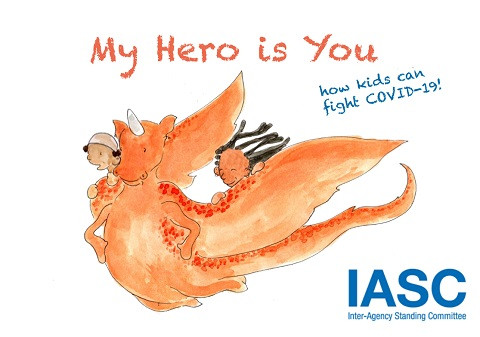 My Hero Is You: How Kids Can Fight COVID-19 Year of publication: 2020 Author: Helen Patuck Corporate author: Inter-Agency Standing Committee (IASC) A new story book that aims to help children understand and come to terms with COVID-19 has been produced by a collaboration of more than 50 organizations working in the humanitarian sector. With the help of a fantasy creature, Ario explains how children can protect themselves, their families and friends from coronavirus and how to manage difficult emotions when confronted with a new and rapidly changing reality. Mon héroïne, c’est toi: Comment combattre la COVID-19 quand on est un enfant Year of publication: 2020 Author: Helen Patuck Corporate author: Inter-Agency Standing Committee (IASC) Un novel livre qui a pour but d’aider les enfants à comprendre et à y faire face a été publié par plus d’une cinquantaine d’organisations actives dans le secteur humanitaire. Ario, une créature fantastique, comment les enfants peuvent se protéger et protéger leurs proches et leurs amis du coronavirus et comment ils peuvent gérer les émotions complexes qui s’emparent d’eux lorsqu’ils sont confrontés à une réalité nouvelle qui évolue rapidement.
  Spotlight: Quality Education for All during COVID-19 Crisis Year of publication: 2020 Author: Chris Petrie | Katija Aladin | Pukhraj Ranjan | Romayne Javangwe | Danny Gilliland | Saku Tuominen | Leponiemi Lasse Corporate author: HundrED | Organisation for Economic Co-operation and Development (OECD) | Supercell This report aims to offer effective solutions that help parents, teachers and children navigate through challenges facing education during the pandemic. It has plentiful insights and high- quality resources from the opportunity for teacher to form much stronger connections with parents, students to challenges of untrained teacher and lack of access to digital learning resources.
  Teaching for Sustainable Development through Ethical Global Issues Pedagogy: A Resource for Secondary Teachers Year of publication: 2019 Author: Karen Pashby | Louise Sund | Matthew Williams | Jennifer Maguire | Heidi Meltovuo | David Few | Nicole Sandler | Ruth Till | Ilona Taimela Corporate author: Manchester Metropolitan University This resource aims to support teacher in their current practice rather than a direct ‘how-to’ guide. The activities offer some suggestions for practice before, during, and after students learn about a particular global issue. It offers some suggested global issues topics, but intend for teachers to adapt this resource to the different issues they explore with their students.
  Understanding the Return on Investment from TVET: A Practical Guide Year of publication: 2020 Author: Jane Schueler | Phil Loveder Corporate author: UNESCO International Centre for Technical and Vocational Education and Training (UNEVOC) | National Centre for Vocational Education Research(NCVER) This guide presents an analytic framework that summarizes some of the main elements and issues that need to be considered in measuring ROI. This includes establishing the scope, context and purpose for measuring ROI, adopting guiding principles, identifying costs, benefits and factors that impact on ROI, and approaches to data collection and analysis. The Guide then introduces a framework that looks at the ROI equation from a range of perspectives – including economic and social dimensions – and for different stakeholders, including individuals, businesses and societies. The Guide presents relevant ROI indicators and measures drawn from the existing international research. Finally, it provides guidelines to planning and collecting ROI data, along with a set of practical pro forma resources and case studies to assist the reader.
 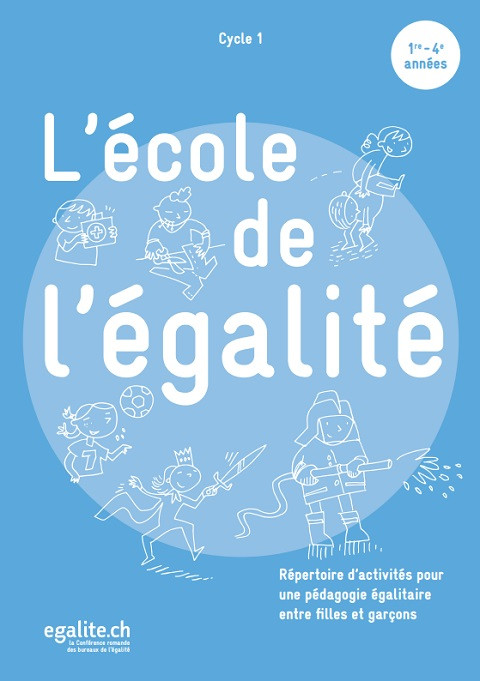 L'école de l'égalité: Répertoire d’activités pour une pédagogie égalitaire entre filles et garçons; 1re-4e années Year of publication: 2019 Corporate author: egalite.ch Cette ressource pour le cycle 1 propose des activités clé en main pour travailler sur les questions de genre et promouvoir l'égalité filles-garçons en classe et à l'école. Chaque brochure propose des séquences pédagogiques en lien avec le Plan d’études romand. Chacune de ces activités invite à un travail pluridisciplinaire.
 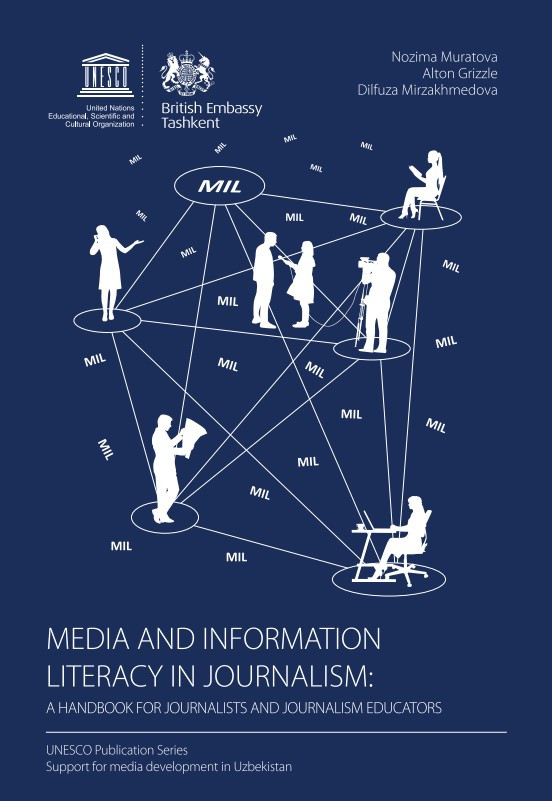 Media and Information Literacy in Journalism: A Handbook for Journalists and Journalism Educators Year of publication: 2019 Author: N. Muratova | A. Grizzle | D. Mirzakhmedova Corporate author: UNESCO Tashkent This handbook aims at being an important and practical tool for journalists in fulfilling their professional activities and mainly in media information literacy (MIL).The first three parts of the Handbook include theoretical material and are accompanied with exercises and case studies; the last part consists entirely of practical tools and exercises that aim to ensure that the material was understood. The Handbook deals with "fake news" and disinformation, provides a conceptual framework for media and information literacy, shows its importance, and explores principles and role of the MIL in journalism education. Also, the Handbook covers topics such as ethics on the Internet, human rights and work with sources, journalistic skills in collecting and processing information, ways to verify and provide reliable information, and the identification of fakes that may adversely affect the public. Медиа- и информационная грамотность в журналистике: Пособие для журналистов и преподавателей журналистики Year of publication: 2019 Author: N. Muratova | A. Grizzle | D. Mirzakhmedova Corporate author: UNESCO Tashkent Данное руководство нацелено на то, чтоб стать важным и практичным инструментом журналистов в осуществлении их профессиональной деятельности и главным образом в овладении медиа информационной грамотностью (МИГ).Первые три части книги включают в себя теоретический материал и сопровождены заданиями и кейсами по теме, последняя часть всецело состоит из практического инструментария и упражнений, которые направлены на закрепление изученного материала. В пособии рассматривается работа с «фэйковыми новостями» и дезинформацией, приведёна концептуальная основа, на которой строится медийная и информационная грамотность, показана ее важность, исследованы принципы и роль МИГ в журналистском образовании. Кроме этого в пособии рассмотрены такие темы, как этика в интернете, права человека и работа с источниками, мастерство журналиста в сборе и обработке информации, способы проверки и предоставления достоверных сведений, выявление фейков, которые могут отрицательно повлиять на общественность.
  Climate Action: Teacher Resource Year of publication: 2018 Author: Gráinne Ryan Corporate author: An Taisce The Climate Action Teacher Resource has been devised to equip Geography, C.S.P.E., Science, English teachers with the tools and guidance to explore the topic of climate change through their curriculum. This comprehensive guide provides teachers with the resources to educate, encourage and inspire students to take action on climate change, a challenge that faces Irish society and the wider international community.