
Resources
Explore a wide range of valuable resources on GCED to deepen your understanding and enhance your research, advocacy, teaching, and learning.
1,322 Results found
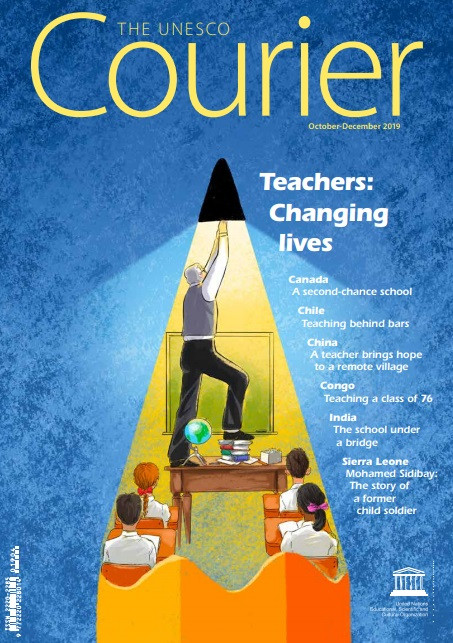 Docentes que cambian el mundo (El Correo de la UNESCO 4, Octubre-Diciembre 2019) Year of publication: 2019 Corporate author: Organización de las Naciones Unidas para la Educación, la Ciencia y la Cultura (UNESCO) Sin duda, todo el mundo reconoce la función esencial que desempeñan los docentes. A título individual, cada uno de nosotros puede mencionar el nombre de al menos un maestro que le influyó decisivamente, a veces hasta el punto de reorientar toda su vida. En el ámbito internacional, los Objetivos de Desarrollo Sostenible (ODS) de las Naciones Unidas, en particular el ODS 4, destacan la importancia del profesorado en la consecución de la Agenda 2030 de desarrollo sostenible.Y, sin embargo, la profesión docente está en crisis. El desarrollo de la neurociencia cognitiva y las múltiples aplicaciones de las nuevas tecnologías en el sector educativo imponen al magisterio la necesidad de adaptarse, de reinventarse.
 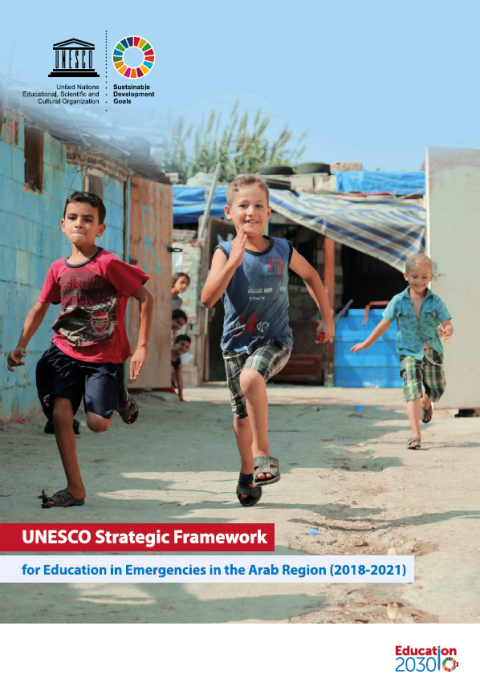 UNESCO Strategic Framework for Education in Emergencies in the Arab Region (2018-2021) Year of publication: 2017 Corporate author: UNESCO The Strategic Framework consists of four strategic goals that are anchored in the three pillars of education (Access, Quality and System Strengthening) and which emphasize the importance of relevant and inclusive education to meet the challenges confronting learners, educators, and education systems in both crisis and post-crisis settings. The strategic goals are: Strategic Goal 1: Children and youth affected by crisis access inclusive and quality learning opportunitiesStrategic Goal 2: Learners affected by crisis are empowered with values, knowledge, and skills for life and workStrategic Goal 3: Education actors provide quality education for better learning outcomesStrategic Goal 4: Education systems are responsive and resilient to crisis
 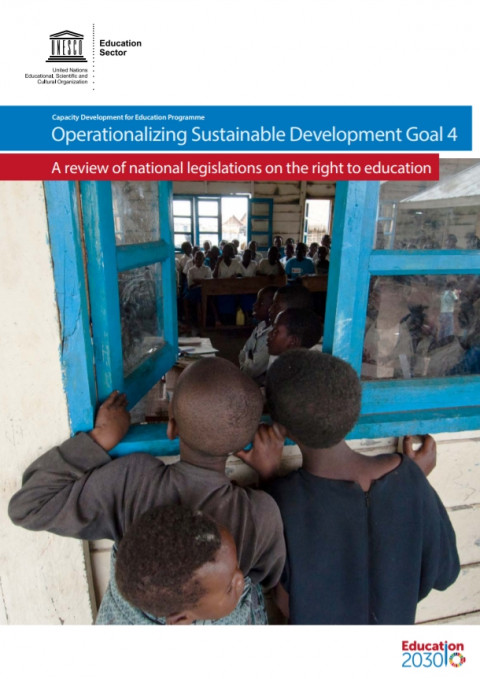 Operationalizing Sustainable Development Goal 4: a review of national legislations on the right to education Year of publication: 2017 Author: Santini, Delphine Corporate author: UNESCO As part of a wider Capacity Development for Education (CapED) Programme on operationalizing SDG4 at the country level, this paper examines the instrumental role that legislation on the right to education can play in view of achieving the SDG4 targets in Least Developed Countries. It does it by reviewing national legal frameworks relating to the right to education in 11 countries, suggesting some lessons of global interest, both for policy-making and normative work. Opérationnaliser l'Objectif de développement durable 4: examen des législations nationales sur le droit à l'éducation Year of publication: 2017 Author: Santini, Delphine Corporate author: UNESCO Dans le cadre du Programme de développement des capacités pour l’éducation (CapED) sur l’opérationnalisation de l’ODD 4 au niveau des pays, ce document examine le rôle déterminant de la législation relative au droit à l’éducation en vue d’atteindre les cibles de l’ODD 4 dans les pays les moins avancés. Les cadres juridiques nationaux relatifs au droit à l’éducation dans 11 pays sont passés en revue, tout en suggérant quelques recommandations de portée plus globale, à la fois pour l’élaboration de politiques et le renforcement du travail normatif.
 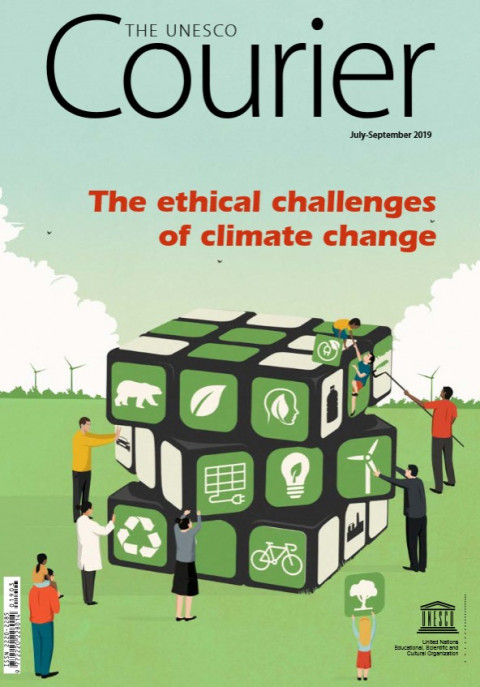 Cambio climático y desafíos éticos (El Correo de la UNESCO 3, July-September 2019) Year of publication: 2019 Corporate author: UNESCO El cambio climático no solo pone en peligro nuestros ecosistemas; también quebranta los cimientos de nuestros derechos fundamentales, agrava la desigualdad y genera nuevas injusticias. La adaptación al cambio climático y la atenuación de sus efectos no es únicamente un asunto de conocimientos científicos y voluntad política, sino que exige además una perspectiva amplia sobre una situación compleja. Con el fin de ayudar a los Estados y demás entidades pertinentes en la toma de las decisiones apropiadas y la ejecución de políticas eficaces en materia de desarrollo sostenible, adaptación al cambio climático y mitigación de sus consecuencias adversas, la UNESCO aprobó en noviembre de 2017 una Declaración de principios éticos en relación con el cambio climático.La ética determina la esencia de todo compromiso. Su capacidad de movilización permite orientar la acción, establecer arbitrajes, decidir entre intereses contradictorios y fijar prioridades. La ética facilita la articulación de la teoría con la práctica, de los principios generales con la voluntad política, y de la toma de conciencia de ámbito mundial con la aplicación de medidas a escala local.
 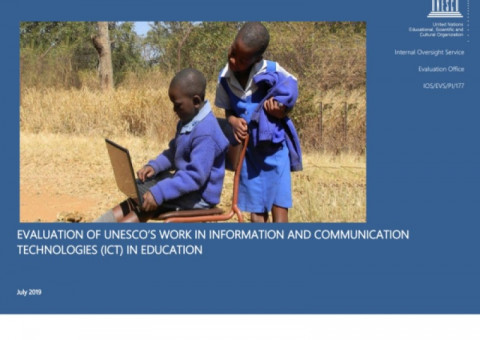 Evaluation of UNESCO's work in information and communication technologies (ICT) in education Year of publication: 2019 Author: Seán Ó Siochru and Graham Attwell Corporate author: UNESCO ICT in Education is a fast-growing area globally that offers many strategic opportunities. As the leader and coordinator of the SDG 4 – Education 2030 with the aim to “Ensure inclusive and equitable quality education and promote lifelong learning opportunities for all”, UNESCO has the mandate and expertise needed to strategically position itself as a world leader in this field. UNESCO’s work in ICT in Education aims at enhancing the quality and relevance of learning and at strengthening inclusion. While technology can facilitate wider access to education and bridge learning divides, can advance gender equality and inclusion as well as digital skills development, the rapidly changing technologies and work processes require the development of new pedagogies, both for the use of ICT for teaching and learning in the classroom and through open access and distance learning. Compared to other players, UNESCO leverages its comparative strengths in its ICT in Education interventions - especially its impartiality, convening power, and policy expertise - through an inclusive and humanistic approach to achieving quality education in coherence with Sustainable Development Agenda 2030. Its expertise across all levels of Education and its multidisciplinary potential of working across its Programme Sectors are also considered among UNESCO’s specific strengths. The evaluation revealed that UNESCO achieved important results, at the level of the learning environment, at the policy level and in institutional capacity building, but it also showed that UNESCO still needs to strengthen its positioning and visibility within the wider landscape of ICT in Education. For example, UNESCO has to continue positioning itself for producing forward-looking knowledge on ICT in Education and as a laboratory of ideas for future-oriented thinking. While the evaluation came across various specific interventions successfully addressing the needs of disadvantaged groups, the evaluation found that considerations of inclusion and gender equality were not consistently mainstreamed into policy-related and capacity building interventions. Other challenges are mainly linked to the current dispersion of resources and fragmentation of expertise across different entities within the Organization, which also leads to reduced visibility. While the key entities active in this area recognize that they are working within a common theme, collaboration and coordination still needs to be improved. The strategic measures proposed by the evaluation towards an overall organizational framework for ICT in Education aim at establishing an enabling environment for inter- and multidisciplinary approaches and greater coherence and collaboration. The ethical challenges of climate change (The UNESCO Courier no. 3, July-September 2019) Year of publication: 2019 Corporate author: UNESCO Climate change not only threatens our ecosystems, it undermines the foundation of our fundamental rights, deepens inequalities and creates new forms of injustice. Adapting to climate change and trying to mitigate its impacts are not just a matter of scientific knowledge and political will; they also demand a broader view of a complex situation. In order to help Member States and other stakeholders to make appropriate decisions and implement effective policies for sustainable development, adaptation to climate change and the mitigation of its negative effects, UNESCO adopted a Declaration of Ethical Principles in relation to Climate Change in November 2017.Ethics constitute the substantial core of any commitment. As a mobilizing force, ethics can steer action, facilitate arbitration, resolve conflicting interests, and establish priorities. Ethics have the capacity to connect theory with practice, general principles with political will, and global awareness with local actions. Défis climatiques, défis éthiques (Le Courrier de l'UNESCO 3, July-September 2019) Year of publication: 2019 Corporate author: UNESCO Le changement climatique ne met pas seulement en péril nos écosystèmes : il ébranle le socle de nos droits fondamentaux, il creuse les inégalités et crée de nouvelles injustices. S’adapter au changement climatique et tenter d’en atténuer les effets n’est pas seulement affaire de connaissance scientifique et de volonté politique; cela implique une vue d’ensemble sur une situation complexe. Afin d’aider les États et les autres acteurs concernés à prendre des décisions appropriées et à mener des politiques efficaces en matière de développement durable, d’adaptation au changement climatique et d’atténuation de ses effets néfastes, l’UNESCO a adopté, en novembre 2017, une Déclaration de principes éthiques en relation avec le changement climatique.L’éthique constitue le cœur substantiel de tout engagement. Grâce à sa force mobilisatrice, elle permet d’orienter l’action, de faire des arbitrages, de trancher entre des intérêts contradictoires, de fixer des priorités. L’éthique permet d’articuler la théorie et la pratique, les principes généraux et la volonté politique, la prise de conscience globale et les actions locales.
  Facing the facts: the case for comprehensive sexuality education Year of publication: 2019 Author: Global Education Monitoring Report Team Corporate author: UNESCO Comprehensive sexuality education is an essential part of a good quality education that helps prepare young people for a fulfilling life in a changing world. It improves sexual and reproductive health outcomes, promotes safe and gender equitable learning environments, and improves education access and achievement. This paper, produced jointly with the Section for Health and Education at UNESCO, discusses how governments can overcome social resistance and operational constraints to scale up these programmes as part of their commitment to SDG 4, the global education goal. Regarder la réalité en face: pourquoi faut-il promouvoir l'éducation complète à la sexualité Year of publication: 2019 Author: Global Education Monitoring Report Team Corporate author: Organisation des Nations Unies pour l'éducation, la science et la culture (UNESCO) L'éducation complète à la sexualité est un élément indispensable d'une éducation de qualité qui aide les jeunes à s'épanouir dans un monde en mutation. Elle améliore les résultats en matière de santé sexuelle et reproductive, crée les conditions d'un apprentissage sûr et équitable du point de vue du genre, élargit l'accès à l'éducation et améliore les résultats scolaires. Ce document d'orientation, préparé avec la section de la santé et de l'éducation de l'UNESCO, explique comment les gouvernements peuvent surmonter les résistances sociales et les contraintes opérationnelles pour amplifier ces programmes, conformément à leur engagement envers l'ODD 4, l'objectif mondial d'éducation.