
Resources
Explore a wide range of valuable resources on GCED to deepen your understanding and enhance your research, advocacy, teaching, and learning.
1,451 Results found
 Éducation globalein Lithuania: challenges and opportunities Year of publication: 2014 Author: Indrė Augutienė | Zina Baltrėnienė Corporate author: Lithuanian Development Education and Cooperation Network of Non-governmental Institutions (Association LITDEA) | Lithuanian National Non-Governmental Development Cooperation Organisations‘ Platform (NGDO Platform) La publication a été réalisée la mise en œuvre du projet « Partenariat Qualité pour le projet de développement de l'UE Présidence de la présidence lituanienne de l'UE, 2013 »(no. DCINSA ED / 2013 / 319-124). Aujourd'hui, nous vivons dans un monde en constante évolution qui est lié par l'esprit des relations entre les peuples, les pays et les cultures, et qui présente divers défis et opportunités. Chaque jour, nous devons résoudre de nombreux problèmes économiques, sociaux et environnementaux qui nous relie avec d'autres pays, leurs cultures et leurs citoyens et de fournir une occasion pour nous tous de faire partie d'une société mondiale. Pour acept les possibilités offertes par les processus de mondialisation et faire face aux nouveaux défis, il est nécessaire de créer les conditions pour les gens à acquérir les connaissances sur les réalités mondiales, les problèmes de développement mondiaux émergents et à les relier à leur propre vie. Il est également important de fournir les possibilités pour les personnes à acquérir les compétences et de renforcer les valeurs propres à faciliter la citoyenneté mondiale active et la responsabilité. Les problèmes mondiaux de plus en plus d'impact sur la vie de tout le monde à travers le monde, nous devons donc réaliser que nous faisons partie du monde avec la pauvreté qui prévaut encore, les inégalités sociales, le changement climatique et les problèmes de réchauffement planétaire. Dans la société actuelle, il est particulièrement important de veiller à ce que les différentes formes d'éducation d'améliorer la compréhension des gens sur les défis ci-dessus et de leur impact sur le développement personnel, communautaire, national et mondial. Éducation globaleis dirigée vers la formation et le développement des compétences, les connaissances des personnes et des valeurs qui facilitent la compréhension et la réponse aux défis du 21e siècle. Jusqu'à présent, le concept de l'éducation globalewas pas validée dans les documents nationaux. Aujourd'hui, les organisations non-gouvernementales discutent activement de cette question avec la société académique et avec les Ministères des Affaires Étrangères / et de l'éducation et de la science représentant l'état dans la zone ci-dessus. Par ailleurs, la Lituanie n'a pas encore mis au point une formation globalestrategy uniforme, mais la dimension de l'éducation globaleis inclus dans plusieurs documents spécifiques de la politique nationale. Compte tenu de cela, cet article examine les conditions préalables à l'intégration de l'éducation globaleset énoncées dans les principaux actes juridiques définissant le développement durable, la coopération au développement et de l'éducation de la Lituanie. Ce document fournit un examen de la globaleconcept Éducation, conditions préalables à sa mise en œuvre et la description de la situation actuelle en Lituanie. Il comprend également les propositions pour un développement réussi d’activités mondiales de l'éducation dans notre pays.
  Citoyenneté mondiale et laïcité Year of publication: 2018 Author: Nicolas Cadène Corporate author: ACTISCE Patronage Laique Jules Vallès La laïcité fait, de chacune et de chacun d’entre nous, au-delà de nos appartenances ou de nos origines, des citoyennes et des citoyens à égalité de droits et de devoirs. Elle nous permet d’aller au-delà de nos différences et de les dépasser tout en les respectant. Par la volonté de vivre ensemble, notre laïcité garantit la liberté de croire ou de ne pas croire et la possibilité de l’exprimer dans les limites de la liberté d’autrui. Elle permet la pluralité dans le respect mutuel et assise sur une citoyenneté commune. Au travers de nombreux exemples dont les cas de la Belgique, la Turquie, l’Inde, le Brésil, le Mexique et le Sénégal, Nicolas Cadène nous montre en quoi la laïcité est source de liberté pour tous les peuples.
  Issue to Action: English; Teaching Toolkit for a Fairer World Year of publication: 2020 Author: Stephanie Flett | Lesley Bloomer Corporate author: Scotdec | European Union (EU) These materials were created by English teachers in Scotland. The first activity introduces the need to hear multiple stories of the world and our place in it. There then follows three units with a focus on climate change, refugees and how we engage with the ‘other’. They include short introductory activities as well as a series of lessons exploring the topics in more detail. A range of stimuli is included – poetry, biography, images and film clips. All activities are mapped to Curriculum for Excellence benchmarks and reference the relevant SDG.
 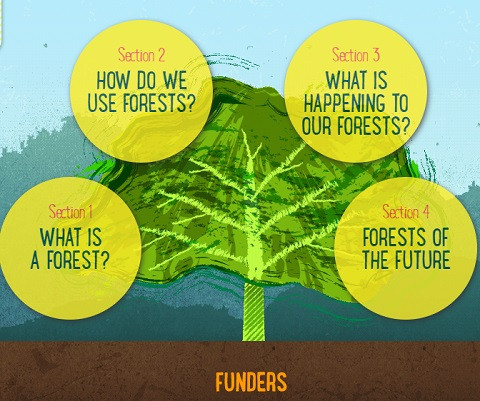 Our Forest, Our Future Corporate author: Scotdec This material helps teachers and pupils to explore the interdependence of people and forests and the vital role forests play in sustaining our environment – in the past, the present and hopefully the future. The Scots Pine forests in Scotland and the Congo Basin rainforest in Africa provide case studies through which pupils will begin to understand why our forests are under threat and the implications for our planet.In making connections between consumerism, people and the environment, pupils will be encouraged to see how they and their actions have an impact on the lives of others globally. It encourages reflection on the possible futures of the world's forests and ways of taking positive actions for a future where people and forests co-exist in a sustainable way. The resource is structured around a global citizenship framework devised by Oxfam.
 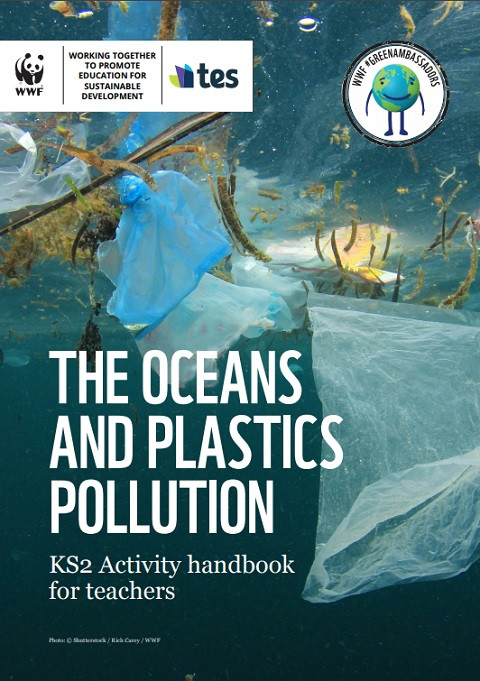 The Oceans and Plastics Pollution: KS2 Activity Handbook for Teachers Year of publication: 2019 Corporate author: World Wide Fund for Nature (WWF) | Tes This resource enables pupils to explore the role of the oceans in our lives and why healthy oceans are so vital to our future. By looking at the impact of plastics pollution on the oceans, pupils will also consider what steps we can all take to safeguard these precious waters for generations to come. It contains a range of activities aimed at teachers of 7-11 year-olds. It is intended that this resource will be used in cross-curricular work and all activities can be linked to the National Curricula of England, Northern Ireland, Scotland and Wales. Teachers will find that the material can be adapted for use with different ages and abilities.The six activities engage pupils in active learning methods, encouraging them to work together to solve problems, to think creatively, and to see themselves as active participants in their communities and the wider world. With a growing awareness of the part that they can play in creating a better future for our oceans, pupils will take a step on the journey to becoming global citizens and sustainability champions of the future.
  1er rendez-vous de l'éducation à la citoyenneté mondiale: Se donner une vision d'avenir en ÉCM Year of publication: 2017 Corporate author: Association québécoise des organismes de coopération internationale (AQOCI) Travail en sous-groupes: « Se donner une vision d'avenir en ÉCM »
 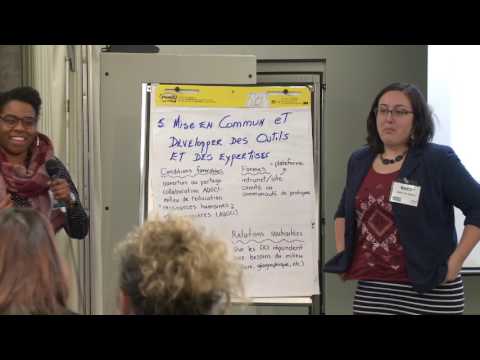 1er rendez-vous de l'éducation à la citoyenneté mondiale: Conditions favorables au changement Year of publication: 2017 Corporate author: Association québécoise des organismes de coopération internationale (AQOCI) Travail en sous-groupes: «Conditions favorables au changement: de la situation actuelle à la situation souhaitée»
  Qu'est ce qu'être citoyen du monde aujourd'hui? Year of publication: 2017 Author: Louis Lourme Corporate author: Rendez-vous Philosophiques Orléans-Tours Il y a des questions fondamentales à partir desquelles il devient possible de définir notre époque comme un nouvel âge de la citoyenneté mondiale. Quels sont les changements de l’époque contemporaine? Comment se manifeste cette citoyenneté mondiale? Et que reste-t-il de l’ancien idéal du cosmopolitisme lorsqu’il gagne ce nouveau sens politique?
  Towards Compassionate Global Citizenship: Educating the Heart through Development Education and Cognitively-Based Compassion Training (Vol. 19, Autumn, 2014) Year of publication: 2014 Author: Caroline Murphy | Brendan Ozawa-de Silva | Michael Winskel Corporate author: Centre for Global Education (CGE) The authors present an argument for developing emotional literacy which can be applied to critical development education to bring about active citizens who have capacity to take compassionate action for global justice. It is argued that both emotional skills and critical thinking skills are mutually essential, and in fact it is only by cultivating a symbiosis between these, can pedagogy be developed that presents a true transformational agency to people. The paper attempts to synthesise development education (DE) with Cognitively-Based Compassion Training (CBCT), and argues that these are potentially compatible to acquire such pedagogy. While DE can provide individuals with the skills to think critically and react to injustice, CBCT can provide the skills and emotional capacity to intervene for change, without giving in to despair, anger, or burnout. In short, it is argued that DE and CBCT can provide the emotional and intellectual skills necessary for productive social activism and change. Throughout this article it is highlighted how the international development organisation, Children in Crossfire (CIC), has been grappling with the above mentioned and related disciplines, and how it has been working, in partnership with researchers from Emory University and Life University’s Center for Compassion and Secular Ethics, to evolve its DE teacher training practice, Teachers in Development and Learning (TIDAL), towards such a transformative pedagogy, entitled ‘Educating the Heart for Compassionate Global Citizenship’.
 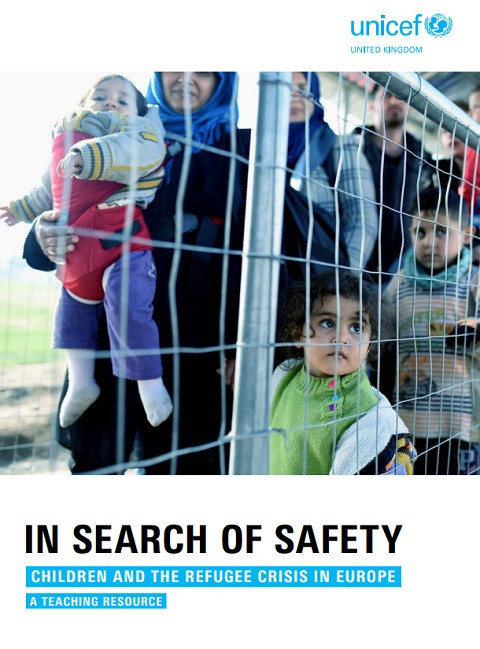 In Search of Safety: Children and the Refugee Crisis in Europe; A Teaching Resource Year of publication: 2016 Author: Carolyne Willow Corporate author: UNICEF UK This resource aims to allow teachers to help their students – primary (age seven upwards) and secondary – make sense of the current refugee and migrant crisis in Europe, within a children’s rights framework. It provides an historical overview of migration, contextualising the challenges we face today with a reminder of what has gone before. Guidance is provided to help you prepare for potentially difficult conversations and situations, and to enable you to be ready to access help for any child that needs it. The resource also includes ideas for extra activities by curriculum area, and ideas for whole-school activities. A range of films, images and information is provided and sign-posted to help you bring these activities to life.