
Resources
Explore a wide range of valuable resources on GCED to deepen your understanding and enhance your research, advocacy, teaching, and learning.
3,451 Results found
 Education for All: Meeting the Challenges of the 21st Century Year of publication: 2017 Corporate author: Global Partnership for Education (GPE) In this speech at the London School of Economics on May 22 2017, Julia Gillard, Board Chair of the Global Partnership for Education, described the global education crisis that the world is facing, and how investing in inclusive, quality education is urgently needed to achieve sustainable development.
 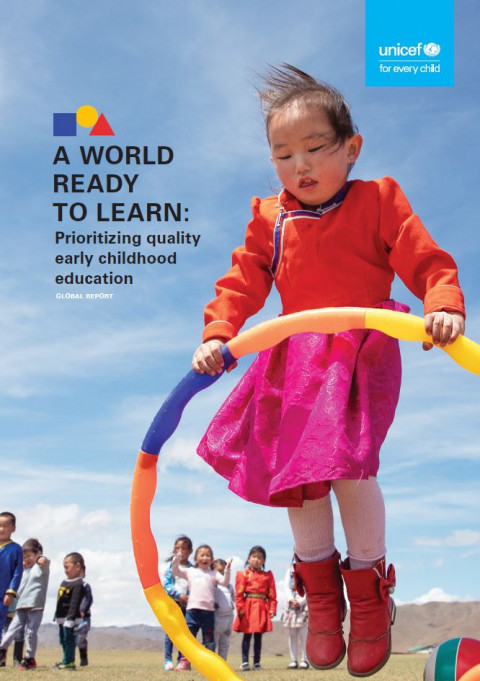 A World Ready to Learn: Prioritizing Quality Early Childhood Education Year of publication: 2019 Corporate author: United Nations Children's Fund (UNICEF) The Sustainable Development Goals (SDGs), and target 4.2 specifically, convey a clear objective that all girls and boys have access to quality early childhood development, care and pre-primary education so that they are ready for primary education. This global report confirms the importance of early childhood education in achieving SDG 4 and supports a bold challenge: Provide all children with at least one year of quality pre-primary education by 2030.The reasons for this aspiration are clear, as a solid body of evidence shows that the foundations for learning are largely built in the early years of life, before a child ever crosses the threshold of a primary school.In recent proposals on how to achieve universal education at all levels, the International Commission on Financing Global Education Opportunity (the Education Commission), the World Development Report and the Global Education Monitoring Reports3,4,5 have all emphasized that investments in early childhood education have positive returns not only for individual children but also for building more efficient and effective education systems.Yet, currently, both domestic financing and international aid invested in pre-primary education are poorly targeted and grossly inadequate. This represents one of the greatest missed opportunities to nurture the world’s human capital and help children reach their fullest potential.Based on comprehensive, data-driven analysis, this report examines the current status of pre-primary education and offers a practical vision for expanding equitable access and improving quality. Recognizing that many countries, especially low- and lower-middle-income countries, are at the beginning of this journey, providing universal access to pre-primary education in all countries by 2030 requires a realistic yet bold approach.
 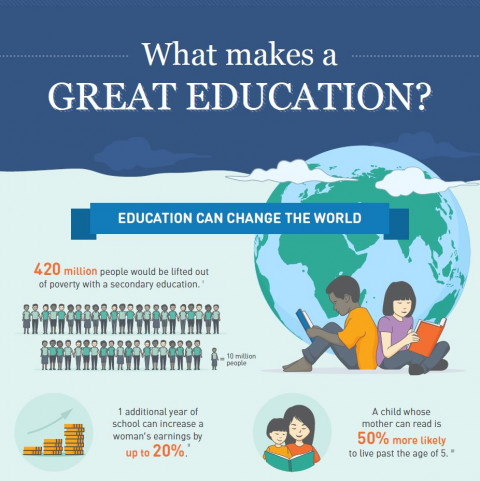 What Makes a Great Education? Year of publication: 2019 Corporate author: Global Partnership for Education (GPE) GPE works to strengthen national education systems to dramatically increase the number of children who are in school and learning.Since 2002, GPE has worked with more than 65 developing countries to improve education planning and implementation, with great results.
  [Video] Global Education Week 2018 Highlights Year of publication: 2019 Corporate author: North-South Centre of the Council of Europe This video clip shows some highlights from the 2018 edition (The world is changing: What about us?) of the Global Education Week (GEW).#GlobalEducationWeek#GEW18
 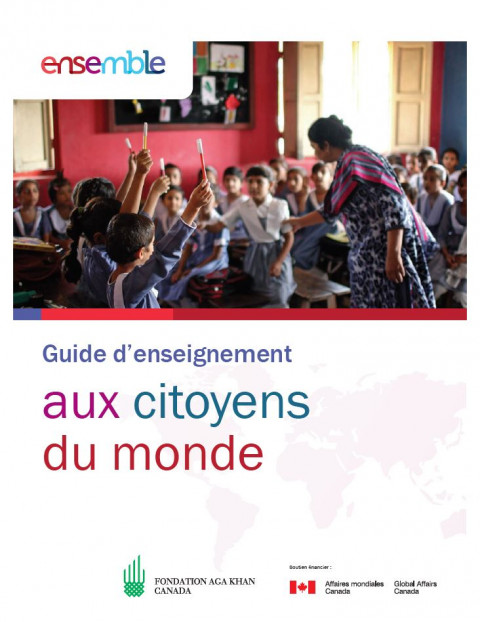 Guide d’enseignement aux citoyens du monde Year of publication: 2016 Corporate author: La Fondation Aga Khan Cette ressource est destinée aux corps enseignant des niveaux intermédiaire et secondaire et a pour but d’instruire les jeunes sur le développement international et les thèmes qui y sont liés, notamment la citoyenneté mondiale. Les activités qui y sont présentées visent à approfondir les connaissances des élèves sur l’interdépendance des pays, les facteurs qui exacerbent les inégalités à l’échelle mondiale et les solutions efficaces et durables pour réduire la pauvreté dans le monde. Nous espérons que le contenu incitera les élèves à agir de façon concrète pour améliorer la vie des gens dans le monde entier.
 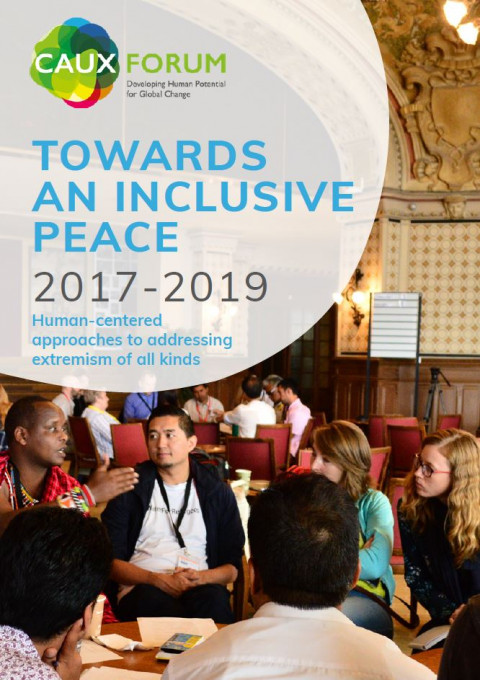 Towards an Inclusive Peace, 2017-2019: Human-centered Approaches to Addressing Extremism of All Kinds Year of publication: 2018 Author: Eliana Jimeno | Johannes Langer Corporate author: Initiatives of Change Switzerland Current approaches to violent extremism which excessively focus on counter terrorism and increasing military capacity, have failed to either stop violence or create peace. On the contrary, they have led to distrust in government institutions and alienation of large sections of the population.Doubling down on these past approaches will not resolve the issue. A new approach is needed and Towards an Inclusive Peace can offer it. Come and learn about human-centred approaches that prioritize sustainable peace, while dealing with root causes, advancing human rights, strengthening communities and enabling development.
 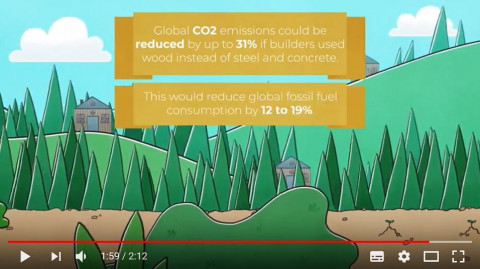 [Video] The Three Little Pigs and Climate Change: The Benefits of Wood as a Low-emission Construction Material Year of publication: 2018 Corporate author: United Nations Economic Commission for Europe (UNECE) | Poland. Ministry of Environment | State Forests Poland Wood can play a crucial role in cutting down emissions when replacing more carbon-intensive materials in the construction sector. The cartoon entitled “The Three Little Pigs & Climate Change”, reminds us that carbon emissions of concrete and steel respectively are 40 and 30 percent higher than those of wood.This video was a joint production of the Forest, Land and Housing Division of the United Nations Economic Commission for Europe, the Polish Ministry of the Environment and State Forests Poland. The video was launched at the 24th Conference of the Parties to the UN Framework Convention on Climate Change (COP24), held in Katowice, Poland, from 2 to 14 December 2018, where global action to reduce emissions and keep global warming within the temperature limits of the Paris Agreement was discussed.UNECE works to promote sustainable solutions for climate neutral buildings:http://www.unece.org/housing.htmlTogether with FAO, it also works to promote the sustainable management of forests:http://www.unece.org/forests/welcome.html
  Intercultural Education : Special Issue : Holocaust Education : Promise, Practice, Power and Potential (Vol 24) Issue 1 & 2 Year of publication: 2013 Corporate author: International Association for Intercultural Education | Routledge "Intercultural Education is a global forum for the analysis of issues dealing with education in plural societies. It provides educational professionals with the knowledge and information that can assist them in contributing to the critical analysis and the implementation of intercultural education." This issue is about the promise, practice, power and potential of Holocaust Education.
 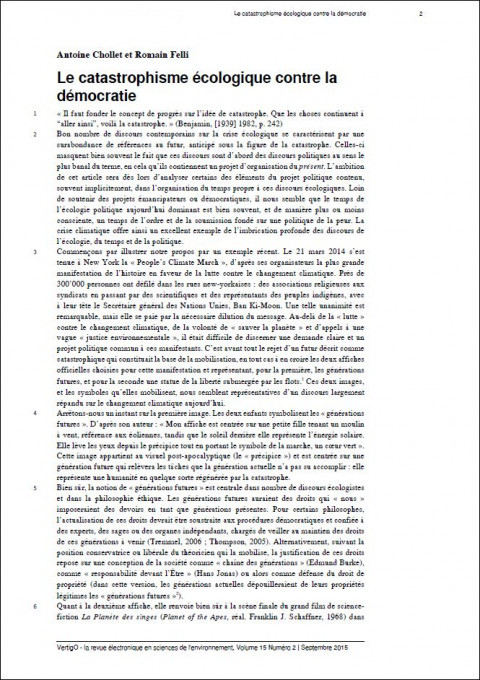 The Ecological Catastrophe Facing Democracy Year of publication: 2015 Author: Antoine Chollet | Romain Fell Corporate author: Université du Québec à Montréal (UQAM) | Éditions en environnement VertigO In this article we aim to analyze the specific temporal regimes associated with the discourses of environmental – and especially, climatic – catastrophe. By empirically describing and analyzing the images of the future used in catastrophist discourses, we seek to demonstrate that these discourses lead to anti-democratic political positions. Hence, we normatively argue for the replacement of these discourses by another understanding of the future, of temporality, and of time itself, and we theoretically define the lineaments of such an understanding. Finally, our aim is not to challenge the severity of the current ecological crises but rather, by way of reframing these crises in a present setting, and by pointing to their contradictory multiplicity, to contribute to a serious assessment of their nature. Only thus, is it possible to acknowledge the possibility of a democratic politics of socio-ecological relations. Le catastrophisme écologique contre la démocratie Year of publication: 2015 Author: Antoine Chollet | Romain Fell Corporate author: Université du Québec à Montréal (UQAM) | Éditions en environnement VertigO Il s’agit dans cet article d’interroger le régime temporel spécifique associé au catastrophisme écologique, et en particulier dans sa variante climatique. Nous cherchons à montrer que les images du futur qui sont utilisées dans les discours catastrophistes, que nous décrivons et dont nous analysons les différentes formes, produisent des positions politiques antidémocratiques. Dès lors, nous plaidons pour leur remplacement par une autre conception du futur, de la temporalité, et du temps lui-même dont nous esquissons les contours sur un plan théorique. Il ne s’agit nullement pour nous de contester la profondeur des crises écologiques que le monde expérimente actuellement, mais au contraire, en les ramenant dans le présent d’une part, et en montrant leur multiplicité contradictoire d’autre part, d’en faire prendre la mesure réelle. C’est ainsi que la possibilité d’une politique démocratique des rapports socio-écologiques peut être comprise.