
Resources
Explore a wide range of valuable resources on GCED to deepen your understanding and enhance your research, advocacy, teaching, and learning.
109 Results found
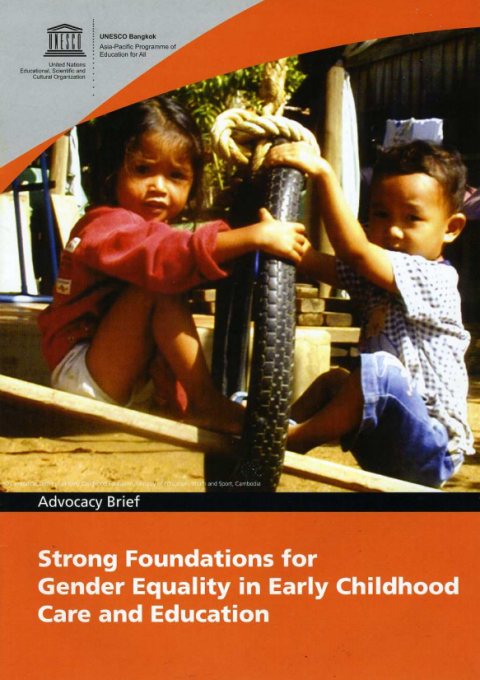 Strong foundations for gender equality in early childhood care and education: advocacy brief Year of publication: 2007 Corporate author: UNESCO The term Early Childhood Care and Education (ECCE) refers to services for children from birth to eight years of age. These include educating parents in how to care for their children and help them learn, as well as providing community-run and formal preschool programmes for pre-primary school-aged boys and girls. Given the varying needs of children from birth to eight years, educators have found it best to have different policies and strategies for children below and above three years of age. This brief focuses on the gender issues in the services provided for children who are three years of age or older in the Asia-Pacific region. Its scope is informed by UNESCO's commitment to holistic pre-primary services for this age group. The goal is to provide early childhood education that helps girls and boys succeed in primary school and in learning throughout their lives. The brief starts by looking into the growth of ECCE in the Asia-Pacific region and what is driving this growth. It explores why gender responsiveness is important in early childhood education, gives practical examples of what this looks like, and discusses the challenges of providing ECCE that equally values and benefits each girl and each boy. Flowing from this, the brief concludes with recommendations on how to make ECCE more gender responsive De solides fondations pour l'égalité des sexes dans les soins de la petite enfance et de l'éducation: le plaidoyer bref Year of publication: 2007 Corporate author: UNESCO Le terme de l’éducation et la protection de la petite enfance (EPPE) fait référence aux services pour les enfants de la naissance à huit ans. Ceux-ci incluent l'éducation des parents dans la façon de prendre soin de leurs enfants et de les aider à apprendre, ainsi que de fournir des programmes formels préscolaires gérés par la communauté et pour les garçons et les filles d'âge scolaire pré-primaire. Compte tenu des divers besoins des enfants de la naissance à huit ans, les éducateurs ont trouvé préférable d'avoir des politiques et des stratégies pour les enfants de moins et de plus de trois ans. Ce bref se concentre sur les questions de genre dans les services fournis aux enfants qui sont de trois ans ou plus dans la région Asie-Pacifique. Son champ d'application est informé par l'engagement de l'UNESCO aux services pré-primaires holistiques pour ce groupe d'âge. L'objectif est de fournir une éducation de la petite enfance qui aide les filles et les garçons à réussir à l'école primaire et dans l'apprentissage tout au long de leur vie. Les brèves commence par la recherche dans la croissance de l'EPPE dans la région Asie-Pacifique et ce qui est le moteur de cette croissance. Il explore pourquoi le genre de réaction est important dans l'éducation de la petite enfance, donne des exemples concrets de ce que cela ressemble, et examine les défis de fournir EPPE que de façon égale les valeurs et les avantages de chaque fille et chaque garçon. Découlant de cela, le mémoire se termine par des recommandations sur la façon de rendre sensible EPPE plus le sexe.
  Asia-Pacific Regional Education Conference, Bangkok, Thailand, 6-8 August 2014: Asia-Pacific Statement on Education Beyond 2015, Bangkok Statement Year of publication: 2014 Corporate author: UNESCO This document is an outcome of the Asia-Pacific Regional Education Conference (APREC) on August 6 -8, 2014, attended by Ministers of Education, high-level government officials and representatives of civil society organizations, teachers’ organizations, United Nations (UN) agencies, development partners, and members of academia and the private sector, gathered in Bangkok, Thailand. Having taken stock of the progress made in the region in achieving the six Education for All (EFA) goals, having examined the remaining challenges, and having reflected on future priorities and strategies for the Asia-Pacific region to achieve the emerging post-2015 education agenda, the deliberations were made based on the national EFA reviews, the Muscat Agreement adopted at the Global Education for All Meeting (Muscat, Oman, 12-14 May 2014), and the Outcome Document of the UN General Assembly Open Working Group for Sustainable Development Goals. The statement fully endorses the vision, principles and targets laid out in the Muscat Agreement, noting that the overarching goal to ‘ensure equitable and inclusive quality education and lifelong learning for all by 2030’ reflects the aspiration of the region for education and development. Conférence de l'Éducation Régionale Asie-Pacifique Bangkok, Thaïlande, 6-8 Août 2014: Déclaration de l'Asie-Pacifique sur l'Éducation Au-delà de 2015 Year of publication: 2014 Corporate author: Organisation des Nations Unies pour l'éducation, la science et la culture (UNESCO) Ce document est le résultat de la Conférence de l'Éducation Régionale Asie-Pacifique (en englais, APREC) le 6 Août -8 2014, en présence de ministres de l'éducation, des responsables gouvernementaux de haut niveau et des représentants des organisations de la société civile, les organisations d'enseignants, United Nations agences (ONU), les partenaires de développement, et des membres du milieu universitaire et du secteur privé, se sont réunis à Bangkok, Thaïlande. Après avoir fait le bilan des progrès réalisés dans la région dans la réalisation des six Éducation Pour Tous (EPT) buts pour, après avoir examiné les défis restant à relever, et après avoir réfléchi sur les priorités et les stratégies futures pour la région Asie-Pacifique pour atteindre le l'après 2015 émergente agenda de l'éducation, les délibérations ont été faites sur la base des examens nationaux de l'EPT, l'accord Muscat adopté à la éducation globalepour tous Réunion (Muscat, Oman, 12-14 mai 2014), et le document final du Groupe ouvert de travail de l'Assemblée générale des Nations Unies pour Objectifs de développement durable. La déclaration souscrit pleinement à la vision, les principes et les objectifs énoncés dans l'Accord de Mascate, en notant que l'objectif primordial de «garantir une éducation de qualité équitable et inclusive et l'apprentissage continu pour tous d'ici 2030» reflète l'aspiration de la région pour l'éducation et le développement.
  Electronic resources on education for sustainable development Year of publication: 2007 Corporate author: APCEIU | UNESCO Bangkok The Asia-Pacific Programme of Educational Innovation for Development (APEID) of UNESCO Bangkok and the Asia-Pacific Centre of Education for International Understanding (APCEIU) collaborated to produce this document listing these electronic resources. The value of such resources is not limited to teachers alone; it is also useful to policy and decision makers, teacher educators, researchers and academics as well as students themselves. Les ressources électroniques sur l'éducation pour le développement durable Year of publication: 2007 Corporate author: Centre Asie-Pacifique d'éducation pour la compréhension internationale (APCEIU) | UNESCO Bangkok Le Programme d'innovation éducative en vue du développement en Asie et dans le Pacifique(APEID)e l'UNESCO à Bangkok et le Centre d'Asie-Pacifique pour la Compréhension Internationale(APCECI) ont collaboré pour produire ce document énumérant ces ressources électroniques. La valeur de ces ressources ne se limite pas aux seuls enseignants; il est également utile pour les politiques et les décideurs, formateurs d'enseignants, des chercheurs et des universitaires ainsi que des étudiants eux-mêmes.
 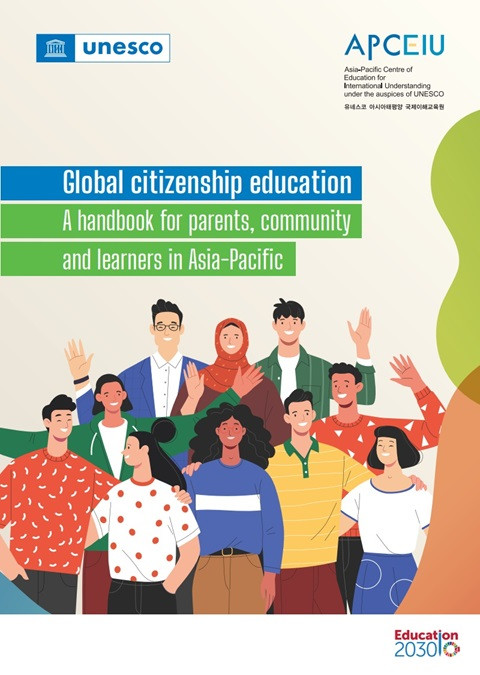 Global Citizenship Education: A Handbook for Parents, Community and Learners in Asia-Pacific Year of publication: 2023 Author: Darla K. Deardorff | Seek Ling Tan Corporate author: UNESCO Bangkok | APCEIU This handbook aspires to engage and involve parents, caregivers and the community to join the mission of developing every learner into a global citizen. To achieve this, parents, caregivers and the community will need to be empowered with the necessary GCED knowledge and skills too. In this handbook, GCED related concepts are introduced, alongside adaptable step-by-step action plans and best practices collected across the Asia-Pacific region to support parents and the community to take action in developing GCED competences in learners.
 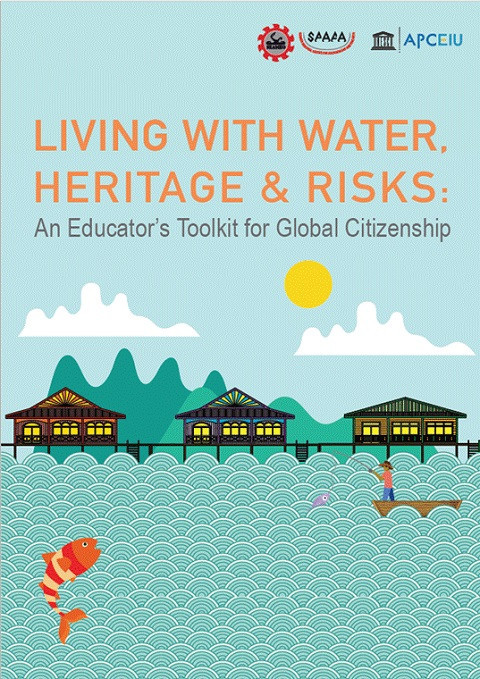 Living with Water, Heritage & Risks: An Educator’s Toolkit for Global Citizenship Year of publication: 2019 Corporate author: APCEIU | SEAMEO. Regional Centre for Archeology and Fine Arts (SPAFA) Designed to help young global citizens gain an awareness of the culture-nature connection in heritage conservation, this toolkit provides visual learning aids and ideas to explore water heritage in Southeast Asia. It is composed of an Educator's Booklet, Activity Sheets, and Inquiry-Based and Self-Learning Photocards. Learners are encouraged to THINK, SHARE and ACT in ways that will enable them to become critical thinkers who can make compassionate and ethical decisions.
 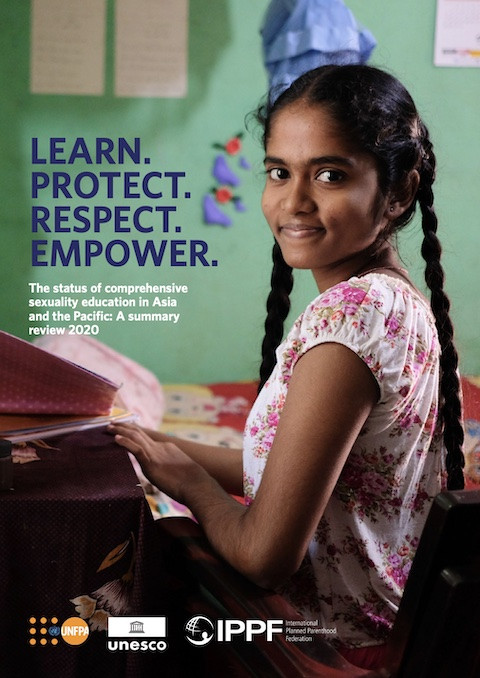 Learn, Protect, Respect, Empower: The Status of Comprehensive Sexuality Education in Asia and the Pacific; A Summary Review 2020 Year of publication: 2021 Corporate author: United Nations Population Fund (UNFPA) | UNESCO | International Planned Parenthood Federation (IPPF) More than half of the world’s 1.8 billion young people aged 10–24 live in the Asia and Pacific region1 and a majority of them live in low and middle-income countries. In spite of their diverse socio-economic contexts, young people across this vast region commonly face limited access to sexual and reproductive health and rights (SRHR) information and services, including age-appropriate comprehensive sexuality education. Of the 13 million adolescent girls globally with an unmet need for contraception, approximately half live in Asia-Pacific, leading to an estimated 3.7 million births to adolescent girls in the region annually. In addition, around 82,000 young people are infected with HIV each year in the region. As adolescents transition through to adulthood, it is crucial that they are equipped with the necessary knowledge, attitudes and skills to support their health and wellbeing, regardless of age, sex, marital status, socioeconomic status, ethnicity, sexual orientation or gender identity. School-based and age-appropriate comprehensive sexuality education (CSE) is an effective means of reaching a large population of children and young people, particularly where rates of school participation are high. This overview of the status of in-school CSE in Asia and the Pacific provides a strong evidence base on the reach and impact of this across the region. Importantly, post COVID-19 we need to build back CSE programmes that are better and stronger to meet the social and emotional needs of our young people.