
Resources
Explore a wide range of valuable resources on GCED to deepen your understanding and enhance your research, advocacy, teaching, and learning.
1,322 Results found
 Annual Report 2019: UNESCO Institute for Lifelong Learning Year of publication: 2020 Corporate author: UNESCO Institute for Lifelong Learning (UIL) This report shows how, in 2019, UIL worked to fulfil its mission, with a focus on youth and adults and a special emphasis on UNESCO’s priority areas of Africa and gender equality. UIL’s vision is for all children, young people and adults to benefit from quality lifelong learning opportunities, within the framework of sustainable development and peace. We promote lifelong learning as the leading educational paradigm for inclusive and sustainable learning societies in the context of the United Nations’ 2030 Agenda for Sustainable Development, which provides an ambitious set of goals and targets for Member States that together form a coherent, universal framework of reference for our activities. Working to this framework, and recognizing lifelong learning’s important transversal role not only with respect to Sustainable Development Goal (SDG) 4 on education but across all 17 SDGs, UIL has made an impact across a range of fronts, including in the areas of policy advice, capacity development, research, monitoring, and networking and advocacy. Rapport annuel 2019: Institut de l’UNESCO pour l’apprentissage tout au long de la vie Year of publication: 2020 Corporate author: Institut de l’UNESCO pour l’apprentissage tout au long de la vie (UIL) Ce rapport décrit la façon dont l’Institut a opéré en 2019 pour remplir sa mission en concentrant ses activités sur les jeunes et les adultes, et en mettant particulièrement l’accent sur les domaines prioritaires de l’UNESCO que sont l’Afrique et l’égalité des genres. L’UIL nourrit la vision d’un monde où tous les enfants, tous les jeunes et tous les adultes bénéficient d’offres d’apprentissage de qualité tout au long de leur vie, dans le cadre d’un développement durable et dans un monde en paix. Nous assurons la promotion de l’apprentissage tout au long de la vie en tant que paradigme éducatif majeur de sociétés apprenantes inclusives et durables dans le contexte du Programme de développement durable des Nations unies à l’horizon 2030. Ce programme fournit aux États membres une série d’objectifs et de cibles ambitieux qui, dans leur ensemble, constituent un cadre de référence universel et cohérent pour nos activités. Œuvrant à la réalisation de ce cadre et reconnaissant le rôle important de l’apprentissage tout au long de la vie, non seulement dans l’optique de l’Objectif de développement durable 4 (ODD 4) sur l’éducation, mais aussi, de façon plus générale pour réaliser les 17 ODD, l’UIL s’est engagé sur différents terrains tels que la formulation des politiques et leur mise en œuvre, le développement des capacités, la recherche, le pilotage et suivi ainsi que la mise en réseau et le plaidoyer.
  Communities in Action: Lifelong Learning for Sustainable Development Year of publication: 2015 Author: Fumiko Noguchi | Jose Roberto Guevara | Rika Yorozu Corporate author: UNESCO Institute for Lifelong Learning (UIL) This handbook identifies principles and policy mechanisms to advance communitybased learning for sustainable development, based on the commitments endorsed by the participants of the Kominkan-CLC International Conference on Education for Sustainable Development, which was held in Okayama City, Japan, in October 2014. To inform policymakers and practitioners new to this field, the handbook clarifies the international vision and goals for sustainable development and Education for Sustainable Development (ESD), and identifies the potential contributions of community-based learning centres and organizations. It documents both policy and practice from different regions and concludes with a summary of principles and policy support mechanisms. Communautés en action: Apprendre tout au long de la vie pour le développement durable Year of publication: 2015 Author: Fumiko Noguchi | Jose Roberto Guevara | Rika Yorozu Corporate author: Institut de l’UNESCO pour l’apprentissage tout au long de la vie (UIL) Ce manuel identifie les principes et les mécanismes politiques de promotion de l’apprentissage communautaire en faveur du développement durable basés sur les engagements pris par les participants à la Conférence internationale des CCA Kominkan sur l’éducation pour le développement durable, accueillie en octobre 2014 par la ville d’Okayama au Japon. Ce manuel clarifie à l’intention des décideurs et des acteurs encore peu familiarisés avec ces problématiques la vision et les objectifs internationaux pour le développement durable et pour l’éducation au développement durable (EDD), et identifie les potentielles contributions des centres et des organisations d’apprentissage communautaire. Il donne des informations à la fois sur les politiques et sur les pratiques des différentes régions et se conclut sur un résumé des principes et mécanismes de soutien politique. Comunidades en acción: Aprendizaje a lo largo de toda la vida para el desarrollo sostenible Year of publication: 2015 Author: Fumiko Noguchi | Jose Roberto Guevara | Rika Yorozu Corporate author: UNESCO Institute for Lifelong Learning (UIL) En este manual se identifican los principios y los mecanismos asociados a políticas destinados a promover el aprendizaje comunitario para el desarrollo sostenible, sobre la base de los compromisos suscritos por los participantes en la Conferencia Internacional Kominkan-CAC sobre Educación para el Desarrollo Sostenible, celebrada en Okinawa, Japón, en octubre de 2014. Como una manera de poner en antecedentes a los diseñadores de políticas y a los profesionales que se están iniciando en esta área, en el manual se exponen con claridad la visión y los objetivos internacionales respecto del desarrollo sostenible y la educación para el desarrollo sostenible (EDS), y asimismo se identifican las potenciales contribuciones de los centros y las organizaciones de aprendizaje comunitario. El documento entrega información sobre las políticas y las prácticas de distintas regiones, y concluye con un resumen de los principios y los mecanismos de apoyo basados en políticas.
  Curriculum globALE: Рамка компетенций преподавателей для взрослых Year of publication: 2021 Corporate author: DVV International | German Institute for Adult Education, Leibniz Centre for Lifelong Learning | International Council for Adult Education | UNESCO Institute for Lifelong Learning (UIL) В этой публикации представлена Curriculum globALE, базовая система компетенций для подготовки педагогов для взрослых во всем мире. Предлагая модульную структуру, основанную на компетенциях, и междисциплинарный подход, Curriculum globALE уникален своей целью сделать обучение и образование взрослых (ALE) профессиональным в международном масштабе с помощью компетенций, которые помогают преподавателям для взрослых работать в любой образовательной среде, поле или форма. Он стремится обеспечить, чтобы знания, компетенции, навыки и отношение педагогов соответствовали профессиональному стандарту. Curriculum globALE подходит для различных контекстов, а его характер и структура позволяют включать его в различные национальные системы образования. Учебный план globALE направлен на: повышать профессионализацию ООВ путем предоставления общей справочной системы для программ обучения взрослых и предлагаемого стандарта компетенций для преподавателей для взрослых оказывать поддержку провайдерам ООВ в разработке и реализации программ «обучения инструкторов» способствовать обмену знаниями и взаимопониманию между педагогами для взрослых во всем мире.
  Teachers’ Toolkit: UNESCO Schools Network in Canada Year of publication: 2020 Corporate author: Canadian Commission for UNESCO This toolkit draws on a variety of resources to give educators a range of activities and best practices for students of all ages. Students will learn about human rights and global citizenship, sustainable development, climate action and reconciliation with Indigenous peoples.
 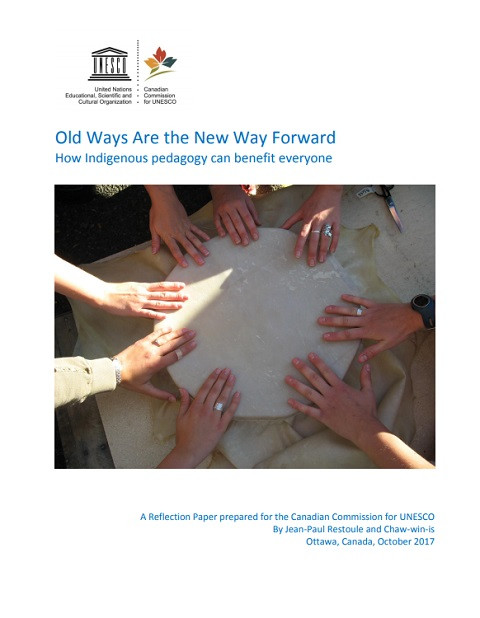 Old Ways Are the New Way Forward: How Indigenous Pedagogy Can Benefit Everyone Year of publication: 2017 Author: Jean-Paul Restoule | Chaw-win-is Corporate author: Canadian Commission for UNESCO This report explores traditional Indigenous ways of teaching and how they are the way forward for "new" innovations in education.
  Media and Information Literacy: Challenges and Opportunities for the World of Education Year of publication: 2019 Author: Carolyn Wilson Corporate author: Canadian Commission for UNESCO This paper explores media and information literacy and its importance to understanding democratic rights, active citizenship, and technological literacy. Filled with key concepts, sample questions, and additional resources, it is essential reading for both educators and the wider public.
 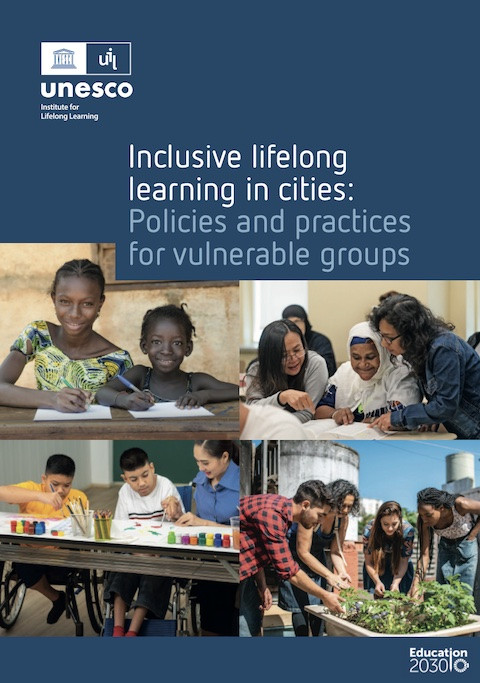 Inclusive Lifelong Learning in Cities: Policies and Practices for Vulnerable Groups Year of publication: 2021 Corporate author: UNESCO Institute for Lifelong Learning (UIL) This publication features chapters on learning cities’ endeavours to promote inclusive lifelong learning for vulnerable groups. It is based on research papers prepared for the fourth International Conference on Learning Cities, which took place in 2019 in Medellín, Colombia, under the theme ‘Inclusion – A principle for lifelong learning and sustainable cities’ and hence marks a transition between the learning city conferences of 2019 and 2021.