
Resources
Explore a wide range of valuable resources on GCED to deepen your understanding and enhance your research, advocacy, teaching, and learning.
2,668 Results found
 Anti-Semitism: A Never-ending Struggle? (Vol 2) These teaching materials were developed by ODIHR and the Anne Frank House in Amsterdam, in co-operation with experts from several OSCE participating States. Part 2 covers contemporary forms of anti-Semitism. The version available here is an English translation of the Polish version.
  European pack for visiting Auschwitz-Birkenau Memorial and Museum - Guidelines for teachers and educators Taking groups of students to the Auschwitz-Birkenau Memorial and Museum is a heavy responsibility, but it is a major contribution to citizenship if it fosters understanding of what Auschwitz stands for, particularly when the last survivors are at the end of their lives. This pack is designed for teachers wishing to organize student visits to authentic places of remembrance, and for the guides, academics and others who work every day with young people at Auschwitz. To avoid the risk of inappropriate reactions or the failure to benefit from a large investment in travel and accommodation, considerable preparation and discussion is necessary before the visit and serious reflection afterwards. This pack offers insights into the complexities of human behaviour so that students can have a better understanding of what it means to be a citizen. The young people who visit Auschwitz in the next few years will be witnesses of the last witnesses. Their generation will be the last to hear the survivors speaking on the spot. The Council of Europe, the Polish Ministry of Education and the Auschwitz-Birkenau Memorial and Museum are jointly sponsoring this project aimed at preventing crimes against humanity through Holocaust remembrance teaching. (By the Council of Europe)
  The Holocaust on screen: Crimes against humanity and representation The staging of the Holocaust and crimes against humanity poses filmmakers ethical issues and some documentaries or fictions have already raised controversy. Is audio-visual therefore the best way to raise awareness among young populations? Should it not rather be the role of other materials such as archives or testimonies? These are the questions raised by this book. Cinema can't only stage the concentration camp horror but must also educate young audiences. In the first part, Anne-Marie Baron re-examines definitions and important concepts concerning the audio-visual treatment of Holocaust and in the second part, she provides a list of documentaries and films along with analysis to help teachers in this exercise.
  L'Holocauste et le Programme d'information des Nations Unies Des informations détaillées sur le Programme de communication des Nations Unies pour l'Holocauste et peut être trouvé sur ce site. Le matériel pédagogique ainsi que des possibilités de perfectionnement professionnel sont présentés.
  中国少数民族基础教育政策研究报告 Year of publication: 2010 Corporate author: UNESCO Beijing 本报告是在“提高少数民族群体的受教育程度及文化上敏感的教育”的框架下是实地调查少数民族基础教育政策研究实施情况。2010年,根据对中国政府制定、实施的少数民族基础教育政策文本分析报告,确定实地调研的目标和任务,对三个项目省十二个个案点调研报告。通过田野调查和问卷调查,六个调研组完成十二个个案点调研报告。基于十二个个案调研报告内容形成本报告,并在此基础上提出改进建议和下一步的行动计划。
  UNITED NATIONS HUMAN RIGHTS MECHANISMS and the Right to Education in Insecurity and Armed Conflict Author: Takhmina Karimova | Gilles Giacca | Stuart Casey-Maslen Corporate author: Geneva Academy of International Humanitarian Law and Human Rights This publication, United Nations Human Rights Mechanisms and the Right to Education in Insecurity and Armed Conflict, seeks to respond to the acute need to identify trends in the practice, and contribution, of United Nations human rights mechanisms to the protection of education in times of insecurity and conflict. It is the result of a one-year research project carried out by researchers at the Geneva Academy of International Humanitarian Law and Human Rights (Geneva Academy). The research was overseen by a Legal Advisory Committee and subject to multi-disciplinary peer review. Accompanying the publication is a summary policy document intended to guide future work in this area. An electronic version of each publication is available at http://www.geneva-academy.ch and at http://www.educationandconflict.org.United Nations Human Rights Mechanisms and the Right to Education in Insecurity and Armed Conflict is the second in a series of legal research documents commissioned by Protect Education in Insecurity and Conflict (PEIC) on the protection of education during insecurity and armed conflict. PEIC is a programme of the Education Above All Foundation, an independent organization chaired by Her Highness Sheikha Moza Bint Nasser of Qatar, UNESCO Special Envoy for Basic and Higher Education. A policy, research, and advocacy organization, PEIC is concerned with the protection of education during insecurity and armed conflict. PEIC’s Legal Programme contributes to such protection through the strategic use of international and national law. Its legal research papers are authored by academics and/or practicing lawyers. They are aimed at a varied audience, including international and national lawyers; non-legally trained education experts and policy-makers within governments; political, social, and cultural bodies; and civil society. The Geneva Academy aims to provide instruction of a high academic standard, conduct and promote scientific research, organize training courses and expert meetings, and provide legal expertise in the branches of international law relating to situations of armed conflict. Founded in 2007, the Academy replaces the University Centre for International Humanitarian Law created in 2002 by the Faculty of Law of the University of Geneva and the Graduate Institute of International Studies, now the Graduate Institute of International and Development Studies(IHEID).
  Le parcours citoyen de l'élève Year of publication: 2016 Corporate author: éducscol De l'école au lycée, le parcours citoyen vise à la construction, par l'élève, d'un jugement moral et civique, à l'acquisition d'un esprit critique et d'une culture de l'engagement. La circulaire du 23 juin 2016 en précise les grands objectifs ainsi que les modalités de pilotage et de mise en œuvre. Qu'est-ce-que le parcours citoyen de l'élève ? Une construction commune Outils pour la mise en œuvre du parcours La cérémonie républicaine
 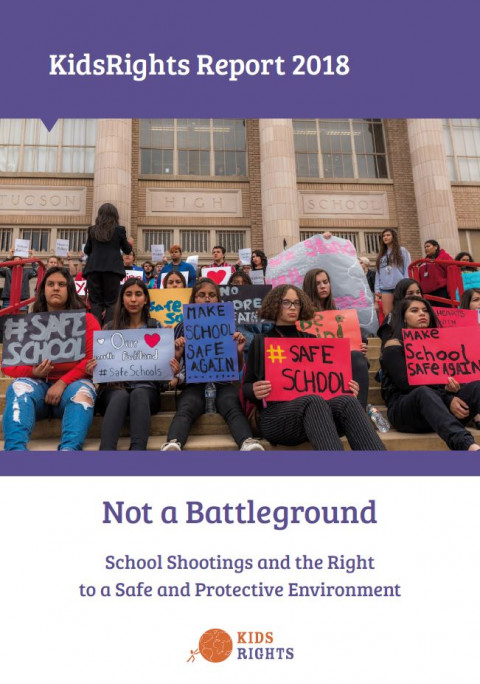 Not a Battleground: School Shootings and the Right to a Safe and Protective Environment Year of publication: 2018 Author: Kim Brouwers | Chrissie van Heijningen Corporate author: KidsRights Foundation Violence is a daily reality for many children, at home, at play and at school. More than 100,000 children die from violence every year, and others suffer the effects well into adulthood. This is a violation of Article 19 of the UNCRC, which stipulates that every child has the right to a safe environment to grow up in, protected from all kinds of violence.School should be a safe place where young people can grow and develop without fear. School shootings are a very real threat to many children, devastating families, creating a lifetime of trauma for survivors, and affecting millions more children by putting them in a permanent state of alert in their learning environment.To prevent school shootings, we need a better understanding of the causes, and therefore more academic research, and better data, therefore detailed registration of incidents by national governments.
  Expo et outils pédagogiques Year of publication: 2015 Corporate author: La maison des solidarités locales et internationales Éduquer à la citoyenneté c’est changer les mentalités et les comportements de chacun dans le but de contribuer individuellement et collectivement à la construction, dès le plus jeune âge, d’un monde juste, solidaire et durable.Dans ce sens, le centre de ressources de la Maison propose à la location ou à la vente des outils pour donner les moyens, par l’information et la sensibilisation, de faire des choix plus responsables.
 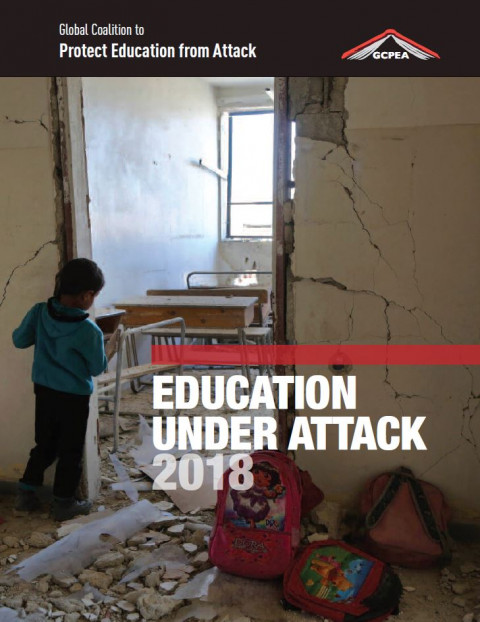 Education Under Attack 2018 Year of publication: 2018 Corporate author: Global Coalition to Protect Education from Attack (GCPEA) This report is the fourth edition of Education under Attack. It builds on the 2014 study published by the Global Coalition to Protect Education from Attack and the 2007 and 2010 publications by the United Nations Educational, Scientific and Cultural Organization (UNESCO). The present edition covers the five-year period from January 2013 to December 2017. The previous edition included profiles of 30 countries that had experienced at least five incidents of attacks on education in which students or education personnel were harmed, including at least one direct attack or one person killed, between 2009 and mid-2013. The current study includes profiles of 28 countries that experienced at least 20 attacks on education during the 2013-2017 reporting period, regardless of the severity of the incidents. Although significant data gaps remain and data quality varies, reporting of attacks on education has become more comprehensive and systematic over the last five years.Each country profile includes information on six categories of attacks on education, as relevant: Physical attacks or threats of attacks on schools Physical attacks or threats directed at students, teachers, and other education personnel Military use of schools and universities Child recruitment at, or en route to or from, school or university Sexual violence by armed parties at, or en route to or from, school or university Attacks on higher education