
Resources
Explore a wide range of valuable resources on GCED to deepen your understanding and enhance your research, advocacy, teaching, and learning.
1,405 Results found
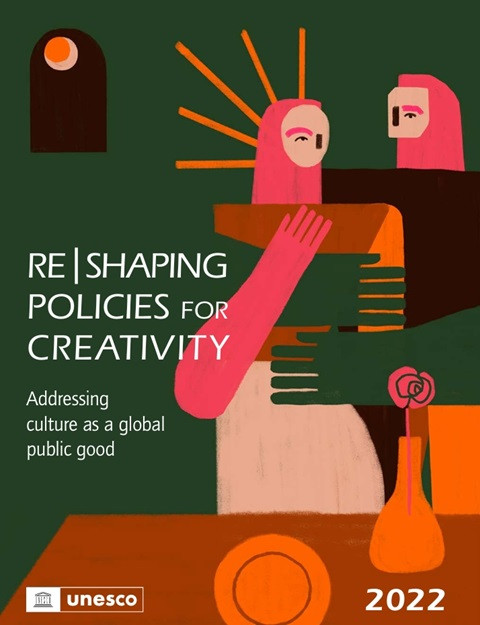 문화정책의 (재)구성: 전지구적 공공재로서의 문화를 바라보다, 2022 Year of publication: 2023 Corporate author: 유네스코 글로벌 리포트 시리즈는 각 국의 <2005 문화적 표현의 다양성 보호와 증진에 관한 협약> 이행상황과 문화·창의분야가 <UN 2030 지속가능한 개발 어젠다>에 어떻게 기여하고 있는지 그 진행 상황을 모니터링 하고 있다. 2015년과 2018년 발간된 보고서와 같이, 이번 제3판은 창의적 활동을 지원하기 위한 최근의 정책 개발 상황을 소개하고, 디지털 환경, 미디어 다양성, 지속가능발전, 예술가와 문화 분야 종사자의 이동성, 양성 평등 및 예술의 자유와 같은 분야의 현재와 미래의 과제를 조명한다. 2022년 발간되는 본 보고서에 소개되는 트렌드, 우수 사례, 국가 간 격차, 그리고 권고사항은 유네스코의 <문화 정책과 지속가능한 개발에 관한 세계 회의(MONDIACULT 2022)>의 정책 토론에서 다룰만한 중요한 자료를 제공하고 있다. 본 보고서는 <2030 어젠다>에 기여하고자 하는 사명을 가지고, 문화적 표현의 다양성에 영향을 미치는 요인을 분석하며, 공공정책 스펙트럼에서 더 넓게 문화와 창의성을 정착시킬 방안에 대해 더 나은 이해와 새로운 문화정책의 비전을 제시하고자 한다.
 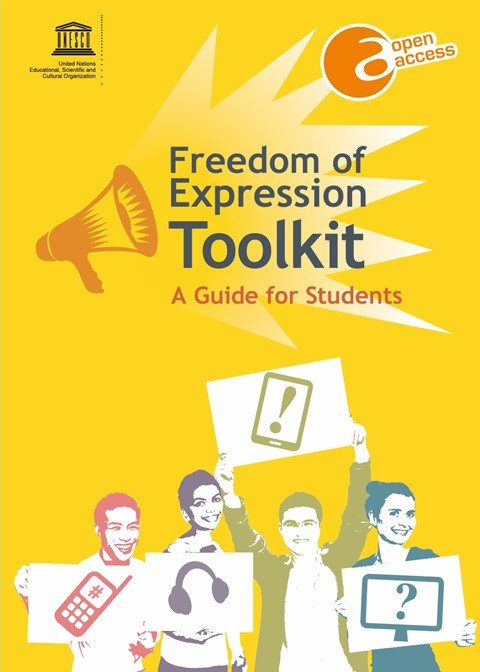 Freedom of Expression Toolkit: A Guide for Students Year of publication: 2013 Corporate author: UNESCO Everyone should have all the necessary tools and mechanism to allow the free flow of information. Much has been written about freedom of expression, indeed it is one of the most debated concepts and issues of our times. However, few such publications are written with youth as the main target readers, especially for young women and men still in high schools and pre-university level. This Toolkit is one such tool targeted at high schools and pre-university students. Young women and men must be empowered and literate in the issues and concepts of freedom of expression in order to become a discerning citizen in a democracy.
  Transforming Education Together: The Global Education Coalition in Action Year of publication: 2023 Corporate author: UNESCO The Global Education Coalition, launched by UNESCO, is a platform for col-laboration and exchange to protect the right to education during this unprec-edented disruption and beyond. This is the fourth progress report of the Coalition and builds on the inaugural document released in September 2020 and the first annual report published in March 2021. This document covers activity between November 2021 and March 2023.
 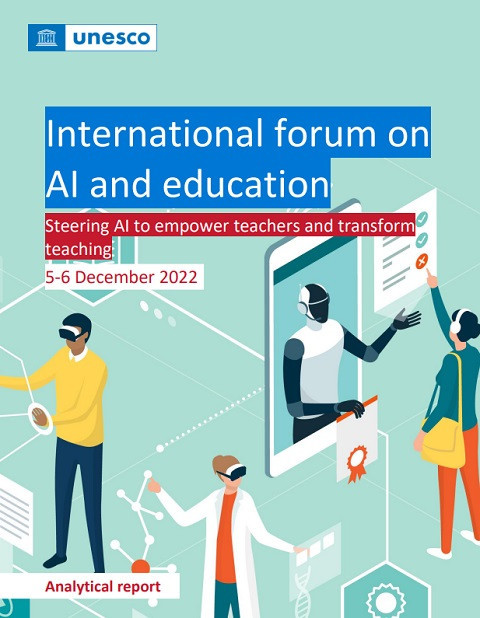 International Forum on AI and Education: Steering AI To Empower Teachers and Transform Teaching, 5–6 December 2022; Analytical Report Year of publication: 2023 Author: Fengchun Miao | Kelly Shiohira | Zaahedah Vally | Wayne Holmes Corporate author: UNESCO | JET Education Services The International Forum on AI and Education has contributed ‘to peace and security by promoting collaboration among the nations through education, science and culture’ (UNESCO, 1945). The Forum has now become the world’s leading event promoting knowledge-sharing, the understanding of peoples, and the achievement of international agreements, in the fast-developing and increasingly impactful field of AI and education. The fourth edition of the International Forum on Artificial Intelligence and Education aimed to foster knowledge sharing specifically on how to steer the design and use of AI to empower teachers and to transform teaching methodologies within the broad framework of digital transformation of education. The Forum sought to bring together a range of expertise and experiences across the globe, and, in keeping with UNESCO priorities, a special focus was placed on Africa. A total of 16 national strategies were presented at the Forum by the various national ministers and representatives invited to attend. The national strategies shared during the Forum also unveiled the varying levels of preparedness and policy responses toward AI across different regions, a reminder that the pre-existing digital divide still underpins the system-wide uptake and integration of AI in education. Therefore, not all of the strategies were directly related to or containing AI because some areas that were represented at the conference are still at the nascent stages of AI Strategy development. The presentations of national initiatives and strategies related to AI from these countries shed light on the general awareness of policy-makers on the impact of AI in education and the commitment of national governments to fostering AI competencies among students and teachers. This report focus on the following key themes: national strategies on AI and education; critical reviews of roles of AI in the digital transformation of education; ethical principles and their implementation with a specific focus on gender equality; AI competencies for teachers, and notable algorithms or AI platforms and AI-informed pedagogies. The report concludes with considerations for the future based on the authors’ own analysis of the key role of human teachers, steering the human-centered approach, mainstreaming gender equity, designing education-specific AI models and innovative pedagogy, and ensuring human agency in defining problems and designing solutions.a
 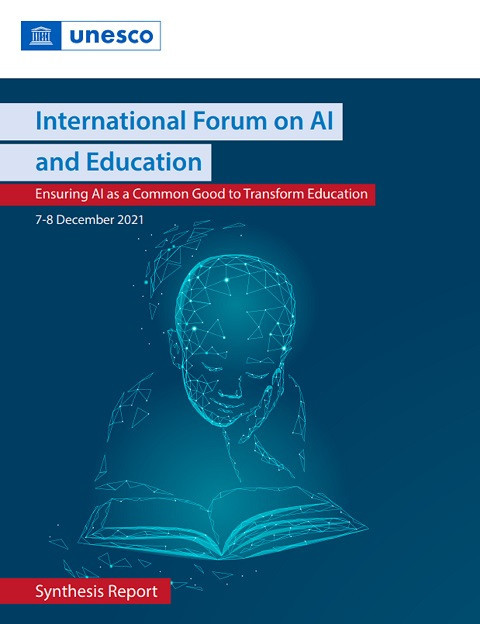 International Forum on AI and Education: Ensuring AI as a Common Good To Transform Education, 7–8 December 2021; Synthesis Report Year of publication: 2022 Corporate author: UNESCO The ‘International Forum on AI and the Futures of Education: Ensuring AI as a Common Good to Transform Education’ was co-organized by UNESCO, the Ministry of Education of the People’s Republic of China, and the National Commission of the People’s Republic of China for UNESCO. Building on the previous ‘AI and the Futures of Education’ forums, held in 2019 and 2020, this 2021 forum set out to explore the importance and role of digital humanism in AI and education. With people and governments worldwide becoming increasingly aware of both the potential and the challenges of AI and education, the forum engaged participants in dialogue about how AI governance and innovation can be enhanced for the common good. Forum participants included government ministers and other high-level ministry officials from Member States, together with representatives of international organizations, NGOs and academic institutions.This synthesis report has been developed by drawing from the International Forum on AI and the Futures of Education held in Beijing and simultaneously online from 7 to 8 December 2021.
  AI Competency Framework for Students Year of publication: 2024 Author: Fengchun Miao | Kelly Shiohira Corporate author: UNESCO Artificial intelligence is increasingly integral to our lives, necessitating proactive education systems to prepare students as responsible users and co-creators of AI. Integrating AI learning objectives into official school curricula is crucial for students globally to engage with AI safely and meaningfully.The UNESCO AI Competency Framework for Students aims to help educators in this integration, outlining 12 competncies across four dimensions:- A human-centred mindset- Ethics of AI- AI techniques and applications- AI system designThese competencies span three progression levels:- Understand- Apply- Create The framework details curricular goals and domain-specific pedagogical methodologies.Grounded in the vision of students as AI co-creators and responsible citizens, the publication emphasizes critical judgement of AI solutions, awareness of citizenship responsibilities in the AI era, foundational AI knowledge for lifelong learning, and inclusive, sustainable AI design.
  AI Competency Framework for Students Year of publication: 2025 Author: Fengchun Miao | Kelly Shiohira Corporate author: UNESCO Preparar a los estudiantes para ser ciudadanos responsables y creativos en la era de la IALa inteligencia artificial (IA) está cada vez más presente en nuestras vidas, lo que requiere sistemas educativos proactivos que preparen a los estudiantes para que sean usuarios responsables y cocreadores de la IA. Integrar los objetivos de aprendizaje de IA en los programas de estudio oficiales de las escuelas es fundamental para que los estudiantes de todo el mundo interactúen de forma segura y significativa con la IA.El objetivo del Marco de competencias para estudiantes en materia de IA de la UNESCO es ayudar a los educadores con esta integración, para lo cual describe 12 competencias que atraviesan cuatro dimensiones: una forma de pensar centrada en el ser humano, la ética de la IA, las técnicas y aplicaciones de la IA, la pedagogía de la IA, y la IA para el diseño de sistemas de IA. Estas competencias abarcan tres niveles de progresión: comprender, aplicar y crear. El marco detalla las metas curriculares y las metodologías pedagógicas específicas para cada dominio.Basado en una visión de los estudiantes como cocreadores de IA y ciudadanos responsables, el marco pone énfasis en el juicio crítico de las soluciones de IA, la conciencia de las responsabilidades ciudadanas en la era de la IA, el conocimiento fundacional de la IA para el aprendizaje a lo largo de la vida, y el diseño de IA inclusiva y sostenible.
  AI Competency Framework for Students Year of publication: 2025 Author: Fengchun Miao | Kelly Shiohira Corporate author: UNESCO Préparer les apprenants à devenir des citoyens responsables et créatifs à l’ère de l’IAL’intelligence artificielle (IA) fait tous les jours davantage partie intégrante de nos vies, ce qui implique d’avoir des systèmes éducatifs proactifs en mesure de préparer les élèves et les étudiants à être des utilisateurs responsables et des cocréateurs de l’IA. L’intégration d’objectifs d’apprentissage de l’IA dans les programmes scolaires officiels est essentielle pour que les apprenants du monde entier puissent s’intéresser en toute sécurité et de manière pertinente à l’IA.Le Référentiel de compétences en IA pour les apprenants de l’UNESCO vise à aider les éducateurs dans cette démarche, en décrivant 12 compétences réparties en quatre dimensions, à savoir une perspective centrée sur l’humain, l’éthique de l’IA, les techniques et applications de l’IA, et la conception de systèmes d’IA. Ces compétences se déploient selon trois niveaux de progression : Comprendre, Appliquer et Créer. Le référentiel détaille les objectifs du programme d’études et les méthodes pédagogiques spécifiques au domaine.Fondé sur une vision des élèves et des étudiants considérés comme cocréateurs de l’IA et citoyens responsables, le référentiel met l’accent sur le jugement critique vis-à-vis des solutions d’IA, la prise de conscience des responsabilités citoyennes à l’ère de l’IA, les connaissances fondamentales en matière d’IA pour l’apprentissage tout au long de la vie, ainsi que la conception d’une IA inclusive et durable.
  AI Competency Framework for Teachers Year of publication: 2024 Author: Fengchun Miao | Mutlu Cukurova Corporate author: UNESCO AI processes vast information, generates new content, and helps decision-making through predictive analyses. In education, AI has transformed the traditional teacher–student relationship into a teacher–AI–student dynamic.This shift requires a re-examination of teachers’ roles and the competencies they need in the AI era. Yet, few countries have defined these competencies or developed national programmes to train teachers in AI, leaving many educators without proper guidance.The AI competency framework for teachers addresses this gap by defining the knowledge, skills, and values teachers must master in the age of AI. Developed with principles of protecting teachers’ rights, enhancing human agency, and promoting sustainability, the publication outlines 15 competencies across five dimensions: Human-centred mindset, Ethics of AI, AI foundations and applications, AI pedagogy, and AI for professional learning. These competencies are categorized into three progression levels: Acquire, Deepen, and Create.As a global reference, this tool guides the development of national AI competency frameworks, informs teacher training programmes, and helps in designing assessment parameters. It also provides strategies for teachers to build AI knowledge, apply ethical principles, and support their professional growth.
  Normes de qualité des écoles vertes: pour des cadres d’apprentissage verts Year of publication: 2024 Corporate author: UNESCO Le changement climatique menace notre planète et notre avenir. Les écoles et autres institutions d'apprentissage sont des lieux centraux pour accélérer l'action climatique parmi les apprenants et les communautés locales. En donnant aux enseignants et aux élèves les moyens de comprendre le changement climatique dans leur propre contexte, ils contribuent à rendre les sociétés plus durables et plus résilientes face au climat. Cette publication fournit pour la première fois une norme de qualité pour la « vérdisation » des écoles et autres environnements d'apprentissage. Elle présente quatre domaines clés pour intégrer les principes de durabilité et l'action climatique : 1) la gouvernance scolaire, 2) les infrastructures et l'exploitation, 3) l'enseignement et l'apprentissage, et 4) l'engagement communautaire. Grâce au Partenariat pour une éducation verte, cette norme établit un langage commun pour tous les acteurs afin d'atteindre ensemble l'objectif mondial de verdir au moins 50 % des écoles dans tous les pays d'ici 2030. Les décideurs politiques et les ministères responsables des schémas d'accréditation éducatifs, ainsi que les éducateurs, les apprenants et les communautés, sont encouragés à utiliser la norme de qualité des écoles vertes et à rejoindre le mouvement des écoles prêtes pour le climat, afin de garantir que chaque apprenant soit équipé pour relever les défis climatiques.