
Resources
Explore a wide range of valuable resources on GCED to deepen your understanding and enhance your research, advocacy, teaching, and learning.
2,781 Results found
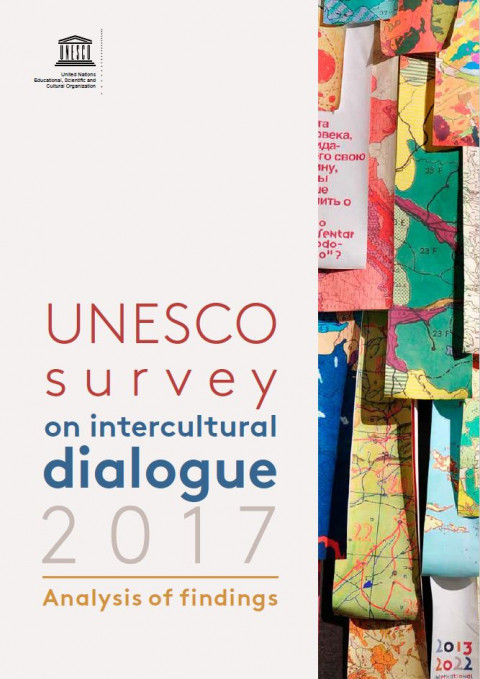 UNESCO Survey on Intercultural Dialogue, 2017: Analysis of Findings Year of publication: 2018 Corporate author: UNESCO Institute for Statistics (UIS) The present report sets out the key findings of the first UNESCO survey on intercultural dialogue conducted among its Member States. The survey takes stock of the current understanding and operational mechanisms and strategies of intercultural dialogue at national level. It assesses the main issues and opportunities, current policies and legislation, available data and resources, and main stakeholders in this field. The resulting information permits an initial inventory of countryspecific intercultural dialogue policies that will function as a point of analysis for future monitoring and inform future policy-making.The questionnaire for the survey was distributed to 199 National Commissions for UNESCO in six official United Nations languages with a submission deadline of Spring 2017. There was a response rate of 21.622%. The respondents represent all geographic regions, including countries with large, middle and small populations, and over half are from developing economies.
  Address by Irina Bokova, Director-General of UNESCO, on the occasion of the Ethics in Action event, Casina Pio IV in the Vatican Gardens; Vatican, 16 October 2017 Year of publication: 2017 Corporate author: UNESCO. Director-General, 2009-2017 (Bokova, I.G.) This address was delivered by Irina Bokova, Director-General of UNESCO, on the occasion of the Ethics in Action event, Casina Pio IV in the Vatican Gardens; Vatican, on 16 October 2017.
  Does the Concept of ‘Global Citizenship’ Have the Potential to Input in Multicultural Education? Year of publication: 2013 Author: Sobhi Tawil Corporate author: Revue internationale d’éducation de Sèvres One of the three priorities of the Global Education First Initiative launched in 2012 by the United Nations is fostering global citizenship. However, this concept remains vague if left unchallenged, and as a result is difficult to implement in the field of education. It may be true that the growing globalisation and multiculturalism of contemporary societies is gradually transforming the concept and traditional role of citizenship, the legal reality of citizenship and its practises, but they still remain largely rooted in the idea of Nation-State. This article attempts to clarify the concept of global citizenship, its possible application in the field of citizenship education and its potential contribution to the enrichment of multicultural education. El concepto de “ciudadanía mundial” : ¿una posible aportación para la educación multicultural ? Year of publication: 2013 Author: Sobhi Tawil Corporate author: Revue internationale d’éducation de Sèvres Entre las tres prioridades de la iniciativa mundial “la educación ante todo” (Education first) lanzada en 2012 por las Naciones Unidas, podemos encontrar la idea según la cual conviene “favorecer la ciudadanía mundial”. Sin embargo, esta noción es de las más imprecisas, si no discutida y, por tanto, difícil de concretizar en el campo de la educación. Si no cabe duda de que la mundialización y la creciente multiculturalidad de las sociedades contemporáneas transforman paulatinamente la concepción y la práctica tradicional de la ciudadanía, la realidad jurídica de la ciudadanía así como su práctica, quedan establecidas fundamentalmente a nivel del Estado-Nación. Este artículo procura aclarar la noción de “ciudadanía mundial”, su posible aplicación en el dominio de la educación a la ciudadanía y su contribución potencial al enriquecimiento de la educación multicultural. Le concept de « citoyenneté mondiale » : un apport potentiel pour l’éducation multiculturelle ? Year of publication: 2013 Author: Sobhi Tawil Corporate author: Revue internationale d’éducation de Sèvres Parmi les trois priorités de l’initiative mondiale « l’éducation avant tout » (Education First) lancée en 2012 par les Nations-Unies, on trouve l’idée de « favoriser la citoyenneté mondiale ». Cependant, cette notion reste vague sinon contestée, et par conséquent difficile à concrétiser dans le domaine de l’éducation. S’il est vrai que la mondialisation et la multiculturalité croissante des sociétés contemporaines transforment progressivement la conception et la pratique traditionnelle de la citoyenneté, la réalité juridique de la citoyenneté, ainsi que sa pratique, restent encore largement ancrées au niveau de l’État-nation. Cet article tente de clarifier la notion de « citoyenneté mondiale », son application possible dans le domaine de l’éducation à la citoyenneté et sa contribution potentielle à l’enrichissement de l’éducation multiculturelle.
  L'éducation à la citoyenneté Year of publication: 2008 Author: Audric Vitiello Corporate author: Raisons politiques Notion récente, l'éducation à la citoyenneté se présente comme une inflexion de la formation civique, visant un renouvellement de sa forme pour mieux assurer sa fonction institutionnelle d'intégration des individus au collectif. Mais, l'éducation ôtant une praxis où moyens et fins sont interdépendants, une modification des modalités de l'éducation induit logiquement celle de la finalité. De fait, l'éducation à la citoyenneté s'indexe à une conception originale du politique pensé non plus comme lieu, mais comme moment spécifique dédié à la régulation de tout collectif. Le mécanisme d'abstraction civique perdure, mais il s'effectue à partir des situations concrètes dans lesquelles l'individu est inscrit, et par une réflexion à fondement dialogique. Se dessine alors une forme de démocratie générale et dialogique, où le politique est déconcentré et démultiplié mais où la décision prise en commun après délibération reste le mode de structuration privilégié du collectif. Mais la démocratie procédurale et dialogique a des limites, dans la mesure où elle suppose d'être fondée dans un corpus substantiel de valeurs qui lui confère sa légitimité.
  Citoyenneté des enfants et des adolescents Year of publication: 2018 Author: Stéphanie Gaudet Corporate author: Lien social et Politiques Chacune des contributions de ce numéro révèle clairement un ou plusieurs de ces défis selon différences échelles d’analyse. La première partie du numéro porte sur les normativités et les représentations sociales de la citoyenneté enfantine et adolescente véhiculées par les instruments de politiques publiques en France et au Québec. La deuxième section porte sur les institutions qui répondent directement des politiques publiques et qui ont pour mandat de socialiser et d’éduquer les enfants et les adolescents aux pratiques de citoyenneté démocratique. La troisième section de ce numéro présente deux contributions qui rendent compte de l’agencéité (agency) des jeunes et de leurs pratiques citoyennes, c’est-à-dire leur capacité à développer des intentions politiques et à les mettre en action les uns avec les autres. Ce terme se distingue de celui d’agentivité qui est utilisé davantage en sciences cognitives et s’intéresse plus spécifiquement aux mécanismes de l’action individuelle (Glossaire, 2009). Finalement, nous terminons le numéro par des analyses à l’échelle des quartiers et des organisations jeunesse. On y voit comment les intervenants de première ligne, et leurs organisations locales, négocient différentes visions de l’éducation citoyenne, allant de l’éducation à la civilité jusqu’à l’intervention démocratique. Ces échelles d’analyse nous permettent d’observer les représentations de la citoyenneté en fonction des rapports de classe et d’ethnicité.
  Review of Curricula and Curricular Frameworks: Report to Inform the Update of the UNESCO International Technical Guidance on Sexuality Education Year of publication: 2018 Author: Nicole Cheetham | Nora Gelperin Corporate author: Advocates for Youth In 2009, UNESCO published the International Technical Guidance on Sexuality Education (ITGSE): An evidence-informed approach for schools, teachers and health educators. The purpose of the ITGSE is to assist education, health and other relevant authorities in the development and implementation of school-based sexuality education programmes and materials (UNESCO, 2009). The publication was released in two volumes: Volume I, which focuses on the rationale for sexuality education and provides sound technical advice on the characteristics of effective programmes; and Volume II, which focuses on the topics and learning objectives to be covered in a ‘basic minimum package’ on sexuality education for children and young people from 5 to 18+ years of age, and includes a bibliography of useful resources.In 2016, UNESCO began a process to update the ITGSE, consisting of a literature review of the evidence and lessons learned since the release of the original publication; a stakeholder consultation on sexuality education held in October of 2016; an online user survey; and an expert, Comprehensive Sexuality Education (CSE) Advisory Group established to inform the process and its findings.This report summarizes evidence-informed conclusions, expert recommendations and current practice for curriculum-based sexuality education for ages 5-18+ and provides preliminary, overarching changes to Volume II of the ITGSE for consideration by the UNESCO CSE Advisory Group.
  The Education We Want: Workshop Facilitator Guide For the Advocacy Toolkit Year of publication: 2014 Author: Daniel Smith | James Edleston | Tom Burke | Emily Laurie Corporate author: A World at School | UN Global Education First Initiative - Youth Advocacy Group (YAG) | Plan International This guide is intended as a resource to accompany the ‘Education we want: An Advocacy’. It aims to provide a wide range of workshop activities for those who intend to Understand, Plan or Do their education advocacy using workshop based approaches.Workshops are an effective way of involving others in advocacy. They can support you in carrying out research, drafting a plan and building skills for action.The successful delivery of workshops relies on effective preparation, good facilitation skills and a commitment to support people’s learning and development.
 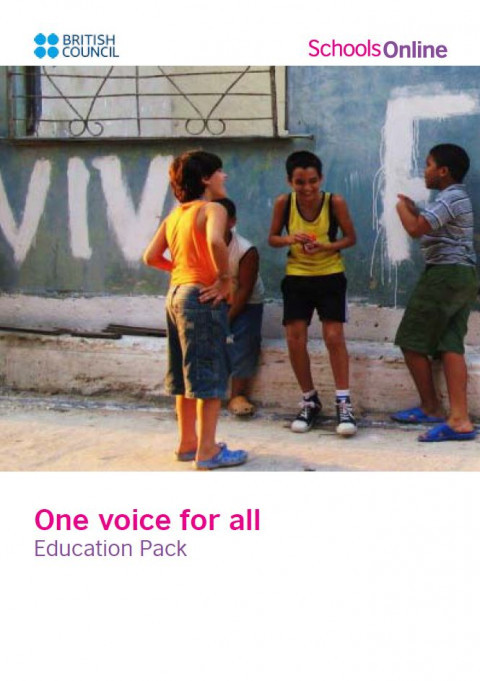 One Voice for All: Education Pack Year of publication: 2013 Corporate author: British Council One Voice for All is a set of resources designed to help teachers work on the Connecting Classrooms themes of Rights and Responsibilities and Fairness and Equality through an exploration of human rights and street children. Its focus is the UN Convention on the Rights of the Child and it aims to allow learners to develop understanding of the key concepts of global citizenship, universal rights and justice.This resource aims to give young people the opportunity to understand the complexity of the wider world in which they live by exploring inequality and steps to address it.