
Resources
Explore a wide range of valuable resources on GCED to deepen your understanding and enhance your research, advocacy, teaching, and learning.
3,790 Results found
 Requirement for Activating the Relationship between the School and the Society in the light of School Community : A Field Research in the Public and Private teaching schools in Damascus Year of publication: 2013 Author: منصور، سمية Corporate author: Damascus University This research aimed to identify: the requirement for activating the relationship between the school and the society, the degree of independent variables effect (the status of the respondent, the school level and the belonging of the school) on the sample’s responses (from the principals, teachers, parents and educational experts) to the questions of the research tool.The research has reached the following findings: firstly, in order to make the relationship between school and society more effective, the school should satisfy the following four fundamental matters: Providing integrated services to the local society, achieving the partnership with the family, mobilizing the resources of the local society and enforcing voluntary work. Secondly, the effect of respondent's position variable was in favor of the managers, the teachers, the educational experts and parents respectively. Thirdly, the type of the school or its level has influenced the responses of the sample members at the general or total level as well as at the particular level for each sector of the field sectors, and this influence was in favor of basic education schools. Fourthly, there was no influence of belonging to the school variable on the sample responses whether on general or particular levels.The research introduced some suggestions and proposals, for the partnership between school and society such as, the agreement of Syrian Ministry of education to legalize and implement the approach of effecting the relationship between school and society on the one hand, and to encourage parents, local community and schools to participate and cooperate.
  دور مدير المدرسة في تفعيل الشراكة بين المدرسة والمجتمع المحلي في سلطنة عمان Year of publication: 2010 Author: محمد علي ذيب عاشور Corporate author: University of Bahrain. Scientific Publishing Center هدفت هذه الدراسة إلى تعرّف دور مدير المدرسة في تفعيل الشراكة بين المدرسة وبين المجتمع المحلي من وجهة نظر العاملين في المدارس وأفراد المجتمع المحلي. كما هدفت إلى تعرف ما إذا كانت هناك فروق ذات دلالة إحصائية في دور مدير المدرسة في تفعيل هذه الشراكة من وجهة نظر العاملين في المدارس وأفراد المجتمع المحلي وذلك من زاوية متغيرين: مسمى الوظيفة والمنطقة التعليمية. تكوّن مجتمع الدراسة من جميع المديرين والمعلمين والعاملين في مدارس التعليم الأساسي للعام الدراسي 2006-2007، والبالغ عددهم 9877، وتكونت العينة من 513 من العاملين في المدارس و80 من أفراد المجتمع المحلي.توصلت الدراسة إلى النتائج التالية: 1) إن دور مدير المدرسة في تفعيل الشراكة بين المدرسة وبين المجتمع المحلي جاء بدرجة قليلة. 2) جاء ترتيب مجالات الدراسة في مدير المدرسة في تفعيل الشراكة بين المدرسة وبين المجتمع المحلي وفق الترتيب الآتي: الشراكة في الرؤية والأهداف العامة للعملية التعليمية، تليها الشراكة في تقديم الدعم المالي للمدرسة، ثم الشراكة في الشؤون اﻹدارية للمدرسة، ثم الشراكة في تقديم الاستشارات للمدرسة، وجاء في المرتبة الأخيرة الشراكة في التخطيط المدرسي. 3) وجود فروق ذات دلالة إحصائية تعزى لمتغير المنطقة التعليمية لجميع مجالات الدراسة فيما عدا الشراكة في الشؤون اﻹدارية للمدرسة.
  The State of Global Education in Europe 2018 Year of publication: 2018 Corporate author: Global Education Network Europe (GENE) The State of Global Education in Europe reports on policy, strategy and funding for Global Education in European countries, based primarily on information submitted by the ministries, agencies and national coordinating bodies that participate in GENE (Global Education Network Europe). This third edition of the report identifies thematic trends and crosscutting issues and explores funding levels for Global Education across Europe. It also includes a chapter outlining some of the work done on evaluation across GENE, and concludes with a selection of highlights from the network. There are examples of national policy and practice throughout the report. This report on the State of Global Education in Europe has been developed to provide an overview of current key issues, policy priorities, funding trends and activities in Global Education in Europe. It draws on the expertise and information provided by organisations that participate in Global Education Network Europe – GENE. These comprise Ministries of Foreign Affairs, Ministries of Education, and their respective national agencies, and other bodies with responsibility for policymaking, support or coordination of Global Education in European countries.
  SDG 4 Data Digest 2018: Data to Nurture Learning Year of publication: 2018 Corporate author: UNESCO Institute for Statistics (UIS) The world is facing a crisis of learning, with many children leaving school without the basic skills they need for a prosperous and productive adult life. Two-thirds of the estimated 617 million children and adolescents who cannot read a simple sentence or manage a basic mathematics calculation are in the classroom. Too many are waiting for a quality education that never comes.As the 2018 SDG 4 Data Digest shows, it is not enough to hope that they will stay in school and somehow acquire skills in reading and mathematics. It is critical to monitor those skills as children progress through school. That requires comparable data, over time, to ensure that children – and the education systems that serve them – are on track.Given the critical importance of learning for the achievement of all the Sustainable Development Goals (SDGs), from poverty reduction to peaceful societies, this year’s edition of the SDG 4 Data Digest is dedicated to the theme of learning outcomes. It showcases the most comprehensive and up-to-date compilation of work to inform the learning indicators of SDG 4.The Digest discusses learning evidence on early child development, mathematics and reading skills among school-aged children, and digital and work-related skills among youth and adults. It highlights the conceptual frameworks and tools developed by leading authors and institutions to understand, measure, monitor and support learning for all. It also considers the implications of reporting for SDG 4. ЦУР 4 Дайджест данных 2018: данные для обучения Year of publication: 2018 Corporate author: UNESCO Institute for Statistics (UIS) Мир сталкивается с кризисом обучения, когда многие дети покидают школу без базовых навыков, необходимых для процветающей и продуктивной взрослой жизни. Две трети из примерно 617 миллионов детей и подростков, посещающих школу, не могут прочитать простое предложение или произвести элементарные математические вычисления. При этом качественное образование для очень многих продолжает оставаться недоступным.Как показывает Дайджест данных ЦУР 4 2018 года, недостаточно просто надеяться, что они, оставаясь в школе, каким-то образом приобретут навыки чтения и математики. Очень важно следить за развитием этих навыков по мере того, как дети учатся в школе. Сопоставление данных с течением времени является необходимым фактором, гарантирующим, что дети и системы образования, которые их обслуживают, находятся на правильном пути.Учитывая исключительную важность обучения для достижения всех Целей в области устойчивого развития (ЦУР), от сокращения бедности до мирных обществ, выпуск Дайджеста данных ЦУР 4 в этом году посвящен теме результатов обучения. Он демонстрирует наиболее полную и актуальную подборку работ для информирования об учебных показателях ЦУР 4.В Дайджесте обсуждаются фактические данные о раннем развитии детей, математике и навыках чтения среди детей школьного возраста, а также трудовые навыки и навыки работы с цифровыми технологиями среди молодежи и взрослых. В нем освещаются концептуальные основы и инструменты, разработанные ведущими авторами и учреждениями для понимания, измерения, мониторинга и поддержки обучения для всех. В нем также рассматриваются результаты отчетности для ЦУР 4.
  [Video] Socio-emotional Learning - the Key to Building Global Citizenship Year of publication: 2018 Author: Nandini Chatterjee Singh Corporate author: Mahatma Gandhi Institute of Education for Peace and Sustainable Development (MGIEP) Dr. Nandini Chatterjee Singh, Programme Specialist, UNESCO MGIEP speaks about 'Socio-emotional Learning: the Key to Building Global Citizenship' as part of Association for Childhood Education International (ACEI)'s online learning event for educators, titled 'Breakthroughs in Education: Innovations in Equity, Access & Quality.
  Aperçu de l’intégration de l'éducation planétaire dans les écoles primaires du Canada: Perspectives à l’échelle des provinces, des districts et des écoles Year of publication: 2007 Author: Karen Mundy | Caroline Manion | Vandra Masemann | Megan Haggerty Corporate author: UNICEF Canada Ce rapport donne une description préliminaire d’une vue d’ensemble de l’éducation planétaire au Canada, documentant de quelle manière l’éducation planétaire est formulée dans les politiques et les programmes scolaires à l’échelle provinciale, comment elle est soutenue par les districts et de quelle façon elle est mise en pratique dans les écoles canadiennes.Comme nous l’avons souligné précédemment, le chapitre 2 présente les faits saillants de plusieurs débats qui animent la mission professorale contemporaine relativement à l’éducation planétaire, et passe en revue les récentes études. Le chapitre 3 examine certaines des caractéristiques structurales de la société, le système politique et les établissements scolaires du Canada, et la manière dont ceux-ci ont contribué à une expérience strictement canadienne en matière d’éducation planétaire. Nous avons également examiné la configuration actuelle des acteurs participant aux activités relatives à l’éducation planétaire et pratique canadienne, selon une perspective comparative.Les six chapitres suivants présentent une brève étude de cas de la pratique en matière d’éducation planétaire de chaque province ou territoire aux trois paliers d’application (des écoles, des districts et de la province). Le chapitre dix présente les données provinciales de la Colombie-Britannique.Dans le chapitre 11, nous résumons les résultats de nos sept études de cas et examinons les différences et similitudes entre elles. Nous situons nos résultats par rapport à la recherche récente sur l’éducation planétaire dans d’autres contextes et y comparons la pratique canadienne. Nous étudions également la façon dont les « définitions perçues » de l’éducation planétaire, telles que nous les avons obtenues dans les écoles canadiennes, peuvent être appliquées aux débats normatifs contemporains sur l’éducation planétaire dans les ouvrages savants et les comptes rendus de recherche. Nous présentons enfin une série de recommandations, parmi lesquelles le besoin, selon nous, d’une nouvelle étude sur l’éducation planétaire au Canada.
  L’éducation dans un contexte mondial pour les élèves de l’Ontario : Stratégies pratiques - Sommaire de recherche Year of publication: 2018 Author: Caroline Manion | Nadya Weber Corporate author: Ontario (Canada). Ministry of Education Le présent sommaire découle de la politique énoncée dans le document Stratégie ontarienne en matière d’éducation internationale de la maternelle à la 12e année (Ministère de l’Éducation de l’Ontario, 2015). Il cible les connaissances actuelles sur les bonnes pratiques prometteuses dans le domaine de l’éducation dans un contexte mondial1 afin de proposer des stratégies pratiques visant à améliorer l’enseignement, l’apprentissage et la réussite. Le présent document s’adresse à tous les intervenants du secteur de l’éducation, c’est-à-dire les membres du milieu, les parents, les élèves, les leaders du système, les leaders scolaires et les éducateurs. Tous sont des agents de changement actifs qui appuient une stratégie d’éducation conçue dans le but d’intégrer les perspectives, les cultures et les expériences mondiales dans le curriculum et le milieu d’apprentissage. L’objectif consiste à permettre aux élèves d’acquérir les compétences dont ils auront besoin pour prospérer en tant que citoyens face à une mondialisation grandissante.L’analyse est présentée par thème. Pour souligner les raisons pour lesquelles l’éducation dans un contexte mondial est d’une importance cruciale pour les élèves de l’Ontario, nous commençons par présenter les contributions importantes que l’éducation dans un contexte mondial peut apporter au bien-être des individus et de la société dans son ensemble. Nous présentons ensuite une vue d’ensemble résumant différentes notions de « l’éducation dans un contexte mondial » et de « l’éducation à la citoyenneté mondiale », ainsi qu’un large éventail de notions secondaires qui se chevauchent.Ensuite, par une revue de la littérature internationale sur le sujet, nous présentons une série de défis et de possibilités concernant la mise en oeuvre de l’éducation dans un contexte mondial et énumérons des exemples pertinents de bonnes pratiques liées à la prestation de l’éducation dans un contexte mondial. Une autre section porte sur les bonnes pratiques en matière de renforcement des capacités et de leadership du système afin d’assurer une éducation dans un contexte mondial efficace. Nous concluons en énumérant les principaux messages et les leçons apprises.
  Teaching for Global Competence in a Rapidly Changing World Year of publication: 2018 Author: Richard Lee Colvin | Virginia Edwards Corporate author: Asia Society | Organisation for Economic Co-operation and Development (OECD) Educators and education systems worldwide are reassessing the knowledge, skills, and dispositions students need for success in today's rapidly changing and complex world. In a remarkable moment of global consensus, the member states of both the United Nations (UN), through its adoption of the Sustainable Development Goals (SDGs) in 2015, and the Organisation for Economic Co-operation and Development (OECD), through its Programme for International Student Assessment (PISA) in 2018, prioritized education for global citizenship and global competence.The OECD and the Center for Global Education at Asia Society have worked with academics, educators, and stakeholders in the global education field over several years to define global competence for primary and secondary education. The Center also has extensive experience supporting educators to integrate global competence into their teaching.A new publication from both organizations, entitled Teaching for Global Competence in a Rapidly Changing World, sets forward a new framework for global competence developed by OECD, which aligns closely with the definition developed by the Center for Global Education, and provides practical guidance and examples of how educators can embed global competence into their existing curriculum, instruction, and assessment.
 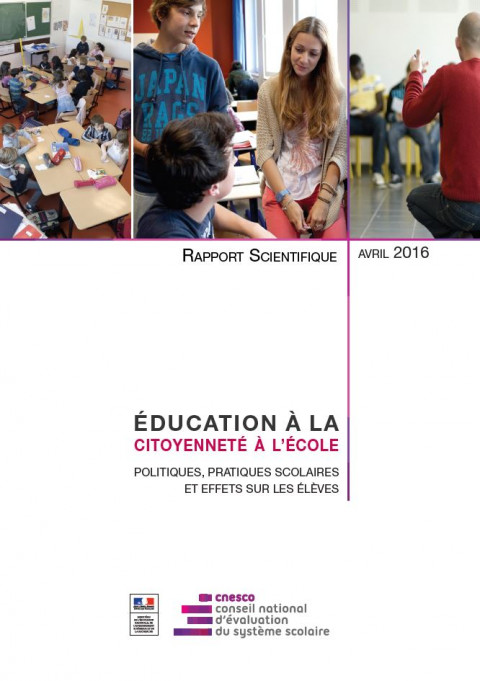 Éducation à la citoyenneté à l'école : Politiques, pratiques scolaires et effets sur les élèves (Rapport scientifique avril 2016) Year of publication: 2016 Author: Géraldine Bozec Corporate author: Conseil natiional d'évaluation du système scolaire (CNESCO) Ce rapport de recherche, commandé par le CNESCO, constitue une revue de la littérature à la fois française et internationale portant sur l’éducation à la citoyenneté. Il vise à avancer dans la compréhension d’un objet de recherche encore délaissé à ce jour dans les études françaises et à identifier des pistes de recherche qui pourraient s’avérer fécondes à l’avenir. Il privilégie les travaux mobilisant des données empiriques. Le rapport dresse d’abord un état de lieux de l’apprentissage de la citoyenneté à l’école française, à partir d’une analyse des politiques, des programmes et des pratiques scolaires (Partie I). Il met ensuite en perspective le cas français en resituant ses spécificités et les points communs qu’il partage avec d’autres cas nationaux en matière d’éducation à la citoyenneté (Partie II). Enfin, il présente un bilan des recherches visant à évaluer les effets de l’éducation à la citoyenneté sur les représentations, les attitudes et les pratiques des élèves (Partie III). En conclusion, des orientations de recherche qui apparaissent, à l’issue de cet état des lieux, comme encore peu explorées et potentiellement fructueuses, sont identifiée.