
Resources
Explore a wide range of valuable resources on GCED to deepen your understanding and enhance your research, advocacy, teaching, and learning.
3,451 Results found
 Écrire pour les droits: Dossier pour l’éducation aux droits humains Year of publication: 2015 Corporate author: Amnesty International This education pack contains five activities on human rights for young people. It can be used as an introduction to human rights, to global solidarity, to campaigning and activism, and to the wider work of Amnesty International. The activities provide a broad perspective on these issues and others.They are useful in opening young people’s minds to global concerns and involving them in actions which can have a real impact on people’s lives.The activities can be run at any time, but will be most effective either before or during the time of Amnesty International’s ‘Write for Rights’ campaign, which this year runs from 4 to 17 December. By working on these cases and taking part in the campaign, young people will know that they are part of a massive global movement of people. They – and you – can bring about a real improvement in the lives of the people featured in the following pages.
  The Write for Rights: A Human Rights Education Pack Year of publication: 2015 Corporate author: Amnesty International This education pack contains five activities on human rights for young people. It can be used as an introduction to human rights, to global solidarity, to campaigning and activism, and to the wider work of Amnesty International. The activities provide a broad perspective on these issues and others.They are useful in opening young people’s minds to global concerns and involving them in actions which can have a real impact on people’s lives.The activities can be run at any time, but will be most effective either before or during the time of Amnesty International’s ‘Write for Rights’ campaign, which this year runs from 4 to 17 December. By working on these cases and taking part in the campaign, young people will know that they are part of a massive global movement of people. They – and you – can bring about a real improvement in the lives of the people featured in the following pages.
  University College London (UCL) Centre for Holocaust Education Corporate author: UCL Centre for Holocaust Education The "Teacher resources" of the UCL Centre for Holocaust Education delivers three types of teaching documents : classroom materials with lesson plans and workshops, thematic lessons for teachers to increase their knowledge on the topic and pedagogical guidance to support and give suggestions for the classroom. University College London (UCL) Centre pour l'éducation holocauste Corporate author: UCL Centre for Holocaust Education Les «Ressources pédagogiques» du Centre UCL pour Holocaust Education délivre trois types de documents d'enseignement: matériel de classe avec des plans et des ateliers leçons, leçons thématiques pour les enseignants d'accroître leurs connaissances sur le sujet et l'orientation pédagogique pour soutenir et donner des suggestions pour la salle de classe. United States Holocaust Memorial museum The website of the United States Holocaust Memorial Museum has extensive in-depth historical information about the Holocaust. It provides easy access to primary source documents, including photographs and maps that deal with the Holocaust. It also has broad information on genocide and mass atrocities.
 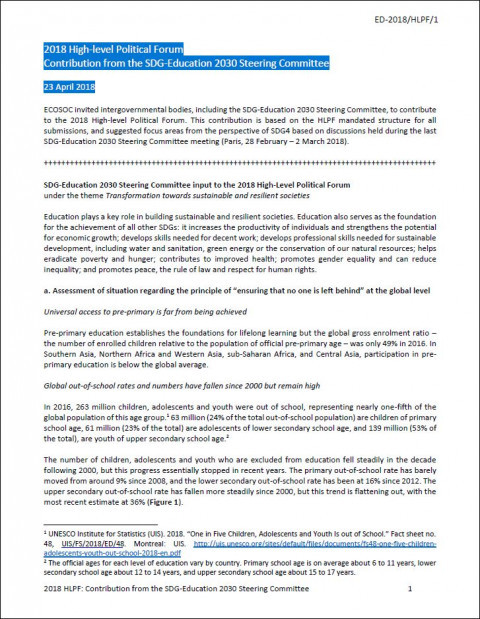 2018 High-level Political Forum: Contribution from the SDG-Education 2030 Steering Committee Year of publication: 2018 Corporate author: SDG-Education 2030 Steering Committee ECOSOC invited intergovernmental bodies, including the SDG-Education 2030 Steering Committee, to contribute to the 2018 High-level Political Forum. This contribution is based on the HLPF mandated structure for all submissions, and suggested focus areas from the perspective of SDG4 based on discussions held during the last SDG-Education 2030 Steering Committee meeting (Paris, 28 February – 2 March 2018).
  UNESCO Survey on Intercultural Dialogue, 2017: Analysis of Findings Year of publication: 2018 Corporate author: UNESCO Institute for Statistics (UIS) The present report sets out the key findings of the first UNESCO survey on intercultural dialogue conducted among its Member States. The survey takes stock of the current understanding and operational mechanisms and strategies of intercultural dialogue at national level. It assesses the main issues and opportunities, current policies and legislation, available data and resources, and main stakeholders in this field. The resulting information permits an initial inventory of countryspecific intercultural dialogue policies that will function as a point of analysis for future monitoring and inform future policy-making.The questionnaire for the survey was distributed to 199 National Commissions for UNESCO in six official United Nations languages with a submission deadline of Spring 2017. There was a response rate of 21.622%. The respondents represent all geographic regions, including countries with large, middle and small populations, and over half are from developing economies.
 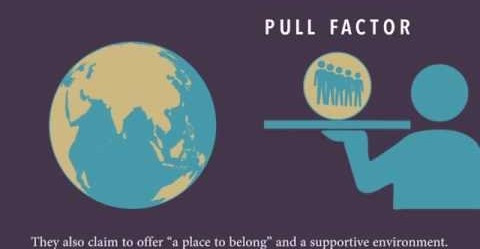 Preventing violent extremism through education Year of publication: 2016 Corporate author: Tim Parry Jonathan Ball Foundation for Peace This UNESCO video illustrates the importance of preventing violent extremism through education. It is based on excerpts from “My Former Life”, produced by the Tim Parry Johnathan Ball Foundation for Peace, based on testimonies of people once engaged in promoting or perpetrating extreme violence. This video also draws attention to some of the drivers of violent extremism, to the role of education in preventing violent extremism and to educational approaches recommended by UNESCO.
  Address by Irina Bokova, Director-General of UNESCO, on the occasion of the Ethics in Action event, Casina Pio IV in the Vatican Gardens; Vatican, 16 October 2017 Year of publication: 2017 Corporate author: UNESCO. Director-General, 2009-2017 (Bokova, I.G.) This address was delivered by Irina Bokova, Director-General of UNESCO, on the occasion of the Ethics in Action event, Casina Pio IV in the Vatican Gardens; Vatican, on 16 October 2017.
  التصدي لمعدات السامية عن طريق التعليم مبادئ تةجيهية لواضعي السياسات Year of publication: 2018 Corporate author: OSCE. Office for Democratic Institutions and Human Rights (ODIHR) A new UNESCO and OSCE co-publication takes up the challenge of educating learners to resist contemporary anti-Semitism at a time when the issue is becoming ever more crucial around the world. It suggests concrete ways to address anti-Semitism, counter prejudice and promote tolerance through education, by designing programmes based on a human rights framework, global citizenship education, inclusiveness and gender equality.It also provides policymakers with tools and guidance to ensure that education systems build the resilience of young people to anti-Semitic ideas and ideologies, violent extremism and all forms of intolerance and discrimination, through critical thinking and respect for others.