
Resources
Explore a wide range of valuable resources on GCED to deepen your understanding and enhance your research, advocacy, teaching, and learning.
3,385 Results found
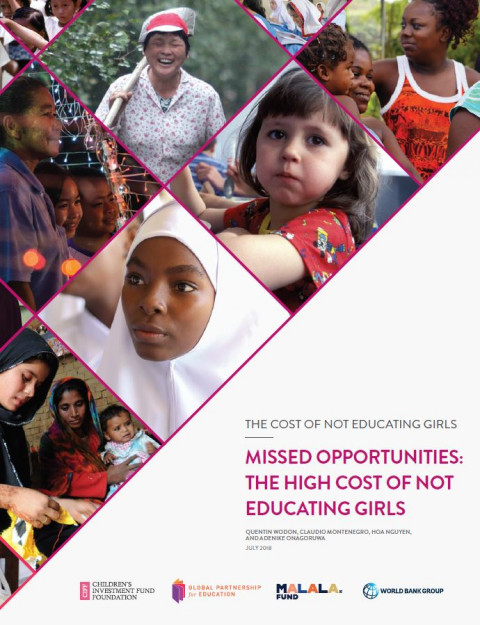 Missed opportunities: the high cost of not educating girls Year of publication: 2018 Author: Quentin Wodon | Claudio Montenegro | Hoa Nguyen | Adenike Onagoruwa Corporate author: Children's Investment Fund Foundation (CIFF) This report estimates the global impact of depriving girls of education as well as showing how educational attainment can affect their life chances and choices, and the outcomes of this at an individual, family and community level. Its findings show the transformative power of education for girls in six areas: (1) earnings and standards of living, (2) child marriage and early childbearing, (3) fertility and population growth, (4) health, nutrition and well-being, (5) agency and decision-making, and (6) social capital and institutions. Findings indicate that limited educational opportunities for girls and barriers to completing 12 years of education cost countries between $15 trillion and $30 trillion dollars in lost lifetime productivity and earnings. The report also finds that primary education is not enough. Across many indicators, benefits from primary education only are limited.
 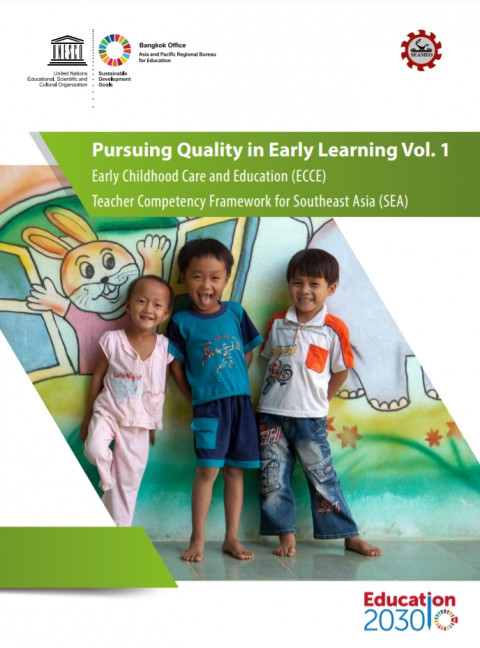 Pursuing quality in early learning, vol. 1: Early childhood care and education (ECCE) teacher competency framework for Southeast Asia (SEA) Year of publication: 2018 Corporate author: Southeast Asian Ministers of Education Organization (SEAMEO) | UNESCO Bangkok With the United Nation’s (UN) Sustainable Development Goals (SDGs) as a platform for achieving quality early childhood care and education outcomes by 2030, ECCE policy-makers, practitioners, and academicians from Asia-Pacific countries gathered at the second Asia-Pacific Regional Policy Forum on Early Childhood Care and Education in Putrajaya, Malaysia in 2016 to share experiences, innovations, and lessons learned in developing and implementing ECCE policies and initiatives. This document first provides a brief background, and discusses the purposes and intended audience for which the framework was developed (Section I). A succeeding section reflects on the regional ECCE landscape (Section II), before proceeding to a discussion of the ECCE teacher competency framework for Southeast Asia (Section III). Section IV suggests possible uses of the ECCE teacher competency framework; a final section concludes with areas for future action.
 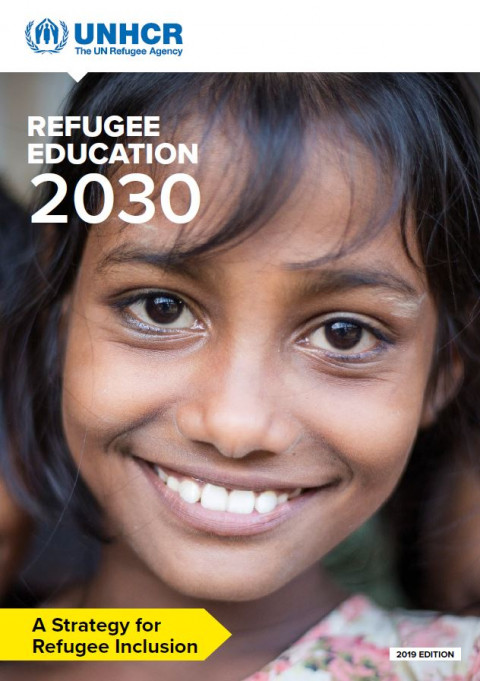 Refugee Education 2030: A Strategy for Refugee Inclusion Year of publication: 2019 Corporate author: UN. Office of the United Nations High Commissioner for Refugees (UNHCR) The UNHCR's 2019 Education strategy, which builds on the Global Compact on Refugees.
  املبادرة العاملية للتعليم أوا: مبادرة األمني العام لألمم املتحدة Year of publication: 2012 Corporate author: United Nations (UN) أطلق الأمين العام للأمم المتحدة مبادرة التعليم أولاً العالمية (GEFI) لمدة خمس سنوات في سبتمبر 2012 لتسريع التقدم نحو تحقيق أهداف التعليم للجميع والأهداف الإنمائية للألفية المتعلقة بالتعليم. وتهدف المبادرة إلى: حشد مجموعة واسعة من الجهات الفاعلة للدفعة النهائية نحو عام 2015؛ وضع التعليم الجيد والملائم والتحويلي في قلب جداول الأعمال الاجتماعية والسياسية والتنموية؛ توليد تمويل إضافي وكاف للتعليم من خلال جهود الدعوة العالمية المستمرة. وقد حددت هذه المبادرة المجالات الثلاثة ذات الأولوية؛ إدخال كل طفل إلى المدرسة، وتحسين جودة التعلم، وتعزيز المواطنة العالمية. Iniciativa Mundial La Educación ante Todo: una Iniciativa del Secretario General de las Naciones Unidas Year of publication: 2012 Corporate author: United Nations (UN) The United Nations Secretary-General launched the five-year Global Education First Initiative (GEFI) in September 2012 to accelerate progress towards the Education for All goals and the education-related Millennium Development Goals. The Initiative aims to: Rally together a broad spectrum of actors for the final push to 2015; Put quality, relevant and transformative education at the heart of the social, political and development agendas; Generate additional and sufficient funding for education through sustained global advocacy efforts. This initiative outlined the three priority areas; Put every child in school, Improve the quality of learning, and Fostering global citizenship. L'Initiative Mondiale pour l'Education Avant tout: une Initiative du Secrétaire Général de l'Organisation des Nations Unies Year of publication: 2012 Corporate author: United Nations (UN) The United Nations Secretary-General launched the five-year Global Education First Initiative (GEFI) in September 2012 to accelerate progress towards the Education for All goals and the education-related Millennium Development Goals. The Initiative aims to: Rally together a broad spectrum of actors for the final push to 2015; Put quality, relevant and transformative education at the heart of the social, political and development agendas; Generate additional and sufficient funding for education through sustained global advocacy efforts. This initiative outlined the three priority areas; Put every child in school, Improve the quality of learning, and Fostering global citizenship. Global Education First Initiative: An Initiative of the United Nations Secretary-General Year of publication: 2012 Corporate author: United Nations (UN) The United Nations Secretary-General launched the five-year Global Education First Initiative (GEFI) in September 2012 to accelerate progress towards the Education for All goals and the education-related Millennium Development Goals. The Initiative aims to: Rally together a broad spectrum of actors for the final push to 2015; Put quality, relevant and transformative education at the heart of the social, political and development agendas; Generate additional and sufficient funding for education through sustained global advocacy efforts. This initiative outlined the three priority areas; Put every child in school, Improve the quality of learning, and Fostering global citizenship. Global Education First Initiative: An Initiative of the United Nations Secretary-General Year of publication: 2012 Corporate author: United Nations (UN) Le Secrétaire Général de l’ONU a lancé l’Éducation Globale Première Initiative (EGPI) pour les cinq ans en Septembre 2012 pour accélérer les progrès vers l'Éducation pour Tous et les Objectifs du Millénaire pour le Développement liés à l'éducation. L'initiative vise à: Rassemblement d' un large éventail d'acteurs pour la poussée finale à 2015; Mettre de qualités, de pertinence et d’éducation transformatrice au cœur des agendas sociaux, politiques et de développement; Générer des fonds supplémentaires et suffisants pour l'éducation grâce à des efforts de sensibilisation mondiale soutenue. Cette initiative a décrit les trois domaines prioritaires; Mettez tous les enfants à l'école, Améliorer la qualité de l'apprentissage, et Favoriser la citoyenneté mondiale. 글로벌 교육 우선 구상: 유엔 사무총장의 구상 Year of publication: 2012 Corporate author: United Nations (UN) 유엔 사무총장은 교육과 관련된 ‘모두를 위한 교육 목표(Education for All Goals)’와 ‘새천년개발목표(Millennium Development Goals)’의 진행을 가속화 시키기 위하여 2012년 9월 5개년 ‘글로벌교육우선구상(GEFI)’을 출범시켰다. 이 구상의 목표는 2015년 최종 추진을 위한 광범위한 활동의 스펙트럼을 함께 이어가며, 그 중심에 사회·정치적 개발 의제와 관련된 양질의 변화된 교육을 두고, 지속적인 글로벌 지지 노력을 통해 교육을 위한 충분한 추가적 펀딩을 확보한다. 본 사업은 세가지 우선 순위의 영역을 두는데, 그 첫 번째로는 모든 어린이를 학교에 입학시키는 것, 두 번째는 학습의 질을 향상시키는 것, 세 번째는 세계 시민을 육성하는 것이다.
  More Than One-half of Children and Adolescents Are Not Learning Worldwide; UIS Fact Sheet No. 46 Year of publication: 2017 Corporate author: UNESCO Institute for Statistics (UIS) This paper presents the first estimates for a key target of Sustainable Development Goal 4, which requires primary and secondary education that lead to relevant and effective learning outcomes. By developing a new methodology and database, the UIS has produced a global snapshot of the learning situation facing children and adolescents who are in school and out. The data show the critical need to improve the quality of education while expanding access to ensure that no one is left behind. The paper also discusses the importance of benchmarking and the concept of minimum proficiency levels.