
Resources
Explore a wide range of valuable resources on GCED to deepen your understanding and enhance your research, advocacy, teaching, and learning.
2,162 Results found
 Educación para la ciudadanía y la convivencia: ciudadanos y ciudadanos del mundo, hijas e hijos de Bogotá; ciclo cuatro (octavo y noveno) Year of publication: 2014 Corporate author: Secretaría de Educación del Distrito (SED) | Fe y Alegría These twelve modules make reference to a series of activities that focus on how children from all the educative grades understand and live citizenship, strengthening and facilitating the learning processes based on autonomy. This educative materials, which are aimed at being implemented inside the classrooms, attempt to serve as input resources for educators and other agents that work on or are interested in working with citizenship education and coexistence. The overall objective is to provide quality education. Educación para la ciudadanía y convivencia: protagonistas de la realidad, dirigimos la historia; ciclo tres (quinto, sexto y séptimo) Year of publication: 2014 Corporate author: Secretaría de Educación del Distrito (SED) | Fe y Alegría These twelve modules make reference to a series of activities that focus on how children from all the educative grades understand and live citizenship, strengthening and facilitating the learning processes based on autonomy. This educative materials, which are aimed at being implemented inside the classrooms, attempt to serve as input resources for educators and other agents that work on or are interested in working with citizenship education and coexistence. The overall objective is to provide quality education. Educación para la ciudadanía y la convivencia: ciberciudadanía para la paz, una aldea digital de la que haces parte; ciclo cinco (décimo, undécimo, duodécimo) Year of publication: 2015 Corporate author: Secretaría de Educación del Distrito (SED) | Fe y Alegría These twelve modules make reference to a series of activities that focus on how children from all the educative grades understand and live citizenship, strengthening and facilitating the learning processes based on autonomy. This educative materials, which are aimed at being implemented inside the classrooms, attempt to serve as input resources for educators and other agents that work on or are interested in working with citizenship education and coexistence. The overall objective is to provide quality education.
  Promoting inclusive teacher education: Introduction Year of publication: 2013 Author: Ian Kaplan | Ingrid Lewis Corporate author: UNESCO Bangkok ‘Promoting Inclusive Teacher Education’ is a series of five advocacy guides. The guides discuss challenges and barriers to inclusive education in different areas of teacher education and offer related strategies and solutions for effective advocacy towards more inclusive practices. The series begins with this introductory guide. It provides an overview of inclusive teacher education and of what advocacy means in this context. It also provides an introduction to the topics covered in the four other guides in the series. These are ‘Policy’, ‘Curriculum’, ‘Materials’, and ‘Methodology’.Advocacy Guide 1: Introduction – This introductory guide begins by providing a brief introduction to inclusive education. Readers should not, however, see this introductory guide as their only guide for understanding inclusive education. It is assumed that advocates will either have existing knowledge of inclusive education or will refer to other more comprehensive sources of information to learn about the concept. This guide goes on to explain the benefits of integrating awareness and understanding of inclusive education throughout pre-service teacher education. Finally, it provides a practical introductory guide to advocacy. Educación para la ciudadanía y la convivencia: hacemos sinergías para vivir y convivir en territorios de paz; ciclo cuatro (octavo y noveno) Year of publication: 2015 Corporate author: Secretaría de Educación del Distrito (SED) | Fe y Alegría These twelve modules make reference to a series of activities that focus on how children from all the educative grades understand and live citizenship, strengthening and facilitating the learning processes based on autonomy. This educative materials, which are aimed at being implemented inside the classrooms, attempt to serve as input resources for educators and other agents that work on or are interested in working with citizenship education and coexistence. The overall objective is to provide quality education.
 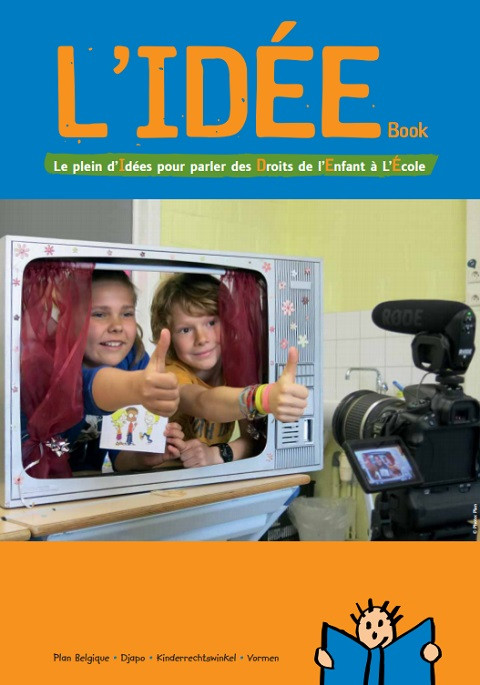 L’idée book: Le plein d’idées pour parler des droits de l’enfant à l’école Year of publication: 2019 Corporate author: Plan Belgique | Djapo | Kinderrechtswinkel | Vormen L’IDÉE Book propose de nombreuses manières d’informer les enfants sur leurs droits et ceux des autres. Ce manuel contient également de nombreuses astuces pour travailler sur les valeurs, les attitudes et les comportements de la Convention internationale des droits de l’enfant. Les activités proposées s’articulent dans une perspective Nord-Sud qui ouvrira l’esprit de vos élèves au monde extérieur. Par ailleurs, nous portons une attention particulière aux enfants de 4 à 10 ans, pour lesquels il existe peu de matériel éducatif.
  교실에서 만나는 세계시민교육 Year of publication: 2016 Author: 정애경 | 윤지아 | 정혜선 | 이근화 | 공석범 | 주예진 | 이원용 | 정용민 Corporate author: 서울특별시교육청 본 자료는 학습자로 하여금 인류가 공동으로 직면하고 있는 문제들에 대해 이해하고 지구촌 공동체에 대한 소속감과 연대감을 키워 지구촌의 문제들을 해결할 수 있는 다양한 실천적이고 협력적인 능력을 키우는데 그 목적을 두고 있으며, 직접 교실 현장에서 활용할 수 있도록 교수학습과정안의 형식으로 구성되어 있다. 학습주제로 제시된 것은 국제이해교육과 세계시민교육에서 공통으로 다루는 인권과 평화, 다문화를 비롯하여 2030년까지의 인류 공동의 목표인 지속가능발전의 환경과 사회와 경제 부분, 그리고 세계시민교육의 배경인 세계화와 미래사회의 지향점인 국제협력 다섯 영역이다.
 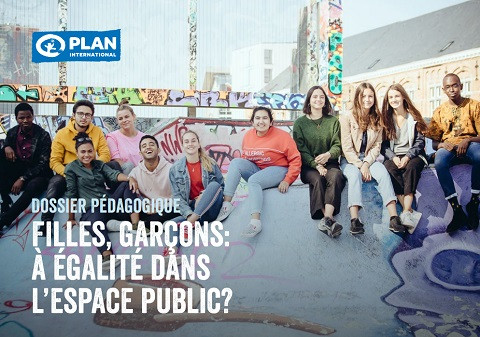 Dossier pédagogique: Filles, garçons, à égalite dans l'espace public? Year of publication: 2019 Corporate author: Plan International Ce dossier pédagogique vise à sensibiliser les adolescent-e-s à propos des inégalités entre garçons et filles et à les faire réfléchir aux conséquences. Le message global est positif: le chemin est porteur d’espoir. Les jeunes peuvent changer les choses. Ils/elles peuvent réfléchir et s’élever contre des normes inadaptées et construire leur avenir. Et nous pouvons, ensemble, briser les stéréotypes de genre, améliorer les modèles de rôles et construire à l’égalité des chances entre garçons et filles. Prendre conscience du poids des stéréotypes et les questionner constamment en les observant à travers le prisme du genre sont des étapes décisives sur la voie de l’égalité. La classe est un cadre idéal pour cette remise en question.
  Confronting White Nationalism in Schools: A Toolkit Year of publication: 2019 Author: Nora Flanagan | Jessica Acee | Lindsay Schubiner Corporate author: Western States Center This toolkit shows strategies to counter white nationalist organizing in schools through sample scenarios that schools frequently encounter. It also offers advice for parents, students, teachers, school administrators, and the wider community. Many resources currently exist that address diversity, inclusion, and bullying in schools; a few of them are listed in the resources section. This toolkit is specifically focused on responding to white nationalist targeting and recruitment of students.
  Stepping Stones for the Sustainable Development Goals: A Workbook for Community and Adult Education Practitioners Year of publication: 2020 Author: Jennifer Harris Corporate author: Development Perspectives | Irish Aid The aim of this workbook is to provide a tool for Adult and Community groups and their leaders to understand the Sustainable Development Goals (SDGs) and to take meaningful action on those Goals. It aims to support adult and community educators in integrating the SDGs into their work using the principles and methodologies embraced by Development Education (DE)and Global Citizenship Education (GCE).